




At the onset of her getaway to the hills of Himachal Pradesh in a secluded tourist spot, Writer’s Hill, Nisha knew something terrible was going to happen. Less than seventy-two hours later, she goes missing under mysterious circumstances. When the police arrive and question the co-inhabitants, they’re surprised at their statements. All of them describe an eerie, almost supernatural, occurrence on the night of Nisha’s disappearance.
To add to the strangeness is a unique coterie of travellers-Nisha’s ignorant boyfriend, a reclusive but nosy writer and a young couple who are not what they seem. There is also the caretaker’s visually impaired daughter who claims she can ‘see things’.
With barely any leads, the police know they have to work doubly hard if they want to find Nisha, but with each passing day, the mystery around her disappearance gets murkier.
Where is Nisha?
Archives: Books
Made in India
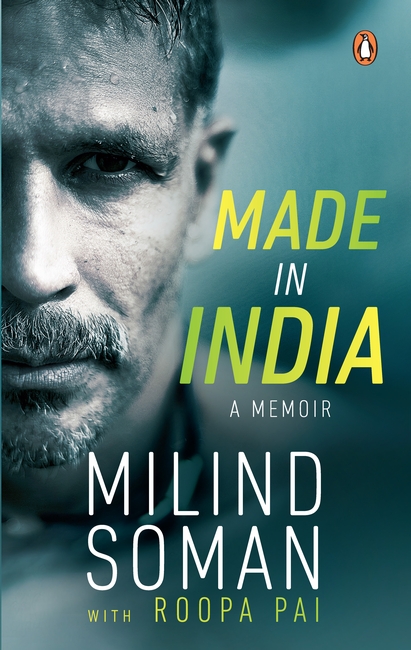
There’s more to Milind Soman than meets the eye (although, as his legions of female fans will agree, what meets the eye is pretty delish).
Combining in himself the passion of an entrepreneur, the mind of a nerd, the discipline of an athlete, the curiosity of an explorer, the heart of a patriot and the soul of a philosopher, Milind has made the stunning-and apparently seamless- transition from champion swimmer to supermodel to actor to extreme sportsperson to women’s fitness activist, enabler and proselytiser, all in one lifetime.
How does he do it? What makes him tick? On the twenty-fifth anniversary of ‘Made in India’, the breakout pop music video of the 1990s that captured the apna-time-aagaya zeitgeist of post-liberalization India and made him the nation’s darling across genders and generations, Milind talks about his fascinating life-controversies, relationships, the breaking of vicious habits like smoking, alcohol, rage, and more-in a freewheeling, bare-all (easy, ladies-we’re talking soul-wise!) memoir.
Co-authored with bestselling author Roopa Pai, MADE IN INDIA is a rare glimpse into the mind and heart of a very unusual man that will leave you thoughtful, awed and inspired.
Skill Builder Grammar Level 1
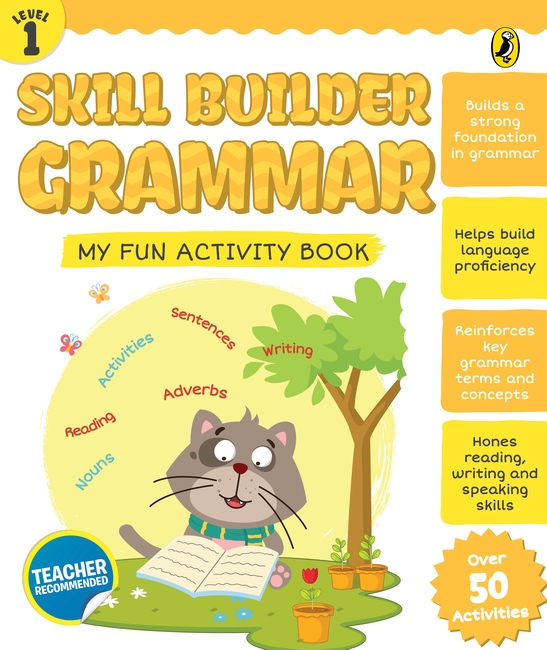
This book contains exercises and puzzles to help young learners practise using basic grammar and hone their language skills. Through fun and challenging activities, your child will learn and master grammar, reading and writing skills that are applicable in a wide-range of everyday contexts.
Skill Builder Grammar Level 2
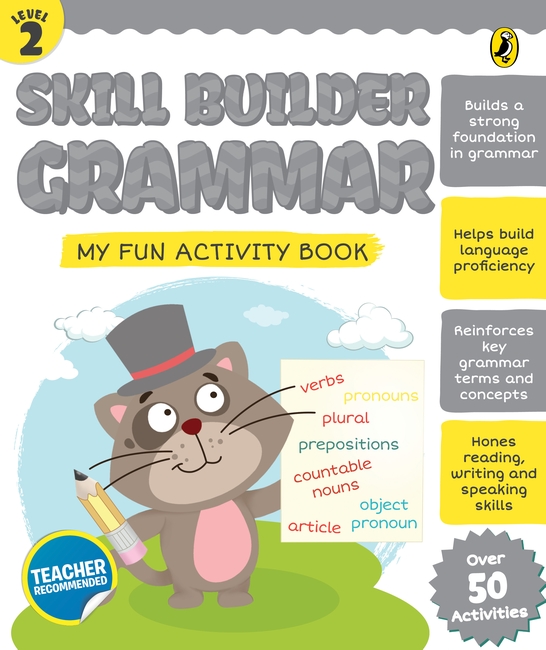
This book contains exercises and puzzles to help young learners practise using basic grammar and hone their language skills. Through fun and challenging activities, your child will learn and master grammar, reading and writing skills that are applicable in a wide-range of everyday contexts.
Skill Builder Grammar Level 3
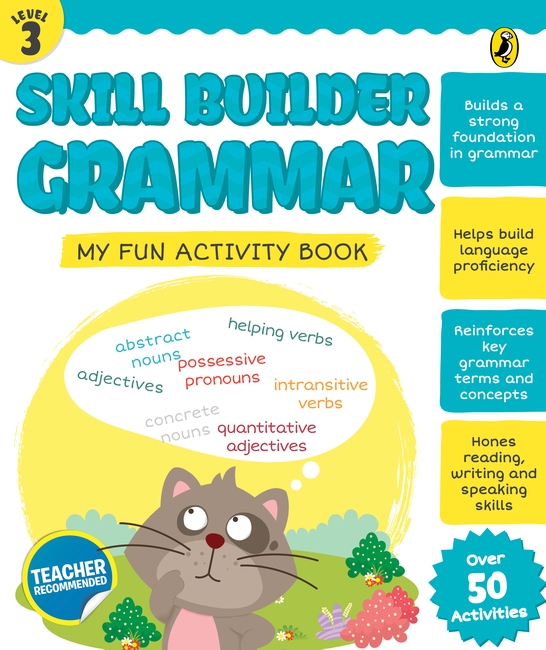
This book contains exercises and puzzles to help young learners practise using basic grammar and hone their language skills. Through fun and challenging activities, your child will learn and master grammar, reading and writing skills that are applicable in a wide-range of everyday contexts.
Skill Builder Grammar Level 4
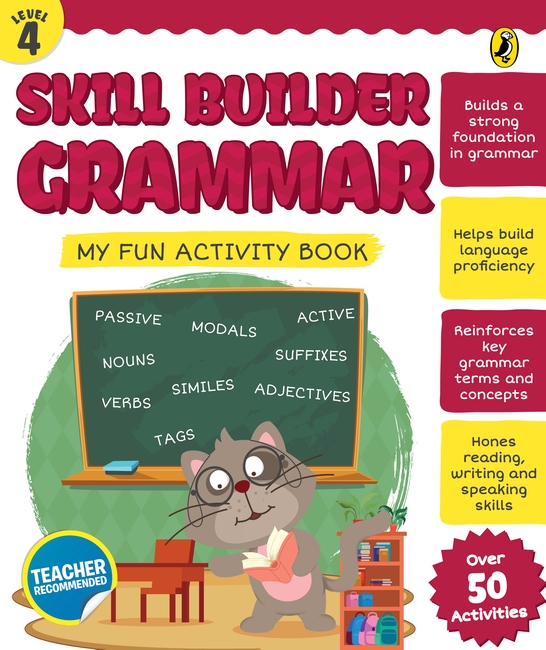
This book contains exercises and puzzles to help young learners practise using basic grammar and hone their language skills. Through fun and challenging activities, your child will learn and master grammar, reading and writing skills that are applicable in a wide-range of everyday contexts.
Penguin Book Of Indian Railway Stories
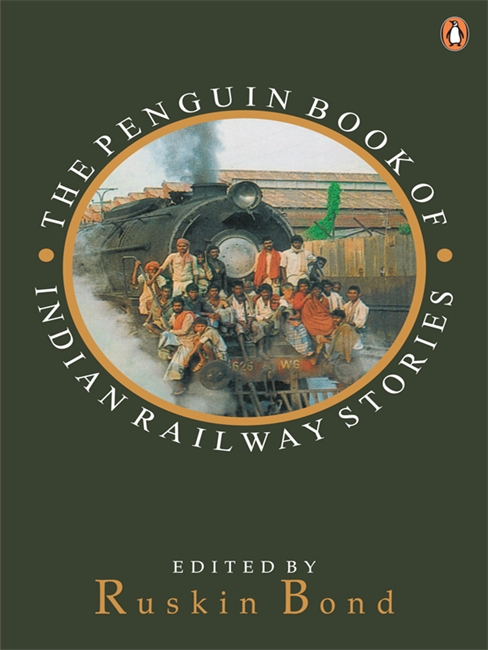
The stories in this collection capture the essence of the Indian Railways from the small-town station, at the time of the Raj to the present day big-city stations bursting at the seams. The teeming and varied life of the Indian Railway station and its environs have fascinated writers from Jules Verne in the 1870s to more recently Satyajit Ray, R.K. Laxman and more modern writers. In this anthology, one of India’s best-known writers makes a selection of the greatest railway stories the subcontinent has produced.
Penguin Book Of Indian Ghost Stories
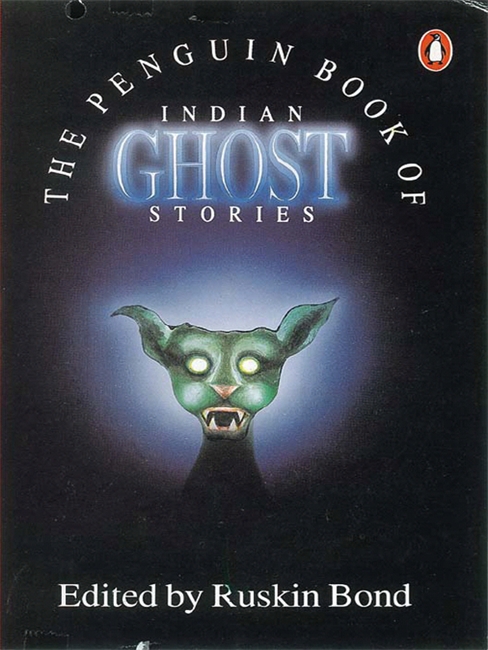
A collection of 21 spine-chilling short stories written by many authors ranging from Rudyard Kipling to Arthur Conan Doyle to Satyajit Ray, this is the perfect book for readers interested in the supernatural elements in India – it also has an introduction by Ruskin Bond who elaborates how he became fond of ghost stories.
The Lamp is Lit
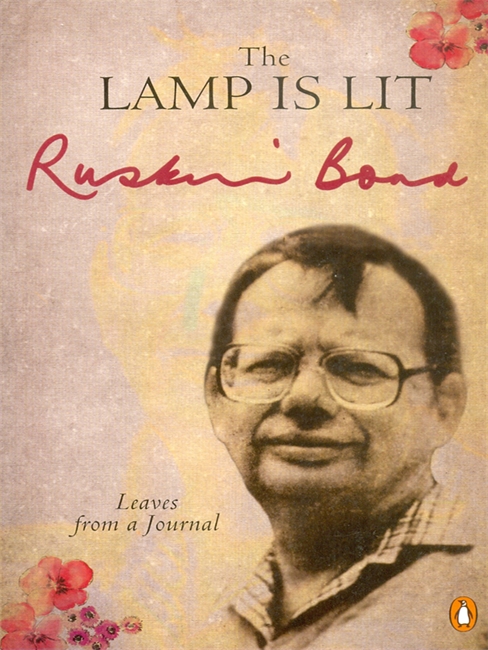
Autobiographical sketches and stories from India’s best-loved writer in English. For over four decades now, by way of innumerable short stories, essays, poems and novels, Ruskin Bond has championed simplicity and quietude in life and in art. This collection of essays and episodes from his journals is, in his own words, “a celebration of my survival as a freelance’. The author’s early forays into the literary magazines of the 1950s and ’60s are described in the first part of the book, along with some examples of his work at the time. The sections that follow contain extracts from an unpublished travel journal he kept during the ’60s, episodes from the highways on which he was a frequent traveller, and vignettes of life in Mussoorie, past and present. With understated humour and compassion, Ruskin Bond records the charming eccentricities of friends and acquaintances (a former princess cheerfully obsessed with death and disaster); the silent miracles of nature (“New moon in a purple sky’); life’s little joys (the smell of onions frying) and its fleeting regrets. Nostalgic and heart-warming, full of wisdom and charm, The Lamp is Lit provides a fascinating glimpse into the life of “our very own resident Wordsworth in prose.
Managing Radical Change
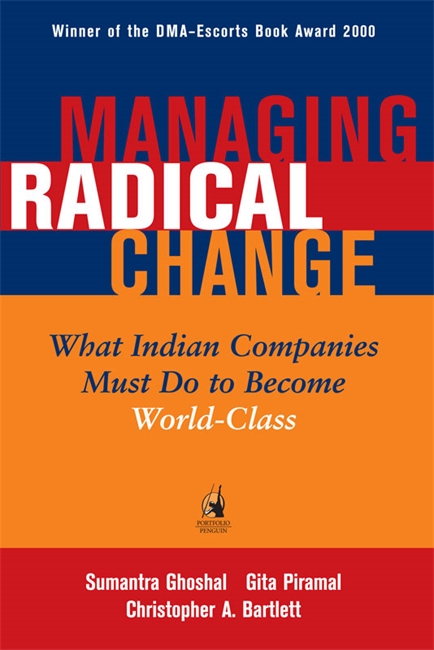
What Indian Companies Must Do to Become World-Class An invaluable roadmap for Indian executives who strive to excel Winner of the DMA—Escorts Book Award 2000 Managing Radical Change: What Indian Companies Must Do to Become World-Class looks at what companies in India must do to rank among the best in their strategy, organization and management. The authors, internationally acclaimed management gurus Sumantra Ghoshal and Christopher A. Bartlett and industry insider Gita Piramal, say that managers are aware of the need for a radical response to the problems and challenges posed by the new competitive, technological and market demands in India. But, believing that change can come only by degrees, they hesitate to initiate action. The key purpose of this book is to make managers believe that radical performance improvement is possible. Ghoshal, Piramal and Bartlett feel that managers are the best teachers of managers, and so Managing Radical Change is a distillation of lessons offered by people as diverse as N.R. Narayana Murthy and Brijmohan Lall Munjal, Keki Dadiseth and Dhirubhai Ambani, Azim Premji and Rohinton Aga, Lakshmi Niwas Mittal and Subhash Chandra, Rahul Bajaj and Parvinder Singh. There is a wealth of information on the best companies in India and worldwide, among them Infosys, Wipro, Reliance, Hindustan Lever, GE and ABB. Lucidly written and brilliantly argued, Managing Radical Change is perhaps the most significant contribution to Indian management literature in recent times.