‘The story of mankind is in you, the vast experience, the deep-rooted fears, anxieties, sorrow, pleasure and all the beliefs that man has accommodated throughout the millennia. You are that book.’
Inspired by Krishnamurti’s belief that truth is found through living, The Book of Life presents 365 timeless daily meditations, developed thematically over seven days, illuminating the concepts of freedom, personal transformation, living fully awake and much more.
The Book of Life is a profound collection of insights to treasure every day for those who have come to cherish the wisdom of this extraordinary spiritual sage as well as those who are discovering it for the first time.

Every country in the world experiences the benefits of its demographic dividend, a period that comes but once in the life of a nation-when the share of the working-age population is larger than the non-working-age share. It has the potential to make a country progress towards higher incomes and development. But it can also become a nightmare if there aren’t enough jobs.
India entered this period in 1980, and by the time it ends in 2040, ours will be an ageing society. As more and more youth reach working age, an increasing number of workers are moving from agriculture towards industry and services, sectors which have higher productivity and incomes. Higher incomes generate increased savings, which, when invested, convert into GDP growth, leading to development.
Since 2012, the number of youth entrants into the labour force has increased at an accelerating pace, while the number of jobs created has decreased. This situation might become graver between 2020 and 2030 as the labour force swells further. Reviving Jobs, the third volume in the Rethinking India series, offers suggestions on how India can make the best use of the remaining period of its demographic dividend-any failure to do so will cause millions to suffer in poverty for decades to come.

Just at the stroke of the half hour, the floor under our feet shook, and in that very instant, the sphere exploded into a thousand bits and scattered on the floor. Then, from the ruins was heard an eerie, disembodied voice declaiming, ‘I know what comes after death!’
In this last volume of Professor Shonku’s escapades, the brilliant and benevolent scientist travels around the world once more to face near death situations. Each nerve wracking experience is faithfully recorded in his diary. We learn of Shonku being outwitted by his own invention, the Tellus computer; his helplessness when his arch-rival in Rome deliberately misplaces his wonder drug, Miracurall; and the thrilling discovery of a three-and-a-half-thousand-year-oldsparkling diamond necklace and a papyrus in an ancient tomb in Cairo. Join the incredible Shonku on his many exhilarating adventures accompanied by his two long-time friends, his feline companion Newton, and his faithful retainer, Prahlad.
Presented in a brilliant translation by Indrani Majumdar and the late author, this volume brings alive the wildly imaginative world of the weird and wonderful Professor Shonku.

Mother. Woman. Human.
What is it like to be a mother in India? Is there only one kind of woman as mother or can mothers be as different as chalk and cheese?
In this original, provocative book, Pooja Pande peels off the layers of social propriety to delve deep into the visceral reality of motherhood, much glorified but barely understood in India. Exploring the spectrum of experiences mothers have as women, as humans-from ecstasy to depression, jealous possessiveness to indifference, exhaustion to sensual desire-she reveals the personal, social and emotional roller-coaster motherhood can be. Through vignettes of her personal journey, and hilarious and poignant episodes in the lives of different mothers-married, divorced, single, queer, adoptive-Pande celebrates and shines new light on this transformative, life-affirming experience. Whatever kind of mother you are, you will find your truth reflected in these pages.

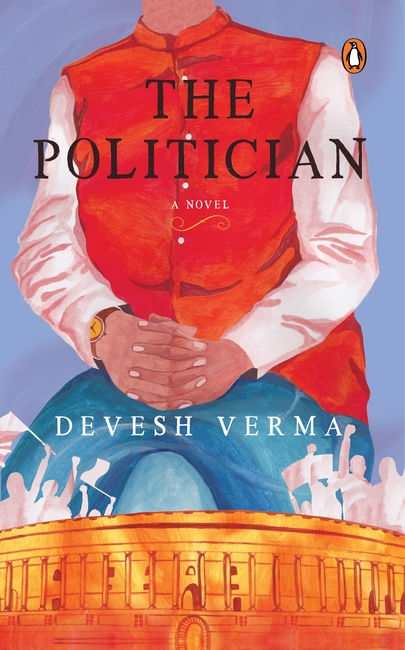
Ram Mohan is an intrepid and ambitious young man in newly independent India, who refuses to be held down by his humble origins. Spurred on by his diehard optimism, he aims for things usually inaccessible to people of his extraction. However, he soon realizes that without political or bureaucratic power, the idea of a respectable life in India is nothing but pretence, and when Gulab Singh rescues him from being insulted by a thug, Ram Mohan becomes persuaded of the efficacy of violence in certain situations . . .
Beginning at the peak of Nehruvian era and ending in the early seventies, The Politician is an enthralling, evocative view of provincial northern India-once the political heartland of the country-and the ebb and flow of the fortunes of its protagonists.

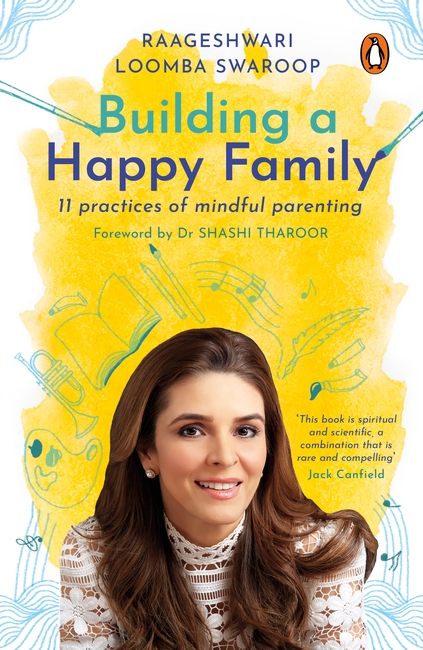
You can’t have a happy family unless you’re happy yourself. Raageshwari Loomba, an award-winning speaker on mindfulness, shows us how to create an excellent atmosphere for the entire family to thrive in. Her relateable style is coupled with real-life examples, such as that of Albert Einstein, who couldn’t speak till the age of four and was a poor student. His parents encouraged him with love and allowed him to learn at his own pace. This, she shows, is the way to bring up your own little genius.
Building a Happy Family brings to you 11 simple mindfulness philosophies that will enrich and strengthen your and your children’s inner world. Through scientific research and her own intimate story of heartbreak and facial paralysis, Raageshwari emphasises how our thoughts can manifest further struggles or glory, and how teaching children early that our inner world attracts our outer world is key. Parents are taught to encourage their children’s original expressions, creativity and joy, and not lose sight of it in their own lives too. This is the secret to a happy family.

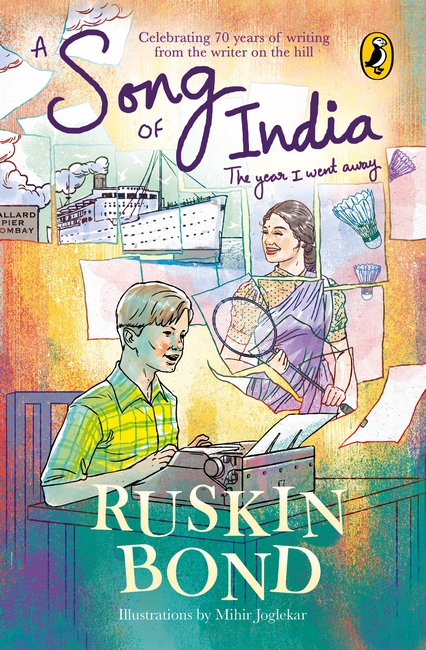
Sixteen-year-old Ruskin, after having finally finished his school, is living with his stepfather and mother at the Old Station Canteen in Dehradun. Struggling to begin his writing journey, he tries to make a passage to England to chase his true calling. But as he prepares for his long voyage, the prospect of saying goodbye to the warm, sunny shores of India looms large.
Brought straight from his past, Ruskin Bond recalls the longing for familiarity, the joys of receiving his first money order, publishing his stories and finding new friends.
Following the trail of Looking for the Rainbow, Till the Clouds Roll By and Coming Round the Mountain, A Song of India is another year from the life of a fiery teenager as he embarks on a journey to an unfamiliar land.

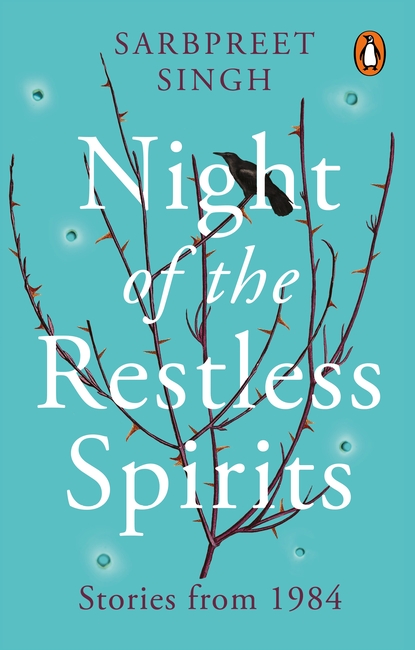
A young Indian in the USA embraces a cause rooted in his motherland, but one that he doesn’t fully understand. A student’s world is turned upside down when his friend and her family are caught in the cross hairs of volatility and violence. A train burns as it enters Delhi, and the sole Sikh survivor shares with the nation the harrowing tale of his survival . . .
These and many other stories form this heart-rending collection that evokes the horrors and uncertainties of 1984, through the tales of ordinary people caught in something bigger than themselves. Set during a time of monumental upheaval, Night of the Restless Spirits blurs the lines between the personal and political, and takes the reader on a journey fraught with love and tinged with tragedy, frayed relationships, the breaking down of humanity and resilience in the face of absolute despair. These stories tell us that people are capable of the best and the worst, but that ultimately there is always hope.

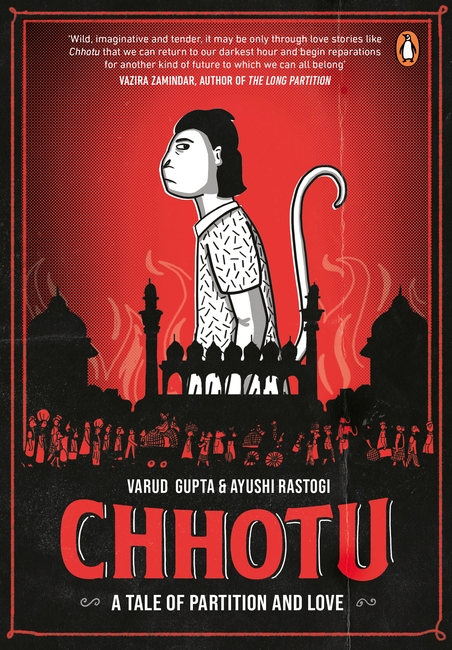
The year is 1947. The British are slowly marking their departure from the country. And while Partition looms large over India, Chhotu, a student-cum-paranthe-cook in the dusty gullies of Chandni Chowk, has other things on his mind-like feeling the first flushes of love of his crush, Heer, the new girl at school.
When he finally decides to make a move, Chhotu soon finds the town’s aloo has suddenly gone missing, reluctantly embroiling himself into the world of corruption, crime and dons. As he struggles to understand what freedom truly means, Chhotu realizes one thing is for certain-that his world, and the world of those around him, is about to change forever.
Set against the backdrop of Partition and the horrors that followed, Chhotu is a coming-of-age story of an unlikely hero and a parable of a past that doesn’t feel too removed from the present.
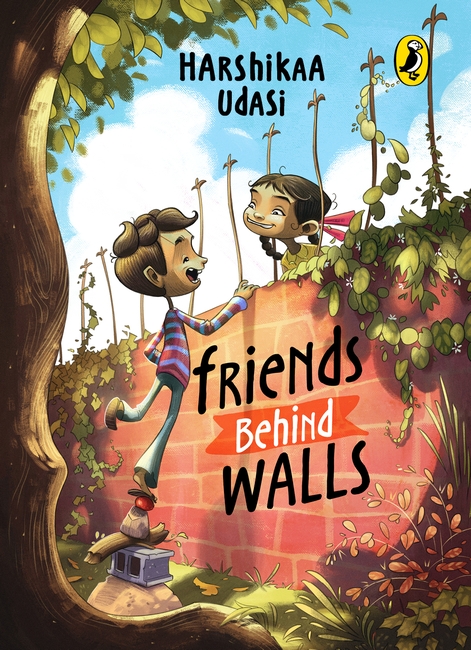
Why won’t anyone let Inu and Putti be friends?
Putti is spending his summer vacation in Deolali and he thinks life is going to be fun with his new friend Inu. But with their parents FORBIDDING them from playing with each other, the two kids are flabbergasted. Flab-ber-gas-ted. Means shocked. Nothing to do with food and farts.
Now the two of them have decided to find out why. Can Mr Om Namaha and Dr Solanki help? Or will I and P have to go up the hill to the fearsome Tekdichi Mhatari to solve this mystery?