

Publish with Us

Follow Penguin

Follow Penguinsters

Follow Penguin Swadesh

Bury Your Dead

By the International Booker Prize-shortlisted author of On Earth As It Is Beneath

What do we owe the dead?

Edgar Wilson collects roadkill from the highways of rural Brazil. It is difficult, unglamorous work, carried out far from public view. But when vultures circling above the forest lead him to the body of a murdered woman, Edgar finds himself drawn into a world of abandoned corpses, missing people and lives deemed unworthy of attention.

Joined by Tomás, an ex-priest who ministers to the dead and dying along the roadside, Edgar embarks on a search for answers in a landscape where violence is commonplace and justice is rarely found. Winner of the São Paulo Literature Prize, Bury Your Dead is a darkly comic, unsettling and unexpectedly tender novel about friendship, responsibility and the dignity owed to every life.

“One must possess a profound understanding of fiction, of reality, and of the representation of reality to be able to write like this.” — O Globo

Build, Don’t Talk | Premium Edition

School taught us specific subjects, like maths and history.

But we weren’t taught:

How to sell
How to build relationships
How to negotiate challenges
How to take care of our mental health
How to network
How to deal with personal finance

These most important situations we face as adults were never discussed with us as students. We weren’t taught these skills in school, and this makes all the success stories we hear seem out of reach; it makes us feel dumb.

We aren’t dumb; we just don’t know how to work the system. Your school taught you how to run in the race; it didn’t teach you how to win. And that’s what this book is for. To help you win the race.

Packed with useful, effective advice gleaned from his own immensely successful journey as an entrepreneur and content creator, this book is a must-read.

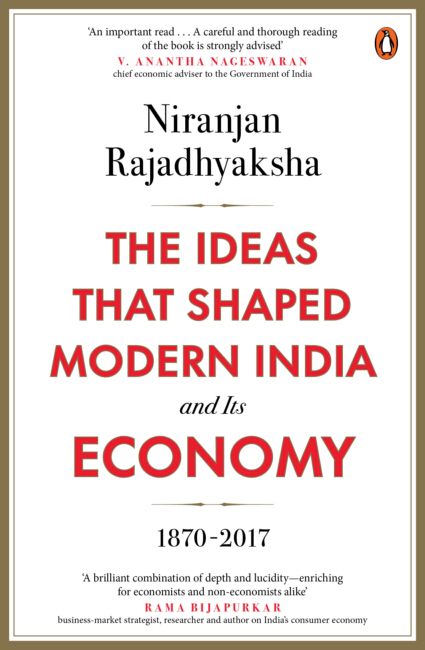
The Ideas That Shaped Modern India and Its Economy

Why do some nations prosper while others struggle? Is wealth created by resources, policies and markets? Or, ultimately, by human ideas and enterprise?

Nearly two centuries ago, Marathi thinker Gopal Hari Deshmukh, better known as Lokhitwadi, found a powerful answer in samudra manthan. Lakshmi, the goddess of wealth, emerges only after the ocean is churned through immense collective effort. His message was simple: wealth must be created.

Beginning with this insight, The Ideas That Shaped Modern India and Its Economy traces close to 150 years of Indian economic thought: from colonial rule and independence to nation-building, liberalisation and the present.

Through the thinkers, reformers, policymakers and dissenters who shaped these debates, it explores enduring questions: How does a nation become prosperous? How can India build domestic capacity while remaining engaged with the world economy? What is the ideal balance between free markets and government intervention?

Accessible, engaging and deeply relevant, this is not simply a history of economics. It is the story of the ideas that made modern India—and those that will shape the India yet to come.

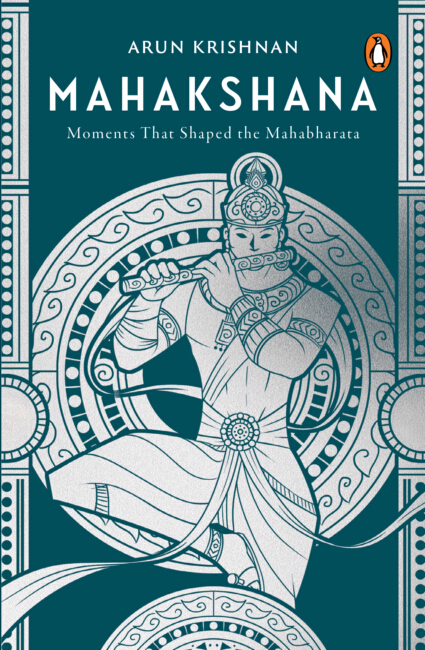
Mahakshana

Devavrata stands on the brink of becoming Bhishma. Amba’s humiliation hardens into vengeance. Dhushasana steels himself for an act that will scar history. Bhima waits for the moment to strike Kichaka. Karna wrestles with the consequences of using the all-powerful Shakti on Ghatothgacha. Abhimanyu contemplates before entering into the Chakravyuha on the Kurukshetra battlefield.
These are not stories of gods and heroes. They are stories of desire and doubt, rage and love, ambition and guilt—of ordinary human emotions colliding with extraordinary destinies.
In this extraordinary retelling of the Mahabharata, Mahakshana, Arun Krishnan steps inside the minds of the men and women who shaped Bharatavarsha, capturing them at the instant when choice becomes destiny.

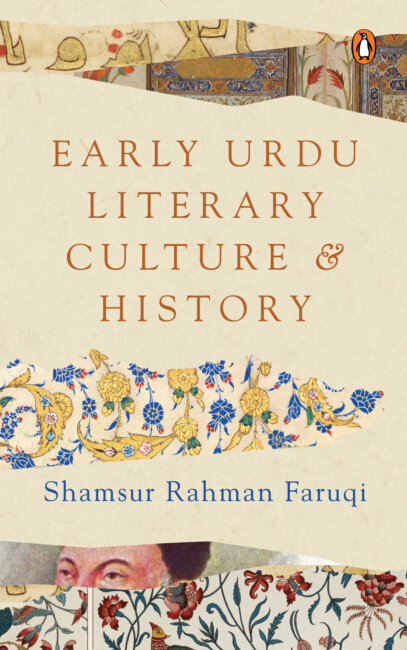
Early Urdu Literary Culture and History

Shamsur Rahman Faruqi tells the fascinating story of how Urdu grew into one of the subcontinent’s great literary languages. In doing so, he also takes us back to the intertwined beginnings of Hindi and Urdu, questioning many of the familiar assumptions about where the two languages came from and how they developed.

Drawing on a remarkable range of poetry and literary traditions, Faruqi explores the major forms of Urdu poetry and the writers who shaped them. But this is much more than a history of poets and poetry. It is also the story of a culture taking shape—of changing tastes, ideas, influences and ways of seeing the world.

Faruqi was never afraid to question received wisdom, and this book is at its most compelling when he does precisely that. He challenges long-held beliefs about Urdu’s origins and literary history and offers fresh, sometimes provocative, ways of understanding them.

Today, when language is so closely tied to questions of identity, belonging and cultural memory, the book has acquired a new resonance. It reminds us that languages do not grow within neat boundaries: they meet, borrow, change and flourish through the people who speak, write and dream in them.

Think Better Than Your Brain

Your brain lies to you. Constantly.
It predicts before it perceives, fills knowledge gaps with guesses, presents biases as instincts, romanticizes your past, compares you against everyone around you and hands you conclusions built from limited experience—then convinces you that this is ‘thinking’.
Most people run this faulty machine their entire lives without once reading the manual. This book is the manual.
First, Shwetabh Gangwar opens up the machinery of the mind—predictive coding, Bayesian reasoning, base rate neglect and the hidden biases—and shows you precisely where your thinking breaks.
Then he rebuilds it. The Ten Dimensions of Thinking give you a complete architecture of reasoning: clarity, flexibility, emotion regulation, scientific thinking, self-awareness, metacognition, fallibilism, knowledge breadth, epistemic humility and optimism—together with a step-by-step problem-solving sequence you can run on anything life throws at you: decisions, failures, relationships, reinvention and more.
This is not what to think but how to think, better than your brain was built to.
You were given the most powerful machine on Earth—the brain. Nobody gave you the instructions.
Until now.

Taylor Jenkins Reid 3 Books Collection: Daisy Jones and The Six, Malibu Rising and Carrie Soto Is Back | Contemporary Fiction, Fame, Family, Romance and Ambition

Three unforgettable stories. Three extraordinary women. One must-have Taylor Jenkins Reid collection.

Step into the glamorous, complicated worlds of Taylor Jenkins Reid, the bestselling author behind some of contemporary fiction’s most beloved stories. This 3-book collection brings together Daisy Jones and The Six, Malibu Rising, and Carrie Soto Is Back — three compelling novels about ambition, love, family, fame and the price of being extraordinary.

DAISY JONES and THE SIX
Sex, drugs, rock ’n’ roll and one unforgettable band. Daisy Jones is a young woman determined to make her mark in the music world, while The Six are on their way to becoming one of the biggest rock bands of the 1970s. When their paths collide, something magical — and explosive — happens. But what really caused the band to break up at the height of their fame?

MALIBU RISING
It’s 1983, and the four Riva siblings are preparing for the party of the year. By midnight, the legendary Malibu mansion will be engulfed in flames — and before morning, the secrets of this famous family will come spilling out. A story of family, fame, love, resentment and the bonds that refuse to break.

CARRIE SOTO IS BACK
Carrie Soto is a champion. At thirty-seven, she has retired from tennis as the greatest player the world has ever seen. But when another player threatens to break her record, Carrie comes out of retirement for one final season. Fierce, determined and unwilling to go quietly, she is ready to risk everything for one last shot at glory.

Inside this collection:
• Daisy Jones and The Six — music, fame, passion, secrets and rock ’n’ roll
• Malibu Rising — family, summer, secrets, wealth and Hollywood glamour
• Carrie Soto Is Back — tennis, ambition, rivalry, resilience and redemption

Perfect for fans of contemporary fiction, strong female characters, celebrity stories, family sagas, romance, ambition and glamorous historical settings.

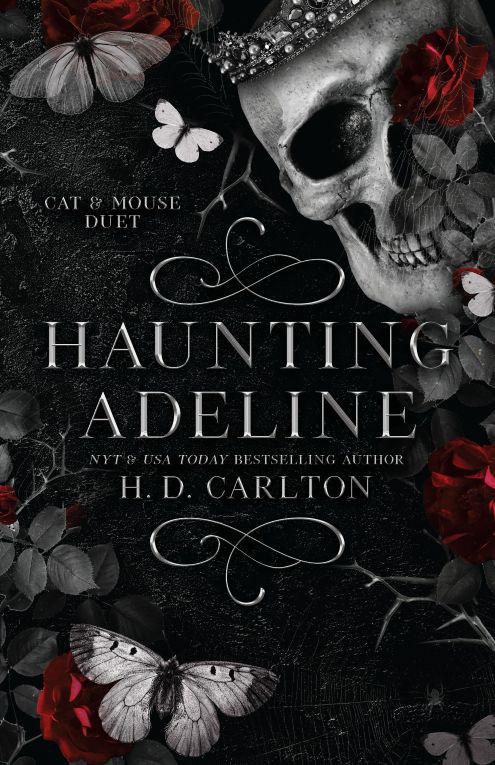
Haunting Adeline (Cat and Mouse Duet)

Instant NYT Bestseller · USA Today Bestseller · Viral BookTok Sensation

A dark, obsessive romance where the hunter becomes the one person she can’t escape.

Adeline is a bestselling author living in her grandmother’s gothic mansion, where a dark family history begins to unravel around her. But there is someone else in the house—or rather, someone watching from the shadows.

He knows where she goes. He knows what she fears. And he has no intention of letting her go.

Zade is obsessed with Adeline. What begins as watching quickly becomes an all-consuming fixation, as he decides that she will be his—no matter how fiercely she resists.

The closer he gets, the harder it becomes for Adeline to tell the difference between fear and fascination.

TROPES and THEMES 

Dark Romance
Stalker Romance
Obsessive Love Interest
Gothic Mansion
Cat-and-Mouse Romance
Morally Grey Hero
Horror and Dark Themes
Possessive Hero
He Watches Her
Forced Proximity
Psychological Tension
Enemies to Lovers
Dangerous Obsession
Author Heroine
Dual POV
Dark and Twisted Romance

For readers who like their romance dark, dangerous and impossible to put down.

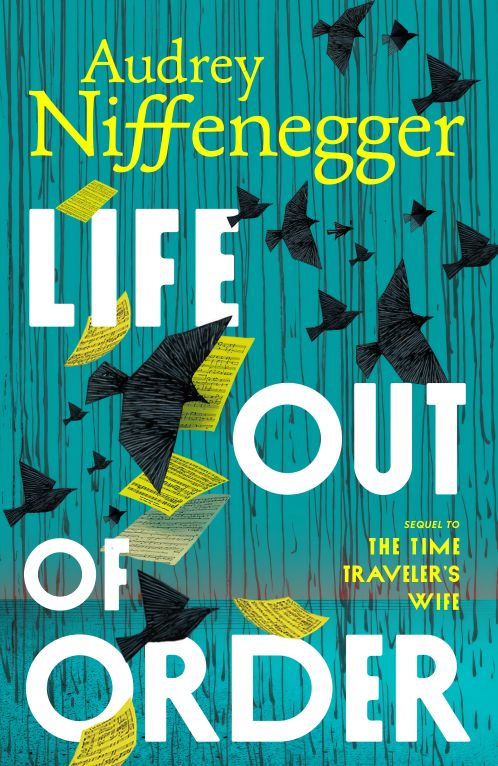
Life Out of Order: The long-awaited sequel to the multi-million copy bestseller The Time Traveler’s Wife

“GRACEFUL, COMPLICATED, SATISFYING.” –BONNIE GARMUS, AUTHOR OF LESSONS IN CHEMISTRY

Two great loves. A world in chaos. And a life that never lands in order.

Discover the highly anticipated new novel from Audrey Niffenegger, which can be read on its own or as a companion to her multi-million copy bestseller The Time Traveler’s Wife.

Alba DeTamble has never lived a life in order. Born with the same rare Chrono-Displacement Disorder as her father, Henry DeTamble, Alba is an involuntary time traveler: she slips unpredictably through decades, carrying the weight of a future she can witness but cannot change. Yet she strives to maintain a normal life: as a gifted violinist, Alba finds refuge in her music, as well as her tight-knit community of artists and activists who fight to take care of each other in an increasingly unstable world.

As she dips in and out of time, Alba is haunted by secrets she must keep from those she loves most, including Zach, her safe, supportive anchor in the chaos. Her journey takes her from the riot-torn Chicago streets, to the eerie, timeless “Yellow House” – where she meets Oliver, a handsome fellow time traveler – to the digital corridors of the Museum of Lost Souls, a virtual sanctuary of forgotten memories and lost artifacts. Curating the museum is Isadora, Alba’s mysterious stepsister and an increasingly unsettling presence in their family – whose fate may be intertwined with Alba’s in more dangerous ways than she knows.

At once intimate and sweeping, Life Out of Order is a kaleidoscopic tale of love, resilience, and hope amid our fractured world where time itself is the greatest adversary. With every leap through the years, Alba is forced to reckon with the choices that define her, the people she cannot bear to lose, and the question that haunts every time traveler: can you ever truly belong to the present?

Framing the Future

A book like this is a thought experiment . . . It wonders about the future, a time when I myself will be gone.

Language has shaped Peggy Mohan’s thinking for most of her life. Language also lies at the heart of India’s greatest questions about identity, community and the future. Language can unite us, but it can also divide us, trapping people in isolated worlds and limiting opportunity.

Yet India stands at a rare moment of possibility.

New technologies are making it possible to bridge linguistic divides without erasing the country’s astonishing diversity. Instead of forcing us into a single language, they can help us speak across languages while preserving our own. What if India’s many languages could become not a source of division, but of connection? Blending history, linguistics and a bold vision of what’s possible,

Framing the Future shows how India can build a future that is more connected, more confident and unmistakably its own.

error: Content is protected !!