I’m stuck between poop and school, and I don’t know what to do. Dadu, this is all for you.’
Anu and his grandfather are happiest together, birdwatching in the forest near their home in Seattle, waiting for the barred owl to show up. One day Dadu suddenly dies in the woods, but his see-through spirit stays with Anu. He is desperate to get his grandfather back from the gods. With his best friend Unger, the daring Izzy Mumu next door and help from the Internet, Anu sets out to turn holy enough to perform great wonders. He visits a graveyard, shaves his head like a sadhu, lives on offerings of sandwiches and water, and rolls all the way to school-through rain and poop-like Ludkan Baba. In the end, the only hope he has left is Karnak, the awesome magician at the Mystery Museum on Divine Island . . .
What happens when Anu finally finds himself face-to-face with Karnak-and a truth that he cannot escape? Find out in this warm and funny story about how a boy deals with being foreign, being bald and being separated from someone he loves like crazy.

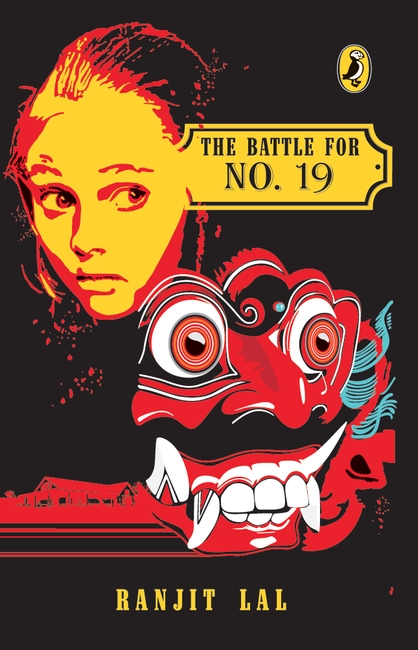
Eight schoolgirls from the hills on a tour of Agra, drive into Delhi the day Indira Gandhi is assassinated. They run into a violent, crazed mob that pulls their jovial old driver Kartar Singh out and slays him brutally. In a blazing city lashed by violence, the girls flee to seek refuge. They find it in an elegant and apparently empty house but is it safe? Its gallery of forbidding masks and medieval weapons is alarming enough, but worse, it is a house marked by the vicious mob because it belongs to a rich Sikh family with two children. In an adventure gone dreadfully wrong, all that the girls can think of is going home, but the vengeful enemy is right at the door! Led by sixteen-year-old Puja, a masterful archer but with her own personal demons to fight, the girls have to tackle one threat after another, including a chicken thief in their midst. Mustering their wisdom, stealth, cunning and courage, they valiantly keep their conscienceless attackers at bay until they are finally plunged into a quandary where there is only hair’s breadth between killing and being killed. A gripping and powerful story, The Battle for No. 19 highlights the moral dilemmas of young people in today’s world where violence erupts round every corner, and the line between right and wrong runs dangerously thin.
Hop on to a super fragilistic story-tour that will take you far and wide to places you have never been and people you have never seen. Meet Chicken Mama, the spiky-haired medicine woman who can move Time backwards; Mokel-embe-embe, the world’s last dinosaur, about to be captured by British explorers; Spooky95768939123, the ghost in danger of becoming extinct; and Manto the Degree Master, equally expert at calligraphy and ‘chumpy’. Salute freedom fighter Shankarrao and his defiant chappal-throwing; and tag along with old Das Babu to Bombay’s Hanging Gardens, Arabia and the yucky-mucky footpath; and find out if Asha and Dhiren are ever able to fool the very clever Chachaji. There’s never a dull moment in this selection of unusual stories. From the laughable antics of Sammy the penguin to the secret of the snake-stone in the Himalayan meadows to Epsilon the biologist’s Amazonian hunt for the rare How-D’You-Do Bird-each story in this exciting collection introduces you to real characters you will never forget and imaginary ones you will want desperately to meet.
‘I was then about seven or eight. I had no useful role to play in this PBI – World; and that old palki, too, had been dismissed from all forms of useful employment . . .’
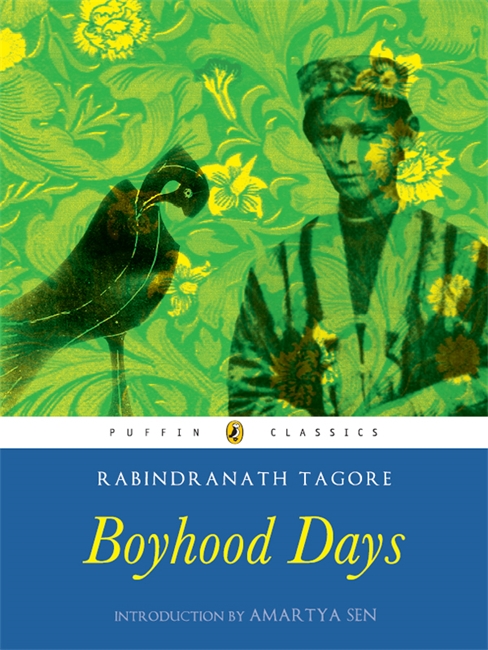
Hidden inside an ancient palanquin on a hot, lonely afternoon, a young boy sets off on an imaginary adventure. He encounters gangs of bandits, arrives at palaces where kings bathe in sandalwood-scented water, and the hunter accompanying him gets rid of the tiger lurking in the forest with a bang! of his gun. The boy, gifted with a vivid imagination and a sensitive mind, grew up to become one of PBI – India’s greatest poets and thinkers.
In Boyhood Days Rabindranath Tagore recounts his growing up years with gentle wit and humour. He describes life in nineteenth-century Kolkata when the only light in the evening came from castor-oil lamps; when hackney carriages raced through the city’s streets and women travelled in palanquins to the Ganga for their bath. He writes about his early love for music and poetry, the myriad influences that shaped his thinking and about the other members of his large, gifted family. Boyhood Days brings to life an era long past and traces the journey of an icon from childhood to the time he takes his first steps in the PBI – World of literature.
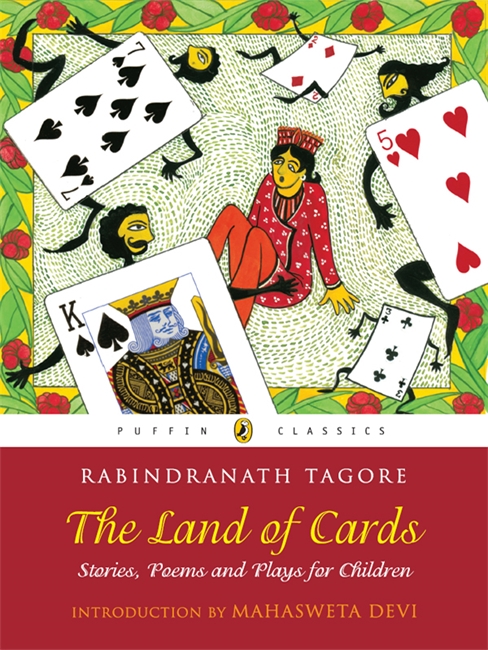
Poet, novelist, painter, musician and Nobel Laureate, Rabindranath Tagore was one of modern India’s greatest literary figures. This collection brings together some of his best works—poems, short stories and plays in one volume. Be it the wit, magic and lyricism of his poetry or the vividly etched social milieu of his stories, or the sheer power and vibrancy of his plays, Tagore’s versatility and unceasing creativity come alive in these writings. The title play ‘The Land of Cards’ is a satire against the bondage of orthodox rules, while in ‘The Post Office’, a child suffocated by his confined existence dreams of freedom in the world outside. From a son’s cherished desire to protect his mother in the poem ‘Hero’ to a fruit-seller longing for his daughter faraway in the story ‘Kabuliwala’, Tagore’s works convey his humanism and his deep understanding of human relationships.
As soon as I make it home I run upstairs to my room and tear my clothes off. I twist my head to get a good view of my back. And that’s when I see it. A wide line of soft, dark hair running from the nape of my neck down to the base of my spine. A stripe right down the center of my back, like a skunk. I’m not just a hairy Pakistani Muslim girl any more.I am a skunk girl.’ Nina Khan is sixteen, and has a few problems at hand. She is the only South Asian student at Deer Hook High; she doesn’t care about calculus, unlike her over-achieving older sister; she has a genetic disposition for excessive body hair; and if her parents had a whiff of her thoughts about Asher Richelli, the cute new Italian transfer student, she would be grounded forever. In this funny, wryly witty debut novel by Sheba Karim, Nina navigates her way through the first year of high school, dealing with friends who don’t even need to wax, and who don’t have a ghazal-listening father waiting round the corner. She realizes that though balancing two cultures is never easy, with a little spunk and a lot of humor, one can always find a way.
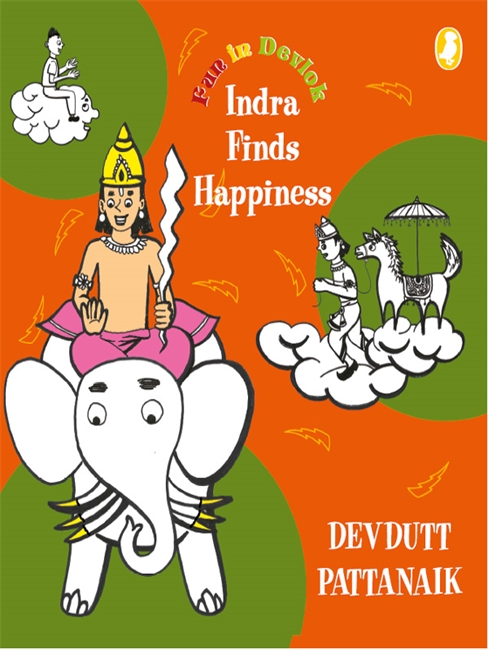
* Why was Indra an unhappy god?
* What are the many magical things Indra has in paradise?
* Will Indra ever find happiness?
Little Harsha was sad, so a cloud flew him up to Indra’s palace, just to show Harsha that the king of gods was sadder than him! There, with his new friends Indra and Airavata, the six-tusked white elephant, Harsha sees so many amazing things a wish- fulfilling tree, a pot of never- ending gold, and a potion that keeps him healthy.
Then Indra thinks of a naughty plan to steal Vasishta’s cow! When he catches Indra, a very angry Vasishta tells him the secret to being happy. (And no, it has nothing to do with ice creams, video games or wish-fulfilling trees.) But will the king of gods learn his lesson finally and stop being sad?
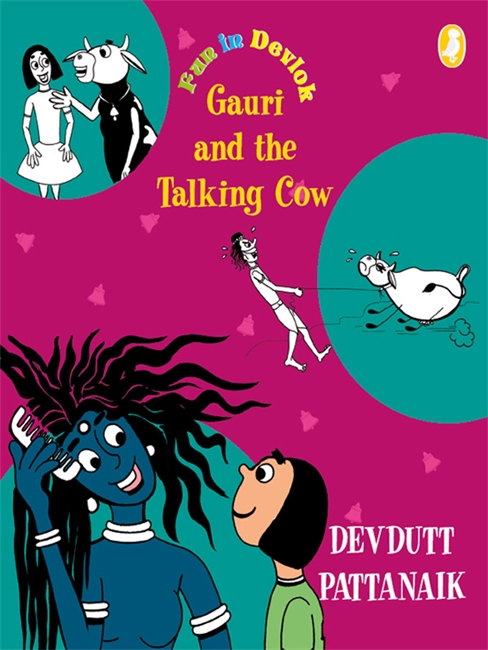
* Why is the cow useful to everyone?
* How are the earth and the cow similar?
* Why is Gauri another name for a cow?
Little girl Gauri thinks milk comes from packets, till she meets Sweety the talking cow. Sweety tells Gauri about the first cow on earth, Surabhi, and how she provided so many useful things to man fuel, manure, medicine and shelter. Sweety narrates stories about a king who found good luck because he gifted cows to many people, and how another king was turned into a lizard because he was not careful about who he gave his cows to! Sweety also tells Gauri how Krishna the cowherd looked after his beloved animals, and why Kali decided to comb her hair.

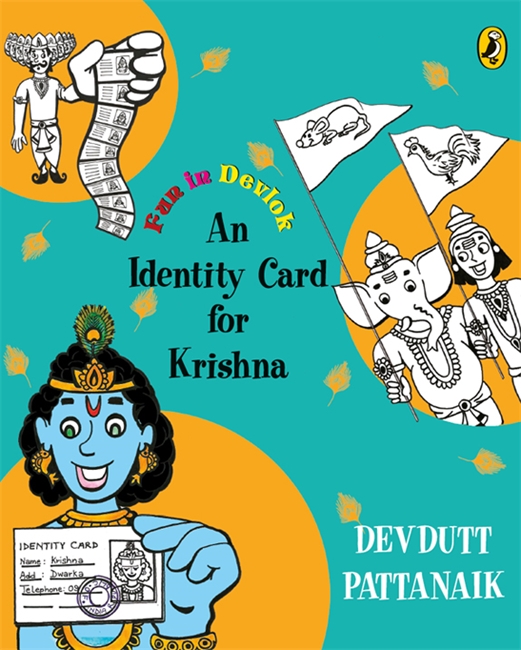
* Why are identity cards important, even for gods?
* How can you tell a Deva from a Manava?
* How would you find a particular god in a crowd of gods?
One day, when Krishna wanted to board an aeroplane, he was not allowed to! All because he did not have an identity card. Then his friends Garuda and Sesha took him to meet Lata-kumari in Guwahati, who told him the story of Anasuya and the Ashwini twins, and why Rishi Chavan made a rule that all gods should carry a dhvaja a flag with each god’s very own symbol. Did Krishna get his identity card so he could ride the aeroplane finally?
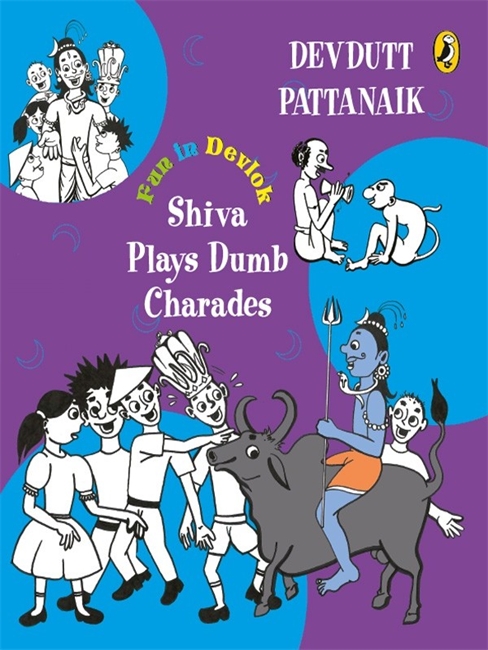
Five children are having fun one evening; playing dumb charades; when Shiva appears and wants to join in! Shiva turns out to be the best at dumb charades; as well as in asking riddles. He can say so much with only his actions! He also tells the children wonderful stories with the help of the many objects he carries with him; like the rattle drum; the crescent moon and a fountain of water that rises from his head. Soon; thanks to Shiva’s playfulness; the children know much more about Shiva and the other gods—even more than their parents!