



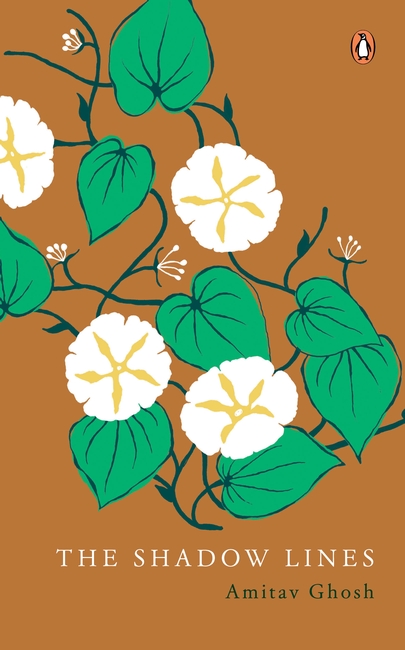
As a young boy, Amitav Ghosh’s narrator travels across time through the tales of those around him, traversing through unreliable planes of memory, unmindful of physical, political and chronological borders. But as he grows older, he is haunted by a seemingly random act of violence. Bits and pieces of stories, both half-remembered and imagined, come together in his mind until he arrives at an intricate, interconnected picture of the world where borders and boundaries mean nothing, mere shadow lines that we draw dividing people and nations. Out of a complex web of memories, relationships and images, Amitav Ghosh builds an intensely vivid, funny and moving story. Exposing the idea of the nation state as an illusion, an arbitrary dissection of people, Ghosh depicts the absurd manner in which your home can suddenly become your enemy.
Catagory: Classics
Navarasa
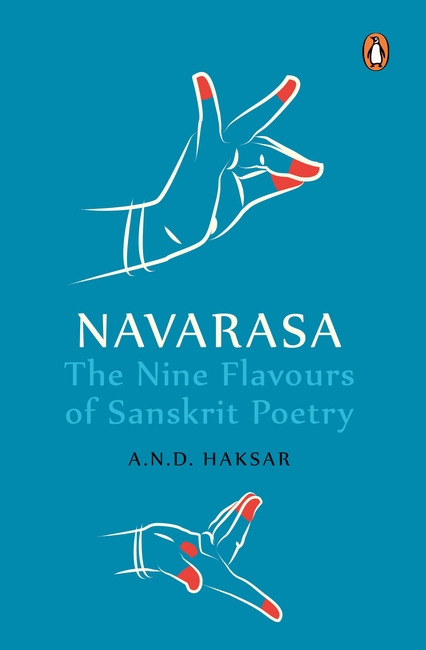
In Indian aesthetics, the ‘rasa’ is the juice or sap that pervades through our art, culture, and guide our primal human emotions. The Navarasas first mentioned in the ancient Hindu text the Natya Shastra, have defined the core of Indian aesthetics; our art, dance, theatre, and literature are based on these nine human emotions.
A first of its kind, this collection of verses from the original Sanskrit, moves away from a mere interpretation of the rasas to an actual translation from ancient texts such as the Subhashitavali by Vallabhadeva (15th century Kashmir), the Sharngdharapaddhati by Sharngadhara (14th century Rajasthan), and the Suktimuktavali by Jalhana (13th century Deccan).
Navarasa: The Nine Flavors of Sanskrit Poetry brings to us for the first time, 99 verse translations on the nine rasas of ancient Hindu history.
Yusuf’s Fragrance
It can be said of the 19th century Kashmiri poet, Mahmud Ga¯mi that he was a pioneer in introducing the Persian genres of the ghazal, nazm, masnavi and na¯t into Kashmiri. Mahmud Gami’s contribution to Kashmiri poetry is unique in both scope and depth. Not only is he the first truly prolific poet who has written entirely in the Kashmiri language, but much of his poetry also stands out for its beauty of expression and depth of thought, such as in the lyrical romance of Shireen Khusrau, Yusuf Zulaikha, and Layla Majnun.
Yusuf’s Fragrance is both a celebration as well as an homage to Gami’s oeuvre. Through these beautiful verses, we explore themes of love, both physical and metaphysical, philosophy, folklore, and tradition through different narrative devices, such as nazms, masnavis, and vatsuns.
Penguin 35 Collectors Edition: The Shadow Lines
As a young boy, Amitav Ghosh’s narrator travels across time through the tales of those around him, traversing the unreliable planes of memory, unmindful of physical, political and chronological borders. But as he grows older, he is haunted by a seemingly random act of violence. Bits and pieces of stories, both half-remembered and imagined, come together in his mind until he arrives at an intricate, interconnected picture of the world where borders and boundaries mean nothing, mere shadow lines that we draw dividing people and nations. Out of a complex web of memories, relationships and images, Amitav Ghosh builds an intensely vivid, funny and moving story. Exposing the idea of the nation state as an illusion, an arbitrary dissection of people, Ghosh depicts the absurd manner in which your home can suddenly become your enemy. Winner of the Sahitya Akademi Award.
Search for a New Land
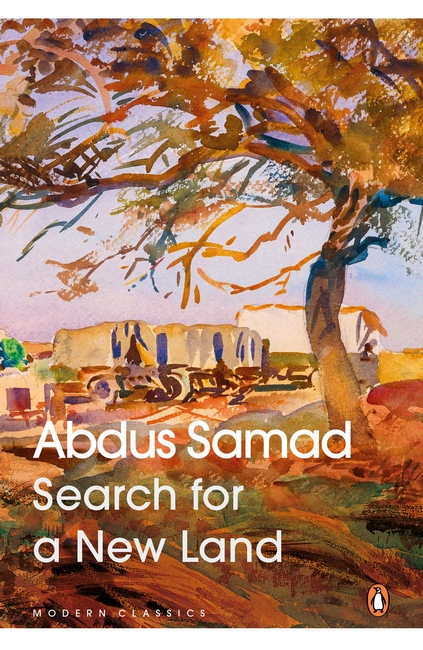
A Muslim feudal family in provincial Bihar Shareef faces devastating grief and anguish during the Partition of India in 1947 and then again, the partition of Bengal in 1971 when lines are drawn across their lands and hearts. Originally published in Urdu as Do Gaz Zameen, Abdus Samad’s deeply emotional and political novel traces the journey of the Hussain family from the 1920s to 1970s, as they travel through the Bihar province, to Calcutta, Karachi, and Dhaka and take us along intensely critical political events that shaped the formation of new lands and new identities in India, Pakistan, and Bangladesh.
Abdus Samad received the Sahitya Akademi award in 1990 for Do Gaz Zameen. His prolific literary career in Urdu fiction has garnered for him several other accolades and awards such as the Bharatiya Bhasha Parishad, the Ghalib award, and the Lifetime Achievement Award from the Urdu Academy in Bihar. Search for a New Land is the first translation into English of this epic novel.
Rajinder Singh Bedi
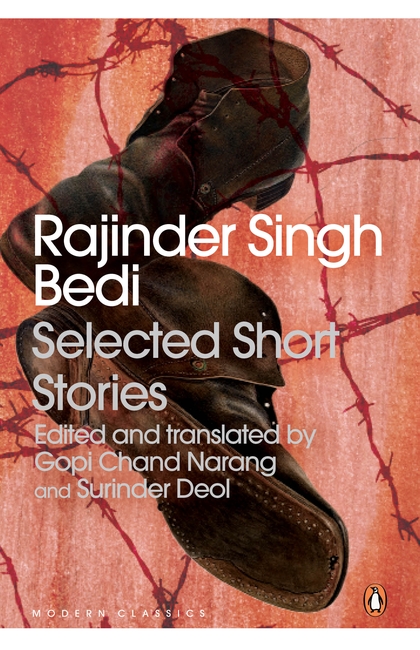
Rajinder Singh Bedi: Selected Short Stories curates some of the best work by the Urdu writer, whose contribution to Urdu fiction makes him a pivotal force within modern Indian literature. Born in Sialkot, Punjab, Rajinder Singh Bedi (1915-1984) lived many lives-as a student and postmaster in Lahore, a venerated screenwriter for popular Hindi films and a winner of both the Sahitya Akademi as well as the Filmfare awards. Considered one of the prominent progressive writers of modern Urdu fiction, Bedi was an architect of contemporary Urdu writing along with leading lights such as Munshi Premchand and Saadat Hasan Manto.
Written between 1940 and 1975, the fifteen short stories included in this collection comprise favorites like ‘Garam Coat’ (Woollen Coat), ‘Lajwanti’, ‘Apne Dukh Mujhe De Do’ (Give Me Your Sorrows), ‘Rahman ke Joote’ (Rahman’s Shoes) and others. Bedi’s stories dissect human emotions with grim precision as he navigates the everyday lives of men and women, exposing social inequities and economic problems.
The Monkey’s Wound and Other Stories

The Monkey’s Wound and Other Stories is a collection of sixteen short stories by Hajra Masroor that are illustrative of her uncompromising tone, her piercing portrayals of the bitter realities of life, and the wounds and traumas of the inner lives of women. The stories, translated from the original Urdu, are sourced from her well-known collection of stories, Sab Afsanay Meray and are stories that bring out Masroor at her best.
Simsim: Longlisted for the JCB Prize for Literature 2023
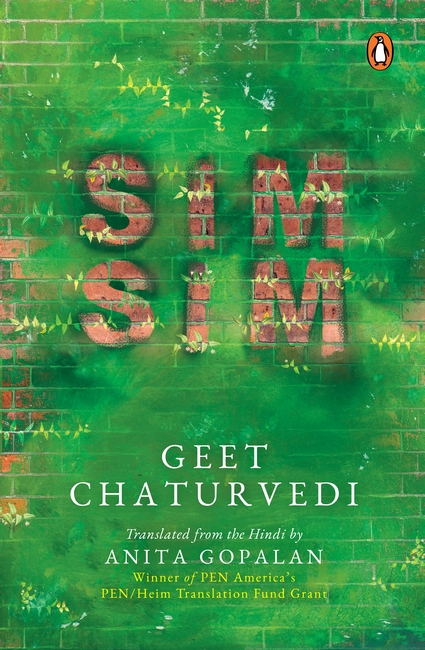
Old Basar Mal remembers his love and homeland that he lost in Sindh, Pakistan during the Partition. A young graduate gets into an imaginary relationship with a girl at a yellow window. The Mumbai land mafia is after Basar Mal and his library. A chatty book cover relates the plight of books. A silent Mangan’s ma washes and feeds a plastic doll she thinks is her son.
Poignantly written by Geet Chaturvedi, a major Hindi writer, and beautifully translated by Anita Gopalan, Simsim is a struggle between memory, imagination, and reality- an exquisitely crafted book that fuses the voices of remarkable yet relatable characters to weave a tale of seeking happiness, fulfilling passion, and reconciling with loss. Simsim is charming, and wonderfully original.
Vishnu Purana
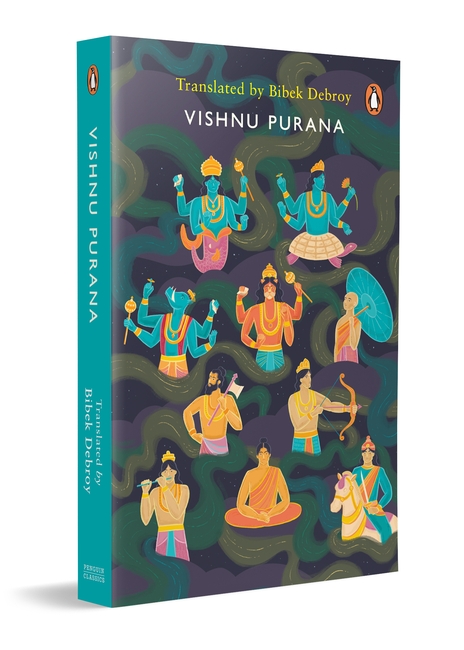
LORD VISHNU AND THE CREATION
The Vishnu Purana is part of a series of eighteen sacred Hindu texts known collectively as the Puranas. It occupies a prominent position among the ancient Vaishnava Puranas which recount tales of creation and the many incarnations of Lord Vishnu. It describes the four classes of society, the four stages of life, and key astronomical concepts related to Hinduism.
Brimming with insight and told with clarity, this translation of the Vishnu Purana by Bibek Debroy presents readers with an opportunity to truly understand the classical Indian mythic texts. Debroy has previously translated the Bhagavata Purana, the Markandeya Purana, and the Brahma Purana.
Salt of the Earth
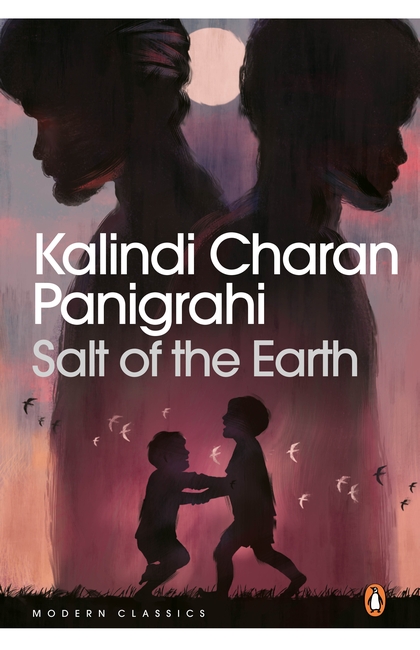
Kalindi Charan Panigrahi was a notable poet and writer in Odia. He is credited for the short but influential movement in Odia literature called the Sabuja Yug which was the age of Romanticism, inspired by Tagore’s writings. He was awarded the Padma Bhushan in 1971. Matira Manisha is his most well-known work. It has been translated into English twice before. Mrinal Sen made a film on this book and it received the National Film Award for Best Odia film in 1967.
The novel is, quite simply, the tale of two brothers, who have very different attitudes towards the land they inherit from their father. It talks about the breaking apart of the joint family and celebrates a Marxist and Gandhian approach to living.