



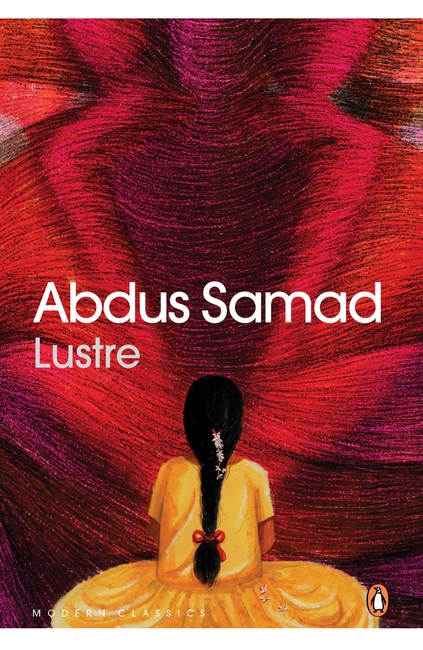
A heinous crime has been committed-seven girls are brutally gang-raped by a group of upper-caste men. As news quickly spreads, their village comes under the national spotlight; journalists, policemen and ministers filter in, each trying to get to the bottom of the truth and find the culprits. Long oppressed, the girls from the minority community refuse to utter the names of the men; feigning ignorance and burdened by shame, they grapple with notions of honour and purity.
Lustre presents to us the portrait of a society-of a village afflicted by communal strains-as tensions rise with the police force coming under pressure, afraid the villagers will be seduced into joining the local Naxalite movement. As things take a violent turn, the novel offers a glimpse into the true situation in some parts of India as well as the collective psyche of a community-their thoughts on propriety, violence, subjugation, and, most importantly, revolution.
Catagory: Classics
A Flight of Pigeons
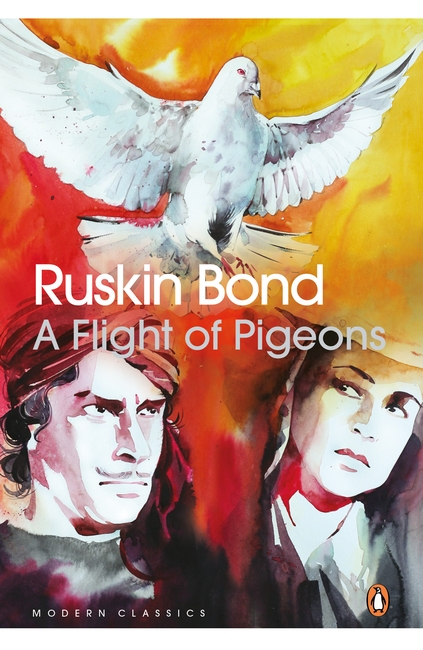
Set in Shahjahanpur during the revolt of 1857, A Flight of Pigeons is Ruskin Bond’s classic novella about the twists of fate, history and the human heart. When Ruth Labadoor’s father, a clerk in the British magistrate’s office, is killed in an attack by sepoys, her family seeks refuge with their trusted companion, Lala Ramjimal. From here they eventually hope to escape to their relatives in Bareilly. But their plans go awry when Javed Khan, a fiery Pathan opposed to the British, abducts Ruth and her mother and takes them to his haveli. To their surprise, it is not hate that impels him in this time of war, but an almost crippling passion for Ruth. It will be months before the fall of Delhi to British troops brings them freedom-from fear, bafflement and despair, not only their own but also Javed Khan’s. Based on true events, this new classic edition of A Flight of Pigeons is a haunting story, rich in detail and drama, told with simplicity and deep humanity.
My Shameless Heart
Vikramorvashiyam

The earthly King Pururavas rescues the celestial nymph Urvashi from a demon, and thus begins a majestic love story that brings heaven and earth together. Both are struck with Kama’s arrow in their very first meeting, but each shies away from saying anything because the distance between them seems insurmountable. Even when they do confess their love, magical transformations and heavenly curses keep the lovers apart. Will Pururavas succeed in his quest for Urvashi?
A magnificent drama based on an episode from the Rig Veda, Vikramorvashiyam is filled with dramatic turns of event, music and dance. The scenes, characters and dialogues are at once lively and theatrical as well as sensitive and speculative. Believed to be the second of Kalidasa’s three plays, Vikramorvashiyam is an undisputed classic from ancient Indian literature. A.N.D. Haksar’s brilliant new translation gives contemporary readers an opportunity to savour this delightful tale.
The Coming Age
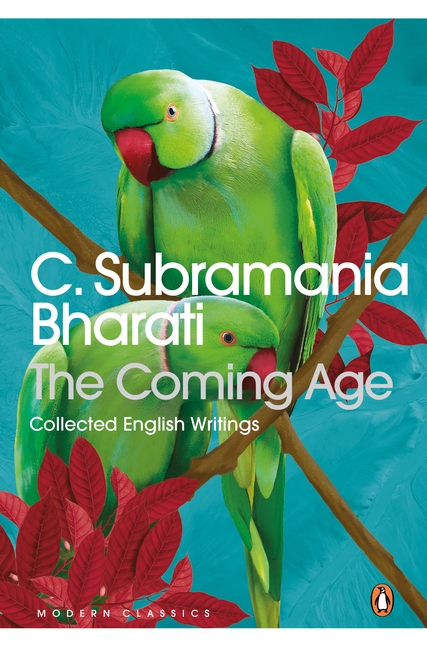
C. Subramania Bharati (1882-1921) has an unrivalled reputation in twentieth-century Tamil literature and has come to be known as the Tamil ‘Mahakavi’, meaning ‘Supreme Poet’. His work as a poet and prose-writer ignited a Renaissance in modern Tamil writing. However, he also wrote and published regularly in English.
The Coming Age brings together Bharati’s important English writings in an authoritative and reliable edition presented by his great-granddaughter. The pieces in this volume reveal a well informed and cosmopolitan writer, engaging with the world around him, passionately sharing his opinions.
Exploring Indian history and culture, offering a shattering contemporary view of the colonial experience, commenting on political events, advocating for women’s rights and caste equality, and sharing his deep knowledge of the Tamil language and literary tradition, these pieces present Bharati in a new light for a new generation.
Somadeva
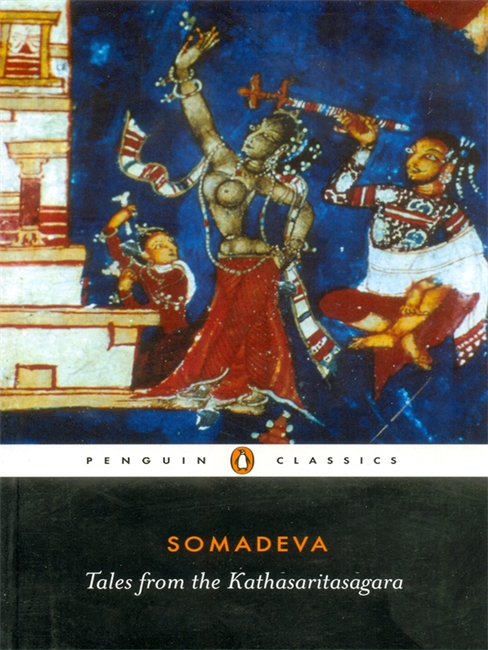
The vast ocean of stories that influenced storytelling the world over ‘The Kathasaritasagara’ is said to have been compiled by a Kashmiri Saivite Brahmin called Somadeva in AD 1070, although the date has not been conclusively established. Legend has it that Somadeva composed the Kathasaritasagara for Queen Suryavati, wife of King Anantadeva who ruled Kashmir in the eleventh century. The stories in this book are retold from ten of the eighteen books of the original Kathasaritasagara. The most remarkable feature of the Kathasaritasagara is that unlike other texts of the time, it offers no moral conclusions, no principles to live by and is throughout a celebration of earthly life. The tale of Naravahanadatta, the prince of the vidyadharas, the sky-dwellers with magical powers, comprises the main narrative and is used as an outer frame to introduce the stories in the text. Promiscuous married women and clever courtesans, imbecile Brahmins, incompetent kings and wise ministers, wicked mendicants and holy ascetics, cursed men and men who are granted boons, evil non-human creatures and friendly magical beings, all jostle for attention in Arshia Sattar’s masterful translation of this timeless collection of tales.
The Postmaster
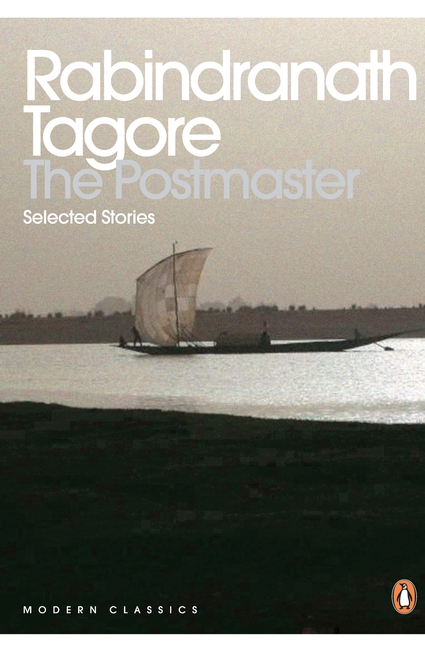
Poet, novelist, painter and musician Rabindranath Tagore created the modern short story in India. Written in the 1890s, during a period of relative isolation, his best stories—included in this selection—recreate vivid images of life and landscapes. They depict the human condition in its many forms: innocence and childhood; love and loss; the city and the village; the natural and the supernatural. Tagore is India’s great Romantic. These stories reflect his profoundly modern, original vision. Translated and introduced by William Radice, this edition includes selected letters, bibliographical notes and a glossary.
Loom Of Time
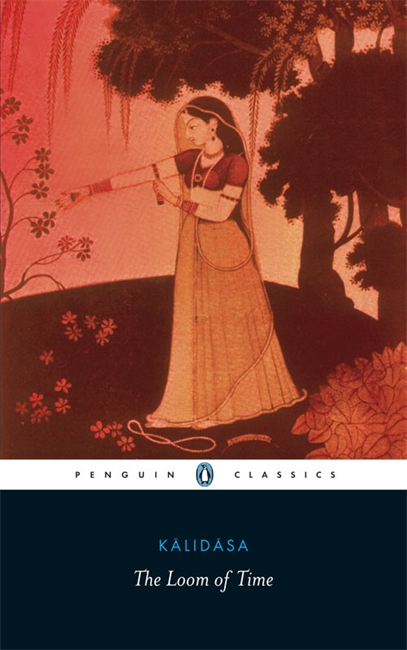
Kalidasa is the greatest poet and playwright in classical Sanskrit literature and one of the greatest in world literature. Kalidasa is said to have lived and composed his work at the close of the first millennium BC though his dates have not been conclusively established. In all, seven of his works have survived: three plays, three long poems and an incomplete epic. Of these, this volume offers, in a brilliant new translation, his two most famous works, the play Sakuntala, a beautiful blend of romance and fairy tale with elements of comedy; and Meghadutam (The Cloud Messenger), the many-layered poem of longing and separation. Also included is Rtusamharam (The Gathering of the Seasons), a much-neglected poem that celebrates the fulfillment of love and deserves to be known better. Taken together, these works provide a window to the remarkable world and work of a poet of whom it was said: Once, when poets were counted, Kalidasa occupied the little finger; the ring finger remains unnamed true to its name; for his second has not been found
The Shattered Thigh & Other Plays
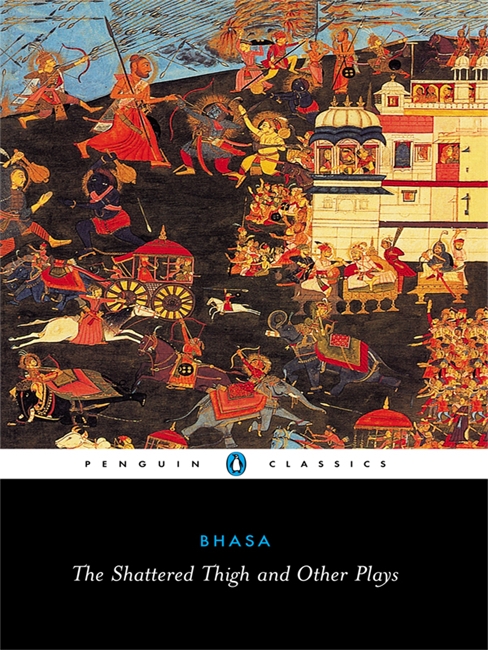
Sunlight on a Broken Column
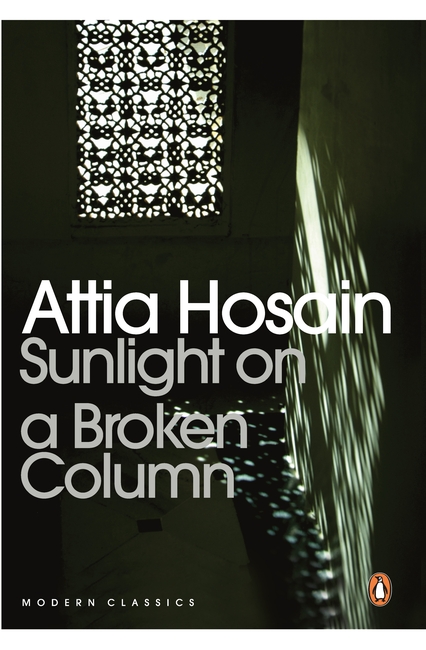
Laila, orphaned daughter of a distinguished Muslim family, is brought up in her grandfather’s house by orthodox aunts who keep purdah. At fifteen she moves to the home of a ‘liberal’ but autocratic uncle in Lucknow. Here, during the 1930s, as the struggle for Indian independence intensifies, Laila is surrounded by relatives and university friends caught up in politics. But Laila is unable to commit herself to any cause: her own fight for independence is a struggle against the claustrophobia of traditional life, from which she can only break away when she falls in love with a man whom her family has not chosen for her. With its beautiful evocation of India, its political insight and unsentimental understanding of the human heart, Sunlight on a Broken Column, first published in 1961, is a classic of Muslim life.