



Like Dickens, Saratchandra had a bag of wonderful tales. The Final Question (Shesh Prashna) is one of Saratchandra Chattopadhyay’s last novels and perhaps his most radically innovative. The novel caused a sensation when it was first published in 1931, drawing censure from conservative critics but enthusiastic support from general readers, especially women. The heroine, Kamal, is exceptional for her time. She lives and travels by herself, has relationships with various men, looks poverty and suffering in the face, and asserts the autonomy of the individual being. In the process, she tears apart the frame of the expatriate Bengali society of Agra, where she lives. Through Kamal, Saratchandra questions Indian tradition and the norms of nationhood and womanhood. The Final Question transcends time and will appeal to readers of all ages. Translated by Department of English, Jadavpur University.
Catagory: Classics
My Kind Of Girl
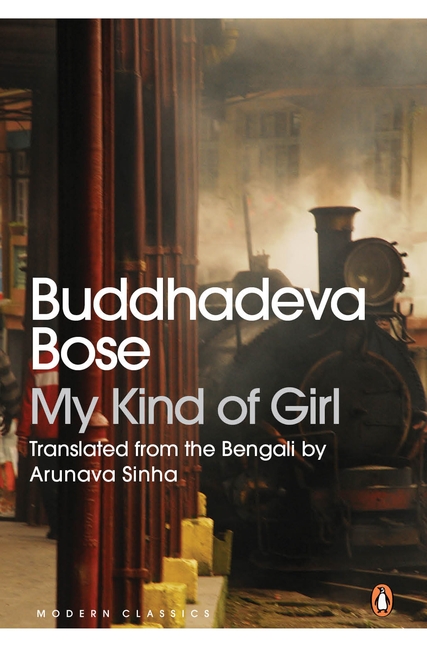
Is the memory of happiness that has passed, sad or happy?
Four middle aged men sit together in a railway station, waiting for dawn to break. To pass their time, each tells a story of a woman they loved secretly in their youth…
Romantic, elegant, suffused with melancholy, My Kind of Girl is a classic love story from one of Bengal’s great writers.
The Shadow Lines: From bestselling author and winner of the 2018 Jnanpith Award
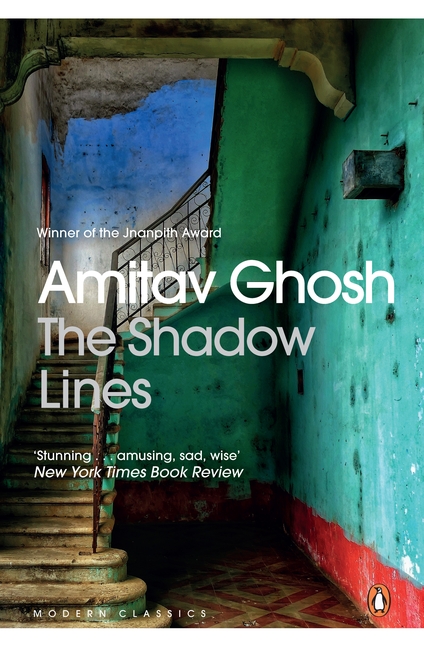
As a young boy, Amitav Ghosh’s narrator travels across time through the tales of those around him, traversing the unreliable planes of memory, unmindful of physical, political and chronological borders. But as he grows older, he is haunted by a seemingly random act of violence. Bits and pieces of stories, both half-remembered and imagined, come together in his mind until he arrives at an intricate, interconnected picture of the world where borders and boundaries mean nothing, mere shadow lines that we draw dividing people and nations.
Out of a complex web of memories, relationships and images, Amitav Ghosh builds an intensely vivid, funny and moving story. Exposing the idea of the nation state as an illusion, an arbitrary dissection of people, Ghosh depicts the absurd manner in which your home can suddenly become your enemy.
The Play of Dolls
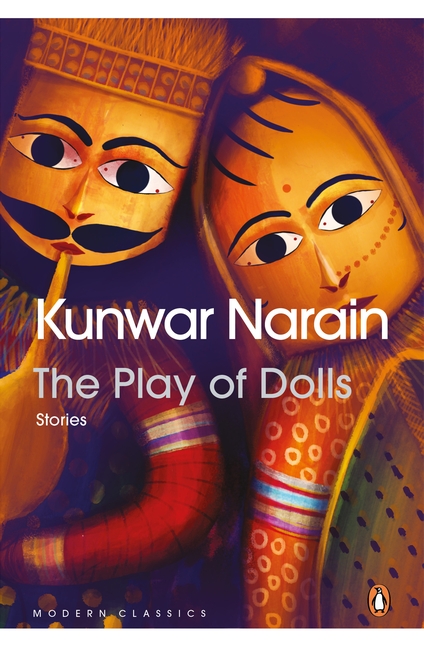
Kunwar Narain’s unusual short stories broke new ground and rejuvenated the genre when they appeared on the Indian literary landscape in 1971. Half a century later, in vivid English translation for the first time, they seem just as far-reaching: sometimes in the novelty of their insight, sometimes in their transcendence, sometimes in the world views they together uncover.
By turns allegorical, satirical, poetic, poignant, playful and bizarre, Narain’s layered, often deceptively simple tales unravel the existential and moral bewilderments of a society navigating the cold, cruel worlds of its own creation, while also allowing hope in the truly human. These bold, sometimes comic, often experimental and metaphysical stories weave love and otherness, fantasy and history, tenderness and silence, leaving us both restive and redeemed at once.
Tamas
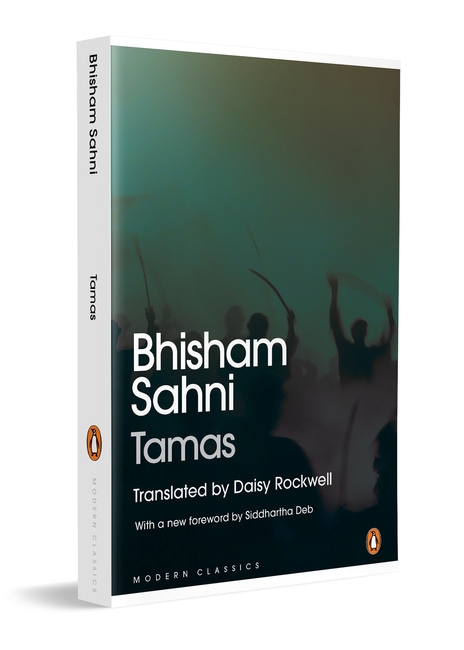
‘Tamas, in either Rockwell’s translation or the original Hindi, remains an essential text for the times’
Nilanjana Roy, Business Standard
‘Tamas is a prophetic warning against the use of religion as a weapon to gain and perpetuate political power’ GOVIND NIHALANI
In a city in undivided Punjab, Nathu, a tanner, is bribed to kill a pig. When the animal’s carcass is discovered on the steps of the local mosque the next morning, simmering tensions explode into an orgy of bloodlust. But in the midst of the ensuing carnage, despite the darkness of the times, rare moments of unexpected friendship and love also surface.
Winner of the Sahitya Aakdemi Award, Sahni’s iconic novel about the Partition of India tells the tale of an unfolding riot from different vantage points. In Daisy Rockwell’s definitive translation, this magnificent work comes vividly to life.
‘Tamas drove the point home that ordinary people want to live in peace’ Guardian
A Drop of Blood

Mohan Karan has been blessed with exceptional good looks-and a rare blood type. An orphan with few connections, he finds that his degree in English literature is unable to secure him a proper job. However, he discovers he can make good money by selling his blood to a private blood bank. And while this opens up unexpected possibilities for this unemployed graduate, little does he realize that it all comes at great personal cost.
This short, blistering novel launched Joginder Paul’s literary career, cleverly exploring the insidious ways in which the mighty habitually prey upon the vulnerable. Incisive in its observations, A Drop of Blood also ably tackles themes of female desire. Snehal Shingavi’s lucid translation makes this important work available in English for the first time.
The Princess and the Political Agent
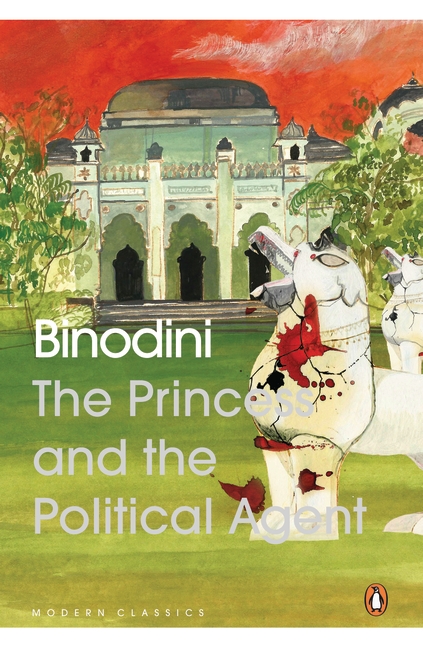
The Manipuri writer Binodini’s Sahitya Akademi Award-winning historical novel The Princess and the Political Agent tells the love story of her aunt Princess Sanatombi and Lt. Col. Henry P. Maxwell, the British representative in the subjugated Tibeto-Burman kingdom of Manipur. A poignant story of love and fealty, treachery and valour, it is set in the midst of the imperialist intrigues of the British Raj, the glory of kings, warring princes, clever queens and loyal retainers. Reviving front-page global headlines of the day, Binodini’s perspective is from the vanquished by love and war, and the humbling of a proud kingdom. Its sorrows and empathy sparkle with wit and beauty, as it deftly dissects the build-up and aftermath of the perfidy of the Anglo-Manipuri War of 1891. Binodini is the supreme stylist of contemporary Manipuri literature and an icon of Manipuri modernism, and her tale of a forbidden love and ostracism vividly brings to life the court and manners of a little-known Asian kingdom. In doing so, she recovers its little-known history, its untold relations with India and Great Britain, and a forgotten chapter of the British Raj.
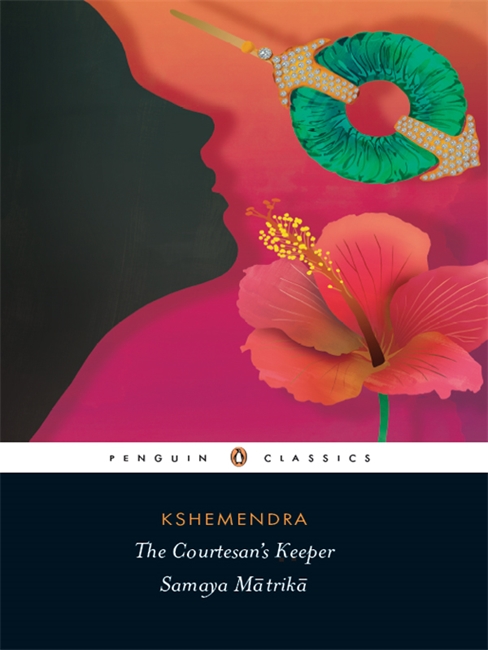
The Courtesan’s Keeper
Srikanta
Srikanta, the narrator of Saratchandra’s epic novel, is an aimless drifter, a passive spectator to his own life, a weak and impressionable soul who cannot survive without the support of an individual stronger than himself. As a child he idealizes the chaste and selfless Annada Didi. Arriving in Burma as a young man looking for new experiences, Srikanta meets the rebellious Abhaya who rejects her violent, bigamous husband to live openly with her lover. Srikanta then experiments with becoming a sanyasi, is bewitched for a while by the Vaishnavi, Kamal Lata, and wanders on till his directionless existence finally finds a focus- when he resigns himself to life with the notorious but stunning Pyari Baiji, breaking free of the social values he grew up with. Through his dynamic and arresting characters, Saratchandra brings alive nineteenth-century Bengal, rife with prejudices and ready for change.
The Resignation
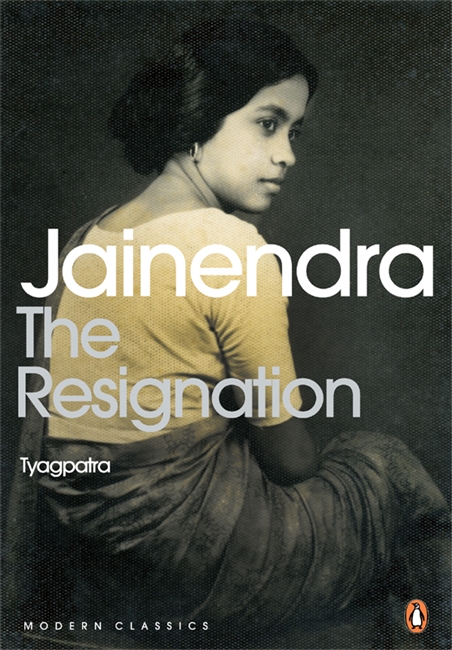
One of the giants of Hindi literature, Jainendra introduced the ‘psychological’ in Hindi fiction. Questions of love, marriage and relationships occupy much of Jainendra’s works, taking them into the realm of the internal and the intimate. In The Resignation, Jainendra tells the story of Mrinal, a young woman whose uncompromising idealism results in her family and society rejecting her completely. Almost seventy-five years after it was written, the story of Mrinal’s struggle against stultifying social norms and her fierce individualism remain startlingly relevant.