



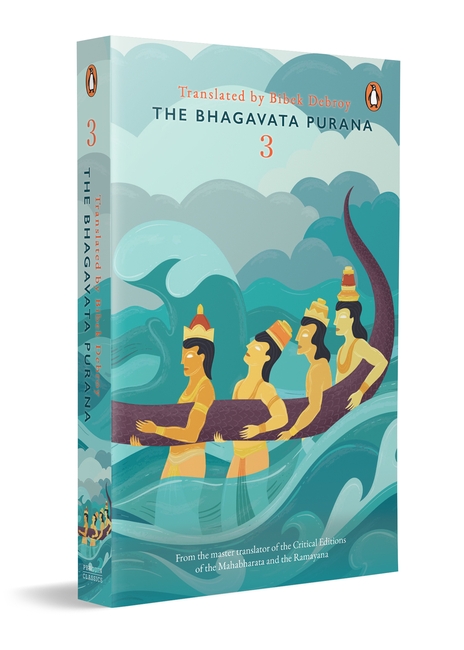
A seamless blend of fable and philosophy, the Bhagavata Purana is perhaps the most revered text in the Vaishnava tradition. It brings to life the legends of gods, asuras, sages and kings-all the while articulating the crucial ethical and philosophical tenets that underpin Hindu spiritualism.
The narrative unfolds through a series of conversations and interconnected stories. We are told how the sage Vyasa was inspired by Narada to compose the Bhagavata Purana as a means to illumine the path to a spiritual life. We learn of the devotion of Prahlada, the austerity of Dhruva, and the blinding conceit of Daksha. Also recounted are tales of the many incarnations of Vishnu, especially Krishna, whom we see grow from a beloved and playful child to a fierce protector of the faithful.
Catagory: Classics
The Bhagavata Purana 2
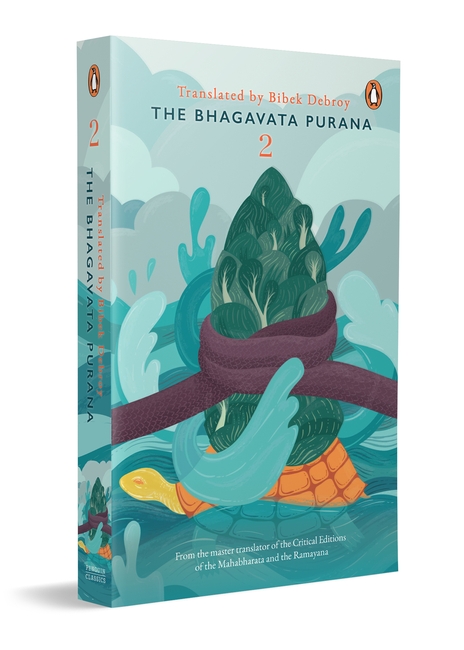
A seamless blend of fable and philosophy, the Bhagavata Purana is perhaps the most revered text in the Vaishnava tradition. It brings to life the legends of gods, asuras, sages and kings-all the while articulating the crucial ethical and philosophical tenets that underpin Hindu spiritualism.
The narrative unfolds through a series of conversations and interconnected stories. We are told how the sage Vyasa was inspired by Narada to compose the Bhagavata Purana as a means to illumine the path to a spiritual life. We learn of the devotion of Prahlada, the austerity of Dhruva, and the blinding conceit of Daksha. Also recounted are tales of the many incarnations of Vishnu, especially Krishna, whom we see grow from a beloved and playful child to a fierce protector of the faithful.
The Bhagavata Purana 1
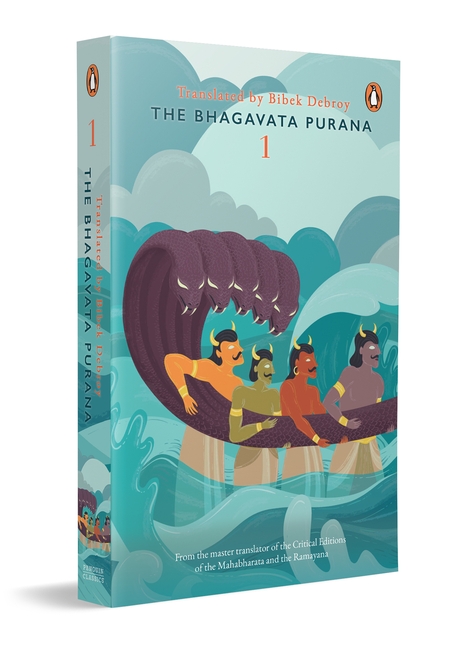
A seamless blend of fable and philosophy, the Bhagavata Purana is perhaps the most revered text in the Vaishnava tradition. It brings to life the legends of gods, asuras, sages and kings-all the while articulating the crucial ethical and philosophical tenets that underpin Hindu spiritualism.
The narrative unfolds through a series of conversations and interconnected stories. We are told how the sage Vyasa was inspired by Narada to compose the Bhagavata Purana as a means to illumine the path to a spiritual life. We learn of the devotion of Prahlada, the austerity of Dhruva, and the blinding conceit of Daksha. Also recounted are tales of the many incarnations of Vishnu, especially Krishna, whom we see grow from a beloved and playful child to a fierce protector of the faithful.
In the City a Mirror Wandering
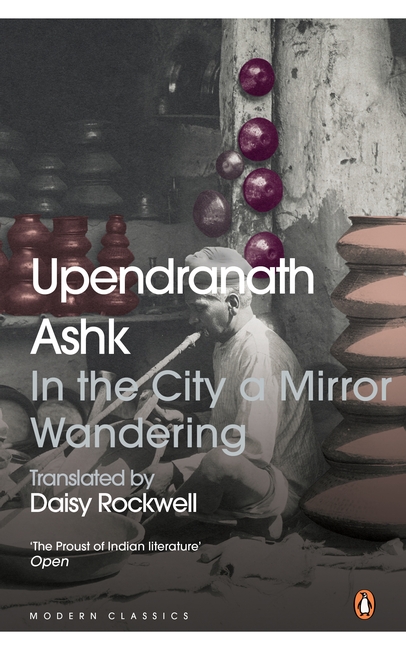
‘Magnificent . . . Ashk writes with a clear hand and is served well by Daisy Rockwell as she recreates a compelling narrative’-Dawn
Unfolding over the course of a single day, Ashk’s sweeping sequel to Falling Walls explores the inner struggles of Chetan, an aspiring young writer, as he roams the labyrinthine streets of 1930s’ Jalandhar, haunted by his thwarted ambitions but intent on fulfilling his dreams.
Married to a woman he does not love while pining for another man’s wife, Chetan must also face the prospect of taking up a dead-end job in the wake of his recent failures in Lahore and Shimla. And as he trudges around Jalandhar, constantly running into people he’d rather avoid, he finds himself confronting the tangled memories, frailties and fears that assail him.
Intensely poignant and vividly evocative, In the City a Mirror Wandering is an exploration of not only a dynamic, bustling city but also the rich tapestry of human emotion that consumes us all.
A Tale of Wonder
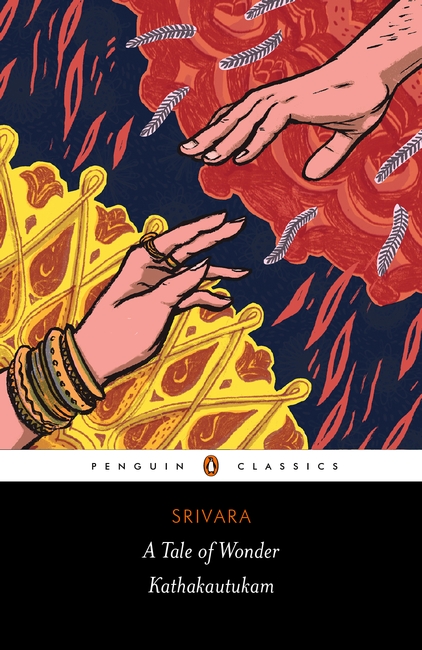
A biblical story travels across regions and time-ultimately reaching medieval India where it is transformed by Shaivite overtones. The result is an exquisite epic love poem of love which also attests to the rich diversity of India’s cultural past.
In an unnamed kingdom in the West, the beautiful princess Zuleikha has nightly visions of a handsome, young man. So captivated is she by this beautiful stranger that her waking hours are afflicted with heartache, much to the anxiety of her father. Zuleikha is resolved to be with Yusuf, and it is in her dreams that she learns of the obstacles that separate her from her beloved. What ensues is a captivating tale of longing and love-a parable of the journey of the soul in its search for the divine.
Magnificent in its simple elegance, A Tale of Wonder is a timeless story that challenges the insidious notion that India has always been dominated by one faith only and insular to other cultural and religious influences.
Pather Panchali
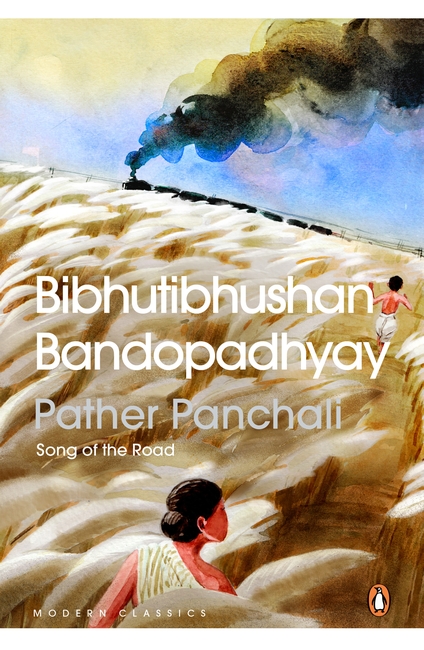
In the idyllic village of the Abode of Contentment, Durga and her little brother, Opu, grow up in a world of woods, orchards and adventure. Nurtured on their aunt’s songs and stories, they dream of secret magical lands, forbidden gardens and the distant railroad. The grown-up world of debts, resentment and bone-deep poverty barely touches them. Their parents, Shorbojoya and Horihor, also dream of the railroad, though as the gateway to lands with a better future. But can distance really change destiny? Will the railroad augur a triumphant future for the Roys, or a ballad of fates drastically altered?
A powerful testament to the indomitable human will to prevail, this timeless novel comes alive in an incandescent new translation.
The Chronicle
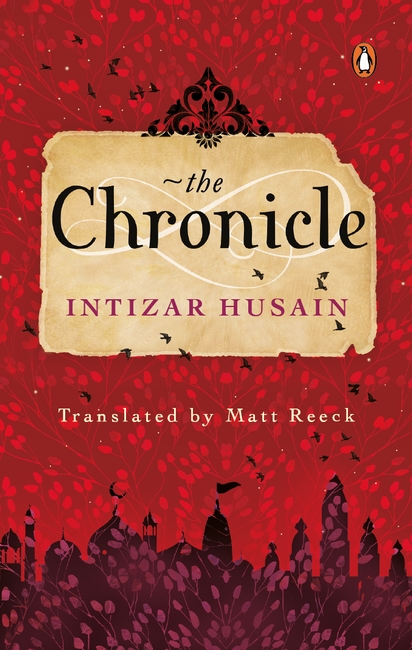
Set in the terrifying times of Zia-ul-Haq’s rule, The Chronicle tells the epic story of a family and its illustrious homes. As Ikhlaq, the main character, struggles to build a home in Lahore, the reader is introduced to a darkly comedic and dramatic chain of events.
These events are interspersed closely with Ikhlaq’s exploration of the tazkirah, a family chronicle, which inspires him to write its last chapter-the story of his life and times.
The Chronicle is an abiding tale of Ikhlaq’s ever-changing life, and the document that chronicles his family’s long history going back to Persia serves as the imaginative soundboard of his life.
Mixing the narrative styles of Buddhist, Hindu and Islamic myth and legend with fast-paced contemporary prose, Husain proves once again his mastery of diverse narrative forms.
Kanthapura
‘The first literary manifesto to point to an Indian way of appropriating the English language’
-Guardian
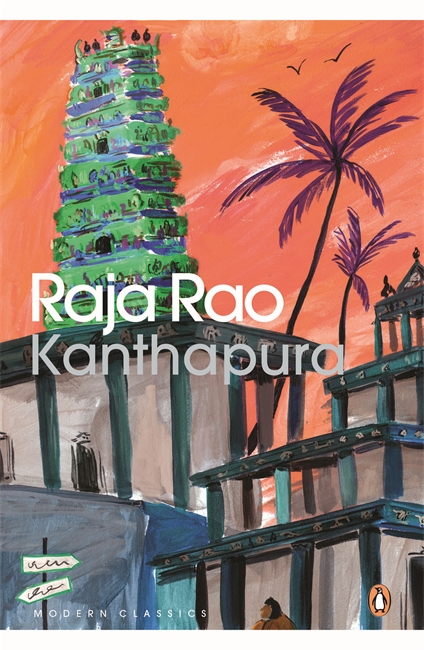
Regarded as the first major Indian novel in English, Kanthapura is the story of how Gandhi’s struggle for Independence came to a casteist south Indian village. Young Moorthy, back from the city, brimming with new ideas, seeks to cut across ancient barriers and unite the villagers in non-violent action. The story emerges through the eyes of a delightful old woman, who comments on the villagers’ actions with sharp-eyed wisdom, evoking the spirit of India’s traditional folk epics.
‘The finest novel to come out of India in recent years’
-E.M. Forster
The Serpent And The Rope
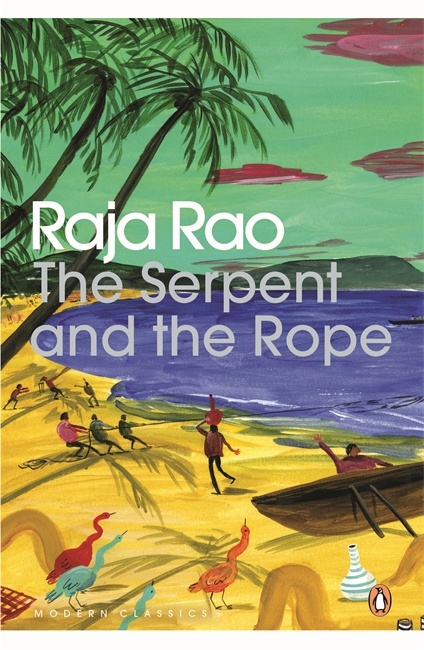
‘Lyrical, fluid, colloquial’—The New York Times
Rama, a young scholar, meets Madeleine at a university in France. Though they seem to be made for each other, both alike in temperament and character, at times they are divided, a huge gulf separating them. Rama’s trip back to India for his father’s illness forcibly reminds him of the underlying contrasts between India and Europe, and of a certain conflict between them in himself. When he returns to France, Rama and Madeleine must face the problems in their marriage. Can they preserve their identities, or must one sacrifice one’s inheritance to make the relationship a success?
‘More than any other writer of his generation [Rao] established the status of Indian literature in English’—The Hindu