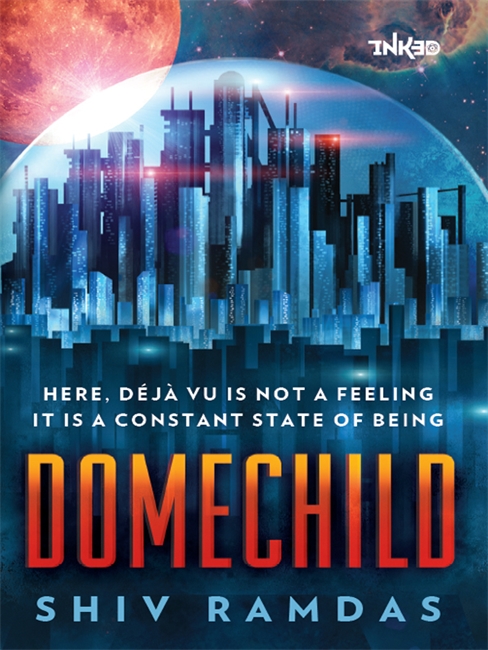
A SUICIDE MACHINE. A CHILD WITH A SECRET THAT CAN CHANGE THE WORLD. THE MAN TRAPPED BETWEEN THEM.
In the City, where machines take care of everything, lives Albert, an ordinary citizen with an extraordinary problem: He’s being blackmailed into becoming the first person in living memory to actually do something. What begins as a chance encounter with an outlaw child swiftly spirals out of control as Albert is trapped between the authorities and the demands of his unusual blackmailer. Forced to go on the run for his life, he finds himself in a shadow world of cyber-junkies, radicals and rebels, where he discovers the horrifying truth behind the City, a truth that will make him question everything he has ever known.

Boo is a collection of well-crafted spooky stories about a he-ghoul, a departed son’s soul, whispers and visitations from beyond, night howls, unearthly claws that erupt from bellies and the very first ghost in the world, among others. Penned by Shashi Deshpande, Kanishk Tharoor, K.R. Meera, Jerry Pinto, Usha K.R., Jahnavi Barua, Manabendra Bandyopadhyay, Ipsita Roy Chakraverti, Jaishree Misra, Kiran Manral, Madhavi S. Mahadevan, Durjoy Datta and Shinie Antony, the tales in Boo are sure to send a chill down your spine.

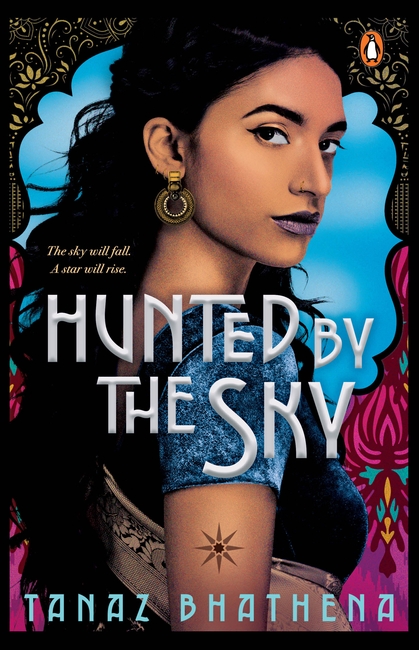
GUL HAS SPENT HER LIFE RUNNING. She has a star-shaped birthmark on her arm, and in the kingdom of Ambar, girls with such birthmarks have been disappearing for years. In fact, it is this very mark that caused her parents’ murder at the hand of King Lohar’s ruthless soldiers and forced her into hiding in order to protect her own life. So when a group of rebel women called the ‘Sisters of the Golden Lotus’ rescue her, take her in, and train her in warrior magic, Gul wants only one thing: revenge. Cavas lives in the tenements, and he’s just about ready to sign his life over to the king’s army. His father is terminally ill but Cavas will do anything to save him. Sparks fly when he meets a mysterious girl-Gul-in the capital’s bazaar. As the chemistry between them grows undeniably, he becomes entangled in a mission of vengeance and discovers a magic he never expected to find. Dangerous circumstances bring Gul and Cavas together at the king’s domain in Ambar Fort . . . a world with secrets deadlier than their own. Inspired by medieval India, this is the first in a stunning fantasy duology by Tanaz Bhathena, exploring identity, class struggles and high-stakes romance against a breathtaking magical backdrop.

Picture living in a world that has you constantly tethered to an oxygen tank, covered from head to toe in a body suit and buying dated air that you can sniff without your head gear on for cheap thrills. A world where the elders tell their children stories about the time their ancestors lived and breathed through an air cocktail—like savages!
As if it wasn’t already hard living in a world like this, imagine having to go through the pressure of attending “sharing air” parties that everyone seems to be going to these days. Apparently, membership at The ToxiClub society is at an all-time high.
Whether or not you believe you can handle the ToxiClub, “Sharing Air” is a fascinating glimpse into a world that’s scarily plausible. Science fiction offers a writer an opportunity to go directly to the heart of an ironical or thought-provoking situation and by setting up this theoretical world, Manjula Padmanabhan hits the nail right on the head with equal literary aplomb.
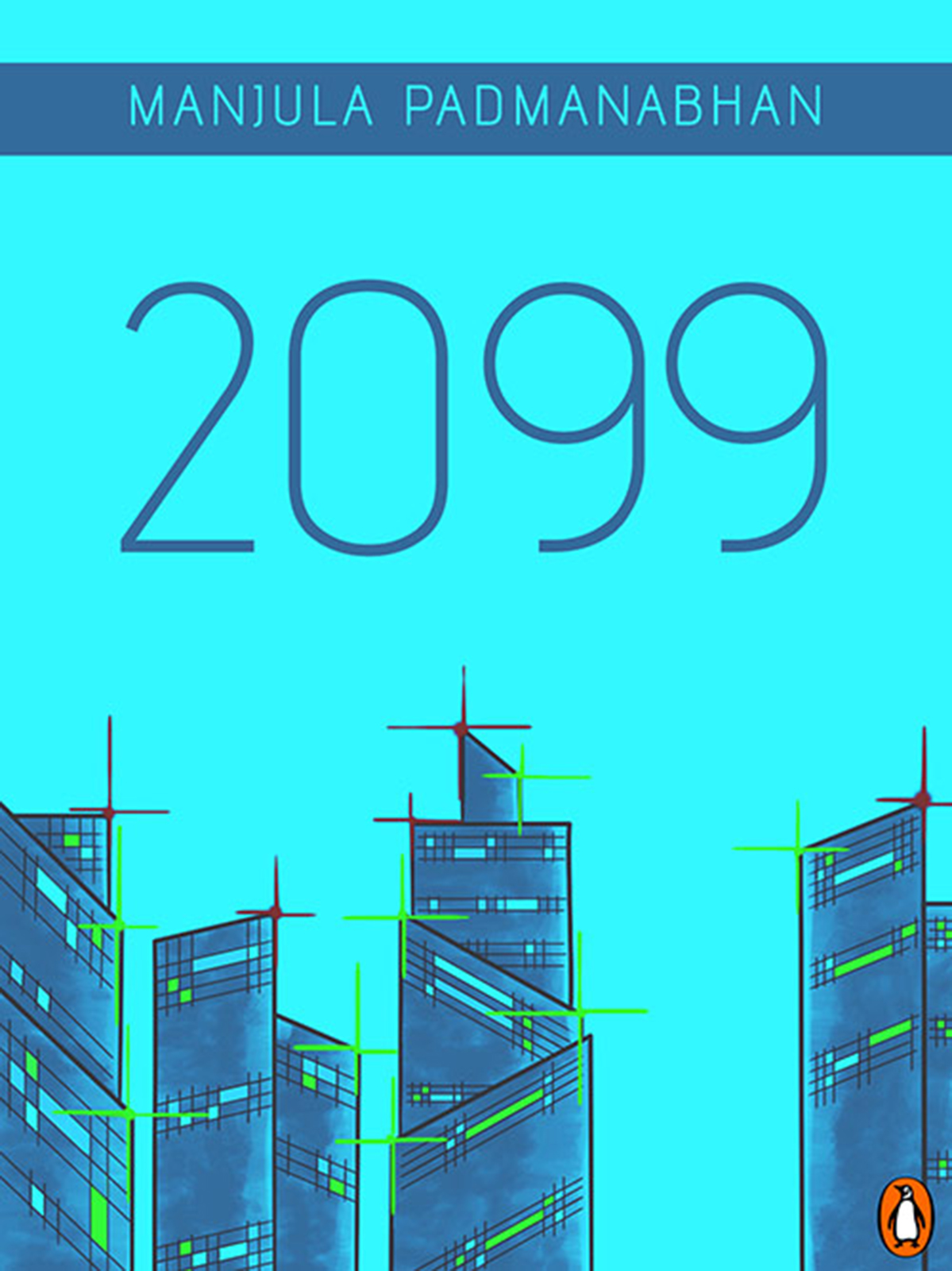
The year is 2099 and Mr M, erstwhile editor of a prestigious newsmagazine, has just come back to life after eighty-two years in the PSP—the Perma Sleep Programme. While revival experts work on him to make his transition into the new era as smooth as possible, Mr M can’t wait to find out all there is to know about what the world is like in 2099. His journalistic curiousity can hardly contain itself.
The world has indeed changed. It is a whole lot different than what Mr M remembers it from when he was last alive. After the two atomic bombs that had detonated in quick succession in 2015, Mr M had signed up for PSP, having faith in the power of the future. Can 2099 really live up to Mr M’s commitment to knowledge or his faith in the future?
2099 is an excellent example of a prolific author like Manjula Padmanabhan using science fiction for social commentary. Her take on what the end of this century could very well look like attempts to answer those questions that we, as humanity, desperately need to address.
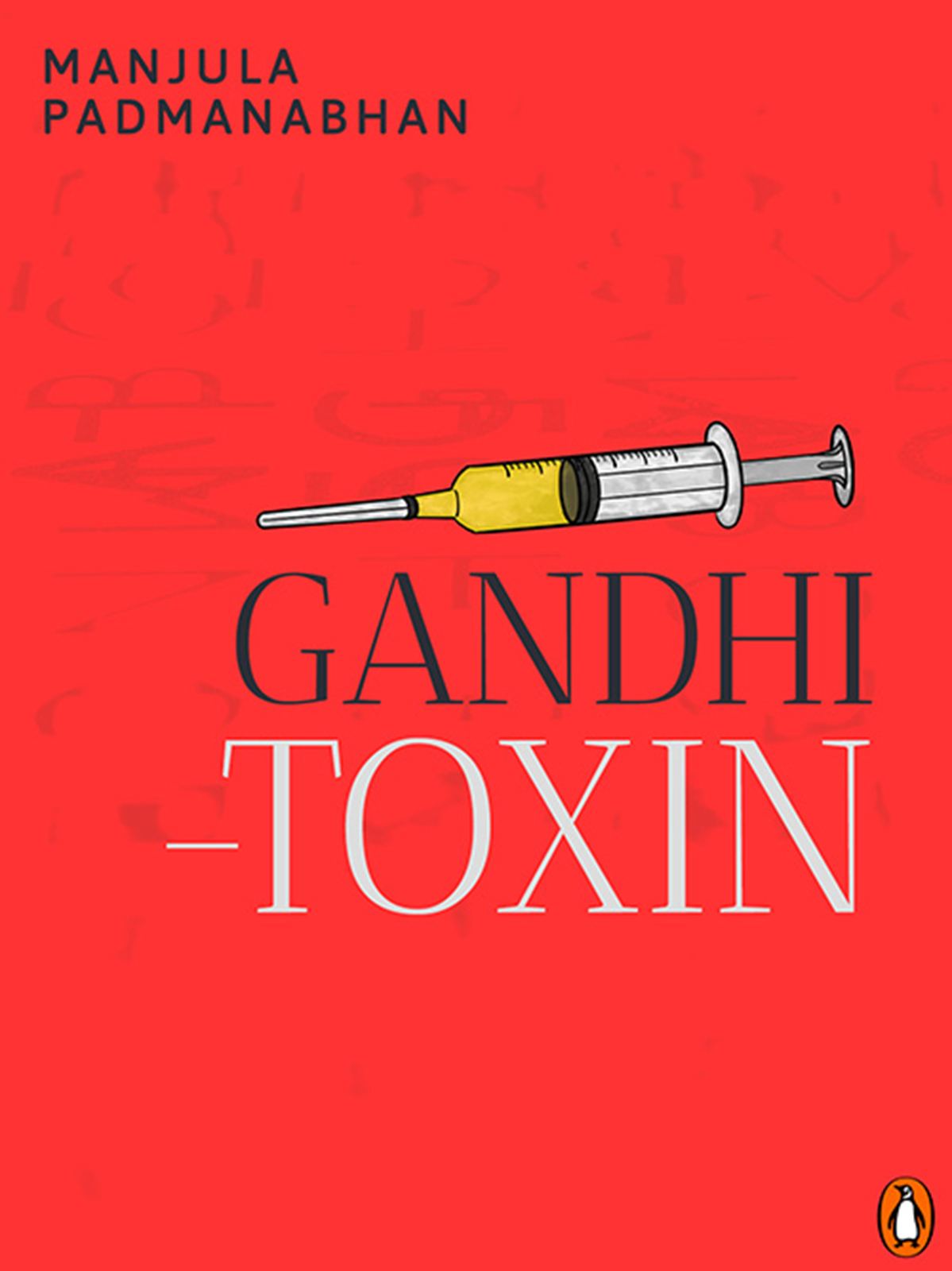
Sitaram Desai, a researcher and the scion of third cousins from Mahatma Gandhi’s bloodline, has just managed to invent a toxin from a vial of ashes belonging to the greatest man the Indian subcontinent has ever seen. The Gandhi-toxin, when diffused through the blood, has the ability to disarm aggression vectors in mammalian brains. Of course, if mass-administered, it can cause catastrophic pacifism and widespread loss of competitive urge—a formidable weapon indeed.
Aidid and Isabella, Supreme Commanders at United Gene Heritage, are aware of the threats, which is why they launch a mass release of the toxin through specially engineered mosquitos that can even cross enemy lines. However, no one has ever managed to predict the long-term effects of genetic manipulation and it looks like the Supreme Commanders are in for a supreme surprise.
Science fiction often manages to look closely at present-day issues through a fairly made-up world. In Gandhi-toxin, Manjula Padmanabhan cleverly uses her literary prowess to build a dystopian—although not entirely unbelievable—near future to make a point about the world we live in today. Funny and incisive, this short read is for anyone who’s ever wondered about the future of our world.

One minute before midnight on 1 January 1949, Nehru’s long battle with Jinnah ended. However, the rivalry they had bequeathed to their nations, and the world, had barely begun.
Even as Gandhi went on a fast until communal violence ended, Nehru and Jinnah were fighting their own battles on behalf of their countries, facing problems they hadn’t anticipated. Meanwhile, Kashmir was – and still remains – the roadblock to better relations between India and Pakistan. With Gandhi’s subsequent demise being projected as the death of a martyr, things were far from improving.
In this brilliantly detailed essay, Nisid Hajari explores the extent to which India’s and Pakistan’s early leadership defined the futures the two nations would eventually live through.
With talk of Partition emerged the most violent and horrific riots in the history of the subcontinent. From Calcutta to Bihar and Punjab, a crazy frenzy was taking over both Hindus and Muslims of a country that was still under British rule.
A situation that was quickly getting out of hand saw the leaders of the hour neither condemning nor making any attempts to stop the violence. Were these the leaders that would eventually lead India and Pakistan towards Independence? Did they know they were leaving behind a bloody legacy that would come to haunt generations of Indians and Pakistanis?
Read on to get an insight into the darkest time of India’s history just as she was getting ready for a new identity in the world.
Until the early 1900s, Hindus and Muslims of the subcontinent were united in their fight against the British, fighting for Independence. Eventually, with the formation of the Muslim League, and the leaderships of Jinnah and Nehru not quite in agreement with each other, it increasingly became evident that independence would come with the formation of two separate states: India and Pakistan.
Could the partition – an event that led to countless horrors – be pegged to two people, influential leaders in their own right? Or were there other factors, like the inability to imagine a populace so hungry for a bloodbath?
Read on to find out what led to Jinnah and Nehru becoming the faces of two nations that would emerge out of the struggle for Independence.

We used to live in a world of magic . . .
For Alice, life as a teenager is hard enough without turning into a supernatural herald of destruction. And you would think that after causing minor hurricanes with a major sneeze, being visited by a talking fox and ending up on a journey with death around every corner, things can’t get much worse.
Wrong.
They can.
Between a blind and telekinetic mass murderer, a girl bound to a shadow-demon and a genetically engineered pseudo messiah, a whole generation of weird is ready to come of age. And when it does, the world will change.
If it survives that long.