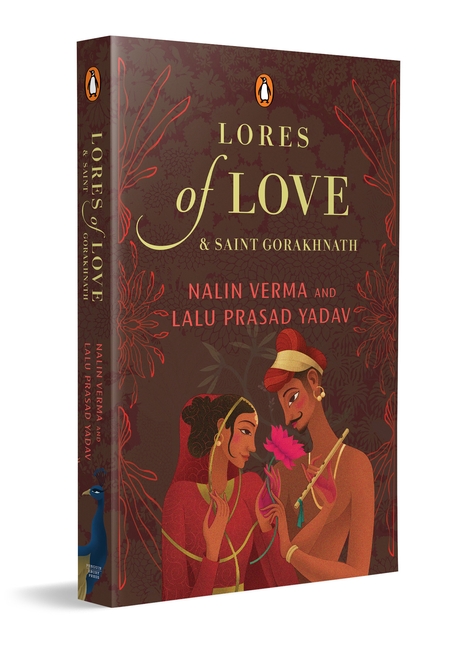
Comprising four folktales, Sorthi-Brijbhar, Bharthari-Pingla, Heer-Ranjha and
Saranga-Sadabrij, the book is an anthology of stories influenced by the life, time and teachings of Yogi Gorakhnath—an eleventh-century saint—who propounded an inclusive religious philosophy that laid the foundation of the Sufi and Bhakti movement in India.
Initially, the yogis (mystics) of the Gorakhnath sect would sing these ballads on the tune of the sarangi and move door to door for alms. Originally, these stories existed in the oral tradition passed down from generation to generation in the form of ballads. The ballads are full of fairies, genies, witches, magic healers, witch doctors and ghosts besides angels in the form of Peer Baba (hermits) and sages. Over the decades and centuries, these stories have inspired folklorists, theatre artists and nautch parties to perform in melas (community fairs), religious events and marriages.

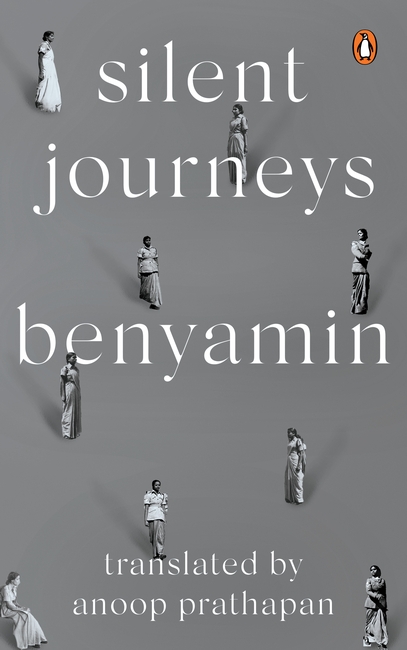
What of the many travels undertaken through history by men and women, in war and peace, that have been unrecorded, invisible, and forgotten?
In Benyamin’s Silent Journeys, we trace the voyage of Mariamma, a young nurse from Kerala who travelled from her hometown in Manthalir all the way across the world. Nothing was known of her journey until many decades later, when a curious great grandson began his investigations only to stumble across a tale of great adventure, hardship, resilience, and love.
The novel reflects upon terrific stories of unaccompanied and courageous journeys that many valiant women, primarily nurses, have made through history, reaching the coldest places in the Arctic, Canada, remote tribal locations in the desert, the interiors of the dark continent, and almost everywhere in Europe
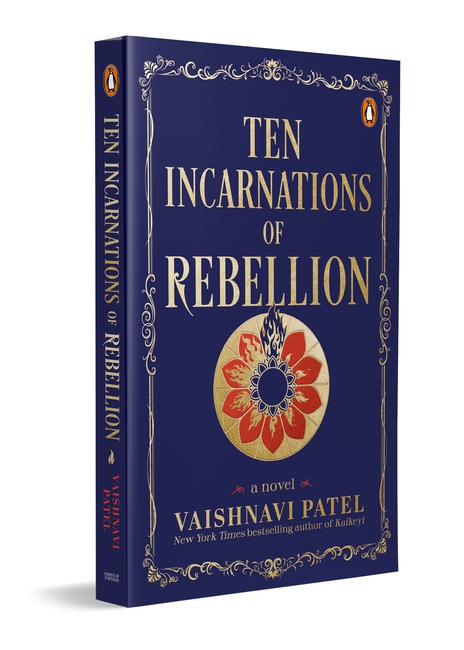
Kalki Divekar grows up a daughter of Kingston—a city the British built on the ashes of Bombay. The older generation, including her father, have been lost to the brutal hunt for rebels. Young men are drafted to fight wars they will never return from. And the people of her city are more interested in fighting each other than facing their true oppressors.
When tragedy strikes close to home, Kalki and her group of friends begin to play a dangerous game, obtaining jobs working for the British while secretly planning to destroy the empire from the inside out. They found Kingston’s new independence movement, knowing one wrong move means certain death. Facing threats from all quarters, Kalki must decide whether it’s more important to be a hero or to survive.
Told as ten moments from Kalki’s life that mirror the Dashavatara, the ten avatars of Vishnu, Ten Incarnations of Rebellion is a sweeping, deeply felt speculative novel of empowerment, friendship, self-determination, and the true meaning of freedom.
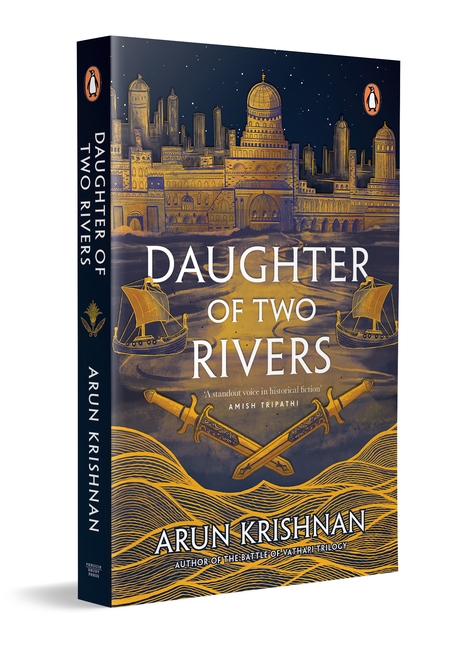
Undergoing a ravaging drought, the riverside settlement of Rohitaka is at odds, struggling to recover from their losses. When a request from Babylon to trade weapons arrives as a blessing in disguise, a trade delegation, headed by prince Arjuna, and the grizzled veteran, Shrutasena, sets off for the faraway kingdom.
An encounter with Lilith, the fierce bodyguard to the Queen, and more importantly, a woman who is hell-bent on despising Arjuna, leaves him flustered. But there’s more to Lilith than meets the eye. The woman is a formidable soldier, but something about her reminds Arjuna of home, Bharatavarsha.
But as fate would have it, Arjun and Lilith find themselves entrenched in a political ploy to overthrow Babylon’s King, Sin-Mubalit. Will they be able to stop the usurpers to the throne? And can they trust each other to have their backs as they do so, even as they’re uncovering new secrets on the go?
Inspired by the twentieth century discovery of a Sumerian tablet off the coast of Mumbai, Daughter of Two Rivers is a homecoming story.
And like all good homecoming stories, it’s a story of learning what home means—across countries, and across time.
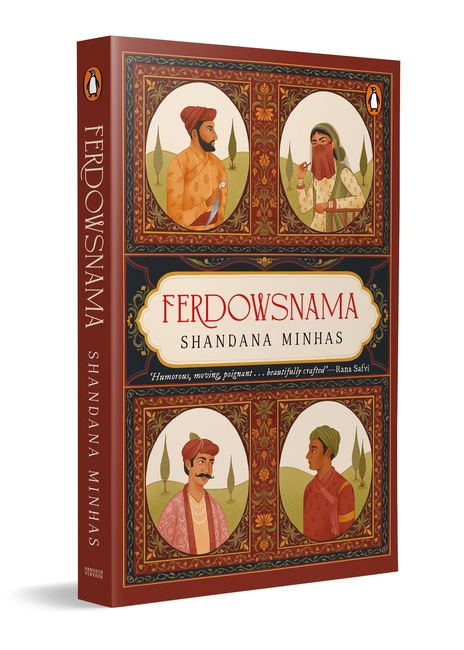
In sixteenth-century India, warrior Amar Singh, tracker Jingu, artist Qamaruz Zaman and fire-scarred scholar Ferdows travel through a land teeming with clans, languages and deities, stealthily rigging the emperor’s dominion over man, beast and demon.
The unlikely quartet prove adept at engineering spectacles reflecting the Great Moghul’s divine right to rule. Qamaruz Zaman and Jingu’s acting abilities are as sublime as their sketching and tracking; Amar Singh excels at violence; and Ferdows is a skilled linguist and healer. In a series of disguises, they intercept a rogue elephant attacking a riverside caravanserai, face a liger in a subterranean complex under a desert kingdom, and confront a demon in an animistic community in a remote mountain valley. The Great Moghul takes credit for each hunt, and this strategy of empire expansion seems to be working.
But there are challenges. Qamaruz Zaman is frail, hedonistic and allergic to fur. Jingu has dreams of transcending his caste but fears they will only ever be dreams. Ferdows is on a hunt but doesn’t like hurting things. And Amar Singh is a narcissist who cares only about honour and reclaiming lost glory. By the time the quartet reaches the harem city of Zikri to investigate a mysterious death during a symposium on metaphysics, the differences of temperament, belief and ambition between them are causing issues.
In Zikri, Jingu and Qamaruz Zaman are sidelined, Amar Singh learns there is an imperial hunter other than the Great Moghul, and Ferdows the storyteller becomes the story.
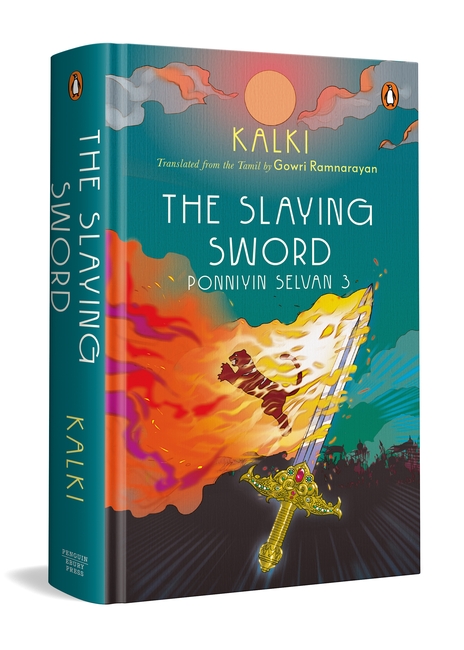
Fear and suspicion abound as rumours of Arulmozhi Varman’s death at sea spread throughout the Chozha land. Anger grows against the powerful, scheming Pazhuvettaraiyars. As leaders scramble to handle the fallout, Nandini Devi, the captivating wife of the elder Pazhuvettaraiyar, continues her machinations against the Chozha royal family. She vows that the sword of the last Pandiyan king—killed by Prince Aditta Karikalan—will take the lives of countless enemies.
Astute he may be, but is Chief Minister Aniruddhar Brahmarayar up to the task of diplomacy in such a volatile political climate? Can Princess Kundavai fight her way through the web of political intrigue and deceit in which she is trapped? Will valiant Vandiyatevan continue to surmount the colossal challenges fate throws at him?
Kalki paints a study in contrasts in The Slaying Sword, the third in the Ponniyin Selvan series, and Gowri Ramnarayan translates his world of conflicts with empathy and adroitness.
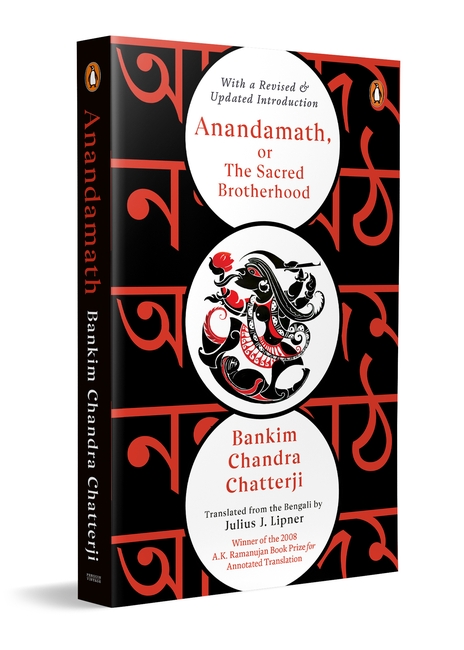
This is a translation of a historically important Bengali novel.
Published in 1882, Chatterji’s Anandamath helped create the atmosphere and the symbolism for the nationalist movement leading to Indian independence in 1947. It contains the famous hymn Vande Mataram (“I revere the Mother”), which has become India’s official National Song. Set in Bengal at the time of the famine of 1770, the novel reflects tensions and oppositions within Indian culture between Hindus and Muslims, ruler and ruled, indigenous people and foreign overlords, jungle and town, Aryan and non-Aryan, celibacy and sexuality. It is both a political and a religious work. By recreating the past of Bengal, Chatterji hoped to create a new present that involved a new interpretation of the past. Julius Lipner not only provides the first complete and satisfactory English translation of this important work, but supplies an extensive Introduction contextualizing the novel and its cultural and political history. Also included are notes offering the Bengali or Sanskrit terms for certain words, as well as explanatory notes for the specialized lay reader or scholar.
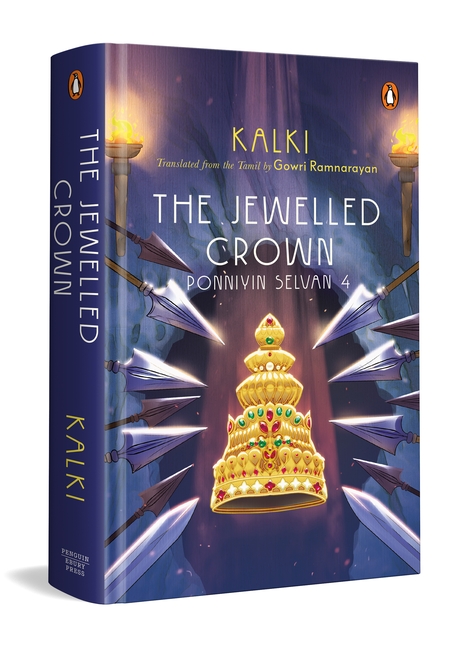
In the fourth part of the sprawling Ponniyin Selvan series, we learn more about the intricate complexities and histories propelling our characters towards their ultimate destiny.
What will happen in Kadambur? Beguiling, breathtaking Nandini Devi requests a rendezvous with Chozha Crown Prince Aditta Karikalan. He is determined to meet her, despite opposition from friends and family. Does Nandini mean to persuade Karikalan to give up the crown or kill him? Meanwhile, in Tanjavur, the life of the ailing Emperor Sundara Chozha is under threat. Will his assassins succeed? The mute Mandakini Devi has been forcibly taken to Tanjavur, and Poonkuzhali rushes there to help her aunt. What will happen when the betrayed Mandakini meets the royal family?
As Kalki’s enthralling saga continues to unfold apace in The Jewelled Crown, Gowri Ramnarayan’s fleet-footed translation proves equal to the challenge of capturing its heightened momentum and suspense.
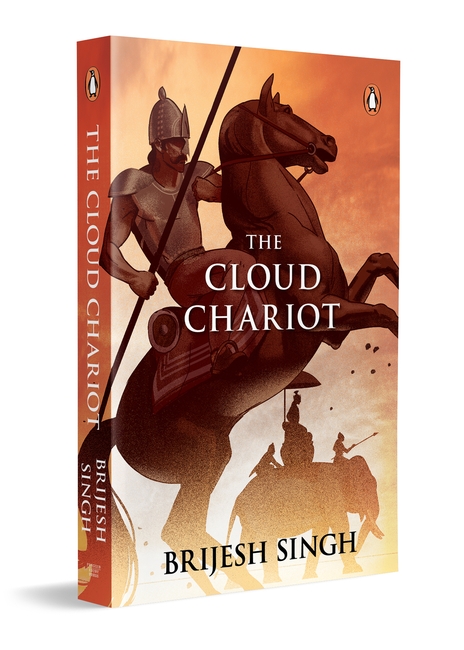
It’s 100 years since Kalinga was devastated by Ashoka, and the kingdom is now re-emerging from the dust. Now, under the Mahameghavahanas, a new and able dynasty, the country has not only freed itself from foreign reign but is also experiencing a cultural and patriotic resurgence. But palace politics, internecine rivalries, the external threat of invaders as well as internal threat of traitors keep King Mahameghavahana Kharavela busy and unsettled. Unable to focus on rebuilding the kingdom to its zenith and his dream of returning to Kalinga the looted Jina idol from Magadha.
And then a stranger enters the kingdom and becomes an integral part of the court. Rudravarman is a polymath, military strategist and a brilliant warrior. But his antecedents are mysterious, and his objectives unclear. Why does he so jealously guard his past? And does he truly want to not only serve the king, but fulfil his dream of a resurgent Kalinga?
A brilliantly researched historical thriller set in the first century BCE.
For some people, home is nowhere. They feel out of place—they are adrift, the stranger in the crowd. It’s as if they are forever walking around in shoes that don’t fit.
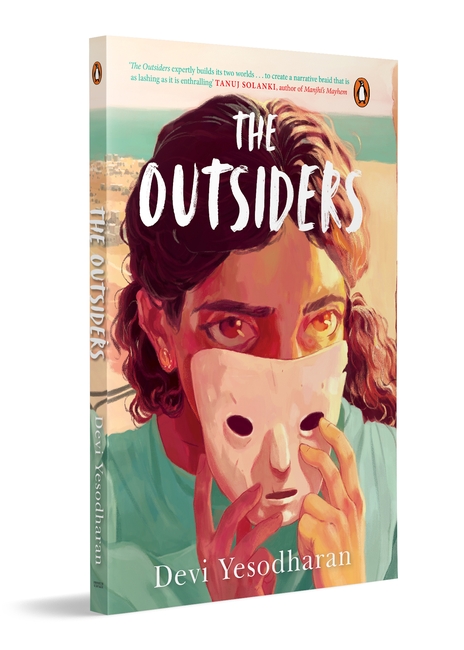
Can they find a home, imperfect as it may be? Sometimes, all it takes is a place at the other end of the world—or a person. Nita, a teacher in Kerala, is desperate for a better-paying job and accepts one in Dubai. It is the 1990s, and Dubai is just becoming a boom town. Everything is changing. But Nita struggles to adjust to the city as an immigrant. Her job as a live-in tutor for a young girl puts her in an unfamiliar, servile role with a wealthy family. Nita starts telling the child’s mother a story from ancient India, where Darius, a sailor, arrives at an Indian port seeking his fortune. As she tells this tale, making it up as she goes, she finds that she’s no longer alone.
This is a two-headed story—the narrators Nita and Darius are nested inside each other like Russian dolls. They are both outsiders in unfamiliar places. They make dangerous choices that take them to the breaking point. And as Nita feels her safety unravel, it does for Darius as well.