India, 1922: Perveen Mistry is the only female lawyer in Bombay, a city where child mortality is high, birth control is unavailable and very few women have ever seen a doctor.
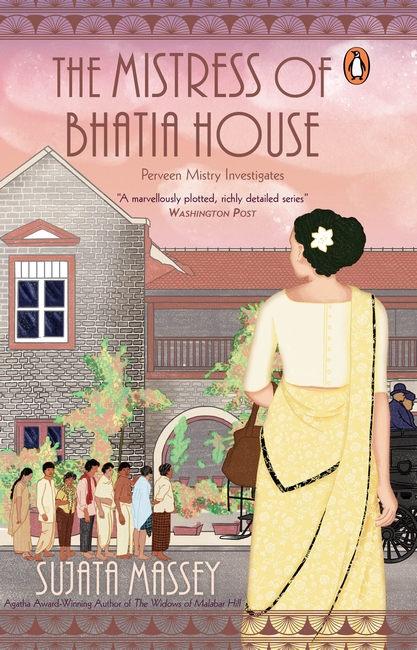
Perveen is attending a lavish fundraiser for a new women’s hospital specializing in maternal health issues when she witnesses an accident. The grandson of an influential Gujarati businessman catches fire–but a servant, his young ayah, Sunanda, rushes to save him, selflessly putting herself in harm’s way. Later, Perveen learns that Sunanda, who’s still ailing from her burns, has been arrested on trumped-up charges made by a man who doesn’t seem to exist.
Perveen cannot stand by while Sunanda languishes in jail with no hope of justice. She takes Sunanda as a client, even inviting her to live at the Mistry home in Bombay’s Dadar Parsi colony. But the joint family household is already full of tension. Perveen’s father worries about their law firm taking so much personal responsibility for a client, and her brother and sister-in-law are struggling to cope with their new baby. Perveen herself is going through personal turmoil as she navigates a taboo relationship with a handsome former civil service officer.
When the hospital’s chief donor dies suddenly, Miriam Penkar, a Jewish-Indian obstetrician, and Sunanda become suspects. Perveen’s original case spirals into a complex investigation taking her into the Gujarati strongholds of Kalbadevi and Ghatkopar, and up the coast to Juhu Beach, where a decadent nawab lives with his Australian trophy wife. Then a second fire erupts, and Perveen realizes how much is at stake. Has someone powerful framed Sunanda to cover up another crime? Will Perveen be able to prove Sunanda’s innocence without endangering her own family?

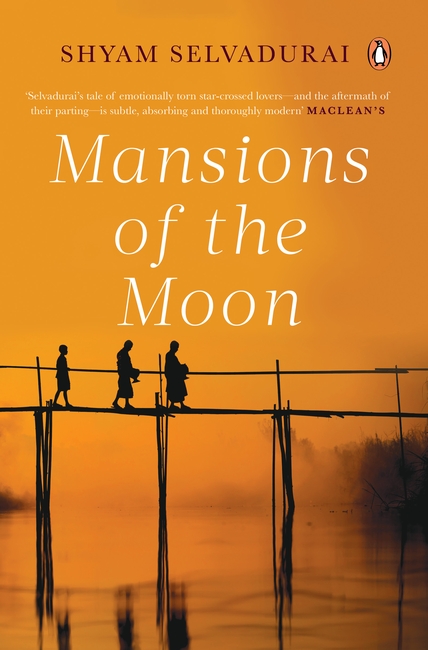
In this sweeping tale, at once epic and intimate, Shyam Selvadurai introduces us to Siddhartha Gautama-who went on to become ‘the enlightened one’-an unusually bright and politically astute young man settling into his upper-caste life after marrying Yasodhara, a woman of great intelligence and spirit. Mansions of the Moon traces the couple’s early love and life together, and then the anguished turmoil that descends upon them both as Siddhartha’s spiritual calling takes over and the marriage partnership slowly, inexorably crumbles.
Drawing on ancient records and historical sources, and weaving it with fiction and mythology, Shyam Selvadurai creates a vivid portrait of Yasodhara, a remarkable woman on a remarkable journey. Mansions of the Moon is an evocative, thought-provoking novel and a must-read for anyone interested in spirituality, mythology and the power of the human spirit.

After successfully fending off the Chalukya’s siege of Kanchi, the Pallava emperor Mahendra Varmar drives the enemy king, Pulikesi, to call for a truce. The statesman in Pallavar is keen to convert a foe into a friend, but a vengeful Pulikesi reneges on his commitment. While the Pallavas are successful in chasing the Chalukyas away, Pallava Nadu bears the brunt of Pulikesi’s wrath.
Fate wields its unpredictable hand further.
A rash decision by the sculptor Aayanar and his daughter Sivakami results in her being abducted by the Chalukyas. Sivakami takes a momentous vow, little realizing how far-reaching the consequences will be.
How will the Pallava crown prince Narasimha Varmar, who is in love with Sivakami, act? Will Mahendra Varmar shape his son’s future in a manner he had always envisaged? And what role will the Machiavellian bikshu play in Sivakami’s life as a captive?
The Bikshu’s Love, the action-packed third volume of Sivakami’s Vow, is unputdownable, and sets the stage for the startling climax of this magnum opus in the fourth and final book in the series.
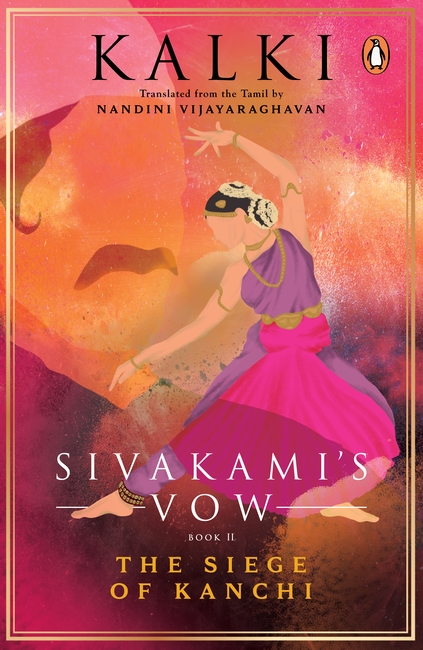
The political stature of the Pallava crown prince, Narasimha Varmar, has grown considerably after defeating the king of Ganga Nadu at the historic Pullalur battle. But he has more obstacles to overcome. Emperor Mahendra Pallavar, after restraining the Chalukya forces for nine months at the northern border of the Pallava kingdom, is on his way back to Kanchi and continues to oppose the crown prince’s relationship with the dancer, Sivakami.
Meanwhile, the Machiavellian Naganandi adigal has convinced Sivakami and Aayanar to leave their home in the forest against Narasimha Varmar wishes. And the Chalukya army marches towards Kanchi, causing destruction and damage across the countryside. Yet, the emperor remains unwilling to cross swords with them. Expecting the enemy to lay siege to the Kanchi fort, Mamallar must find a way to balance his duties as crown prince and his love for Sivakami.
Expertly weaving suspense, romance and drama, Kalki’s gripping narrative describes the tremendous efforts of the Pallavas to counter the Chalukya invasion and the growing intimacy between Mamallar and Sivakami in the action-packed second volume of Sivakami’s Vow: The Siege of Kanchi.

Mallika is a painfully shy young woman growing up in the heart of a close-knit, sometimes stifling New Delhi colony. Though she is surrounded by love, her life is complicated by secrets that she, her mother and her aunt work hard to keep.
After suffering a trauma aged nineteen, Mallika loses three days of her memory and slowly spirals into a deep depression. She must find a way out of this abyss, back to herself and those she cares about. But she must also hide her mental illness from her community.
In a narrative that unfolds elliptically from the perspectives of Mallika and the seven people closest to her, the astonishing story of these characters’ lives emerges. For Mallika’s family, childhood friends and the two men she loves are also hiding truths. As each gives voice to contending with their own struggles, secrets and silences shatter.

As India’s chief of intelligence, Amitabh has spent a lifetime battling India’s enemies, domestic and foreign. But in the winter of his career, he receives a chilling message from his top mole inside the ISI: a nuclear strike against India is imminent. Nothing is known—except that it’s coming.
At the same time, senior IAS officer Kamal investigates the theft of two priceless paintings from a government research facility. What appears to be an inside job soon reveals a terrifying connection to the looming terror strike.
Racing against time, Amitabh and Kamal must uncover a conspiracy that stretches from the blood-soaked borders of Partition to a forgotten chapter of Indian cinema and into the vaults of international art smugglers—where a long-forgotten betrayal holds the key to modern-day devastation.
From the corridors of New Delhi to the shadow games of Langley and Islamabad, Indian intelligence must outmanoeuvre both the ISI and the CIA in a battle for control over a secret that could shift the balance of global power.
In the end, only one man can decide whether the truth is revealed—or buried forever.
The Portrait of a Secret is a gripping geopolitical thriller that blends espionage, art and Partition-era history into a pulse-pounding narrative. Inspired by true events.

Not every courtesan has gone down in the annals of history like Ambapali. She was beautiful, intelligent, talented and, as the nagarvadhu janpad kalyani-the bride of the city-she went on to wield immense power amongst the nobles. Until she renounced all worldly pleasures to embrace Buddhism.
This vivid narrative tells the story of a young woman forced to follow a path because of the machinations of powerful people. Propelled onto the cultural centerstage in the Vajji republic against her wishes, betrayed in love, disappointed by friends, Ambapali’s is yet the story of a strong woman determined to take control over her life. A remarkable, poignant novel about the dazzling glamour, daring romance, and sacrifice that marked Ambapali’s life.

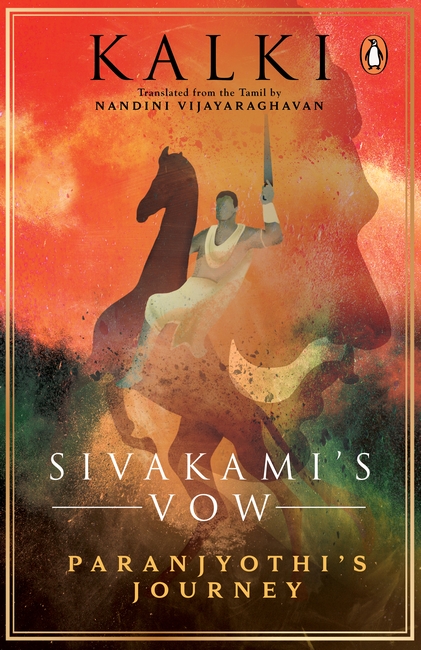
A young man trudges from a tiny Chola village to Kanchi, the great city of art and learning, hoping to discover his destiny. A bikshu wanders around the Pallava empire, befriending lonely souls. Spies lurk in the shadows, and even statues of the Lord Buddha conceal secrets. Emperor Mahendra Pallava, connoisseur beyond compare, rules with compassion and justice, while his son, Kumara Chakravarthy Narasimhar, falls deeply in love with the greatest dancer of the empire, Sivakami.
Somewhere in the distance can be heard the drums of war. The fearsome Chalukyas are planning an invasion: their war elephants, horses and infantry sweep towards the Pallava empire. Emperor Pulikesi eyes Kanchi as the crowning glory to his martial achievements.
Paranjyothi’s Journey, the first in the four-volume Sivakami’s Vow series, is a riveting tale of war, betrayal, secret passages, guarded forts, passions and a Pallava emperor who will do anything to save his kingdom. It was written by Kalki, a master storyteller who raised Tamil literature and history to new heights almost single-handedly.

The epic tale of a woman who breathes a fantastical empire into existence, only to be consumed by it over the centuries – from the transcendent imagination of Booker Prize-winning, internationally bestselling author Salman Rushdie.
In the wake of an insignificant battle between two long-forgotten kingdoms in fourteenth-century southern India, a nine-year-old girl has a divine encounter that will change the course of history. After witnessing the death of her mother, the grief-stricken Pampa Kampana becomes a vessel for the Goddess, who begins to speak out of the girl’s mouth. Granting her powers beyond Pampa Kampana’s comprehension, the goddess tells her that she will be instrumental in the rise of a great city called Bisnaga – literally ‘victory city’ -the wonder of the world.
Over the next two hundred and fifty years, Pampa Kampana’s life becomes deeply interwoven with Bisnaga’s, from its literal sowing out of a bag of magic seeds to its tragic ruination in the most human of ways: the hubris of those in power. Whispering Bisnaga and its citizens into existence, Pampa Kampana attempts to make good on the task that the Goddess set for her: to give women equal agency in a patriarchal world. But all stories have a way of getting away from their creator, and Bisnaga is no exception. As years pass, rulers come and go, battles are won and lost, and allegiances shift, the very fabric of Bisnaga becomes an ever more complex tapestry – with Pampa Kampana at its centre.
Brilliantly styled as a translation of an ancient epic, this is a saga of love, adventure and myth that is in itself a testament to the power of storytelling.

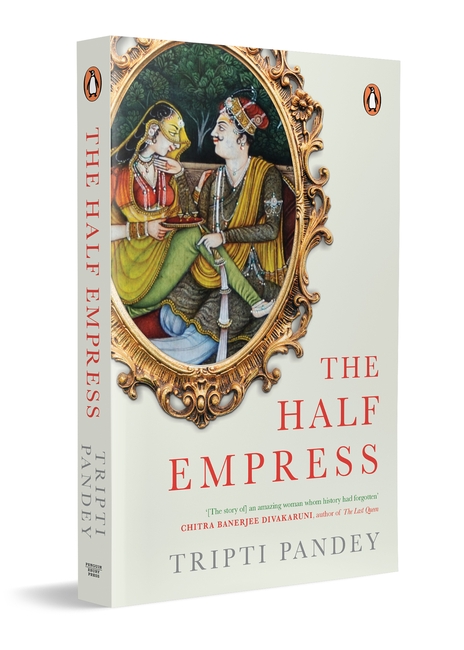
Among the rulers of Jaipur, Maharaja Sawai Jagat’s name is taken with contempt, because of his affair with a tawaif, or courtesan, Raskapoor, the daughter of a Muslim mother and a Brahmin father. The Maharaja defied all norms and bestowed upon her the title of ‘Half Empress’. With little experience, Raskapoor resiliently navigated her way through the cobwebs of the royal life. But, pitched against a fleet of plotters in an atmosphere filled with deceit, she finally fell into their trap and was imprisoned. There are many stories about how her life ended-the compassionate prison chief allowed her to flee or she flung herself on to the pyre of Jagat Singh. But today, she is best remembered by the guides who routinely mention her as a celebrity prisoner at the famous Nahargarh Fort.
In her historical novel The Half Empress, Tripti Pandey transports the reader to the royal corridors of nineteenth-century Jaipur and brings to life the story of a formidable woman who has been deliberately omitted from history.