‘Babu Sahib! You must have heard of a phoolsunghi—the flower-pecker—yes? It can never be held captive in a cage. It sucks nectar from a flower and then flies on to the next.’
When Dhelabai, the most popular tawaif of Muzaffarpur, slights Babu Haliwant Sahay, a powerful zamindar from Chappra, he resolves to build a cage that would trap her forever. Thus, the elusive phoolsunghi is trapped within the four walls of the Red Mansion.
Forgetting the past, Dhelabai begins a new life of luxury, comfort, and respect. One day, she hears the soulful voice of Mahendra Misir and loses her heart to him. Mahendra too, feels for her deeply, but the lovers must bear the brunt of circumstances and their own actions which repeatedly pull them apart.
The first ever translation of a Bhojpuri novel into English, Phoolsunghi transports readers to a forgotten world filled with mujras and mehfils, court cases and counterfeit currency, and the crashing waves of the River Saryu.

A sweeping saga of ancient india
Return of the Aryans tells the epic story of the Aryans – a gripping tale of kings and poets, seers and gods, battles and romance and the rise and fall of civilizations. In a remarkable feat of the imagination, Bhagwan S. Gidwani takes us back to the dawn of mankind (8000 BC) to recreate the world of the Aryans. He tells us why the Aryans left India, their native land, for foreign shores and shows us their triumphal return to their homeland…
Vast and absorbing, the novel tells the stories of characters like the gentle god, Sindhu Putra, spreading his message of love; the physician sage Dhanawantar and his wife Dhanawantari; peaceloving Kashi after whom the holy city of Varanasi is named; and Nila who gave her name to the river Nile…
Richly textured and with a cast of thousands, the epic adventure of the Aryans come gloriously alive in the hands of the bestselling author of The Sword of Tipu Sultan.

Colombo is in the throes of an explosion. Its face changes continuously, its vices are legion, its future as yet obscure and its paths speak of sunlight as well as of shadow.-‘ Carl Muller begins his quasi-fictional portrait of this beautiful, war-torn city by describing the great battles fought over it by European colonizers-. In AD 1505, a Portuguese fleet blown off-course took shelter in Galle, overthrew the local kings, fortified Colombo and decided to stay. The Dutch came along, ousted the Portuguese, made Colombo their capital and ruled till the British arrived and sent them packing. Muller intersperses the tales of the past into descriptions of the battles that are being fought in Colombo today”political battles in which vested interests play a major role as well as battles fought on the individual level in the struggle to survive: young women and children turning to prostitution to earn an extra buck, people begging in the streets to make ends meet, unemployed young men turning to crime in frustration, students demonstrating against atrocities, lovers pining for nightfall in order to push away loneliness if only for a few moments… Written in Muller’s lucid style, Colombo: A Novel is a chronicle of a city’s trials and triumphs.
The story of the upheaval of the 1947 partition of India seen through the eyes of a Parsee girl growing up in Lahore. Through her relationships with her Hindu Ayah, the Muslim cook, the Sikh zoo attendant and the ice candy man, she shows how ordinary citizens reacted to the horrific turmoil.
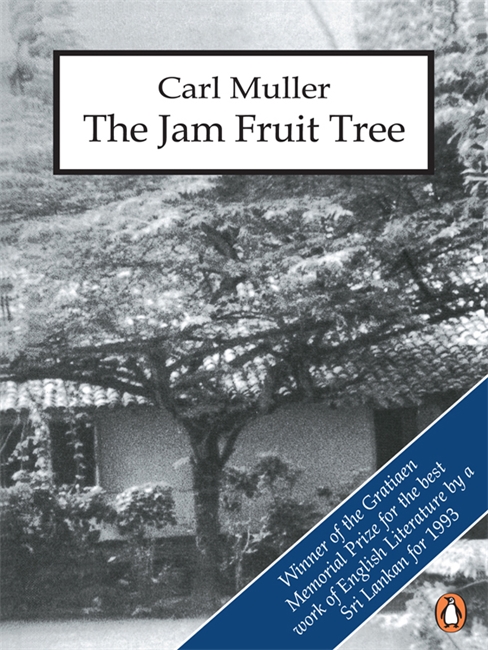
Winner of the Gratiean Memorial Prize for the best work in English Literature by a Sri Lankan for 1993 Hilarious, affectionate, candid and moving, this is the story of the Burghers of Sri Lanka . . . Who are the Burghers? Descended from the Dutch, the Portuguese, the British and other foreigners who arrived in the island-nation of Sri Lanka (and ‘mingled’ with the local inhabitants), the Burghers often stand out because of their curiously mixed features-grey eyes in an otherwise Dravid face, for instance. A handsome and guileless people, the Burghers have always lived it up, forever willing to ‘put a party’. Carl Muller, a Burgher himself, writes in this quasi-fictional, engaging biography of the lives of his people; they emerge, at the end of his story, as a race of fun-loving, hardy people, much like the jam fruit tree which simply refuses to be contained or destroyed.
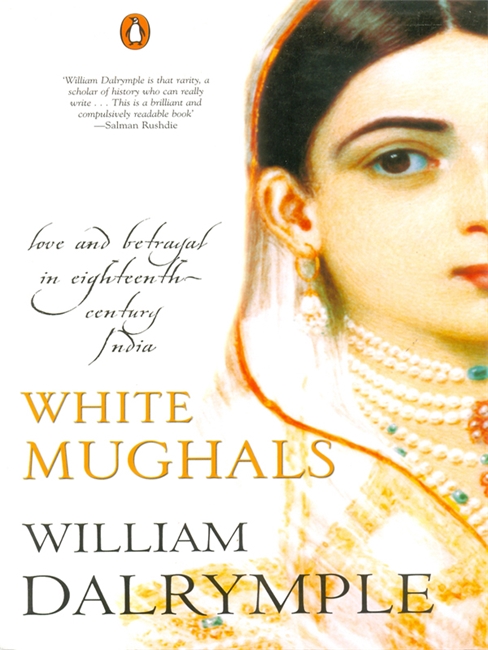
James Achilles Kirkpatrick landed on the shores of eighteenth-century India as an ambitious soldier of the East India Company. Although eager to make his name in the subjection of a nation, it was he who was conquered—not by an army but by a Muslim Indian princess. Kirkpatrick was the British Resident at the court of the Nizam of Hyderabad when in 1798 he glimpsed Khair un-Nissa—’Most Excellent among Women’—the great-niece of the Nizam’s Prime Minister. He fell in love with Khair, and overcame many obstacles to marry her—not least of which was the fact that she was locked away in purdah and engaged to a local nobleman. Eventually, while remaining Resident, Kirkpatrick converted to Islam, and according to Indian sources even became a double-agent working for the Hyderabadis against the East India Company. Possessing all the sweep of a great nineteenth-century novel, White Mughals is a remarkable tale of harem politics, secret assignations, court intrigue, religious disputes and espionage.
Byomkesh Bakshi’s appeal as the self-styled inquisitor, a detective not by profession but by passion, found him a dedicated following among generations of readers. This collection of stories, all set in Kolkata of the 1950s and 1960s, brings together four mysteries that put the sleuth’s remarkable mental agility to the ultimate test. In ‘the Menagerie’ (adapted by master film-maker Satyajit Ray for his 1967 film Chiriakhana) Byomkesh cracks a strange case involving broken motor parts, a seemingly natural death and the peculiar inhabitants of Golap Colony who seem capable of doing just about anything to safeguard the secrets of their tainted pasts. In ‘the Jewel Case’ he investigates the mysterious disappearance of a priceless necklace, while in ‘the Will That Vanished’ he solves a baffling riddle to fulfil the last wish of a close friend. And, in ‘the Quills of the Porcupine’, the shrewd detective is in his element as he expertly foils the sinister plans of a ruthless opportunist. Sreejata Guha’s translation captures brilliantly the thrill and ingenuity of Byomkesh’s exploits just as it does Saradindu Bandyopadhyay’s remarkable portrayal of a city struggling to overcome its colonial past and come into its own.

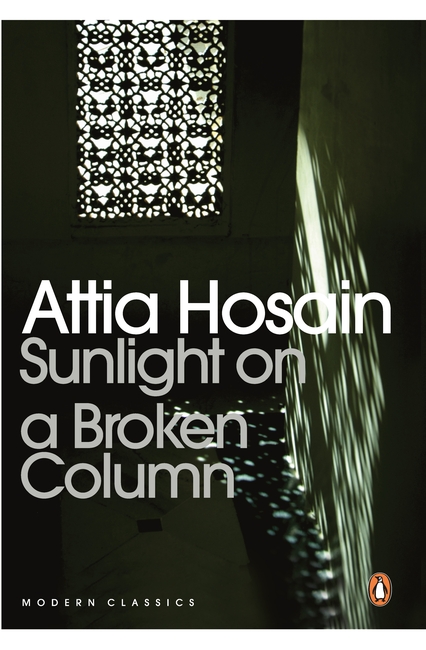
Laila, orphaned daughter of a distinguished Muslim family, is brought up in her grandfather’s house by orthodox aunts who keep purdah. At fifteen she moves to the home of a ‘liberal’ but autocratic uncle in Lucknow. Here, during the 1930s, as the struggle for Indian independence intensifies, Laila is surrounded by relatives and university friends caught up in politics. But Laila is unable to commit herself to any cause: her own fight for independence is a struggle against the claustrophobia of traditional life, from which she can only break away when she falls in love with a man whom her family has not chosen for her. With its beautiful evocation of India, its political insight and unsentimental understanding of the human heart, Sunlight on a Broken Column, first published in 1961, is a classic of Muslim life.

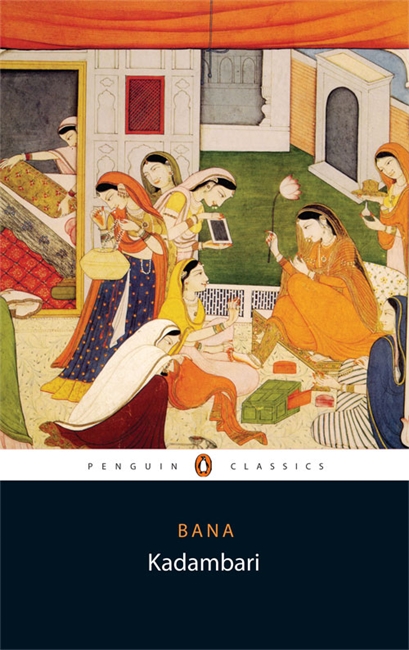
Bana is among the three most important prose writers in classical Sanskrit, all of whom lived in the late sixth and early seventh centuries AD. It is clear, from his writings, that his mind was amazingly modern, humane and sensitive, especially for the seventh-century India in which he lived. Bana had a healthy irreverence towards many of the established orthodoxies of his time and his strength lies in his skill as a storyteller and as a creator of characters vibrant with life and individuality.
Kadambari is a lyrical prose romance that narrates the love story of Kadambari, a Gandharva princess, and Chandrapida, a prince who is eventually revealed to be the moon god. Acclaimed as a great literary work, it is replete with eloquent descriptions of palaces, forests, mountains, gardens, sunrises and sunsets and love in separation and fulfillment. Featuring an intriguing parrot-narrator, the story progresses as a delightful romantic thriller played out in the magical realms between this world and the other, in which the earthly and the divine blend in idyllic splendour.
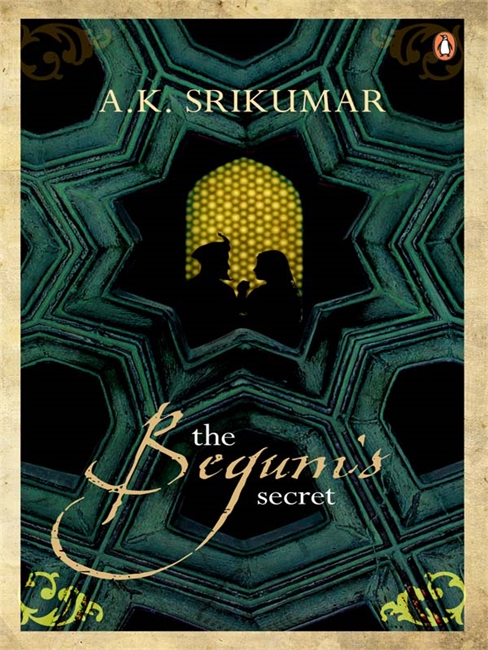
What do you suggest, then? How do we mitigate this tragedy? Three years of drought . . . three years of starvation!’ She realized it was his way of getting back at her. ‘There is an answer, Your Majesty. What if a large imambara were to be built, bigger and more magnificent than any constructed so far in Hindustan? Every Mussulman in Allah’s creation will remember Asaf-ud-daula with reverence for all time to come.’ 1784. Amid famine, poverty, a grand culture rises: Awadh. As Nawab Asaf-ud-daula tries to come to terms with new British masters, his awam seeks comfort in the vibrant poetry of Mir, the buzz of the Chowk, the thrill of the wrestling matches and the gossip of the zenankhana. In masterful prose, A.K. Srikumar tells the story of Asaf-ud-daula’s court and his people, of the uncertain fortunes of Begum Shams-un-nisa, Prince Wazir Ali, Nazir-i-Mahal Nuruddin, of the schemes of Naib Haider Baig Khan and Resident John Bristow and pretender Saadat Ali Khan, of the Bada Imambara and a culinary tradition that was born amidst the brick and mortar— dum pukht.