



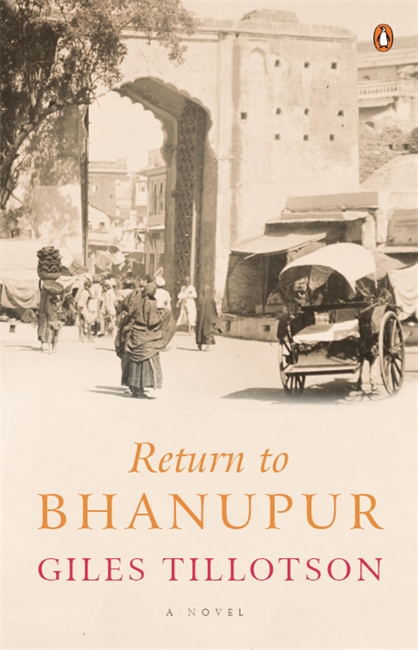
‘It is the first duty of kingship to be as the people wish to see me.’
This fictional account of events in the court of the princely state of Bhanupur, a hundred years ago, is a tale of intrigue, politics and image-building. What was going through the mind of Maharaja Amar Singh II in the key moments of his reign? How much did he rely on the advice of his clever prime minister Chatterjee, the wily Bengali? How did he solve sensitive issues like undertaking a voyage across the seas to attend the coronation ceremony of the British king, without polluting his caste? And what were his relations with the British—especially with Dr Constable and the architect Colonel Talbot, employed by his court? As the narrative moves towards its tragic conclusion, the characters’ innermost convictions are laid bare
Catagory: Historical Fiction
The House of Wives

Calcutta, 1841. Emanuel, an ambitious Jewish merchant, wants to make his fortune by trading opium with China. Over the ensuing decades, Emanuel’s success will be determined by two remarkable women: Semah, his dutiful first wife in Calcutta whose dowry funds the mercenary expedition to Hong Kong; and Pearl, the beautiful Chinese girl whom he falls in love with. Despite the open hostility between the two women, Emanuel insists that they must all live together in his Hong Kong mansion that locals call the House of Wives.
Brimming with intrigue and adventure, and written with astounding flair, The House of Wives is a dramatic and poignant tale of love, ambition, friendship and family inspired by the true story of the author’s great-grandfather.
The Chieftain’s Daughter
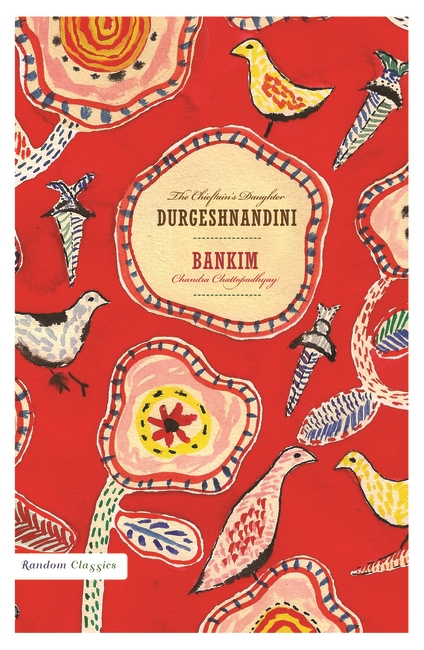
Inspired by the romances of Walter Scott, Durgeshnandini is a swashbuckling historical epic set in Bengal during the reign of the Mughal emperor Akbar in the sixteenth century.
Tamas
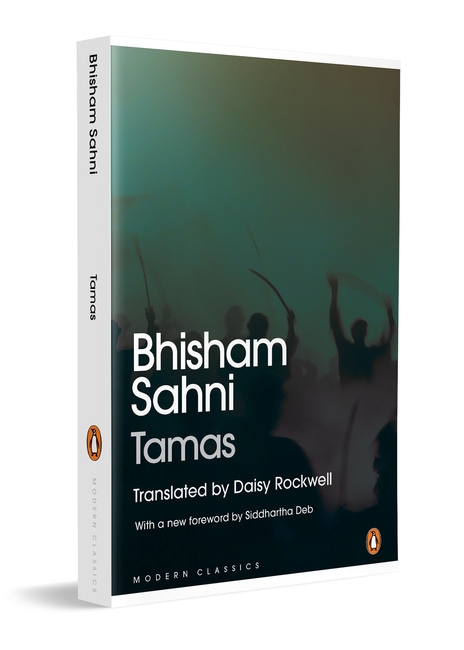
‘Tamas, in either Rockwell’s translation or the original Hindi, remains an essential text for the times’
Nilanjana Roy, Business Standard
‘Tamas is a prophetic warning against the use of religion as a weapon to gain and perpetuate political power’ GOVIND NIHALANI
In a city in undivided Punjab, Nathu, a tanner, is bribed to kill a pig. When the animal’s carcass is discovered on the steps of the local mosque the next morning, simmering tensions explode into an orgy of bloodlust. But in the midst of the ensuing carnage, despite the darkness of the times, rare moments of unexpected friendship and love also surface.
Winner of the Sahitya Aakdemi Award, Sahni’s iconic novel about the Partition of India tells the tale of an unfolding riot from different vantage points. In Daisy Rockwell’s definitive translation, this magnificent work comes vividly to life.
‘Tamas drove the point home that ordinary people want to live in peace’ Guardian
The Cowherd Prince
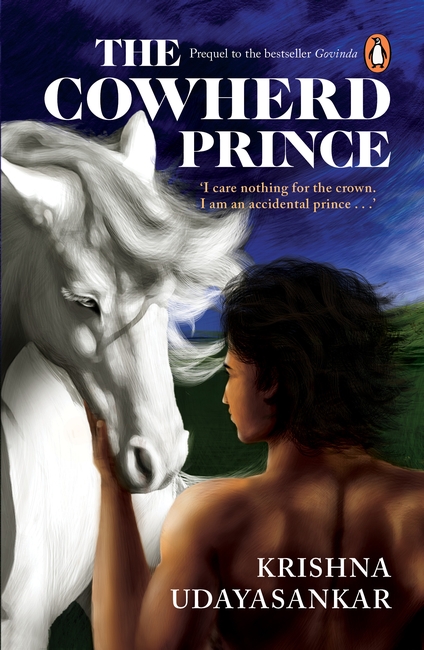
Govinda Shauri always has a plan.
Govinda, son of Nanda-one of the many cowherds in the verdant kingdom of Surasena, in Aryavarta-was content with his tough but wonderful life. That was until the king’s men came looking for him and his brother, Balabadra, spewing death and destruction in their wake.
Forced to leave behind those they love in order to save them, the brothers are now on the run-all the while being hunted by the tyrant king, Kans, and his bloodthirsty adviser, Chanuran, who will stop at nothing to kill them.
Even as their journey reveals Govinda’s true identity as a prince and the rightful heir to the Surasena crown, it pulls them deeper into the murky secrets surrounding the throne-and its bloody legacy.
What will it take for an ordinary cowherd boy to grow into a master strategist who will always have a plan?
For Pepper and Christ
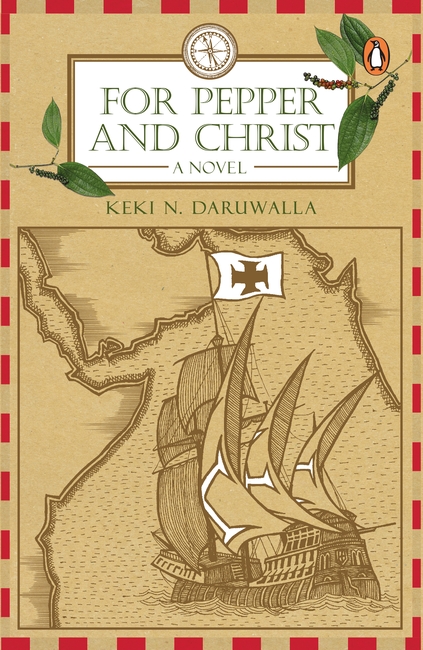
For a century the Portuguese had been scouring the seas, collecting maps and sending spies along the Red Sea to find out how the Arabs carried on their spice trade with India … the pursuit of a legend can be pretty thankless, but it catches human imagination by the forelock.’
In his first novel noted poet and short story writer Keki N. Daruwalla brings alive a world of tumultuous voyaging during the time of Vas co da Gama-an era when the quest for exotic spices triggered a passionate desire for exploration. Legends of a magnificent Christian dominion, nestled in the heart of the East and ruled by the fabled Prester John, also generated an intense curiosity about the lands bordering the Indian Ocean.
Traversing the ocean from the Mrican coastline to Calicut on the Malabar Coast, and zigzagging through the streets of Cairo, For Pepper and Christ takes the reader on a voyage of discovery with a singular cast of characters-Brother Figuero, the fervent missionary, constantly in a tussle between felt reality and envisioned ideal; Taufiq the eternal voyager, quick to board ship and even quicker to fall in love in a strange land; Ehtesham the artist who cannot stop painting even when his life is in danger; and the Muhtasib, the Zamorin and the Abbott, three men of power, but with vastly different ways of using that power. The flight of silver doves over a church spire causes riots in Egypt; the discord between Islam and Christendom intensifies; and the individual destinies of the characters collide and coalesce in this atlas of shifting geography and looming history to form an intriguing web of power and ambition, humility and sacrifice, greed and betrayal, love and redemption. Blending historical fact with richly imagined fiction, For Pepper and Christ is imbued with the creative brilliance of one ofIndia’s finest poets.
The Good Muslim
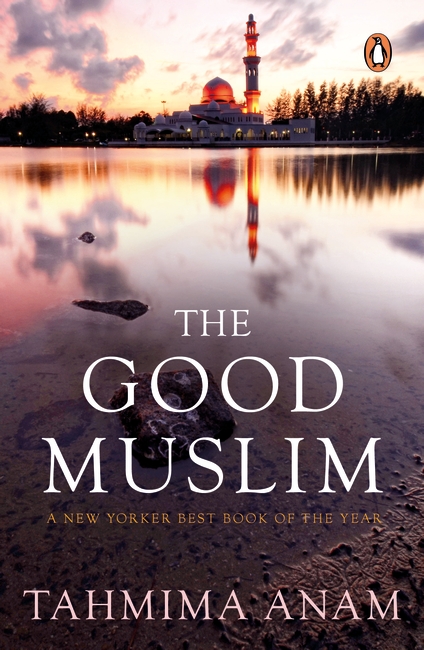
Maya Haque-outspoken, passionate, headstrong-has been estranged from her brother Sohail for almost a decade. When she returns home to Dhaka hoping for reconciliation, she discovers he has transformed beyond recognition. Can the two, both scarred by war, come together again? And what of Sohail’s young son, Zaid, caught between worlds but desperate to belong? The Good Muslim is an extraordinary novel about faith, family and the long shadow of war.
A Girl & A River
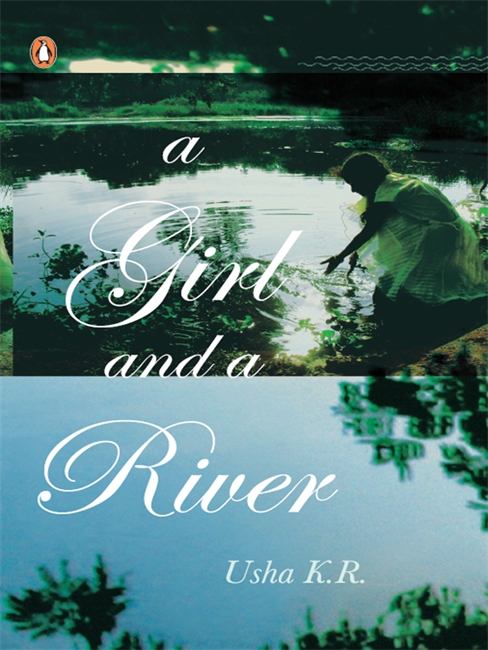
It is the 1930s and the fire of the freedom movement from distant Bengal and Delhi is warming the languid bones of the small town in Mysore, where Kaveri and Setu grow up. Theirs is a liberal, prosperous household and the family takes its privileges for granted. Mylaraiah, their father, believes that they are twice protected from such delusions as “swaraj”, once by the British and then by the maharaja. While Setu absorbs their father’s unquestioning veneration of the British, Kaveri, profoundly affected by Mahatma Gandhi’s visit to their town, comes to recognize their attempts to be ‘more English than the English’ as rather shameful. In an attempt to follow her heart and take charge of her own future, Kaveri defies her father and participates in the Quit India march organized by Shyam, the hot-headed revolutionary she is attracted to. Angered and jealous, and loyal to his father, Setu is forced into betraying his sister. The small town is shaken into life quite brutally when it faces a police firing for the first time in its history. But Kaveri is safe and home, or so Setu thinks . . . Fifty years later, Setu’s daughter tries to unravel the circumstances of her uneasy upbringing, of the grit-in-the-eye feeling to her childhood; understand her cold father, her self-effacing mother and their refusal to talk about their past. Two books and a letter found in a tea tin in the attic lead her to Kaveri, and it is Kaveri whose fate remains shrouded in mystery, who has the answer to her questions. But even with all the pieces of the jigsaw in hand, the picture eludes her. She is forced to come to terms with the insidiousness of family bonds as she realizes that the truth, if it at all exists, is made of elisions and imperfections.
The Collected Novels
Included here are the classics ‘The Train to Pakistan’ that describes the tragedy of Partition through the love story of a Sikh dacoit and a Muslim girl, ‘I Shall Not Hear the Nightingale’, which deals with the conflict in a prosperous Sikh family of Punjab in the 1940s; and the best-selling ‘Delhi’ , a vast, erotic, irreverent magnum opus centred on the Indian capital.
The Great Indian Novel
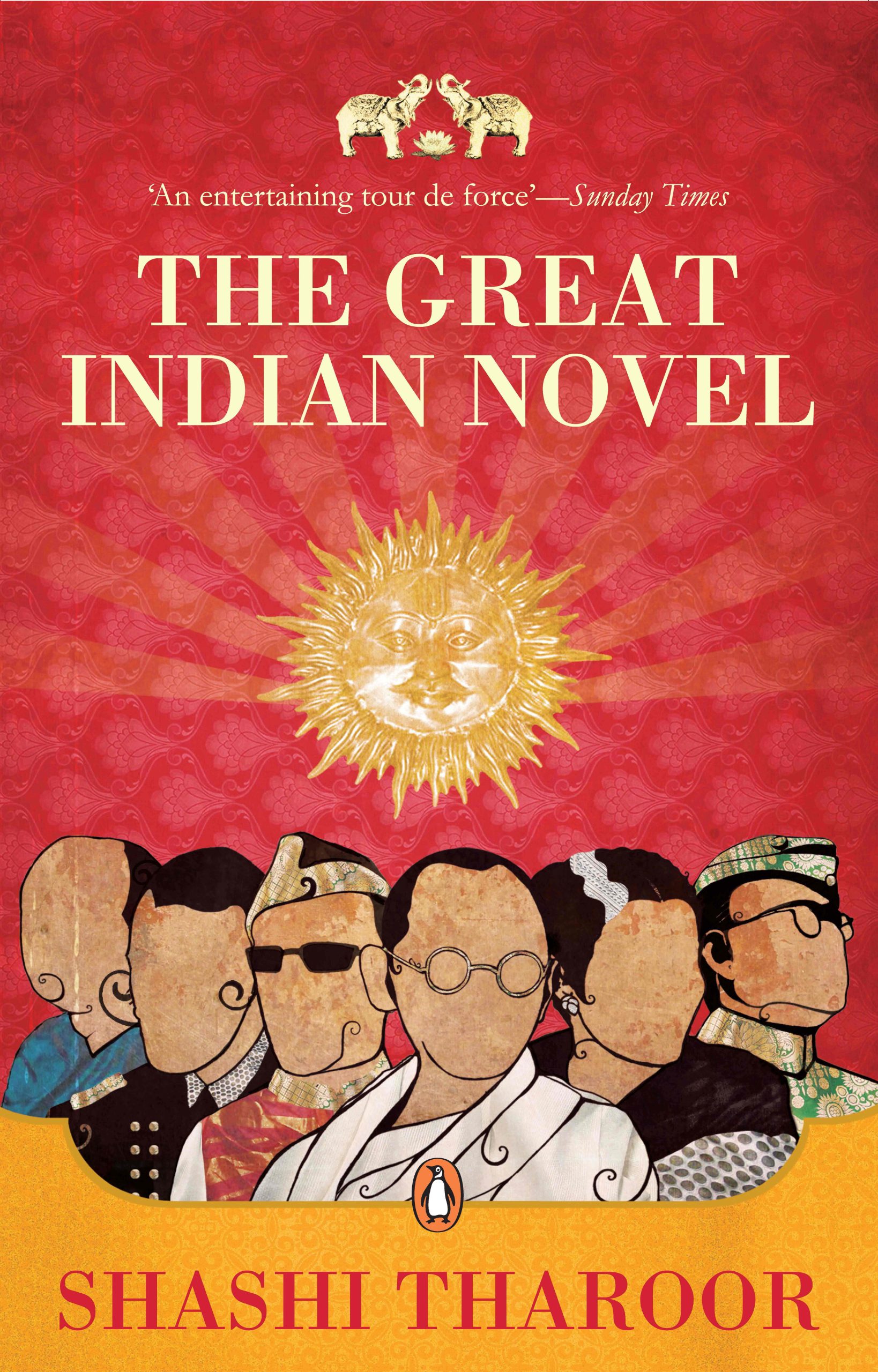
A fictionalized account of Indian history over the past 100 years. It aims to remain true to the original events, including characters such as Gandhi and Mountbatten but it also utilizes characters, incidents and issues from the Indian epic, the Mahabharata.