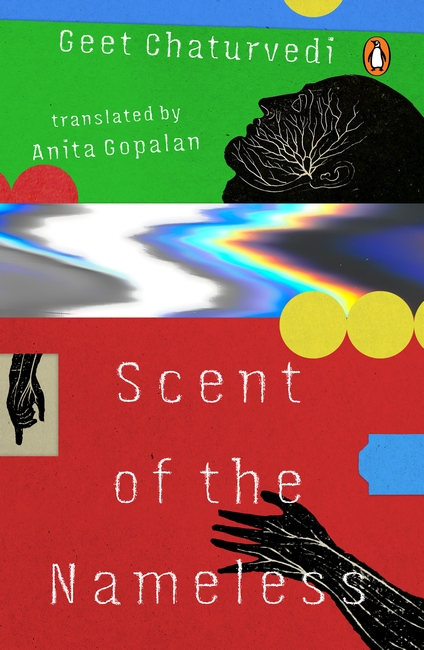
Scent of the Nameless traces the quiet unravelling of an ordinary life in urban India.
An unnamed middle-class office clerk lives with his wife and young daughter in a modest Mumbai apartment, leading a life of contented monotony—until a credit card unleashes desires he never knew existed. What begins as convenience becomes compulsion, then catastrophe. Debt seeps into everything: his relationships, his dignity, even his sense of self. As his humiliation deepens, the unseen machinery of markets, power and privilege tightens its grip around him.
Blending satire with hallucinatory lyricism and psychological tension, this novel by Geet Chaturvedi, in Anita Gopalan’s translation, is a piercing meditation on modern capitalism and the insidious violence of economic inequality. Written with restraint and moral precision, it stands in quiet kinship with J.M. Coetzee, W.G. Sebald and Thomas Bernhard.

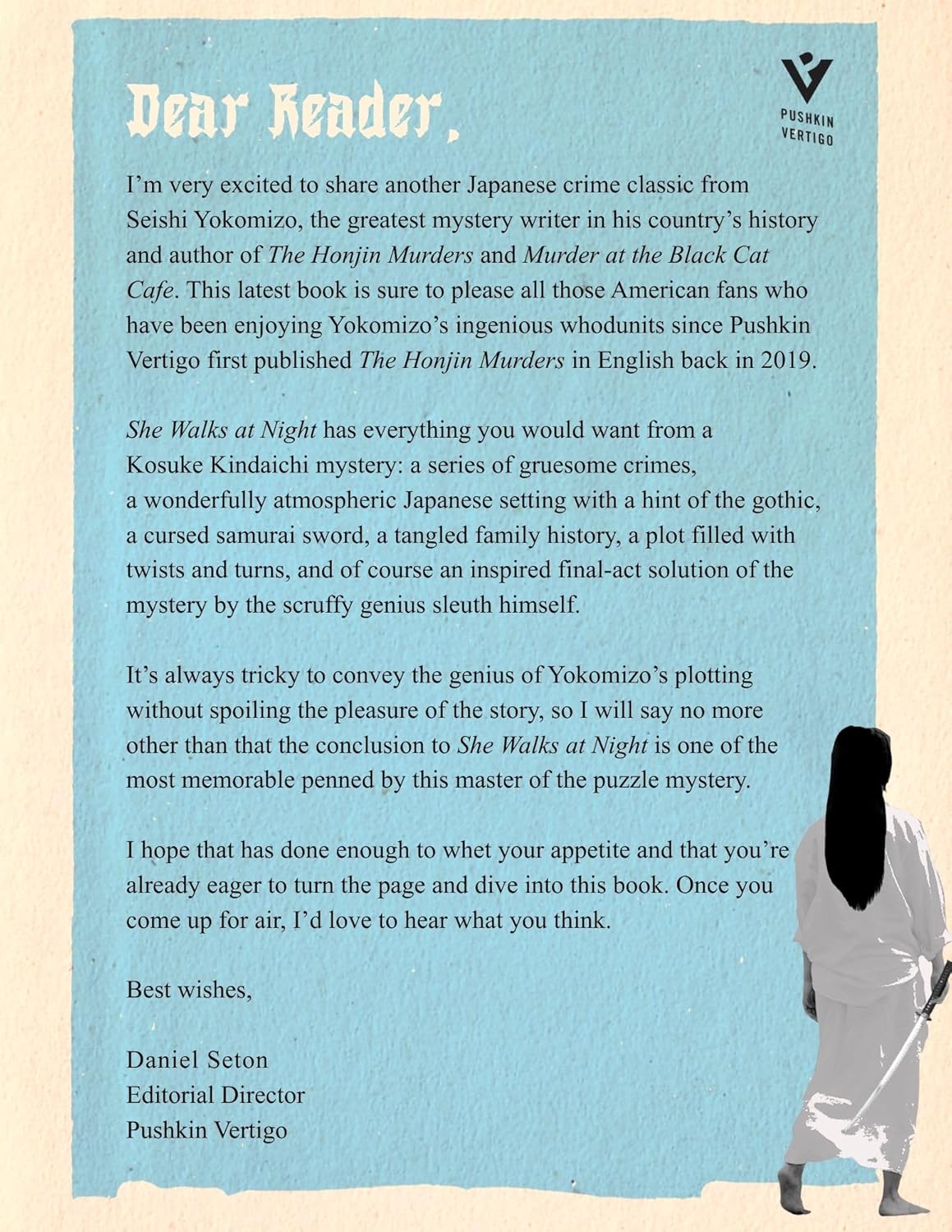
THE CLASSIC JAPANESE MYSTERY – from the author of The Honjin Murders
‘The master of ingenious plotting’ Guardian
Fear looms over the luxurious Furugami estate. The beautiful, young Yachiyo Furugami, plagued by episodes of sleepwalking, receives a series of cryptic letters culminating in an ominous warning: ‘Walk not at night’.
Then a body is discovered, decapitated with a centuries-old samurai sword. The police are baffled, so the famous sleuth Kosuke Kindaichi is called upon to solve the mystery, but before he can do so, the killer strikes again. Can Kindaichi get to the truth before the Furugami family is destroyed by its own secrets?

Loving someone is easy. But keeping them forever? That’s tough.
Vikrant Vayu is just another middle-class guy navigating college life in Delhi till one drunken night, when a dare from his friends changes everything. The challenge is to slide into the DMs of Tara Neer, the college’s reigning Instagram queen with an aesthetic feed and a vibe that screams ‘out of league’.
He’s not expecting anything. But Tara, intrigued by his charm and wit, starts chatting with him. What follows is an unexpected friendship that grows into something real. From cozy campus walks to viral couple reels and late-night chai dates, Vikrant and Tara fall in love.
For a while, it feels perfect. So perfect, they decide to get engaged. Families meet. Rings are discussed. Future feels real.
But love in the age of Instagram comes with receipts. And insecurities don’t disappear just because you say, ‘I trust you.’ Enter the red flags, the toxic patterns and online drama. And when those red flags start waving too loud, you’re forced to ask the question no couple wants to answer: Are we fighting for love—or just fighting?
Days With My Red-Flag Girlfriend is a raw, unfiltered story about modern love—the kind that’s messy, real and impossible to forget.

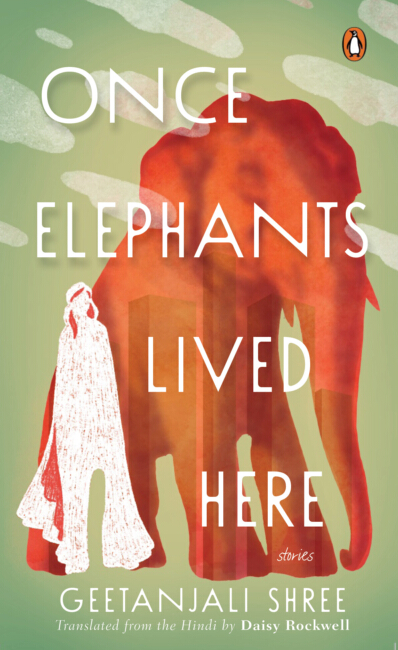
The eleven stories cover a wide variety of themes, but all have in common the stylistic experimentalism which came to blossom fully in Tomb of Sand. There is an iconoclasm to Geetanjali Shree’s writing, especially beginning with this collection. Readers will soon learn that nothing is sacred to the author: narrative and genre conventions are summarily pushed off their pedestals and in their place we find…what? Entirely new ways of conceiving and presenting storytelling unfurl before us as we come to question our own rigid preconceptions of the short story genre. In one story, a woman spends all day compulsively walking in circles around her housing complex. There is no introduction, no explanation, no denouement. In another, a woman goes on a writer’s retreat, and in a pseudo-sci-fi turn of events, falls passionately in love with the sky. The other participants in the retreat are robots. In a third, “Butterflies” (included here), a narrator staying in a cottage in Kerala is overwhelmed with the grief over past events, but is surprised out of her self-indulgence by a mysterious group of young women who are either nurses or diabetes patients; she’s never sure which. Plots break, sentences shatter, grammar careens, new words are formed, and new narrative structures are erected and felled. Once Elephants Lived Here reveals to us the pathbreaking experiments that led to Geetanjali Shree’s magnum opus Tomb of Sand.

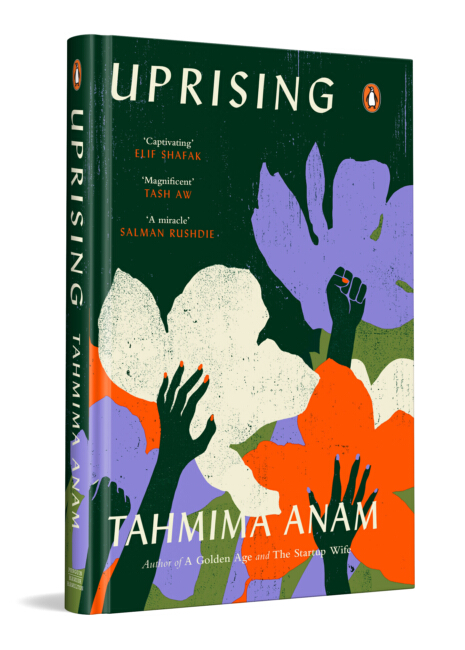
On a desolate, sinking island, a group of children witness their mothers living lives of cruelty and servitude.
Bought and sold by Amma, the sadistic madam who was once herself sold into slavery, the women have learned to accept their fate. Yet their children weave fantastic tales of escape, imagining that someday they will leave the island and enjoy a life of freedom.
When Kusum Khan, a young, educated woman from the city, is forcibly brought to the island, she too is subjected to Amma’s violent induction. Yet Kusum refuses to yield, and soon the collective complacency of her fellow prisoners turns into ferocity and defiance. Together, they begin a rebellion that will upend their island, their world and the very order of things. An earth-shattering drama of resistance and female power, Uprising gives voice to the silenced through the story of a revolution no one saw coming.

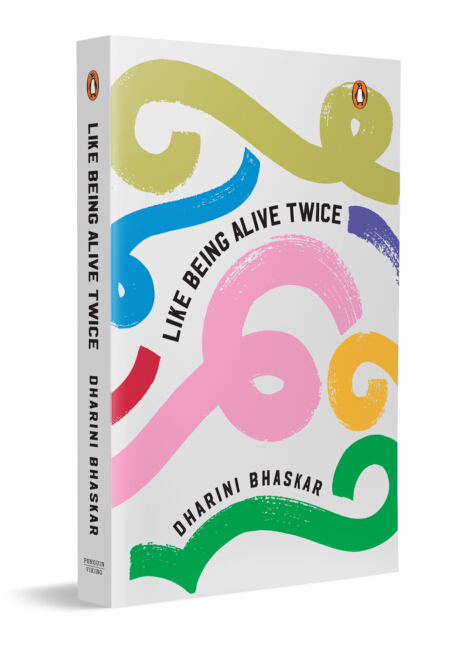
Is there a moment, so pliant, that we can nudge it towards any future we desire?
Sometimes I believe that there is such a moment. In a lifetime, once.
In an unnamed nation that’s about to rupture, Priyamvada (Poppy), a Hindu and Tariq, a Muslim are in love. In a few hours, Tariq intends to propose; Poppy intends to say yes. Both assume that they’ll fend off political blowback. For, surely, their privilege will protect them.
But will it? Will Poppy and Tariq sustain a love so wholesome, so cossetted, that it remains impervious to a dystopian state? Or will the two be rent apart by chance and circumstance? What will their lives look like as they plunge into a brave new future, together or apart?
Written in alternating chapters, Like Being Alive Twice trails fact and possibility—the tale as-it-was and the tale as-it-could-have-been-if-only—arranging and rearranging, tweaking and nudging; hoping to find a lasting peace in one or the other story; hoping, above all else, that such peace will prevail over murderous times.
Politically urgent, stylistically intrepid, and relentless in its commitment to scrutinizing love, loss and the language of privilege, Like Being Alive Twice tells of the frantic pursuit of life piled upon life, even as a bloodied world closes in.
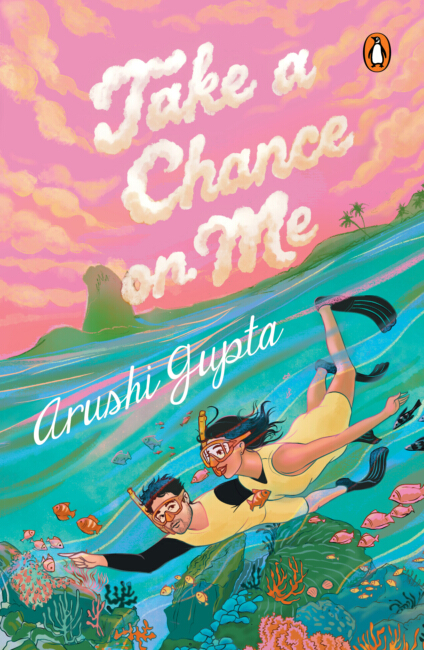
Sitara is so close to having it all figured out.
At 29, she’s a lawyer with a career that’s going nowhere and a love life that’s nothing short of a nightmare. Worse, she’s slowly becoming her colleague Nikhil’s ‘uncommitted’ plus-one—all while being spectacularly, hopelessly in love with him.
It’s fine. She’s fine. This is all completely normal.
Of course, Sitara has options: she could open her bakery or write that novel she’s been penning in her head for years, or finally turn her upcycling hobby into something that could make her truly happy—and pay the bills. Instead, she goes to work.
And then there’s Samar. Her sworn enemy. The headache that just won’t go away. The man, who has decided to take Sitara on as his personal project. He’s infuriating, charming and somehow lately, always around her.
As Sitara’s constant run ins with Samar threaten the carefully curated stability Sitara keeps close to her chest, she begins to wonder if she really is wasting her life.
With her feelings in disarray, Sitara has a choice to make—keep waiting to be chosen, or finally choose herself.

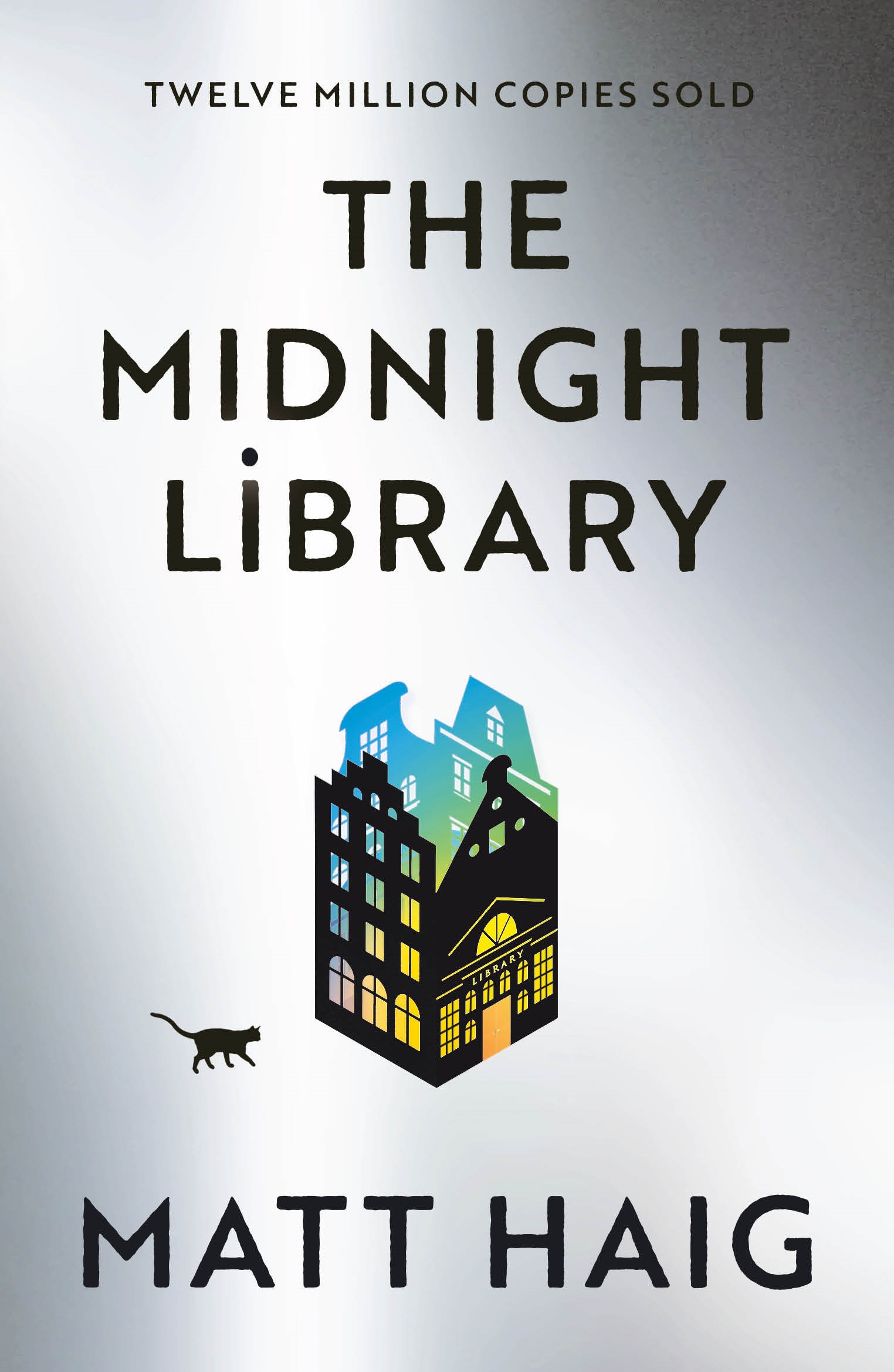
Nora’s life has been going from bad to worse. Then at the stroke of midnight on her last day on earth she finds herself transported to a library. There she is given the chance to undo her regrets and try out each of the other lives she might have lived. Which raises the ultimate question: with infinite choices, what is the best way to live?
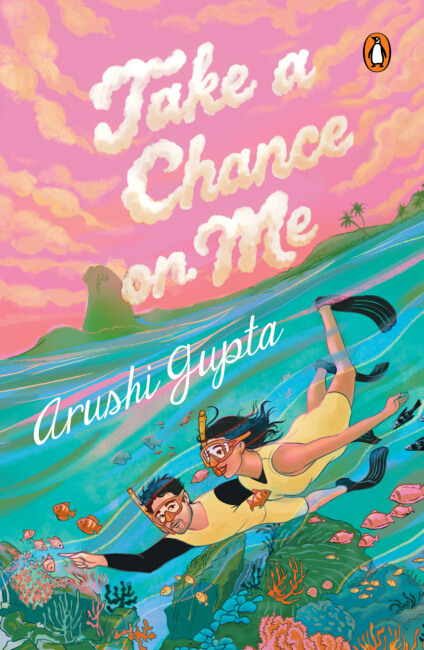
Sitara is so close to having it all figured out.
At 29, she’s a lawyer with a career that’s going nowhere and a love life that’s nothing short of a nightmare. Worse, she’s slowly becoming her colleague Nikhil’s ‘uncommitted’ plus-one—all while being spectacularly, hopelessly in love with him.
It’s fine. She’s fine. This is all completely normal.
Of course, Sitara has options: she could open her bakery or write that novel she’s been penning in her head for years, or finally turn her upcycling hobby into something that could make her truly happy—and pay the bills. Instead, she goes to work.
And then there’s Samar. Her sworn enemy. The headache that just won’t go away. The man, who has decided to take Sitara on as his personal project. He’s infuriating, charming and somehow lately, always around her.
As Sitara’s constant run ins with Samar threaten the carefully curated stability Sitara keeps close to her chest, she begins to wonder if she really is wasting her life.
With her feelings in disarray, Sitara has a choice to make—keep waiting to be chosen, or finally choose herself.

‘This book is a complete delight, not only a fairytale for adults that transports you on a magical journey of childlike wonder, but also a parable that helps you lead a better life’ – JAMES NORTON
‘Magically hopeful. This story will speak to your soul and your monkey mind and bring them back into harmony. Beautiful and uplifting, charming and soul-nurturing, this is another glorious triumph from the beloved Matt Haig’ – DONNA ASHWORTH
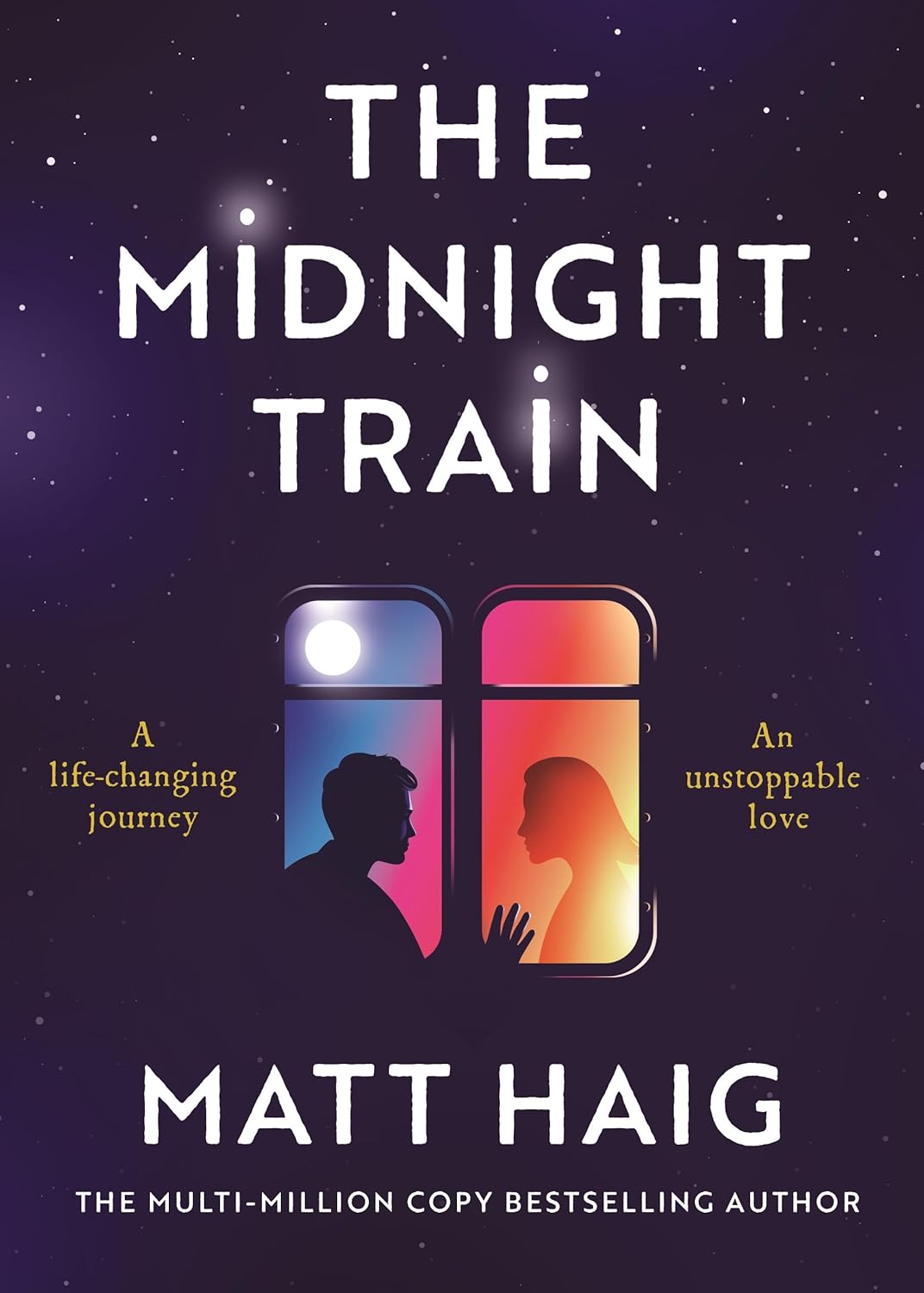
‘If you enjoyed The Midnight Library, you’ll love this. The Midnight Train is exquisite storytelling and utterly brilliant. One of the most beautiful stories you’ll ever experience’ – JOANNA CANNON
When your life flashes before your eyes, what will matter most?