



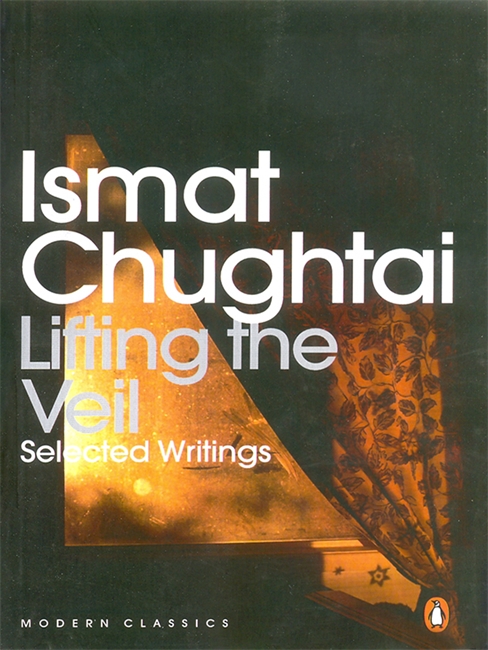
At a time when writing by and about women was rare and tentative, Ismat Chughtai explored female sexuality with unparalleled frankness and examined the political and social mores of her time.
She wrote about the world that she knew, bringing the idiom of the middle class to Urdu prose, and totally transformed the complexion of Urdu fiction.
Lifting the Veil brings together Ismat Chughtai’s fiction and non-fiction writing. The twenty-one pieces in this selection are Chughtai at her best, marked by her brilliant turn of phrase, scintillating dialogue and wry humour, her characteristic irreverence, wit and eye for detail.
Catagory: Literature & Fiction
Srikanta
Srikanta, the narrator of Saratchandra’s epic novel, is an aimless drifter, a passive spectator to his own life, a weak and impressionable soul who cannot survive without the support of an individual stronger than himself. As a child he idealizes the chaste and selfless Annada Didi. Arriving in Burma as a young man looking for new experiences, Srikanta meets the rebellious Abhaya who rejects her violent, bigamous husband to live openly with her lover. Srikanta then experiments with becoming a sanyasi, is bewitched for a while by the Vaishnavi, Kamal Lata, and wanders on till his directionless existence finally finds a focus- when he resigns himself to life with the notorious but stunning Pyari Baiji, breaking free of the social values he grew up with. Through his dynamic and arresting characters, Saratchandra brings alive nineteenth-century Bengal, rife with prejudices and ready for change.
The Resignation
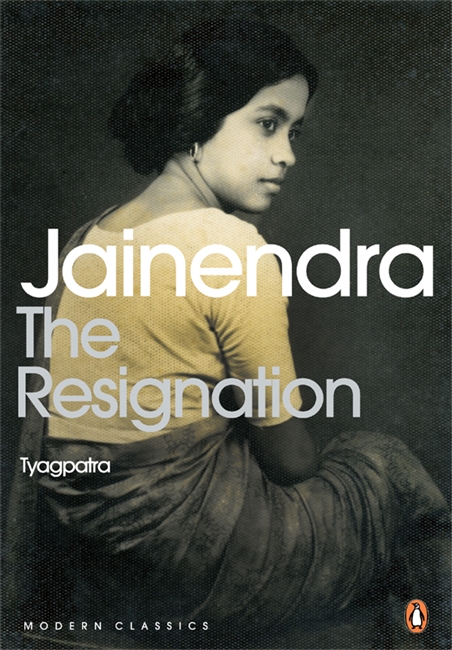
One of the giants of Hindi literature, Jainendra introduced the ‘psychological’ in Hindi fiction. Questions of love, marriage and relationships occupy much of Jainendra’s works, taking them into the realm of the internal and the intimate. In The Resignation, Jainendra tells the story of Mrinal, a young woman whose uncompromising idealism results in her family and society rejecting her completely. Almost seventy-five years after it was written, the story of Mrinal’s struggle against stultifying social norms and her fierce individualism remain startlingly relevant.
Sisters
When her parents die in an air crash, Mikki Hiralal discovers that her father’s massive business empire is in serious trouble. And it’s up to her to sort the mess. Beset by creditors, rapacious tycoons and untrustworthy associates, the young woman realizes that there is only one person she can turn to for help—the beautiful Alisha, her father’s illegitimate daughter. There is only one hitch—Alisha hates Mikki . . .
Socialite Evenings
A divorce and a succession of sordid affairs have left prominent Bombay socialite Karuna feeling battered, empty and melancholic. She looks back upon her life and the friends and enemies who surround her-neurotic, man-hungry Anjali; gorgeous, vivacious Ritu; high-profile editor Varun, with a penchant for young boys; Krish, the pretentious adman, whose wife actively helps him in his extramarital affairs. Scandalous, astute and utterly riveting, Shobhaa Dé’s first novel, Socialite Evenings, laid bare the world of high-society India and changed the face of the Indian novel forever.
The Seduction Of Shiva
The god Shiva is utterly seduced by Mohini, the enchanting female form assumed by the god Vishnu during the churning of the ocean for nectar. A barber employs wit and wile and rumours of witchcraft to win his wife back from the lustful attentions of their king. The celestial nymph Urvashi curses the Pandava prince Arjuna when he rejects her sexual advances. A woman caught in adultery befools her elders with a religious ritual. A man with a disagreeable missing wife insists nevertheless that she be recovered by his ruler who has a similar problem.
Refined, colloquial, romantic, cynical, satirical by turns, these stories of erotic love, elegantly translated from the Sanskrit classics, make a sustained argument for the secular ends of life of desire tempered with discrimination and pleasure with restraint.
The Mahabharata
The Greatest Story Ever Told
Dispute over land and kingdom may lie at the heart of this story of war between cousins-the Pandavas and the Kouravas-but the Mahabharata is about conflicts of dharma. These conflicts are immense and various, singular and commonplace. Throughout the epic, characters face them with no clear indications of what is right and what is wrong; there are no absolute answers. Thus every possible human emotion features in the Mahabharata, the reason the epic continues to hold sway over our imagination.
In this superb and widely acclaimed translation of the complete Mahabharata, Bibek Debroy takes us on a great journey with incredible ease.
French Lover
French Lover is the story of Nilanjana, a young Bengali woman from Kolkata who moves to Paris after getting married to Kishanlal, a restaurant owner. Kishanlal’s luxurious apartment seems to be a gilded cage for Nilanjana, and she feels stifled within its friendless confines. Her marriage, where she functions as little more than a housekeeper and sex object, is far from fulfilling and Nilanjana desperately looks for a way out of the boredom and depression that threaten to engulf her. It is at this point that she meets Benoir Dupont, a blond, blue-eyed handsome Frenchman, and is swept off her feet. Benoir introduces Nilanjana to the streets, cafes and art galleries of Paris. In her passionate, sexually liberating relationship with Benoir, she finally begins to have an inkling of her own desires. The relationship ends when Nilanjana realises that Benoir’s first priority is himself and not the woman he loves, and that her need for him has ended. But her road to self-discovery has only just begun. Bold in concept and powerful in execution, French Lover is a fascinating glimpse into the workings of a woman’s mind as she struggles to come to terms with her identity in a hostile world.
One Amazing Thing

A group of nine are trapped in the visa office at an Indian Consulate after a massive earthquake in an American city. Two visa officers on the verge of an adulterous affair; Jiang, a Chinese-Indian woman in her last years; her gifted teenage granddaughter Lily; an ex-soldier haunted by guilt; Uma, an Indian-American girl bewildered by her parents’ decision to return to Kolkata after twenty years; Tariq, a young Muslim man angry with the new America; and an enraged and bitter elderly white couple. As they wait to be rescued—or to die—they begin to tell each other stories, each recalling ‘one amazing thing’ in their life, sharing things they have never spoken of before. Their tales are tragic and life-affirming, revealing what it means to be human and the incredible power of storytelling.
A Girl Like That

Sixteen-year-old Zarin Wadia is many things: a bright and vivacious student, an orphan, a risk-taker. She’s also the kind of girl that parents warn their kids to stay away from: a troublemaker, whose many romances are the subject of endless gossip at school. You don’t want to get involved with a girl like that, they say. So how is it that eighteen-year-old Porus Dumasia has only ever had eyes for her? And how did Zarin and Porus end up dead in a car together, crashed on the side of a highway in Jeddah, Saudi Arabia? When the religious police arrive on the scene, everything everyone thought they knew about Zarin is questioned. And as her story is pieced together, told through multiple perspectives, it becomes clear that she was far more than just a girl like that. This beautifully written debut novel from Tanaz Bhathena reveals a rich and wonderful new world to readers; tackles complicated issues of race, identity, class and religion; and paints a portrait of teenage ambition, angst and alienation that feels both inventive and universal.