



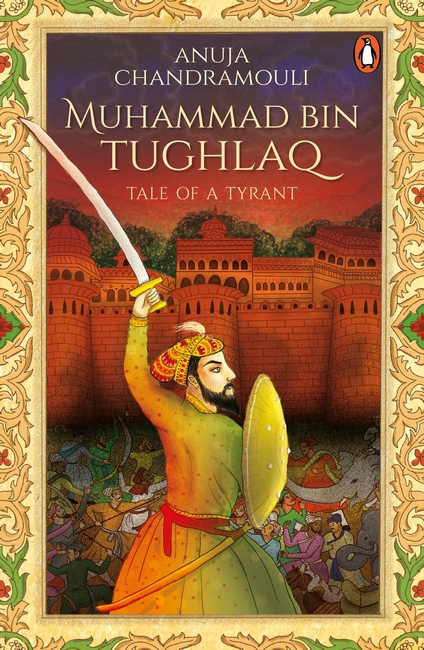
When his father dies, Prince Jauna Khan succeeds to the throne of Delhi as Muhammad bin Tughlaq. His reign will prove to be epic and bloody, but unsurpassed in splendour, innovation and defeat.
A formidable strategist and remarkable scholar, the Sultan will go down in history for his brutality as well as his brilliance, unfairly remembered only as a cruel tyrant who might have been raving mad. His high-flown aspirations and grandiose ambitions may have met with crushing failure, but even so, Tughlaq was a great hero of the fourteenth century, albeit a tragic and fatally flawed one.
In this fictional retelling, Anuja Chandramouli, one of India’s best mythology writers, reimagines Muhammad bin Tughlaq’s life and times in incredible detail to bring to life the man behind the monarch.
Catagory: Literature & Fiction
Ladies Coupe
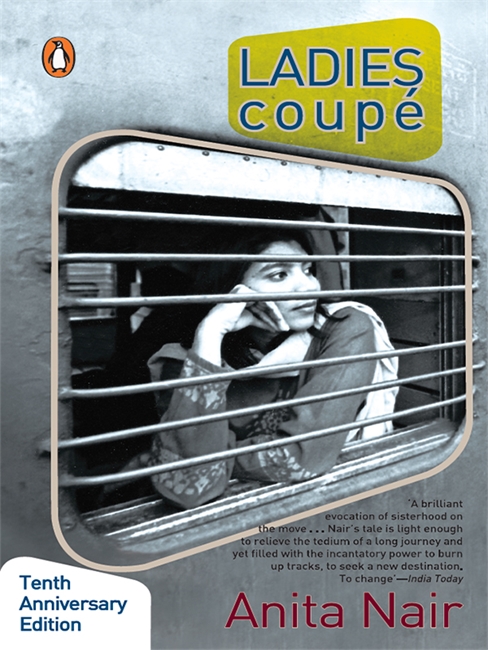
The story of a woman’s search for strength and independence Meet Akhilandeshwari, Akhila for short: forty-five and single, an income tax clerk and a woman who has never been allowed to live her own life—always the daughter, the sister, the aunt, the provider. Until the day she gets herself a one-way ticket to the seaside town of Kanyakumari, gloriously alone for the first time in her life and determined to break free of all that her conservative Tamil brahmin life has bound her to. In the intimate atmosphere of the ladies coupe which she shares with five other women, Akhila gets to know her fellow travellers: Janaki, pampered wife and confused mother; Margaret Shanti, a chemistry teacher married to the poetry of elements and an insensitive tyrant too self-absorbed to recognize her needs; Prabha Devi, the perfect daughter and wife, transformed for life by a glimpse of a swimming pool; fourteen-year-old Sheela, with her ability to perceive what others cannot; and Marikolanthu, whose innocence was destroyed by one night of lust. As she listens to the women’s stories, Akhila is drawn into the most private moments of their lives, seeking in them a solution to the question that has been with her all her life: Can a woman stay single and be happy, or does a woman need a man to feel complete?
When Dreams Travel
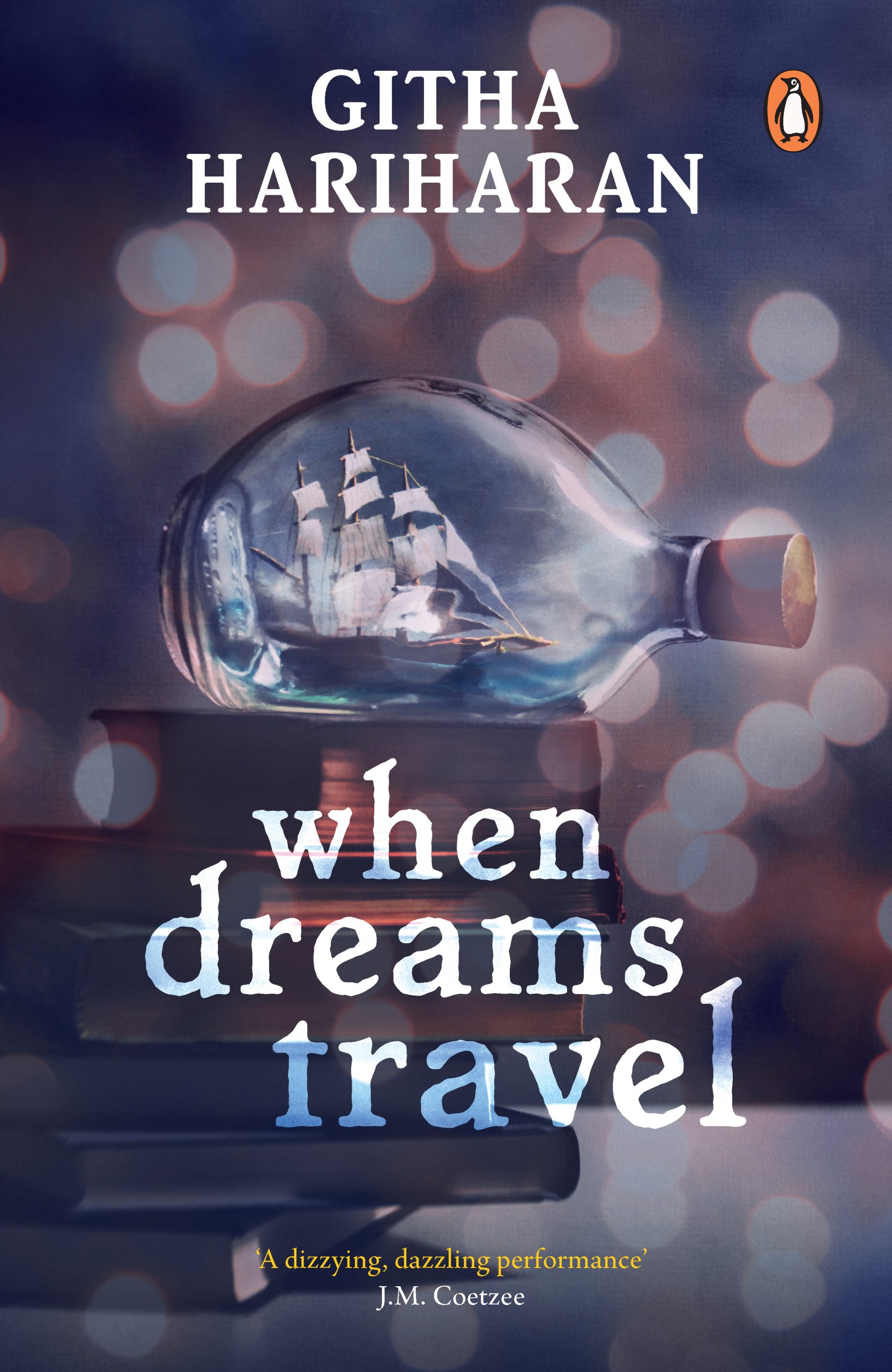
A magical tour de force by a writer at the height of her powers, ‘When Dreams Travel’ weaves round Scheherazade-or Shahrzad of the thousand and one nights-a vibrant, inventive story about that old game that’s never played out: the quest for love and power. The curtain opens on four figures, two men and two women. There is the sultan who wants a virgin every night; there is his brother, who makes an enemy of darkness and tries to banish it; and there are their ambitious brides, the sisters Shahrzad and Dunyazad, aspiring to be heroines-or martyrs. Travelling in and out of these lives to spellbinding effect is a range of stories, dark, poetic and witty by turns, spanning medieval to contemporary times. With its sharp and lively blend of past and present, its skillful reworking of the historical tradition, and its controlled use of evocative language, Githa Hariharan’s multi-voiced narrative assumes the significance of modern myth.
Once Upon A Curfew
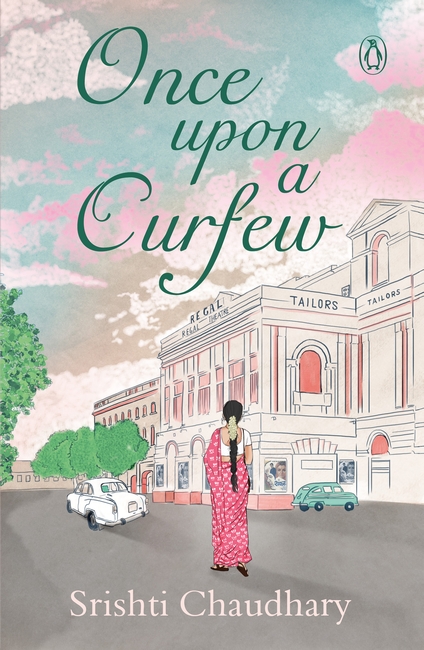
It is 1974. Indu has inherited a flat from her grandmother and wants to turn it into a library for women. Her parents think this will keep her suitably occupied till she marries her fiancé, Rajat, who’s away studying in London.
But then she meets Rana, a young lawyer with sparkling wit and a heart of gold. He helps set up the library and their days light up with playful banter and the many Rajesh Khanna movies they watch together.
When the Emergency is declared, Indu’s life turns upside down. Rana finds himself in trouble, while Rajat decides it’s time to visit India and settle down. As the Emergency pervades their lives, Indu must decide not only who but what kind of life she will choose.
The King of Kings
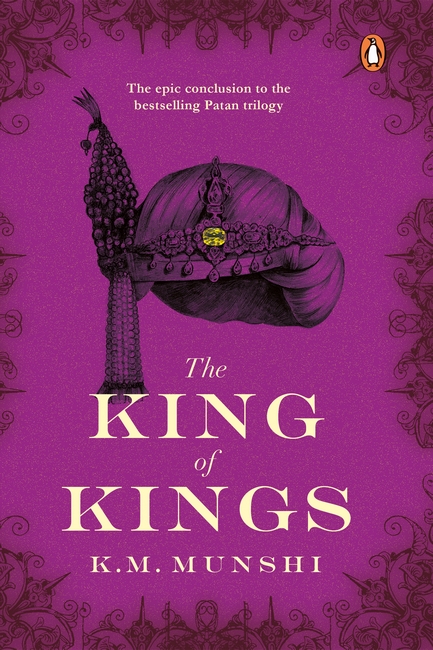
A mysterious emissary arrives in the port city of Bhrigukachchh. He has been sent by King Jaysinhdev of Patan with a secret message for Kaak, the valiant chieftain of the city. The king seeks to urgently enlist Kaak’s help in conquering the kingdom of Junagadh. However, Kaak has also received crucial summons from two others: Leeladevi, the firebrand princess whose marriage to Jaysinhdev Kaak himself facilitated; and Ranakdevi, the queen of Junagadh.
Caught in a web of conflicting loyalties, Kaak must navigate a treacherous terrain of political machinations where the slightest misstep could lead to grave consequences-where even he will not emerge unscathed.
K.M. Munshi’s magnificent conclusion to his beloved Trilogy, The King of Kings is a panoramic epic filled with adventure and intrigue, and a timeless classic with a nuanced insight into human nature and the complex links between statecraft and violence.
The City and the Sea
In a crumbling neighbourhood in New Delhi, a child waits for a mother to return home from work. And, in parallel, in a snow-swept town in Germany on the Baltic Sea coast a woman, her memory fading, shows up at a deserted hotel. Worlds apart, both embark, in the course of that night, on harrowing journeys through the lost and the missing, the living and the dead, until they meet in an ending that breaks the heart – and holds the promise of putting it back together again.
Called the novelist of the newsroom, Raj Kamal Jha cleaves open India’s tragedy of violence against women with a powerful story about our complicity in the culture that supports it. This is a book about masculinity – damaging and toxic and yet enduring and entrenched – that begs the question: What kind of men are our boys growing up to be?
Immortal
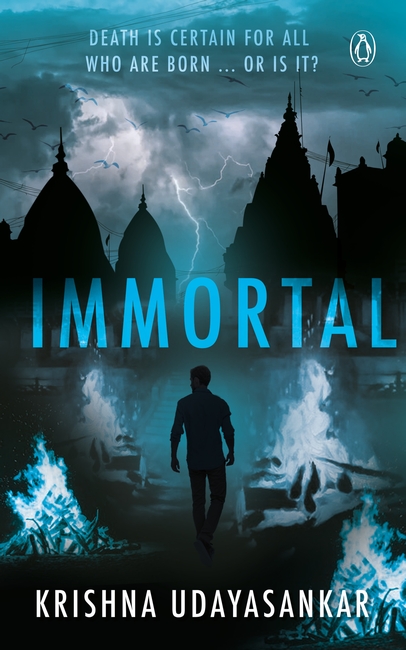
Professor Bharadvaj is more than just another whisky-loving, gun-toting historian-for-hire. Behind the assumed identity of a cynical academic is a man who has walked the earth for scores of years. He is Asvatthama-the cursed immortal, the man who cannot die.
When Professor Bharadvaj is approached by the enigmatic Maya Jervois to search for a historical artefact unlike any other, he is reluctant to pursue it. The object in question, the Vajra, is rumoured to possess incredible alchemical powers, but the Professor does not believe it exists. After all, he has spent many lifetimes-and identities-searching for it, in a bid to unearth the secret to his unending life.
Yet, as the evidence of the Vajra’s existence becomes increasingly compelling, the professor is plunged into an adrenaline-fuelled adventure that takes him from the labyrinthine passages beneath the Somnath temple to the legendary home of the siddhas in the Nilgiris, and finally into the deserts of Pakistan to solve a confounding puzzle left behind by the ancients.
But who is behind the dangerous mercenaries trying to thwart his discoveries at every step? And is the professor-a legendary warrior in a long-ago life-cursed to walk the path of death and bloodshed forever?
3
Early thirteenth century CE. The Srivijaya Empire, considered to be one of the world’s greatest maritime forces, has been abruptly left powerless in a swift political exchange.
With nothing but a meaningless crown, a once-lauded navy and the will to keep alive the name of Srivijaya against the endless onslaughts of old enemies and ambitious neighbours, Emperor Prabhu Dharmasena and his kin leave behind their island realm to traverse the seas, desperate and homeless. Sailing amongst them is Dharmasena’s youngest son, Nila Utama, for whom loyalty and honour have ceased to have meaning since he saw his father forsake their beloved land.
Now, all that is left to do is survive…
Or so Nila thinks, till a voyage across turbulent seas brings him to a fishing village, where the headstrong prince, so far insistent on keeping to the shadows, is forced to step up to his responsibility, face his old demons and discover what it truly means to be a king.
Based on the founding legend of the island of Singapore, also known as Singapura or the Lion City, 3 is an engrossing tale – told in an exquisitely rich voice – of love, self-realization and adventure on the high seas.
The Old Man And His God
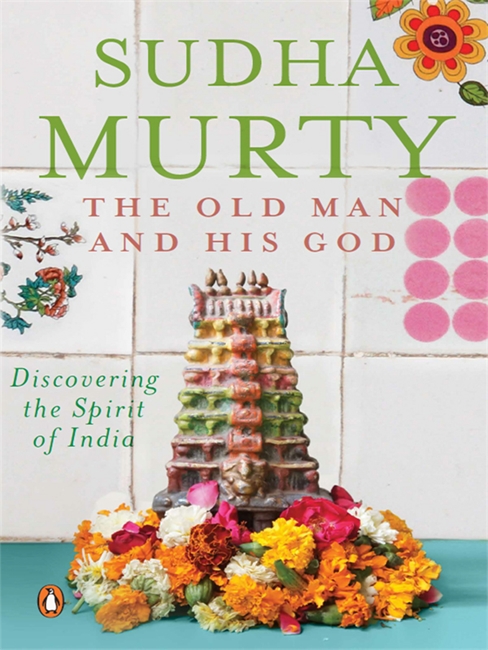
As she goes about her work with the villagers, slum dwellers and the common men and women of India, Sudha Murty-writer, social worker and teacher-listens to them and records what they have to say. Their accounts of the struggles and hardships which they have at times overcome, and at other times been overwhelmed by, are put together in this book.There are stories about people’s generosity-and selfishness-in times of natural disasters like the tsunami; women struggling to speak out in a world that refuses to listen to them; and tales of young professionals trying to find their feet as they climb up the corporate ladder.Told simply and directly from the heart, The Old Man and His God is a collection of snapshots of the varied facets of human nature and a mirror to the souls of the people of India.
Mahashweta
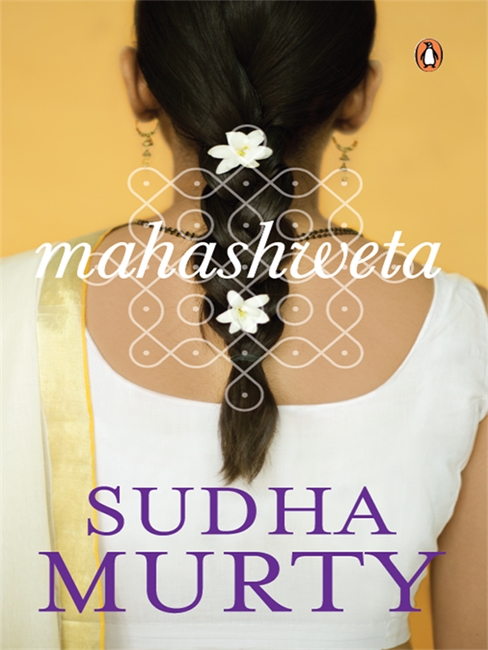
Anupama looked into the mirror and shivered with shock. A small white patch had now appeared on her arm.’ Anupama’s fairytale marriage to Anand falls apart when she discovers a white patch on her foot and learns that she has leukoderma. Abandoned by her uncaring in-laws and insensitive husband, she is forced to return to her father’s home in the village. The social stigma of a married woman living with her parents, her steother’s continual barbs and the ostracism that accompanies her skin condition force her to contemplate suicide. Determined to rebuild her life against all odds, Anupama goes to Bombay where she finds success, respect and the promise of an enduring friendship. Mahashweta is an inspiring story of courage and resilience in a world marred by illusions and betrayals. This poignant tale offers hope and solace to the victims of the prejudices that govern society even today.