Twenty tales to curdle your blood and scorch your soul, chosen from Roald Dahl’s bestsellers-Over to You, Someone Like You, Kiss Kiss and Switch Bitch
Hypnotized from the first sentence, you will remain spellbound as Roald Dahl unravels his fiendish fictions with their satisfying twist-in-the-tale finales, as he leads you through the dangers of gambling for high stakes over wine, the perils of being a vegetarian and the macabre consequences of a night-time seduction . . .
The Best of Roald Dahl is, quite simply, Roald Dahl at his sinister best.

India, 1922. A curse seems to have fallen upon the royal family of Satapur, a princely kingdom tucked away in the lush Sahyadari mountains, where both the maharaja and his teenage son have met with untimely deaths. The state is now ruled by an agent of the British Raj on behalf of Satapur’s two maharanis, the dowager queen and her daughter-in-law.
When a dispute arises between the royal ladies over the education of the young crown prince, a lawyer’s counsel is required to settle the matter. Since the maharanis live in purdah, the one person who can help is Perveen Mistry, Bombay’s only female lawyer. But Perveen arrives to find that the Satapur Palace is full of cold-blooded power play and ancient vendettas.
Too late she realizes she has walked into a trap. But whose? And how can she protect the royal children from the palace’s deadly curse?
‘A marvellously plotted, richly detailed series’
WASHINGTON POST
‘Even better than the series’ impressive debut’
PUBLISHERS WEEKLY
‘Perveen Mistry . . . is sure to join the leads of great mystery fiction’
SUSAN ELIA MACNEAL
‘An astonishing heroine’
BAPSI SIDHWA

Set in Burma during the British invasion of 1885, this masterly novel tells the story of Rajkumar, a poor boy lifted on the tides of political and social chaos, who goes on to create an empire in the Burmese teak forest. When soldiers force the royal family out of the Glass Palace and into exile, Rajkumar befriends Dolly, a young woman in the court of the Burmese queen, whose love will shape his life. He cannot forget her, and years later, as a rich man, he goes in search of her. Through this brilliant and impassioned story of love and war, Amitav Ghosh presents a ruthless appraisal of the horrors of colonialism and capitalist exploitation.
A biblical story travels across regions and time-ultimately reaching medieval India where it is transformed by Shaivite overtones. The result is an exquisite epic love poem of love which also attests to the rich diversity of India’s cultural past.
In an unnamed kingdom in the West, the beautiful princess Zuleikha has nightly visions of a handsome, young man. So captivated is she by this beautiful stranger that her waking hours are afflicted with heartache, much to the anxiety of her father. Zuleikha is resolved to be with Yusuf, and it is in her dreams that she learns of the obstacles that separate her from her beloved. What ensues is a captivating tale of longing and love-a parable of the journey of the soul in its search for the divine.
Magnificent in its simple elegance, A Tale of Wonder is a timeless story that challenges the insidious notion that India has always been dominated by one faith only and insular to other cultural and religious influences.

‘Magnificent . . . Ashk writes with a clear hand and is served well by Daisy Rockwell as she recreates a compelling narrative’-Dawn
Unfolding over the course of a single day, Ashk’s sweeping sequel to Falling Walls explores the inner struggles of Chetan, an aspiring young writer, as he roams the labyrinthine streets of 1930s’ Jalandhar, haunted by his thwarted ambitions but intent on fulfilling his dreams.
Married to a woman he does not love while pining for another man’s wife, Chetan must also face the prospect of taking up a dead-end job in the wake of his recent failures in Lahore and Shimla. And as he trudges around Jalandhar, constantly running into people he’d rather avoid, he finds himself confronting the tangled memories, frailties and fears that assail him.
Intensely poignant and vividly evocative, In the City a Mirror Wandering is an exploration of not only a dynamic, bustling city but also the rich tapestry of human emotion that consumes us all.

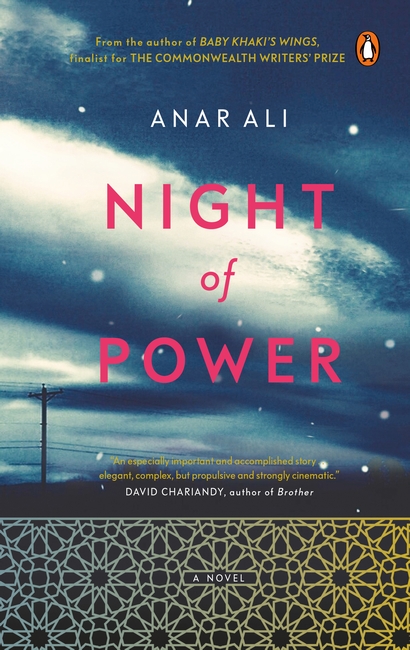
A portrait of a Muslim family?-?from the heady days in Uganda to hard times in a new country, and the tragic accident that forces them to confront the ghosts of the past.
It’s 1998. And Mansoor Visram has lived in Canada for 25 years, ever since dictator Idi Amin expelled South Asians from Uganda. As a refugee with a wife and child, Mansoor has tried his best to recreate the life they once had, but starting over in Canada has been much harder than he expected. He’s worked as a used-car salesman, as a gas-station attendant, and now he runs a small dry cleaner in suburban Calgary. But he’s hatching plans for a father-and-son empire that will bring back the wealth and status the Visrams enjoyed in Uganda. The problem is, his son Ashif does not share his dreams, and he’s moved across the country to get away from his father. He’s a rising star at a multinational corporation in Toronto, on the cusp of a life-changing promotion, but he can’t seem to forget his girlfriend from long ago. Mansoor’s wife, Layla, has spent the past decade running her own home-cooking business and trying to hold her family together. But Ashif rarely comes home to visit, and Mansoor’s pride has almost ruined their marriage. As the fissures that began generations ago-and continents away-reappear, Mansoor, Ashif, and Layla drift further and further apart.
On the Night of Power, a night during Ramadan when fates are decided for the next year, a terrible accident occurs. Will the Visrams survive this latest tragedy?
Night of Power is a heart-wrenching story of a family in crisis. Gripping and unforgettable, Anar Ali’s debut novel vividly illuminates the injustices of displacement and the nuances of identity-of losing a home and coming home again.

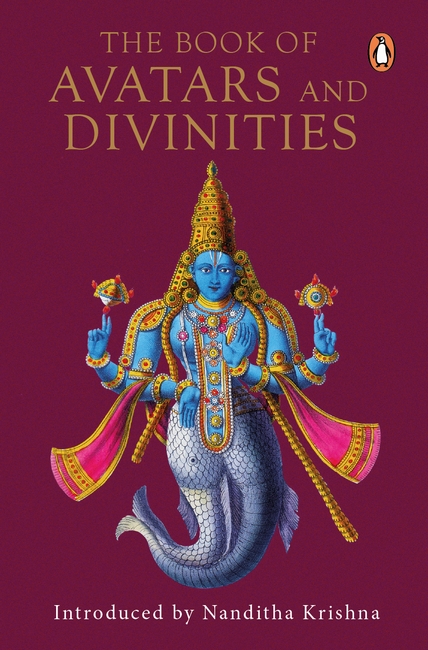
In the Hindu universe, gods and goddesses play freely among human beings to help them, nudge them towards the right action and mete out justice. They may appear to us as avatars in human form or manifest themselves as forces of nature. The many myths of Hinduism become colourful and entertaining when Shiva, Vishnu and Devi take different forms to enact their rivalries, destroy demons and teach devotees with superpowers a lesson in humility.
This first-of-its-kind book brings together the major deities of the Hindu pantheon, describing the different manifestations by which they are recognized, celebrated and worshipped-from Durga to Sita to Kali, and from Narasimha to Parashurama to Krishna. The contributions by Bulbul Sharma, Namita Gokhale, Nanditha Krishna, Parvez Dewan, Royina Grewal and Seema Mohanty offer enchanting stories about our favourite divinities.

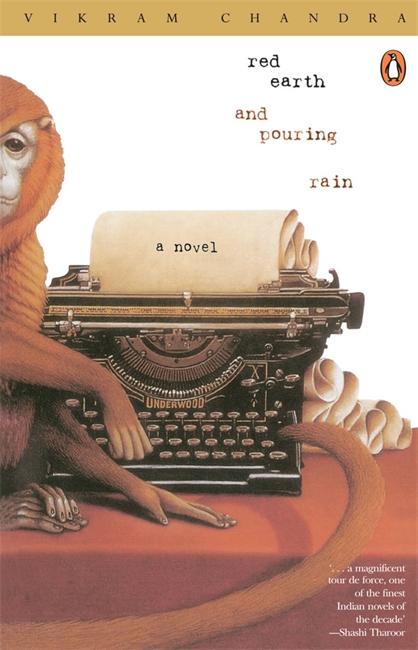
In Vikram Chandra’s astonishing first novel, the gods Hanuman, Ganesha and Yama descend on a house in an Indian city to vie for the soul of a wounded monkey. A bargain is struck: the monkey must tell a story, and if he can keep his audience entertained, he shall live.The result is Red Earth and Pouring Rain, a tale of nineteenth century India: of Sanjay, a poet, and Sikander, a warrior; of hoofbeats thundering through the streets of Calcutta and the birth of a luminous child; of great wars and love affairs and a city gone ‘mad with poetry’. And woven into this tapestry of stories is a second, totally modern narrative, the adventures of a young Indian criss-crossing America in a car with his friends and his eventual return to his homeland.

A prophetic and incisive novel on the persisting fault lines between communities
Remembering her late husband, Asad, Mala relives the heady days of love and optimism they had shared, while she struggles to understand how the world around them has changed so radically. Their daughter, Sara, embarks on a journey that takes her to Ahmedabad, where-across a lately created ‘border’-she meets Yasmin, a survivor of mayhem. Together, Sara and Yasmin search for the future, for hope, amid lives caught in a mesh of memory and anguish.
Marked by an astonishing clarity of observation and deep compassion, Fugitive Histories exposes the legacy of prejudice that continues to erupt into hatred and violence in present-day India.
Ever since he first read Graham Greene, Pico Iyer has been obsessed by the figure of the writer and by one of the great themes of Greene’s work: what it means to be an outsider. Wherever he has travelled-usually as an outsider himself-Iyer has found reminders of Greene’s life, observed scenes that might have been written by Greene, written stories that recall Greene. Yet, as Iyer recounts the history of his obsession, another phantom image begins to assert itself, one that Iyer had long banished from his inner life-that of his father.