



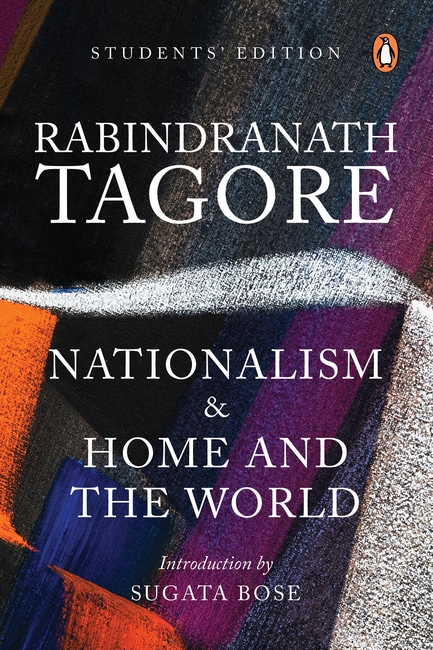
Combining two classic texts by Rabindranath Tagore, this special edition features a new Introduction by eminent scholar Sugata Bose. Nationalism is based on Tagore’s lectures, warning the world of the disasters of narrow sectarianism and xenophobia. Home and the World is a classic novel, exploring the ever-relevant themes of nationalism, violent revolution and women’s emancipation.
Catagory: Literature & Fiction
Only the Good Die Young
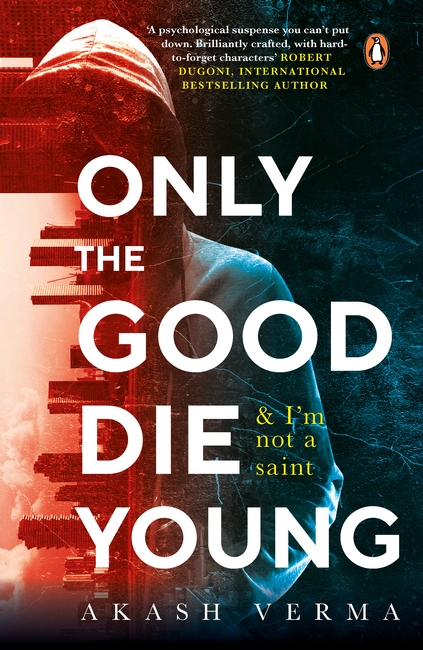
Sometimes when you’re desperate to leave the past behind, the past is eager to catch up!
Anuradha leaves Gurgaon when Dhruv chooses his family over her. She thinks that chapter of her life has ended, and starts afresh in Mumbai. But strangely, it seems her past is trying to catch up. Dhruv suddenly comes back into her life. Even as they try to figure out their relationship, horrible things start happening to people they know. Together, Anuradha and Dhruv need to find out who it is that cannot bear to see them together. Who is carrying out these shocking crimes? Are they really soulmates cursed to stay apart, or is there some karmic debt they have to repay? Taut and thrilling, Only the Good Die Young is unputdownable.
Lajja
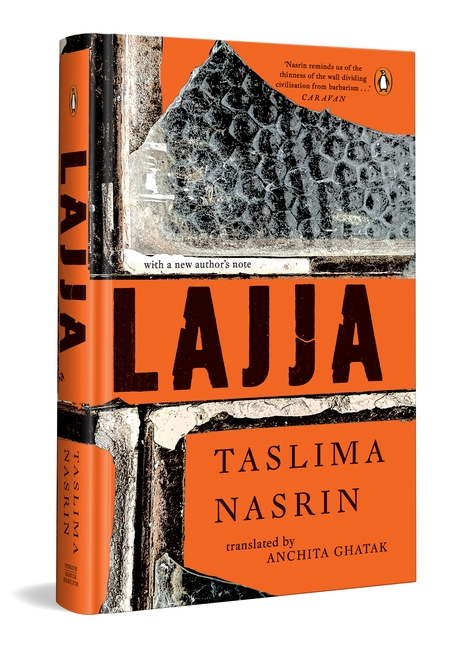
A special collectible edition from one of the most eminent voices of our generation
A savage indictment of religious extremism and man’s inhumanity to man, Lajja was banned in Bangladesh but became a bestseller in the rest of the world. This brand-new translation marks the twentieth anniversary of this controversial novel. The Dattas Sudhamoy and Kironmoyee and their children, Suronjon and Maya have lived in Bangladesh all their lives. Despite being members of a small Hindu community that is terrorized at every opportunity by Muslim fundamentalists, they refuse to leave their country, unlike most of their friends and relatives. Sudhamoy believes with a naive mix of optimism and idealism that his motherland will not let him down. And then, on 6 December 1992, the Babri Masjid at Ayodhya is demolished by a mob of Hindu fundamentalists. The world condemns the incident, but its immediate fallout is felt most acutely in Bangladesh, where Muslim mobs begin to seek out and attack the Hindus. The nightmare inevitably arrives at the Dattas’ doorstep and their world begins to fall apart.
Two Plays
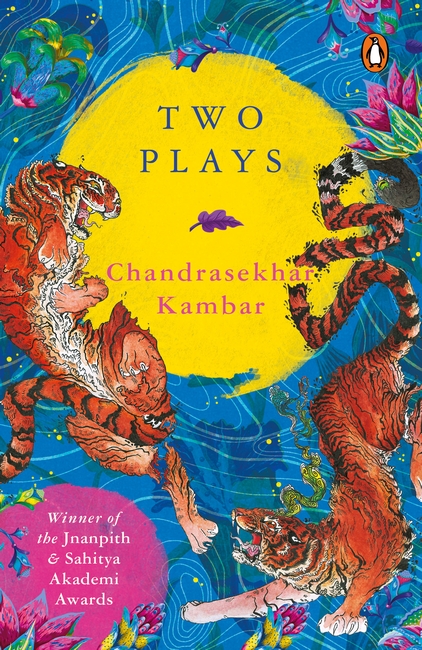
In Chandrasekhar Kambar’s timeless classic The Bringer of Rain: Rishyashringya, a village afflicted with a deadly famine eagerly awaits the arrival of the chieftain’s son, whose homecoming promises the return of rain. As the death toll rises, age-old secrets are unravelled and mythical forces step out of hiding. Will the sky relent?
Power and bloodshed run hand in hand in Kambar’s latest, Mahmoud Gawan. Set in the fifteenth-century Bahamani Sultanate, it follows Gawan’s rise to fame during a time of intense civil strife when empires routinely rose and fell.
Alluring and sublime, Two Plays is a must-read for anyone hoping to dip their toes into the rich waters of Kannada folklore and theatre.
Unaccustomed Earth
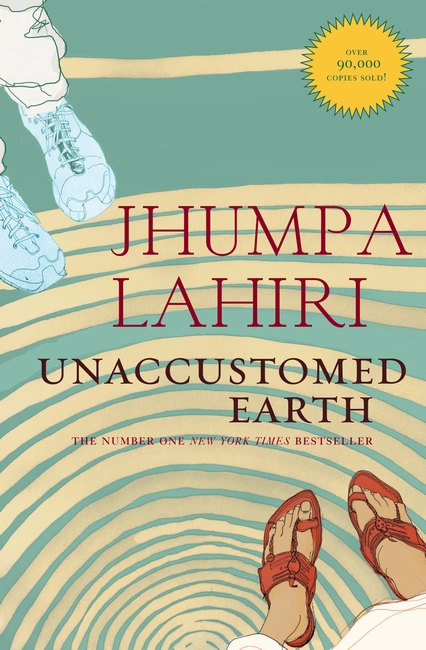
The stories of Unaccustomed Earth focus on second-generation immigrants making and remaking lives, loves and identities in England and America. We follow brothers and sisters, mothers and fathers, friends and lovers, in stories that take us from Boston and London to Bombay and Calcutta.
Blending the individual and the generational, the exotic and the strikingly mundane, these haunting, exquisitely detailed and emotionally complex stories are intensely compelling elegies of life, death, love and fate. This is a dazzling work from a masterful writer.
The Lowland
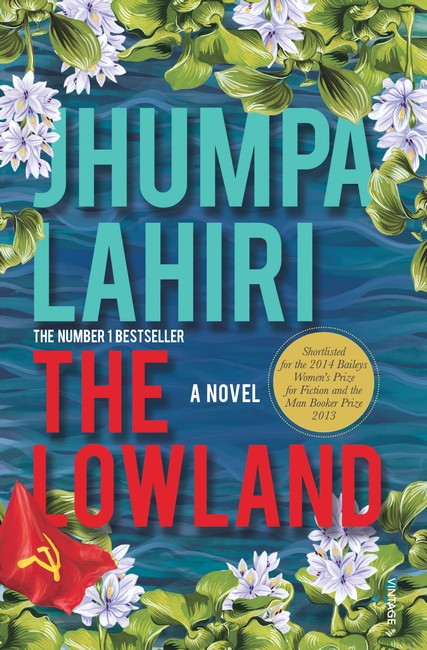
Two brothers bound by tragedy. A fiercely brilliant woman haunted by her past. A country torn by revolution. A love that lasts long past death. This extraordinary, emotionally riveting new novel, set in India and America, expands the scope and range of one of our most beloved storytellers: the Pulitzer Prize-winning, #1 New York Times best-selling author of Interpreter of Maladies and Unaccustomed Earth.
Born just fifteen months apart, Subhash and Udayan Mitra are inseparable brothers, one often mistaken for the other in the Calcutta neighborhood where they grow up. But they are also opposites, with gravely different futures ahead. It is the 1960s, and Udayan-charismatic and impulsive-finds himself drawn to the Naxalite movement: he will give everything, risk all, for what he believes. Subhash, the dutiful son, does not share his brother’s political passion; he leaves home to pursue a life of scientific research in a quiet, coastal corner of America.
But when Subhash learns what happened to his brother in the lowland outside their family’s home, he comes back to India, hoping to pick up the pieces of a shattered family, and to heal the wounds Udayan left behind-including those seared in the heart of his brother’s wife.
Suspenseful, sweeping, piercingly intimate, The Lowland is a masterly novel of fate and will, exile and return. Shifting among the points of view of a wide range of richly drawn characters, it is at once a page-turner and a work of great beauty and complex emotion; an engrossing family saga with very high stakes; and a story steeped in history that seamlessly spans generations and geographies. A tour de force and an instant classic, this is Jhumpa Lahiri at the height of her considerable powers.
The Last Burden
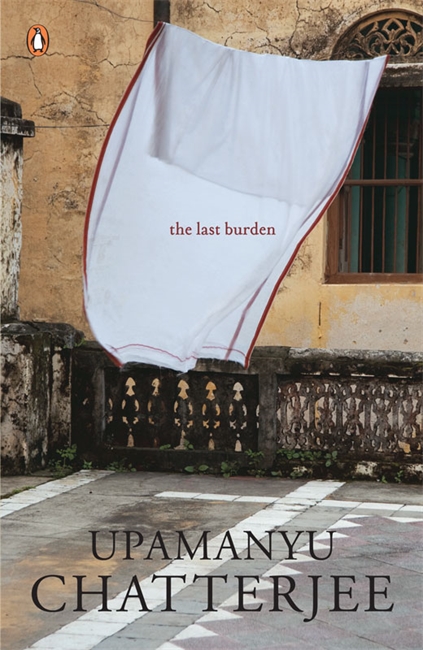
A fascinating portrayal of life in an Indian middle-class family by the best-selling author of English, August Upamanyu Chatterjee’s second novel brilliantly recreates life in an average Indian family at the end of the twentieth century. Jamun, the central character, is a young man, unmarried, adrift. He stays away from his family, which comprises his parents, Urmila and Shyamanand, his elder brother, Burfi, his sister-in-law, Joyce, his two nephews and the children’s ayah. Jamun returns to the family when his mother is hospitalized. Once there, he decides to stay on until one of his ailing parent dies. He barely admits to himself that there is another, probably stronger, reason for his extended stay in the family home- an old friend Kasturi, now married and pregnant, who has returned to the city (that she associates with Jamun) . . . Flitting back and forth in time and space, and writing in a language of unsurpassed richness and power, Upamanyu Chatterjee presents a funny, bitterly accurate and vivid portrait of the awesome burden of family ties.
The Mammaries Of The Welfare State
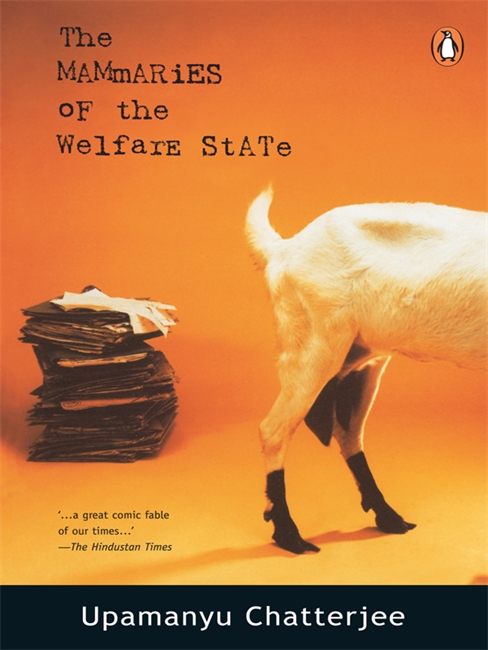
In this sequel to Upamanyu Chatterjee’s debut novel, English, August, Agastya Sen- older, funnier, more beleaguered, almost endearing- and some of his friends are back. Comic and Kafkaesque, The Mammaries of the Welfare State is a masterwork of satire by a major writer at the height of his powers.
Weight Loss
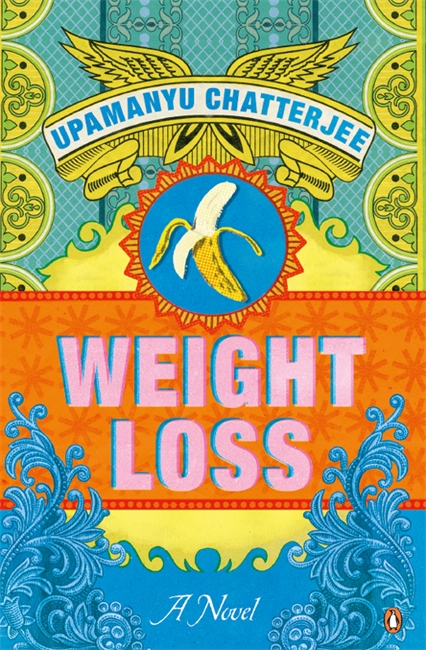
Innocent and unremarkable, but for his near crippling obsessions with sex and running, Bhola goes through life falling for all the wrong people. At School, he lusts indiscriminately after his teachers, both male and female, and is equally attracted to eunuchs. While in college, he has vaguely demeaning affairs with his landlady, and a vegetable vendor-cum-nurse and her husband. Later, he marries (a woman with a voice like liquid gold), fathers a daughter and suspects he is close to balance and beauty. Then his past catches up with him.
Upamanyu Chatterjee’s genius for black humour and the absurd has never been more compelling than in this unforgettable portrait of a lost life.
Pataakha
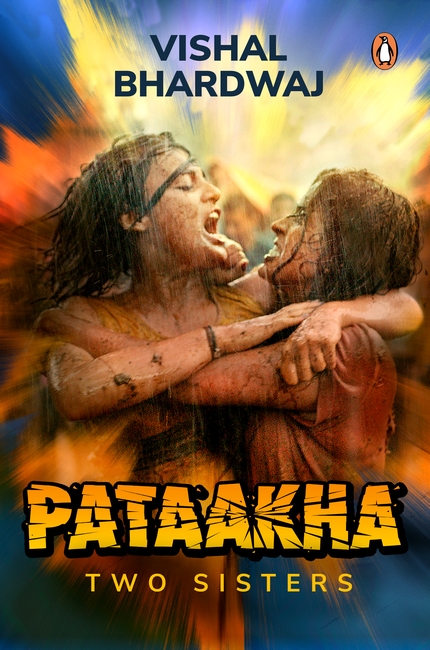
They cannot live with each other, they cannot live without each other. As children, they squabbled all day long. When they were old enough, they married two brothers, and took with them their feuds to their in-laws. Boisterous and fiery pataakhas, sisters Badki and Chhutki are the bane of each other’s existence. Their days start and end with petty squabbles and violent clashes, marked by unapologetic use of free-flowing abuses. But one day things go too far and a decision made upturns the trajectory of both their lives.
Based on Charan Singh Pathik’s eponymous short story, Vishal Bhardwaj’s adaptation is a hilarious tour de force that obliquely and mischievously takes into its ambit notions of patriarchy and diplomacy between nations. This translation, which includes the novella and the screenplay that the film-maker developed from the short story, not only brings to the reader a rustic, elemental tale rooted in the soil, but also provides a unique glimpse into the art of adapting a literary work into film.