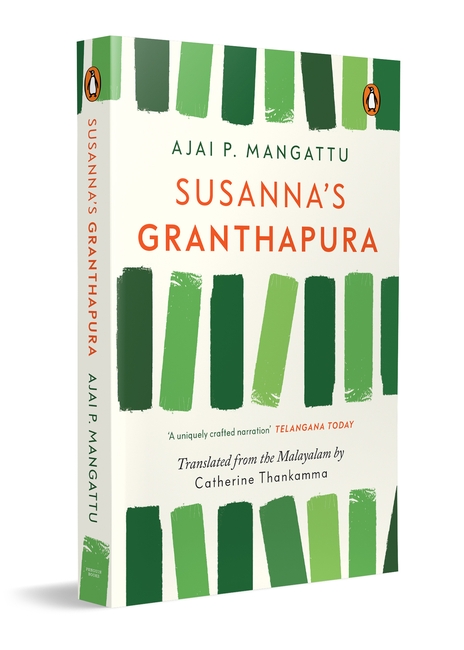
Why does the usually aloof and reticent Paul suddenly want to meet Ali after Susanna’s death? Why does the possibility of an unfinished manuscript by a long-forgotten writer fascinate Ali and Abhi to the extent that they undertake a journey to Marayoor, a town deep in the heart of Kerala to meet the unknown Susanna?
First published in Malayalam in 2019, Susanna’s Granthapura is Ajai Mangattu’s uniquely crafted novel that celebrates the strong bonds that form between people who share a love of reading and of books.

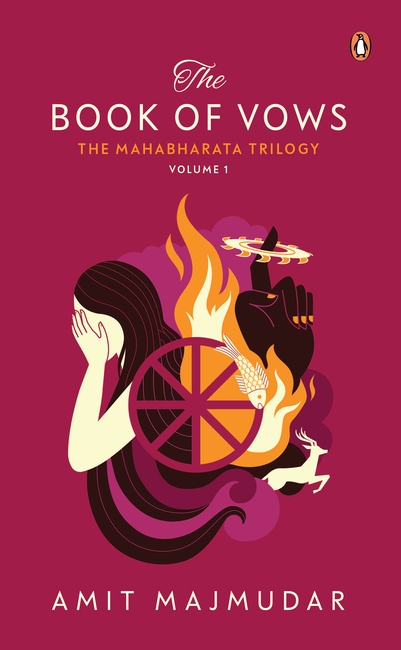
This is the first part of a trilogy on the Mahabharata. Grounded in the original Sanskrit epic, Majmudar recreates the ancient epic for a contemporary audience. It is his finest work yet and is one of the most accessible, magical and unputdownable retellings of the Mahabharata. The Book of Vows will be followed by The Book of Discoveries and The Book of Killings.

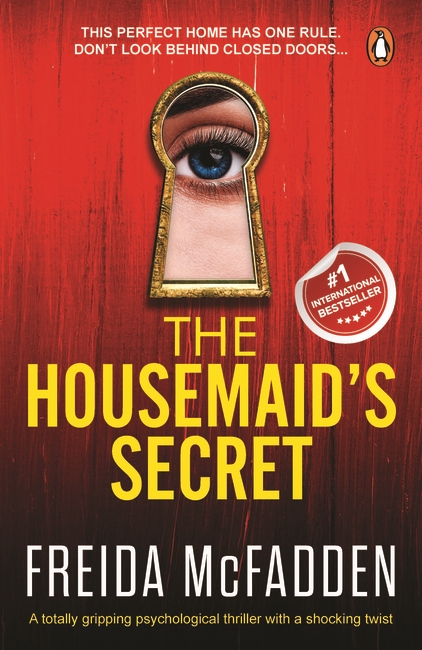
“Don’t go in the guest bedroom.” A shadow falls on Douglas Garrick’s face as he touches the door with his fingertips. “My wife… she’s very ill.” As he continues showing me their incredible penthouse apartment, I have a terrible feeling about the woman behind closed doors. But I can’t risk losing this job-not if I want to keep my darkest secret safe…
It’s hard to find an employer who doesn’t ask too many questions about my past. So I thank my lucky stars that the Garricks miraculously give me a job, cleaning their stunning penthouse with views across the city and preparing fancy meals in their shiny kitchen. I can work here for a while, stay quiet until I get what I want.
It’s almost perfect. But I still haven’t met Mrs Garrick, or seen inside the guest bedroom. I’m sure I hear her crying. I notice spots of blood around the neck of her white nightgowns when I’m doing laundry. And one day I can’t help but knock on the door. When it gently swings open, what I see inside changes everything…
That’s when I make a promise. After all, I’ve done this before. I can protect Mrs Garrick while keeping my own secrets locked up safe.
Douglas Garrick has done wrong. He is going to pay. It’s simply a question of how far I’m willing to go…
This absolutely explosive and shockingly twisty sequel to international bestseller The Housemaid will keep you racing through the pages late into the night. Anyone who loves The Perfect Marriage by Jeneva Rose, The Woman in the Window and Gone Girl will be totally hooked! This book can also be enjoyed as a standalone.

2 MILLION COPIES SOLD OF THE #1 BESTSELLING SERIES!
‘A MASTER OF PUZZLES AND PLOT TWISTS’ E. Lockhart, author of We Were Liars
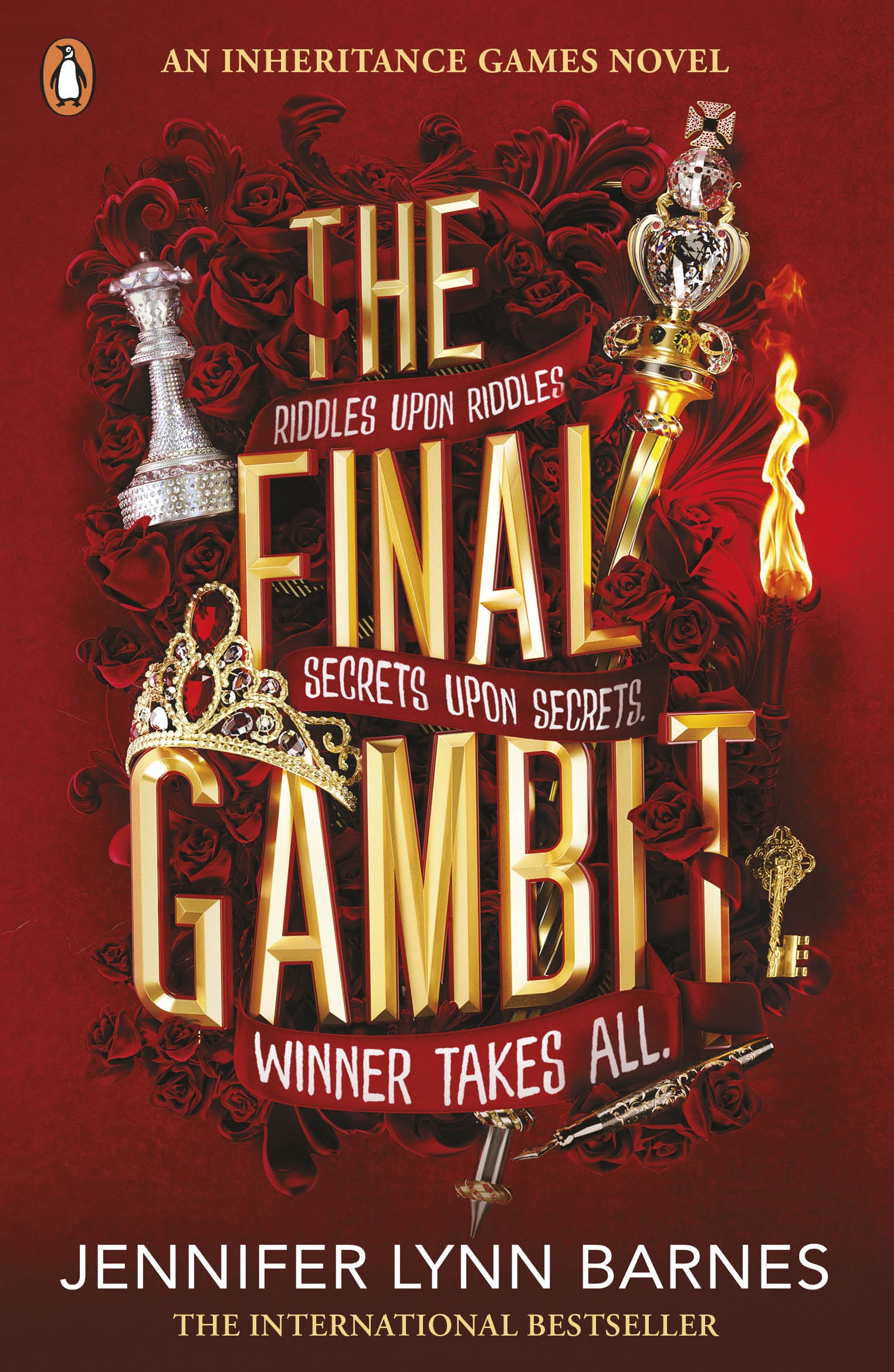
The third thrilling and unmissable instalment in the global bestselling, ‘impossible to put down’ (Buzzfeed), BookTok sensation, Inheritance Games series. Perfect for fans of Karen McManus and Holly Jackson.
WINNER TAKES ALL . . .
ONE LAST GAME.
Against all odds, Avery has survived nearly a year of secrets, schemes, and love lost and found at Hawthorne House. She’s weeks away from fulfilling the terms of Tobias Hawthorne’s will and inheriting his billions.
ONE MORE PLAYER.
Avery thinks she knows all the family secrets, but when a familiar face arrives with shocking news and a plea for help, it’s clear there is one last puzzle to solve.
ONE FINAL TWIST.
Soon, Avery and the Hawthorne brothers are drawn into a last deadly game against an unknown and powerful opponent. Hearts and lives are at stake – and there is nothing more Hawthorne than winning.
**Avery’s story continues in The Brothers Hawthorne**

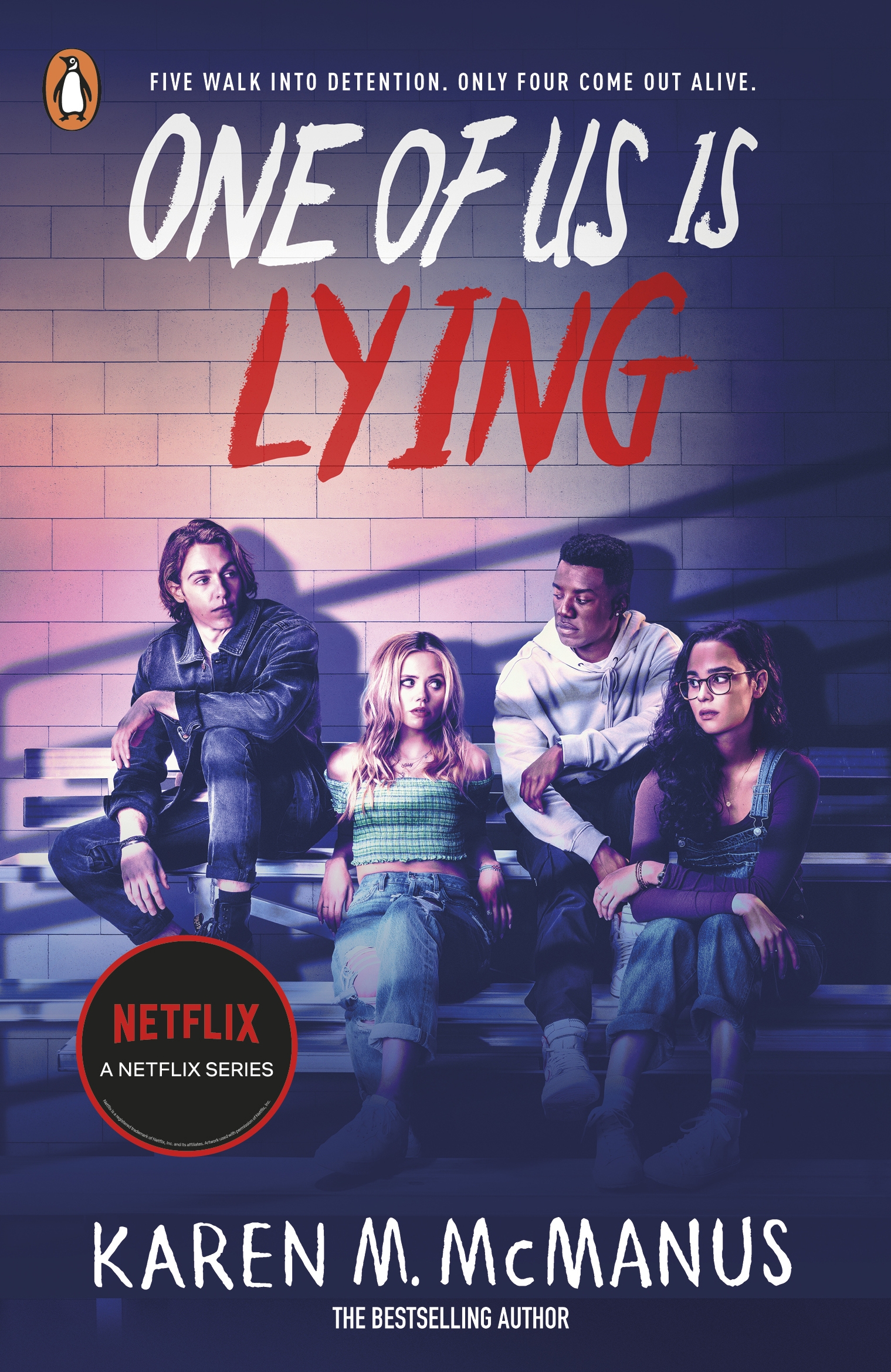
The international bestselling YA thriller by acclaimed author, Karen M. McManus – NOW A MAJOR NETFLIX SERIES.
Five students go to detention. Only four leave alive.
Yale hopeful Bronwyn has never publicly broken a rule.
Sports star Cooper only knows what he’s doing in the baseball diamond.
Bad boy Nate is one misstep away from a life of crime.
Prom queen Addy is holding together the cracks in her perfect life.
And outsider Simon, creator of the notorious gossip app at Bayview High, won’t ever talk about any of them again.
He dies 24 hours before he could post their deepest secrets online. Investigators conclude it’s no accident. All of them are suspects.
Everyone has secrets, right?
What really matters is how far you’ll go to protect them.
‘Tightly plotted and brilliantly written, with sharp, believable characters, this whodunit is utterly irresistible’ – HEAT
‘Twisty plotting, breakneck pacing and intriguing characterisation add up to an exciting single-sitting thrillerish treat’ -THE GUARDIAN
‘A fantastic murder mystery, packed with cryptic clues and countless plot twists. I could not put this book down’ – THE SUN
‘Pretty Little Liars meets The Breakfast Club’ – ENTERTAINMENT WEEKLY

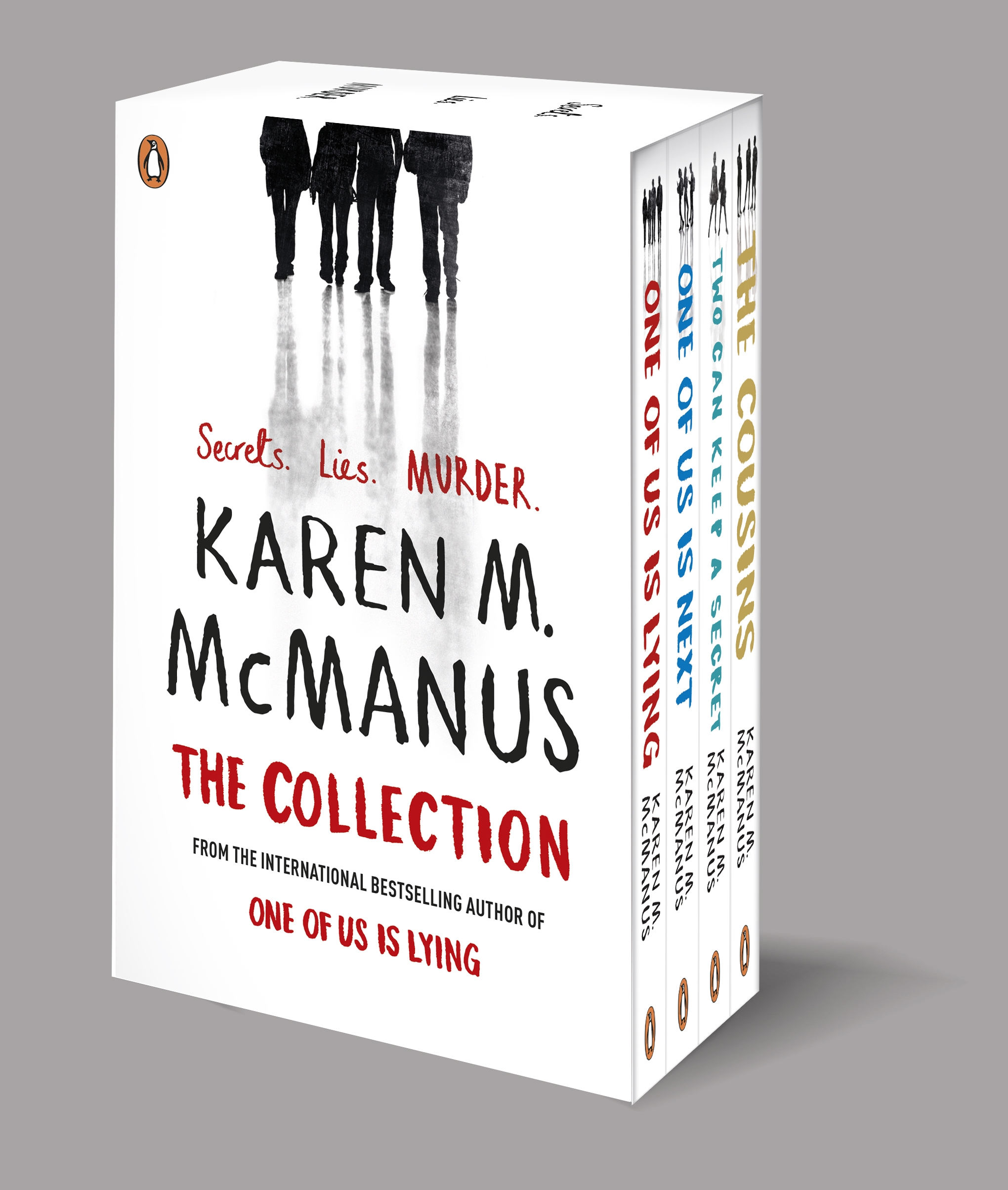
A boxset of four titles from the internationally bestselling author of ONE OF US IS LYING.
Secrets. Lies. Murder. The Karen M. McManus boxset has it all:
ONE OF US IS LYING
Five students go to detention. Only four leave alive.
ONE OF US IS NEXT
Truth or dare turns deadly. Who would you believe?
TWO CAN KEEP A SECRET
Two dead homecoming queens. Who’s next?
THE COUSINS
Secrets. Lies. Inheritance. Family first always. Right?
‘It’s easy to see why queen of teen crime Karen McManus is a bestseller on both sides of the Atlantic’ – Guardian
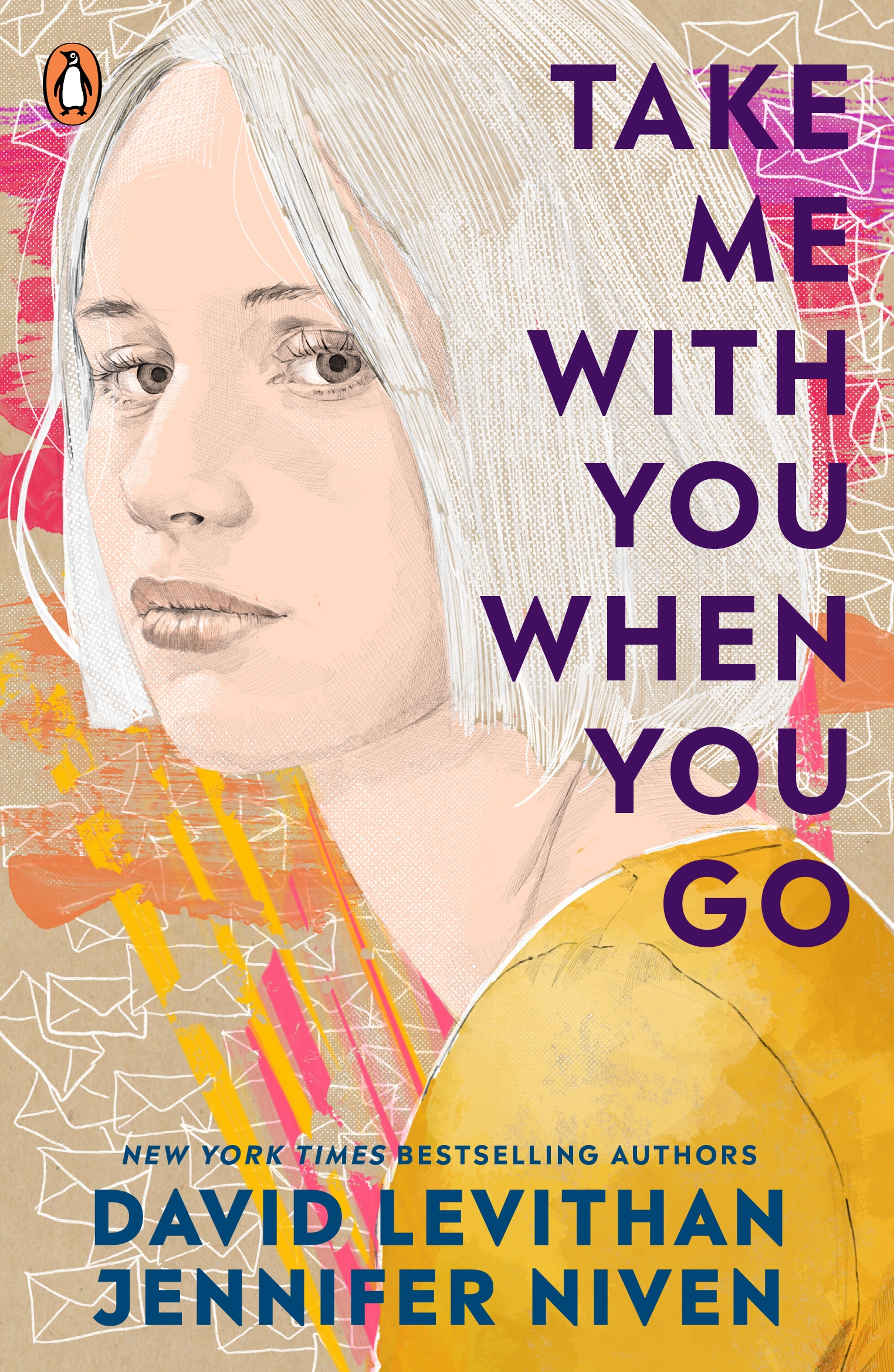
Subject: You. Missing.
Ezra wakes one day to find his sister gone. No note, no sign, nothing but an email address hidden somewhere only he would find it.
Escaping their toxic home life, Bea finds herself alone in a new city – without friends, without a real plan – chasing someone who might not even want to be found.
As things unravel at home for Ezra, Bea confronts secrets about their past that will forever change the way they think about their family. Separated by distance but connected by love, this brother and sister must learn to trust themselves before they can find a way back to each other.
From the New York Times bestselling authors of All the Bright Places and Every Day comes a story of hope, family, and finding your true home in the people who matter the most.
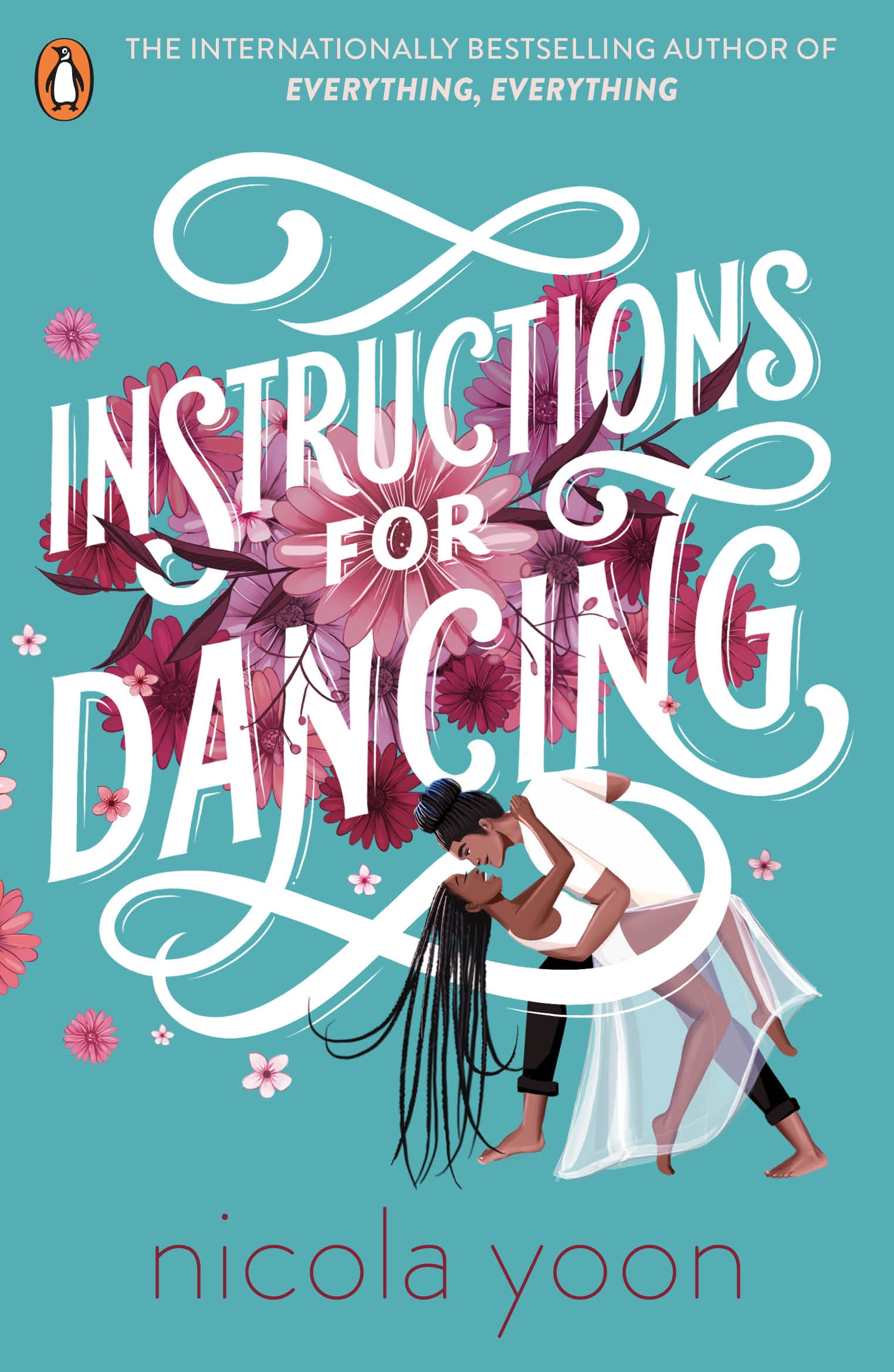
#1 New York Times bestselling author of Everything, Everything and The Sun is Also a Star Nicola Yoon is back with a new and utterly unique romance.
‘An endearing, affecting portrayal of the journey of love. Everything Yoon touches turns to gold… this cinematic supernatural romance will be no exception’ Booklist
Evie is disillusioned about love ever since her dad left her mum for another woman – she’s even throwing out her beloved romance novel collection.
When she’s given a copy of a book called Instructions for Dancing, and follows a note inside to a dilapidated dance studio, she discovers she has a strange and unwelcome gift. When a couple kisses in front of her, she can see their whole relationship play out – from the moment they first catch each other’s eye to the last bitter moments of their break-up.
For Evie, it confirms everything she thinks she knows about love – that it doesn’t last.
But at the dance studio she meets X – tall, dreadlocked, fascinating – and they start to learn to dance, together. Can X help break the spell that Evie is under? Can he change Evie’s mind about love?
‘A story of love’s unpredictability and the importance of perspective that unfolds with ease and heart’ Publisher’s Weekly
‘A remarkable, irresistible love story that will linger long after the reader turns the final page’ Kirkus
Praise for Nicola Yoon:
‘Gorgeous and lyrical’ New York Times
‘Powerful, lovely, heart-wrenching’ Jennifer Niven
‘This extraordinary first novel about love so strong it might kill us is too good to feel like a debut’ Jodi Picoult
2 MILLION COPIES SOLD OF THE #1 BESTSELLING SERIES!
‘A MASTER OF PUZZLES AND PLOT TWISTS’ E. Lockhart, author of We Were Liars
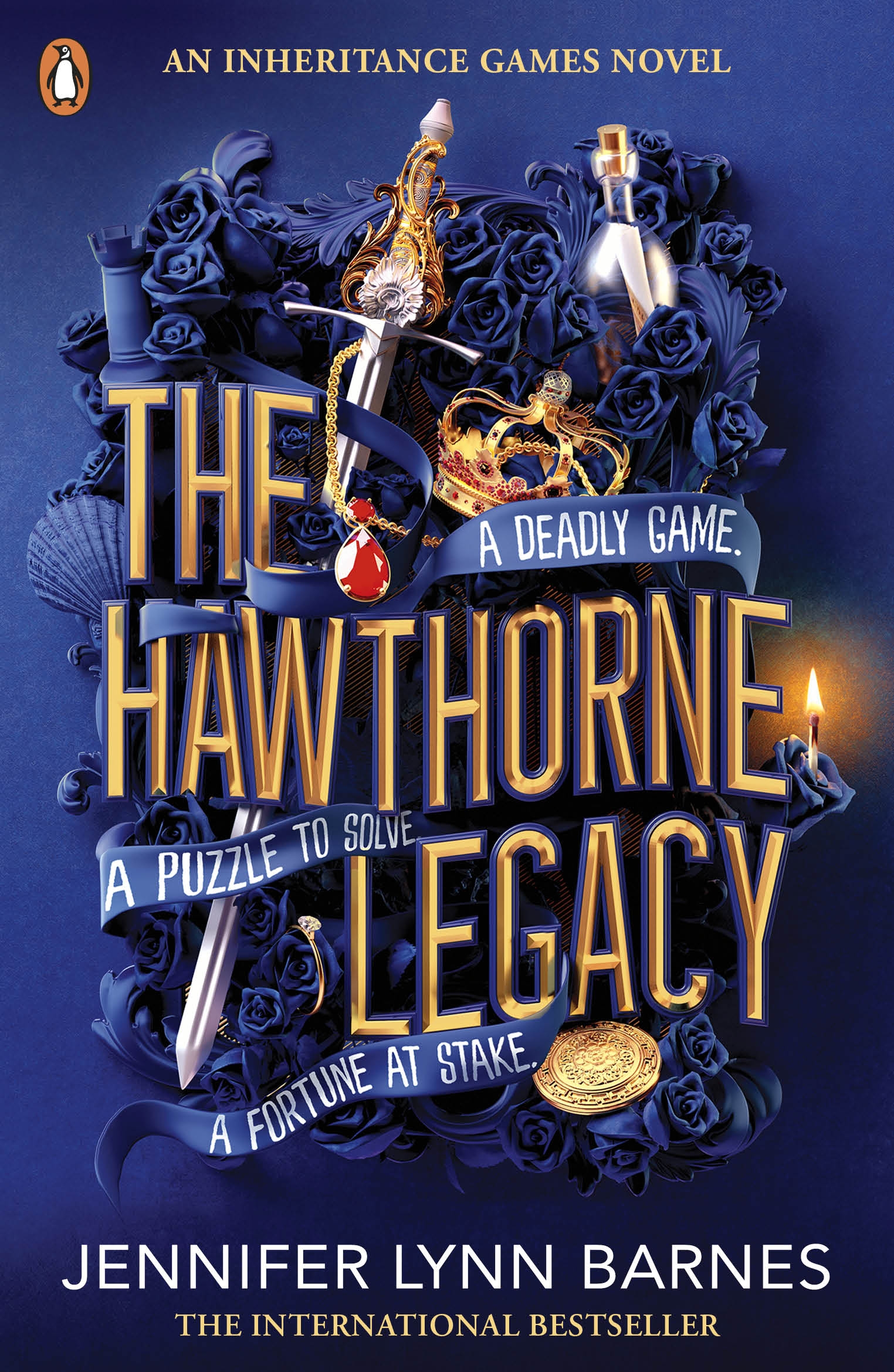
Intrigue, riches, and romance abound in the second thrilling instalment in the global bestselling Inheritance Games series. Perfect for fans of Karen McManus and Holly Jackson.
A DEADLY GAME. A PUZZLE TO SOLVE. A FORTUNE AT STAKE.
ONE STEP FORWARDS.
Avery thought that solving the riddle left by billionaire Tobias Hawthorne would reveal why he left her – a complete stranger – his entire fortune.
TWO STEPS BACK.
But as the cryptic clues pile up and Jameson and Grayson, two of the handsome and enigmatic Hawthorne grandsons, continue to pull her in different directions, Avery wonders who she can really trust.
SECRETS UPON SECRETS.
Soon Avery realizes this game is no longer just about money and power. Now she’s playing for her life
**Avery’s story continues in The Final Gambit and The Brothers Hawthorne**
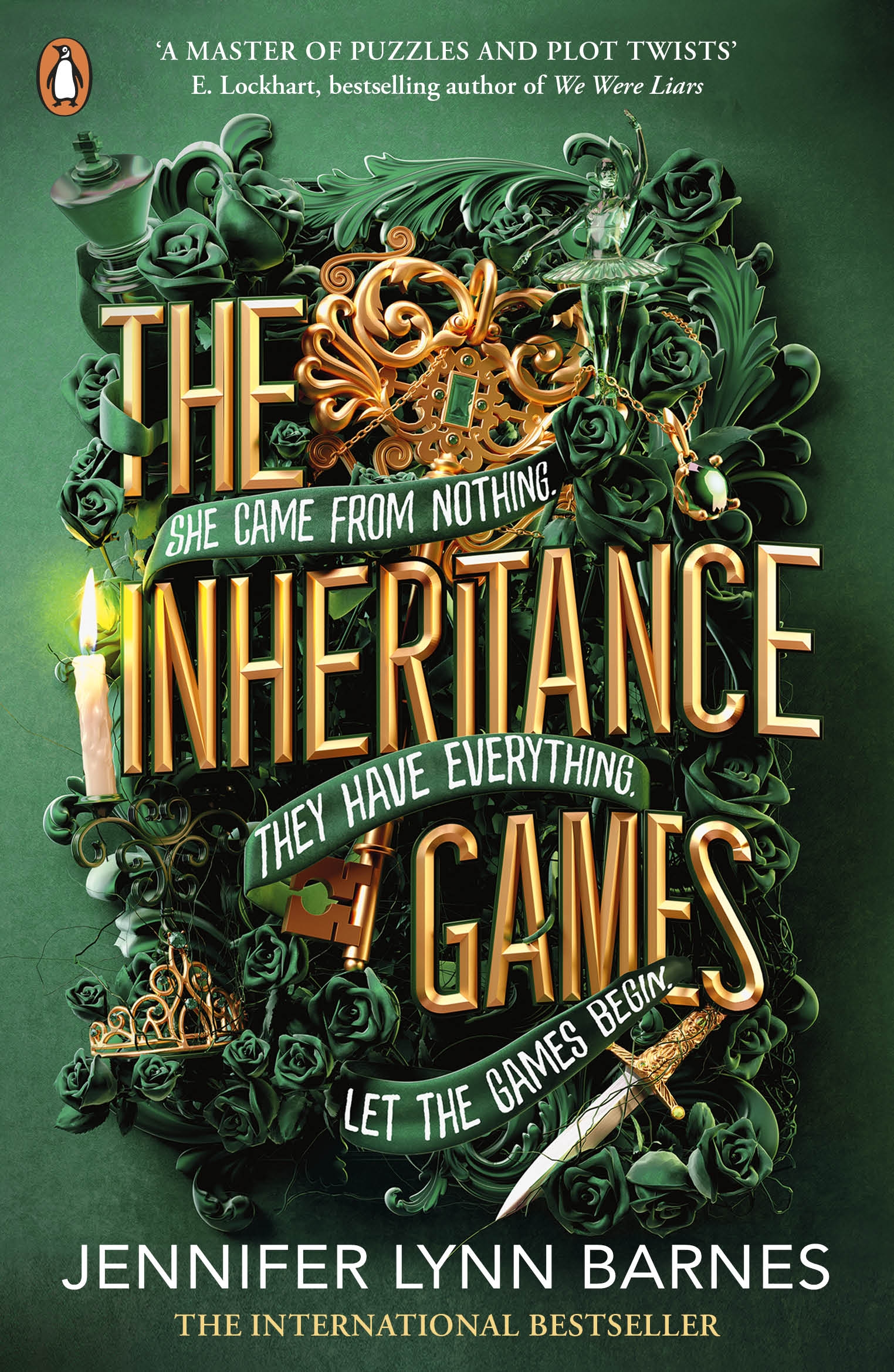
2 MILLION COPIES SOLD OF THE #1 BESTSELLING SERIES!
‘A MASTER OF PUZZLES AND PLOT TWISTS’ E. Lockhart, author of We Were Liars
The addictive and twisty thriller, full of dark family secrets and deadly stakes that’s ‘impossible to put down’ (Buzzfeed). Perfect for fans of Karen McManus and Holly Jackson.
A BILLION-DOLLAR FORTUNE TO DIE FOR.
Avery has a plan: keep her head down, work hard for a better future. Then an eccentric billionaire dies, leaving her almost his entire fortune. And no one, least of all Avery, knows why.
A DEADLY GAME.
Now she must move into the mansion she’s inherited.
It’s filled with secrets and codes, and the old man’s surviving relatives –
a family hell-bent on discovering why Avery got ‘their’ money.
WINNER TAKES ALL.
Soon she is caught in a deadly game that everyone in this strange family is playing.
But just how far will they go to keep their fortune?
**Avery’s story continues in The Hawthorne Legacy, The Final Gambit and The Brothers Hawthorne**