




Naishee Kamaraj has a special bond with her younger brother, Shravan. One day when he suddenly goes missing, everyone tells her perhaps he left of his own volition, but Naishee knew her brother better than anyone else. She fears there has been foul play. And her fears come true when she receives a second-hand phone with a video of her brother being held captive. She needs to perform some horrific activities to save her brother. As time ticks by, Naishee knows she will come out a totally different being by the end of it all . . .
Catagory: Literature & Fiction
The Half Empress
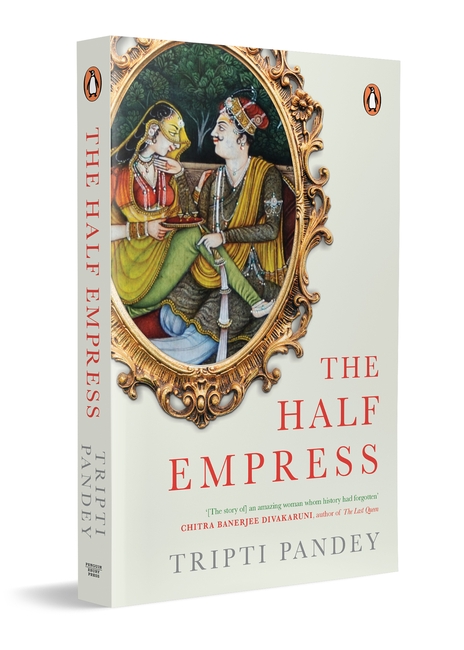
Among the rulers of Jaipur, Maharaja Sawai Jagat’s name is taken with contempt, because of his affair with a tawaif, or courtesan, Raskapoor, the daughter of a Muslim mother and a Brahmin father. The Maharaja defied all norms and bestowed upon her the title of ‘Half Empress’. With little experience, Raskapoor resiliently navigated her way through the cobwebs of the royal life. But, pitched against a fleet of plotters in an atmosphere filled with deceit, she finally fell into their trap and was imprisoned. There are many stories about how her life ended-the compassionate prison chief allowed her to flee or she flung herself on to the pyre of Jagat Singh. But today, she is best remembered by the guides who routinely mention her as a celebrity prisoner at the famous Nahargarh Fort.
In her historical novel The Half Empress, Tripti Pandey transports the reader to the royal corridors of nineteenth-century Jaipur and brings to life the story of a formidable woman who has been deliberately omitted from history.
Souffle
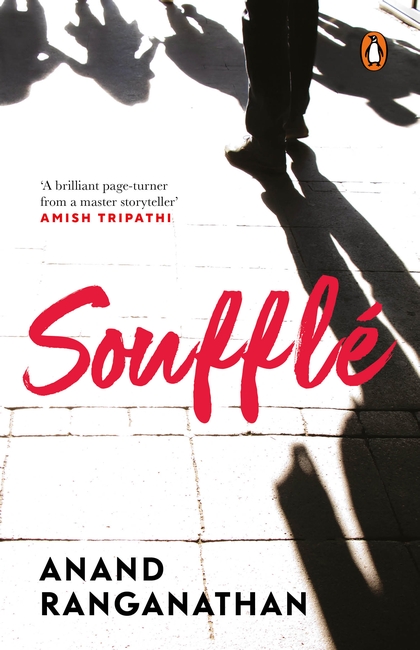
One sultry Mumbai night, business tycoon Mihir Kothari takes a bite of a soufflé and drops dead. According to the CCTV footage, celebrity chef Rajiv Mehra is the killer. It seems like an open-and-shut case.
Or is it?
A catastrophic accident on the day the chef is to be hanged allows him to escape and, driven by an inner calling, pursue a new life. Chased by shadows he thought he had left behind, torn by spurned love, the chef
returns in search of the real killer so that he can prove his innocence. But there is a problem. Unknown to him, the killer has chosen his next target: the chef himself!
Soufflé is a rich, layered thriller that explores life, love and the passions that motivate people to do unexpected and impossible things.
‘If this psychological, compelling and unpredictable novel doesn’t keep you hooked, give up reading’
ASHWIN SANGHI
Black Soil
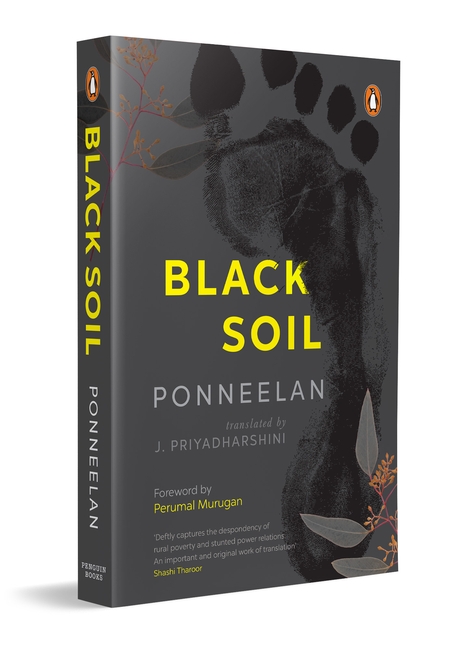
Kannappan is posted to Perumalpuram as the new schoolteacher. The village lies in the black soil region of Tamil Nadu where the river Tamirabarani flows. He’s an outsider in this village with Veerayyan, a local farmer, as his only guide and friend.
Once settled in his role, Kannappan observes the everyday brutality faced by the farmers at the hands of the sadistic, all-powerful landlord-the Master. Child marriage is common in the village and so is the appalling practice of marrying young lads to older women who then serve as their father-in-law’s consort. Through his gentle yet probing conversations with the villagers, Kannappan tries his best to show the villagers a better way of life. The farmers who had begun protesting the excesses meted out to them by the upper-caste landlord soon find an ally in Kannappan. The schoolteacher’s sympathies for their cause bolster their waning spirits and replenishes their resolve to fight back.
Ponneelan’s first novel is a tour de force. Now translated for the first time, Black Soil lays bare the atrocities faced by the farmers and the human cost of building a better tomorrow.
All the Right People
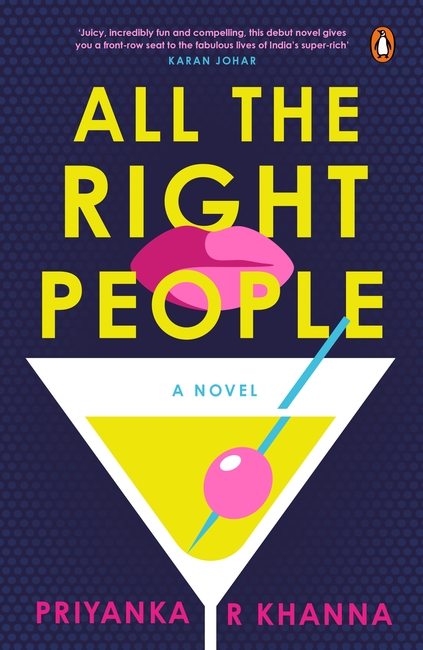
Tara-Shaan-Aria. Nearly twenty years ago in a classroom in Mumbai, three young girls formed a tight knit trio that navigated school and university, first loves and fresh starts.
But when Tara’s father, Mohan Mehta, a prominent businessman, hits the headlines for the wrong reasons, this friendship comes under the scanner. Will their bond go the distance?
Tara is devastated. A social media star who found a way to fit into London’s high society, she’s worked her entire life to be the perfect everything. But she’s always had friends and family by her side. That is, until she’s left alone to pick up the pieces of the only life she knows.
As the daughter of a billionaire industrialist, in Aria Mistry’s world, nothing short of perfection will do. Her father’s pride and joy, she’s always lived by the rules. When she meets Bollywood star Rohan Rawal, he challenges everything she’s been raised to believe. Will she choose to follow her head or her heart?
Delhi party girl by night and a leading politician’s dutiful daughter by day, Shaan Singh knows which role to play to get her own way. Feisty and fiercely intelligent, she has political aspirations of her own. But when her parents force her into marriage for strategic gain, how far will she fight to hold onto her freedom? Or will she give in?
Glittering, whip-smart and incredibly fun, All The Right People takes you into the hidden, privileged world of the wealthiest and most powerful families in Bombay, Delhi and London but tells a universal story. Of love. Of loss. Of family. Of friendship. Of difficult decisions.
And of women taking control of their own lives.
Shurjo’s Clan
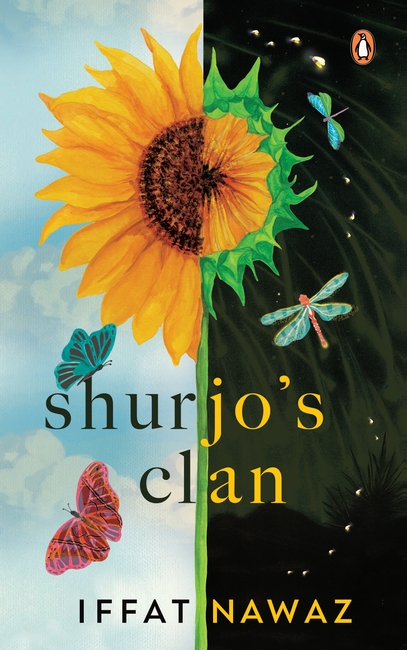
During the hours of daylight, young Shurjomukhi’s family is like any other in Dhaka, going through the motions of school, work, and domesticity in a nation still in the flush of youth. But every night, once darkness falls over their asymmetrical house, they switch over to the Unknown world. Death does not exist in the Unknown side and the family is joined for dinner by Shurjo’s freedom fighter uncles, who were martyred in the tea gardens of Sylhet at the start of the 1971 Bangladesh liberation war, and her grandmother who killed herself by jumping into a well in the aftermath of 1947. These dinners are festive affairs, replete with the joy of reunion, music and stories, but underneath the celebration, Shurjo’s family is riddled with the traumas of their past: death, war, migration, separation, the inability to belong to a land, dwelling in an in-between space, an eternal limbo. And when the miasmic shadow of the past inevitably falls on young Shurjo, the pitfalls of their dual reality is laid bare. The only way forward is an upheaval that splits the family apart, flinging Shurjo and her parents to the other end of the world.
Imaginative and compelling, Shurjo’s Clan merges magical realism with a vivid historicity to paint an entirely contemporary portrait of how grief is inherited, how the traumas and memories of our ancestors continue to shape those who come long after.
Spanning decades, from the forced migration of Bengalis to East Pakistan in 1947, through the 1971 liberation war, the wave of immigrants to the West in the 1980s, and a final return, Iffat Nawaz’s lyrical and evocative prose marks the arrival of a distinctive voice, one that unravels questions of grief, belonging, identity, and family with delightful imaginativeness and devastating insight. With its mesmerising balance between inexplicable otherworldliness and undeniable reality, this debut novel asks, above all, how we can honour the past without letting its wounds destroy us.
The Sthory of Two Wimmin Named Kalyani and Dakshayani
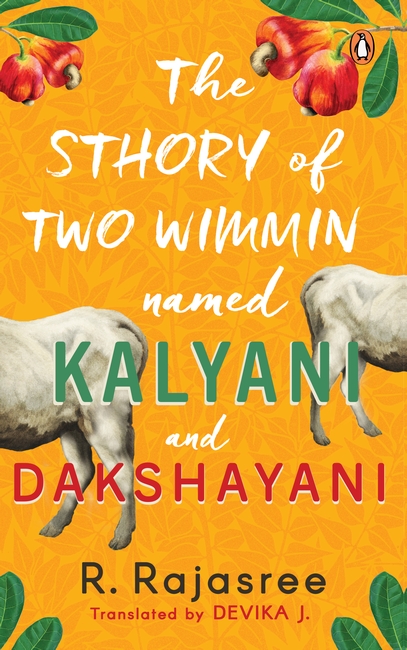
The Sthory of Two Wimmin Kalyani and Dakshayani traces luminous paths of female friendship in the rural worlds of north Malabar, through the lives of two rural women, Kalyani and Dakshayani. Rebelling against the patriarchy in school at the age of six (‘Rot in ‘ell, yuh sonofabitch’, yells Dakshayani at the school master who lifted her skirt to pinch her thigh, and walks out of school, with Kalyani following in solidarity), the two friends take on life and love. Women have no native place, they learn-but they have each other. Rajashree’s cleverly crafted narrator pauses and plays the scenes of their struggles, pains and laughter, drawing strength from them for her own battle against the mind-police. The bittersweet longing for one’s place of birth, the dialects of Malayalam, animals, spirits-all come alive in Rajashree’s beautifully crafted tale, enabled by Devika’s magnificent and careful translation.
Yusuf’s Fragrance
It can be said of the 19th century Kashmiri poet, Mahmud Ga¯mi that he was a pioneer in introducing the Persian genres of the ghazal, nazm, masnavi and na¯t into Kashmiri. Mahmud Gami’s contribution to Kashmiri poetry is unique in both scope and depth. Not only is he the first truly prolific poet who has written entirely in the Kashmiri language, but much of his poetry also stands out for its beauty of expression and depth of thought, such as in the lyrical romance of Shireen Khusrau, Yusuf Zulaikha, and Layla Majnun.
Yusuf’s Fragrance is both a celebration as well as an homage to Gami’s oeuvre. Through these beautiful verses, we explore themes of love, both physical and metaphysical, philosophy, folklore, and tradition through different narrative devices, such as nazms, masnavis, and vatsuns.
Anthill
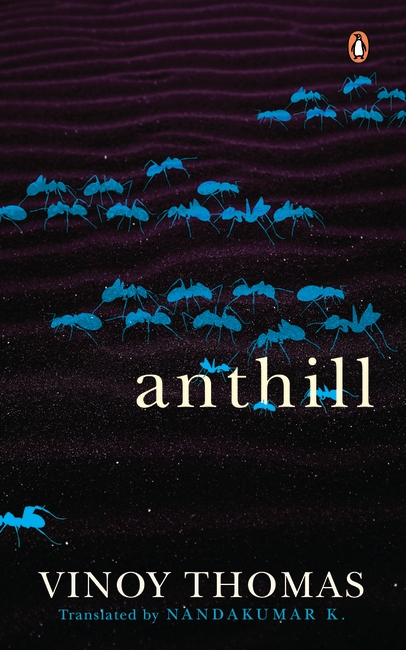
Bounded by dense Kodagu forests on the south and west, and rivers on the north and east, Perumbadi, at the border between Kerala and Karnataka, has hidden itself from the world. Its very isolation has attracted varied settlers from south Kerala over the years. The first settler on this land, Kunji Varkey, was fleeing the opprobrium of getting his own daughter pregnant. Those who followed had similar shameful secrets.
Anthill, the exquisite translation from the Malayalam of the Kerala Sahitya Akademi-winning novel Puttu, is the story of common people who tried to wriggle out of the shackles of family, religion and other restraining institutions, but eventually also struggle to civilize themselves-from their beginnings of a hillbilly existence and life as a promiscuous community.
As Perumbadi moves into modernity and feels the need for refined justice, Jeremias comes to be known by the moniker President and becomes the unchallenged adjudicator of Perumbadi, thanks to his equanimity and sense of fairness. However, even as he resolves local disputes, he is troubled by developments in his own home and by his own moral failure.
One of the most promising young writers in Malayalam, Vinoy Thomas, in his bestselling second novel, deploys dark humour to question the moral codes that bind society. Ultimately, this is also a story about the human race.
Penguin 35 Collectors Edition: Queen of Ice
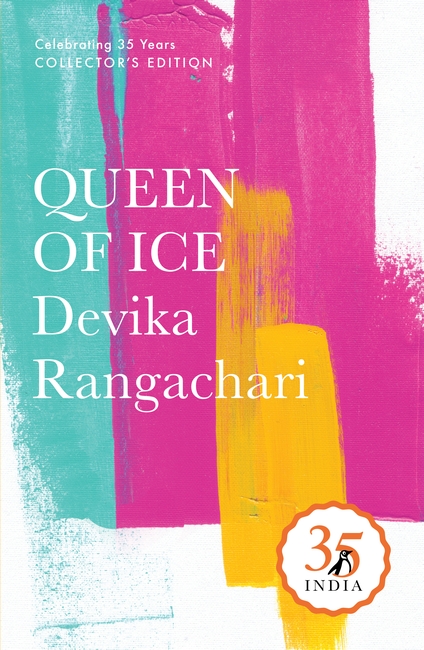
Didda, princess of Lohara, is beautiful, intelligent–and lame.
Despised by her father and bullied by his heir, Didda’s childhood is miserable and her future, bleak.
When she is married off to the dissolute ruler of Kashmira, she must learn to hold her own in a court ridden with factions and conspiracies. But Didda is no ordinary queen. Ruthless and ambitious, she wants to rewrite history. Will she succeed?
Queen of Ice is a compulsive read that brings alive the turbulent history of tenth-century Kashmir with an exquisite balance of fact and fiction. This is award-winning author Devika Rangachari’s finest novel yet.