AN ECLECTIC COLLECTION OF STORIES BY ONE OF INDIA’S MOST EXCITING NEW WRITERS
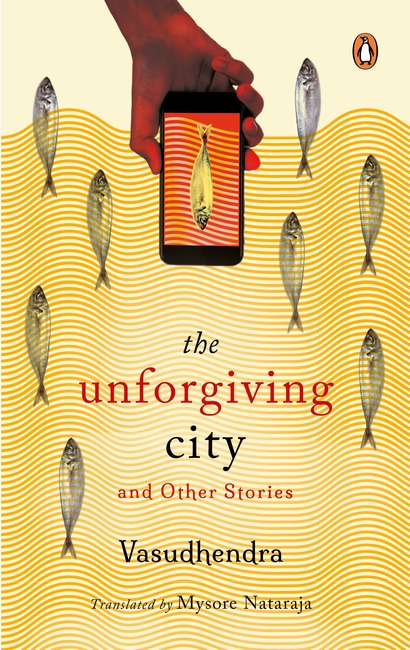
From the Karnataka Sahitya Akademi winner Vasudhendra comes a powerful collection of stories that shock, move and amuse by turns. As the characters struggle to find their feet in a fast-changing India, they mirror our unspoken dilemmas, torn loyalties and the loss of innocence.
In the extremely popular ‘Red Parrot’, an innocuous image from childhood returns to haunt a man when he visits his idyllic hometown. In ‘Recession’, the desire for a child leads a couple down unexpected paths. In other stories, a young woman in love rethinks her future when buried family secrets are suddenly revealed; a boy learns that insomnia may be the symptom of something more ominous; lonely apartment residents discover the thrills and perils of social media.
Deftly crafted with gentle wit and a lightness of touch, each gripping story exposes the deepest contradictions of modern life. The fluid translation retains the flavour and nuances of the original Kannada, creating a rich reading experience.
FROM THE BOOK
‘The dance was called Paper Dance, where couples were asked to dance within the boundaries of a newspaper spread out on the floor. Stepping out of the boundary led to disqualification. As Devika was single, someone from the crowd stepped forward. It was Vinayak Kulakarni. . . . Devika sensed her partner’s hesitation. He would forget his steps the moment he touched her. His ears turned red and he refused to look into her eyes. His boisterous friends shouted to him from behind: “Hey, Kulki, come on, get closer.” But, the more she boldly held his waist and drew him nearer, the more he would shrink; he held on to her gingerly. Devika egged him on nonstop, eventually helping him break out of his shyness. By the time the newspaper size shrank to the size of a paper towel, they were still in the game and, finally, Devika won. That was when she whispered her mobile number in his ear.’

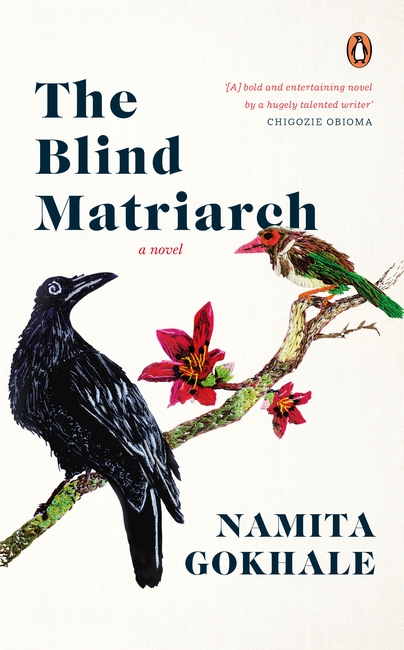
The blind matriarch, Matangi-Ma, lives on the topmost floor of an old house with many stories. From her eyrie, she hovers unseeingly over the lives of her family. Her long-time companion Lali is her emissary to the world. Her three children are by turn overprotective and dismissive of her. Her grandchildren are coming to terms with old secrets and growing pains. Life goes on this way until one day the world comes to a standstill-and they all begin to look inward.
This assured novel records the different registers in the complex inner life of an extended family. Like
the nation itself, the strict hierarchy of the joint-family home can be dysfunctional, and yet it is this home that often provides unexpected relief and succour to the vulnerable within its walls.
As certainties dissolve, endings lead to new beginnings. Structured with the warp of memory and the weft of conjoined lives, the narrative follows middle India, even as it records the struggles for individual growth, with successive generations trying to break out of the stranglehold of the all-encompassing Indian family.
Ebbing and flowing like the waves of a pandemic, the novel is a clear-eyed chronicle of the tragedies of India’s encounter with the Coronavirus, the cynicism and despair that accompanied it, and the resilience and strength of the human spirit.
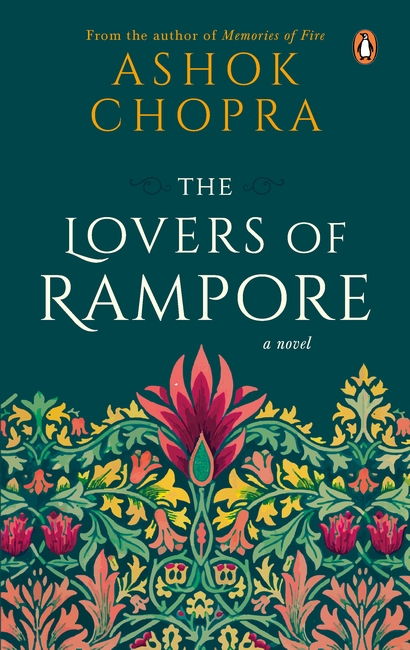
In The Lovers of Rampore, Ashok Chopra delves into the many mysterious forms of love thus introducing a mystic quality to the everyday lives of his characters. From the thrills of lust to the joys and fears of genuine commitment, to the exploration of desire and dispassion that exist in all relationships, this is the story of love in all its different manifestations.
Raja Rajvendra Veer Bahadur Singh married Rani Padmakshi Devi Singh, a woman thirty-three years younger to him, after losing his first wife. Theirs is a love built on respect, trust and the desire to support each other against all odds. In Rampore, their son, the dashing Yuvraj, is curiously averse to the very ideals his parents’ marriage embodies, choosing instead the path of instant gratification. In Mumbai, we’re introduced to Vikram Desai-an enigmatic architect whose principles, charm and persona change the course of all those whom he interacts with.
Ashok Chopra weaves a contemporary Bayeux tapestry of richly detailed stories which are mature, slow-burning and strum with a quiet passion that cuts across class, gender, and age, fundamentally altering the way we perceive love. In doing so, he also challenges society’s archaic understanding of the bonding between people.

“I would have considered myself blessed if I could have achieved a fraction of his quality in my writing” – Mahasweta Devi
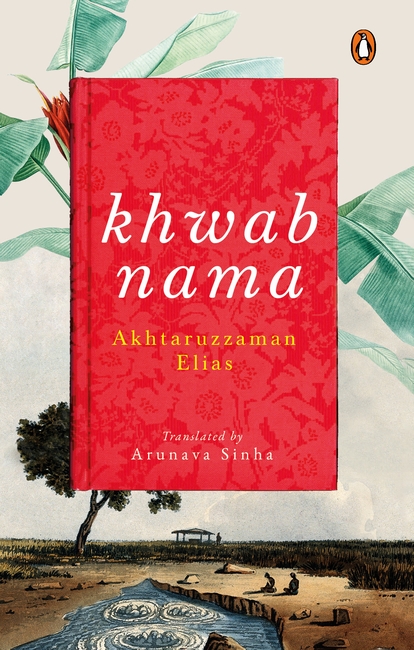
Bengal in the 1940s. Having overcome the famine and the revolt of the sharecroppers, Bengal’s peasants are uniting. Work is scarce and wages are low. There is barely any food to be had. The proposal for the formation of Pakistan, the elections of 1946, and communal riots are rewriting the contours of history furiously. Amidst all this, in an unnamed village, a familiar corporeal spirit plunges into knee-deep mud. This is Tamiz’s father, the man in possession of Khwabnama.
At first glance, Khwabnama is the tale of a harmless young farmhand who becomes a sharecropper and dreams of a future that has everything to do with the land that he cultivates and the soil that he tills. The fabric of his dreams, though, have as much to do with the history of
the land as its future, and as much to do with memories as with hope.
In this magnum opus, which documents the Tebhaga movement, wherein peasants demanded two-thirds of the harvest they produced on the land owned by zamindars, Akhtaruzzaman Elias has created an extraordinary tale of magical realism, blending memory with reality, legend with history and the struggle of marginalized people with the stories of their ancestors.

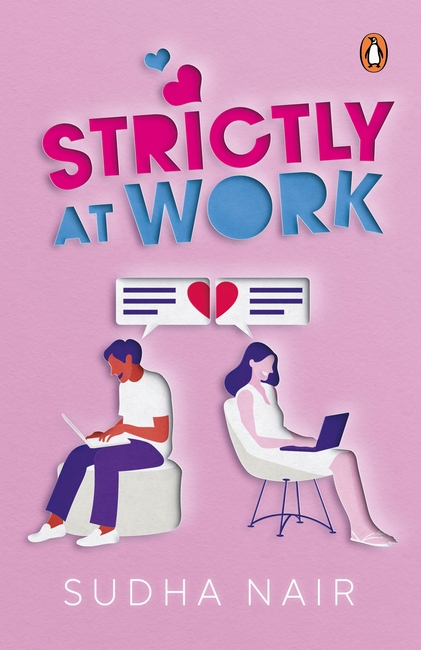
Simi is a marketeer for a furniture company.?
Ranvir is an analyst at a finance start-up
At BizWorks, a swanky co-working space, their paths aren’t meant to cross. But as circumstances bring them together, again and again, they find it harder to deny the spark between them.
Simi’s family is pushing her towards the ‘perfect’ arranged marriage, while Ranvir is in a live-in relationship. When their personal lives clash, as they get attracted to each other, Simi and Ranvir must decide if they want to be more than just co-workers…
Strictly at Work is a story about love, relationships and defining choices.
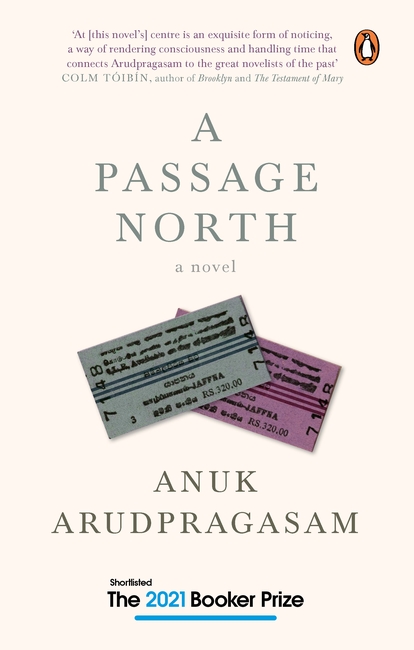
A young man journeys into Sri Lanka’s war-torn north in this searing novel of longing, loss, and the legacy of war, from Anuk Arudpragasam, the author of The Story of a Brief Marriage.
Short-listed for the Booker Prize 2021, A Passage North begins with a message from out of the blue: a telephone call informing Krishan that his grandmother’s caretaker, Rani, has died under unexpected circumstances-found at the bottom of a well in her village in the north, her neck broken by the fall. The news arrives on the heels of an email from Anjum, an impassioned yet aloof activist Krishnan fell in love with years before while living in Delhi, stirring old memories and desires from a world he left behind.
As Krishan makes the long journey by train from Colombo into the war-torn Northern Province for Rani’s funeral, so begins an astonishing passage into the innermost reaches of a country. At once a powerful meditation on absence and longing, as well as an unsparing account of the legacy of Sri Lanka’s thirty-year civil war, this procession to a pyre ‘at the end of the earth’ lays bare the imprints of an island’s past and the unattainable distances between who we are and what we seek.
Written with precision and grace, Anuk Arudpragasam’s masterful novel is an attempt to come to terms with life in the wake of devastation, and a poignant memorial for those lost and those still alive.

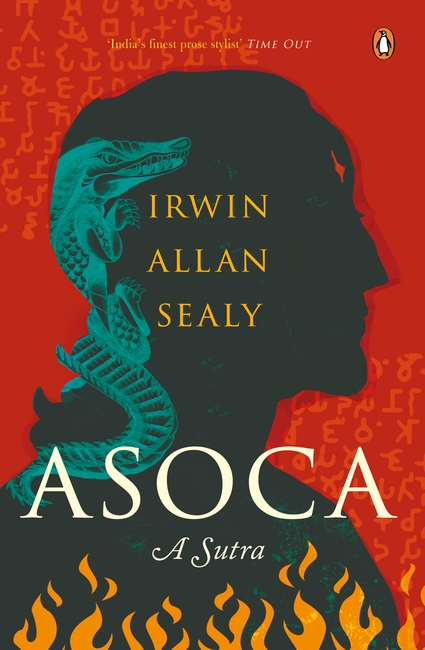
The mastermind behind one of the deadliest wars fought.
The proponent of ahimsa.
Who was the man? Who was the king?
Who was Asoca?
“Sealy’s distinct technique and his singular meandering and descriptive narrative form have ensured him […] unequalled standing in [the] world of Indian writing in English” – The Guardian
Asoca-often spelled Ashoka-was hailed as Ashoka the Great, the emperor who ruled most of the Indian Subcontinent and was pivotal in the spread of Buddhism from India to other parts of Asia in the third century BC.
But his life as emperor was not always led by non-violence. History has it that he masterminded one of the biggest and deadliest wars ever fought, and it was the insurmountable grief he experienced at the sight of the people dying and dead on the battleground that made him turn to Buddhism and take a vow of ahimsa.
Who was the man, and who was the king? What were his demons, and what gave him strength? This historical novel, drawn from research and portrayed with energy and complexity, transports the reader to the era of the Mauryan dynasty with atmospheric vividness and insight. Epic in scope and Shakespearean in drama, Asoca: A Sutra leaves the reader breathless with the full-bodied richness of Sealy’s prose, his trademark whimsy and his imaginative modern reconstruction of that enigmatic and brilliant ruler of the Indian subcontinent.

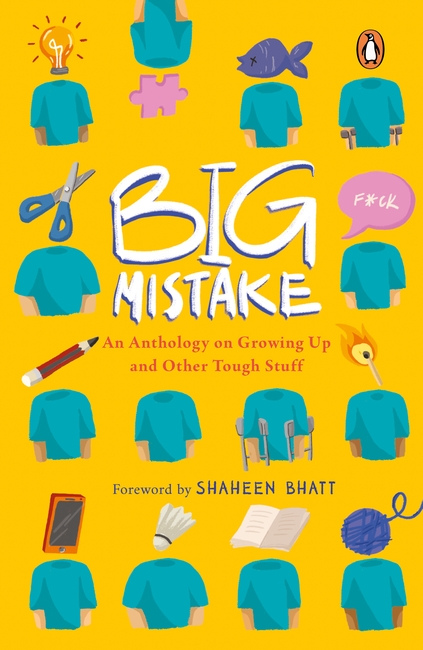
A label-defying anthology for every young adult
Insecurities and assurances, conflict and solidarity, fearfulness and courage-the personal histories, stories and #ownvoices in this anthology cover a lot of ground in just a few pages. Let them spark conversations on love, identity, disability, family, body positivity, ambition and other tough stuff. After all, no matter how old we get, growing up can feel like one big mistake.
– Helmed by a powerful foreword by Shaheen Bhatt
– A modern and bold take on the once-popular Chicken Soup for the Soul series, to give readers hope, comfort, courage and love with stories that are told from the heart
– Includes fiction, non-fiction and poetry from:
Saina Nehwal, badminton superstar
Parvati Sharma, author of several children’s and adult novels
Japleen Pasricha, founder-CEO of Feminism in India
Nandana Dev Sen, writer, child-rights activist and award-winning actor
Anusha Misra, founder of Revival Disability Magazine
Nikhil Taneja, CEO of Yuvaa
Andaleeb Wajid, author of over twenty-five novels
Neha Singh, children’s author, theatre practitioner and women’s rights activist
Jane De Suza, award-winning author of children’s fiction
Hannah Lalhlanpuii, debut author
Sonaksha Iyengar, illustrator, graphic recorder and book designer
Kautuk Srivastava, writer and comedian

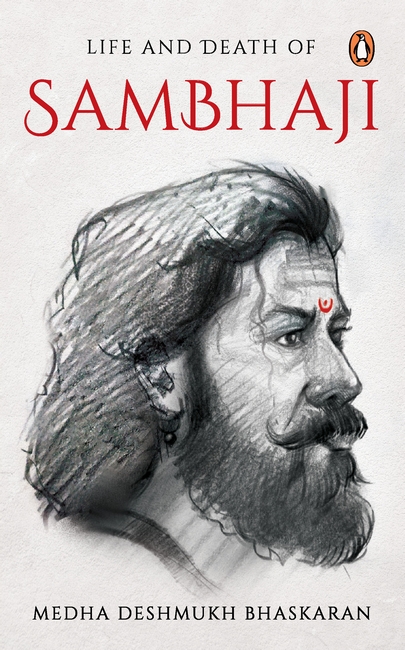
It begins to dawn on the nine-year-old Sambhaji that his father has fled from the clutches of the Mughal badshah Aurangzeb and left him behind. He must now find his way back home with the help of strangers . . .
Under the shadow of an illustrious father, Sambhaji finds himself thrust into the Maratha-Mughal conflict from a tender age. His mistakes cost him dearly and when his father suddenly dies and he becomes the chhatrapati, it is as if he has inherited a crown of thorns.
In the nine years that follow, he faces a constant battle-internally, as palace intrigues simmer to kill him, and externally, as Aurangzeb descends on the Deccan with full military force.
Even Chhatrapati Shivaji had never faced a full-blown Mughal aggression.
Will he be able to protect the Maratha nation and Swaraj that was his father’s dream? Will he prove to be a worthy son to his father-in life as well as in death?
History has been unfair to Sambhaji, but it can’t deny that he inspired a generation of Maratha warriors, who eventually ensured the end of Aurangzeb’s jihad.

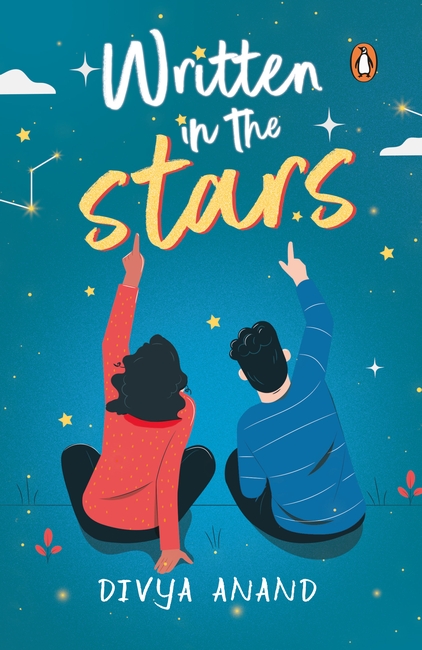
When all her efforts at political maneuvering, sucking up and even doing her job fail to land her that elusive promotion, Sitara decides it’s time to use the new marketing head Abhimanyu’s obsession with his horoscope to her advantage.Soon, she’s rescheduling meetings, pitching ideas and picking launch dates based on his horoscope. Except, Sitara is so focused on manipulating Abhimanyu with the career section of his horoscope that she doesn’t pay attention to the personal section. Hilarity ensues when these star-crossed signals result in Abhimanyu pursuing Sitara romantically, without realizing that the ‘signs’ are engineered coincidences in her quest to get promoted.
Soon, Sitara is faced with choosing what she really wants-a career progression or true love. She must chart her own course even if what she has in mind may not be what the stars ordained. Written in the Stars is a romantic comedy about life, love and whether the biggest things in life are the choices you make or what destiny has in store for you.