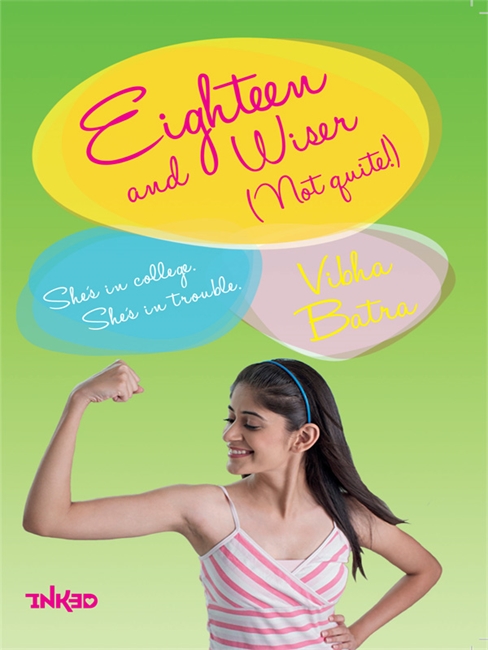
Join Rinki and the wolf pack in the most exciting year of their lives. She has dreamed of it, longed for it, cried for it. And now, she’s it. Rinki Tripathi is finally eighteen! But, as she realizes, being eighteen comes with its own set of troubles: parental expectations (they seem to be obsessed with the ‘F’ word: Future), romantic complications (in the form of the so gorgeous- it-isn’t-fair Tejas), professional tribulations (don’t even ask).
Rinki can’t understand why her male friends prefer her female friends to her. Her college teachers can’t understand why her attendance is so poor. And her parents, poor folks, don’t understand her at all! Rinki has hit the magic number but her life is far from magical. Will the eighteenth year of her life make her feel any wiser? Read the last instalment in the Rinki series and find out.

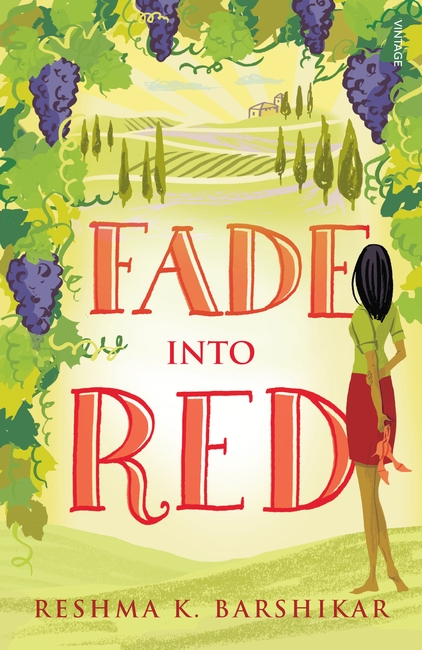
Twenty-something investment banker Ayra had always wanted to be an art historian till it occurred to her that art history couldn’t possibly support her penchant for beautiful shoes.
One monsoon day, she’s sent to Rome on a last-minute assignation with a star client. What should have been a four-day trip turns into a two-week treasure hunt placing her bang in the middle of dodgy vintners and midnight deals, rolling Tuscan hills, and a millionaire playboy who’s out to taste more than just the wine.
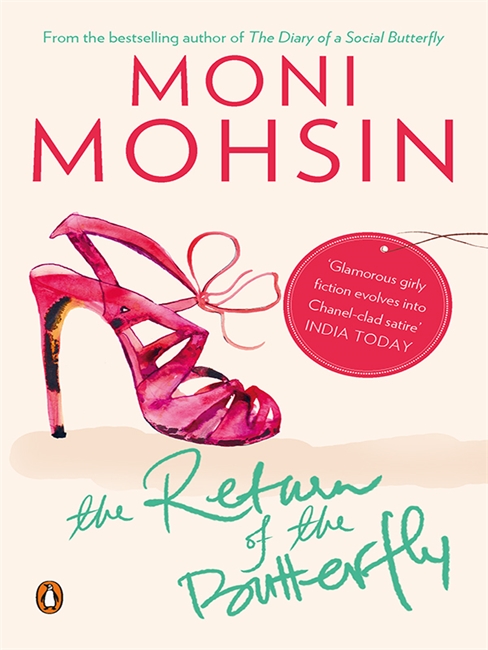
I tell you the halaats are so bad, so bad that don’t even ask. The Talibans sitting on top of our heads, bombs bursting left, right and centre, drones droning away, load-shedding a hundred hours a day, servants answering back, in-laws trying to upstage you, friends throwing you out of their kitties and on top of that elections ka tamasha. Janoo tau is coming closer and closer to a nervous brake out while Mummy is getting sterile dementia. As for Kulchoo, bhai, don’t even ask. But I’ve decided, come what may, I tau am not going to let anyone clamp my style. I’m going to live just as I like-watching my Turkish soaps, going to GTs and weddings, throwing kitty parties, telling everyone everything saaf-saaf and, of course, doing summers in London-voh tau must hai na. And I’m going to do it in my Jimmy Choo ki heels and my sleeveless designer shirts, and my streaked hair and my Prada ki sunglasses. This much I’m telling you all from now only. So tighten your seat belts, okay?

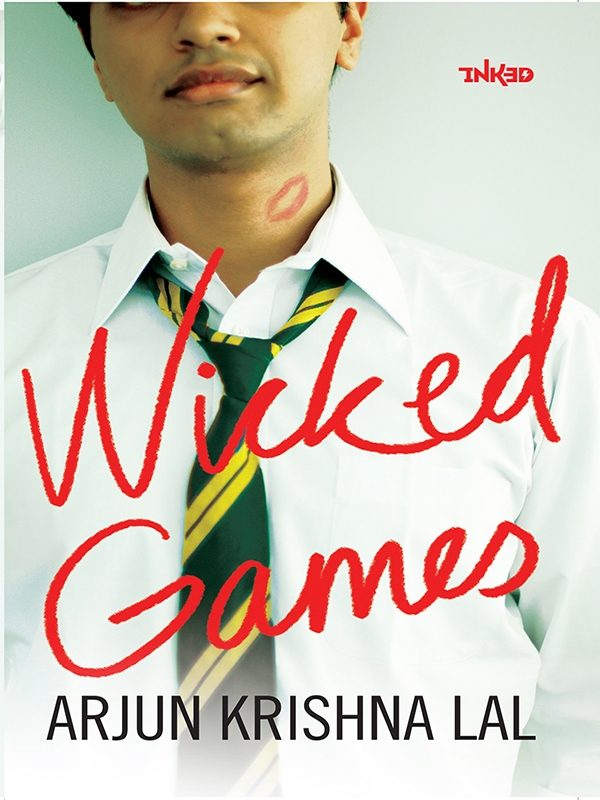
They think they’re invincible. After seventeen very ordinary years of life in small-town America, Amit Pillai suddenly finds himself on a red-eye flight to Kerala. An NRI, he is forced to join the posh Ananthapuri International School, the only school in town that accepts ‘soft boys’ like him. But this Kerala is faux Americana where it’s all loud music and lined pockets, and there is never enough time to stop and look around. Amit quickly discovers that life here is anything but soft. Struggling with love and identity, he is never quite sure where to draw the line, when his fragile existence at school is rocked by a series of shocking events. What have they done? What are the consequences? And can they live with them? A roller-coaster ride through the real-time experiences of an Indian teenager, Wicked Games is contemporary school life told like never before.
Patriarchy asserts men are superior to women
Feminism clarifies women and men are equal
Queerness questions what constitutes male and female
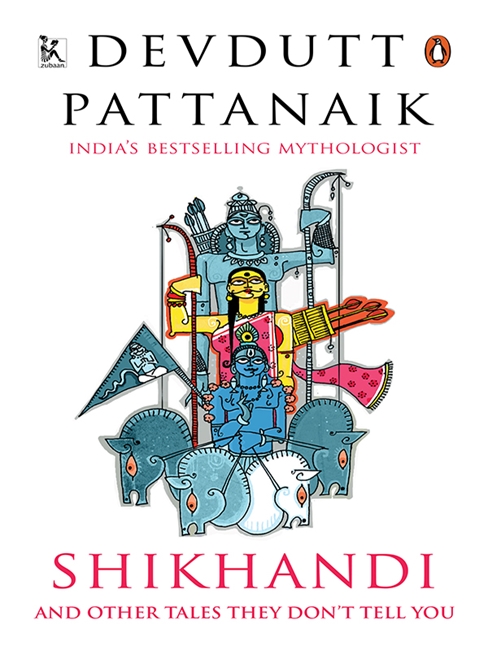
Queerness isn’t only modern, Western or sexual, says mythologist Devdutt Pattanaik. Take a close look at the vast written and oral traditions in Hinduism, some over two thousand years old, and you will find tales of:
Shikhandi, who became a man to satisfy her wife
Mahadeva, who became a woman to deliver a devotee’s child
Chudala, who became a man to enlighten her husband
Samavan, who became the wife of his male friend
and many more . . .
Playful and touching—and sometimes disturbing—these stories when compared with tales of the Mesopotamian Gilgamesh, the Greek Ganymede, the biblical Sodom or the Chinese ‘cut sleeve’ Emperor reveal the unique Indian way of making sense of queerness.
Devdutt Pattanaik’s new book builds on profound ideas that our ancestors shared but which we have rarely inherited.
This book has content for mature audiences. Discretion advised.
Meda’s back. With a friend.The battle is over; the choice has been made. Meda Melange has officially hung up her monstrous mantle and planted her feet firmly on the holy and righteous path of a Crusader-in-training. Or, at least, she’s willing to give it a shot. It helps that the Crusaders are the only thing standing between her and the demon hordes who want her dead.The problem is the only people less convinced than Meda of her new-found role as Good Girl are the very Crusaders she’s trying to join. So when a devilishly handsome half-demon boy offers escape, how’s a girl supposed to say no?After all, everyone knows a good girl’s greatest weakness is a bad boy.
‘Startlingly avant garde in its form, as well as its content’-Business Standard
Samar, a young scholar, is married to Prabha against his will. Ego and frustration combine to make him refuse to say even a single word to his wife on the day of the marriage. They live thus, without speaking, for nearly a year. Until one moment when their suppressed emotions burst through, and lead to a passionate reconciliation. Funny, affectionate and hard hitting, this is one of the most unique love stories in Indian writing. ‘The first Hindi work which attempted to jolt the fabled Bharatiya Sanskriti (Indian culture) out of its smug stupor’-Countercurrents
‘The enfant terrible of Hindi literature’-Tehelka
The Mahabharata is one of the greatest stories ever told. Though the basic plot is widely known, there is much more to the epic than the dispute between the Kouravas and Pandavas that led to the battle in Kurukshetra. It has innumerable sub-plots that accommodate fascinating meanderings and digressions, and it has rarely been translated in full, given its formidable length of 80,000 shlokas or couplets. This magnificent 10- volume unabridged translation of the epic is based on the Critical Edition compiled at the Bhandarkar Oriental Research Institute. Volume 1 consists of most of Adi Parva, in which much happens before the Kouravas and the Pandavas actually arrive on the scene. This volume covers the origins of the Kuru clan; the stories of Poushya, Poulama and Astika; the births of the Kouravas and the Pandavas; the house of lac; the slaying of Hidimba and Baka; Droupadi’s marriage; and ends with the Pandavas obtaining their share of the kingdom. Every conceivable human emotion figures in the Mahabharata, the reason why the epic continues to hold sway over our imagination. In this lucid, nuanced and confident translation, Bibek Debroy makes the Mahabharata marvellouly accessible to contemporary readers.

Can a man walk on water?
Can he see the future?
Can he read people’s minds?After a deep personal loss, Maximus Pzoras, Harvard economist and Wall Street banker, sets out on a quest to find the cause of human pain and suffering. His journey takes him from New York to a hidden ashram in south India, and then to a freezing cave high in the Himalayas. And as he goes from being a cubicle dweller to a cave-dwelling yogi, he starts to develop extraordinary powers. But will Max, an investment banker turned Himalayan sage, find the answers to the questions that led him to India?
The Seeker is the story of a man’s tremendous inner transformation, a Siddhartha for our generation.

War is here.
Full-scale war has erupted between the Crusaders and the demons and even Chi has to admit that it isn’t going well. Like any sensible rat, Meda’s eager to abandon the sinking ship but, unfortunately, her friends aren’t nearly as pragmatic. Instead, Meda’s forced to try to keep them all alive until the dust settles.
As the Crusaders take more and more drastic measures, the tables turn and Meda suddenly finds herself in the role of Voice of Sanity. No one is more horrified than she is. When old enemies reappear as new allies and old friends become new enemies Meda has to decide-again-whose side she’s really on.