Gripping and insightful stories on the modern Indian condition
Twenty stories of contemporary Indian life that demonstrate the range of Hariharan’s writing, executed with a precision of style and magical imagery. Sometimes comic (yet tinged with sadness) as in the much-anthologized ‘The Remains of the Feast’ where an old woman near the end of her life suddenly feels the urge to sample all the food she has been forbidden; sometimes with a twist as in ‘Gajar Halwa’ where Chellamma, a servant girl from a small-town family, finally understands what makes a big city work; sometimes moving as in ‘The Reprieve’, these stories never fail to surprise and delight.

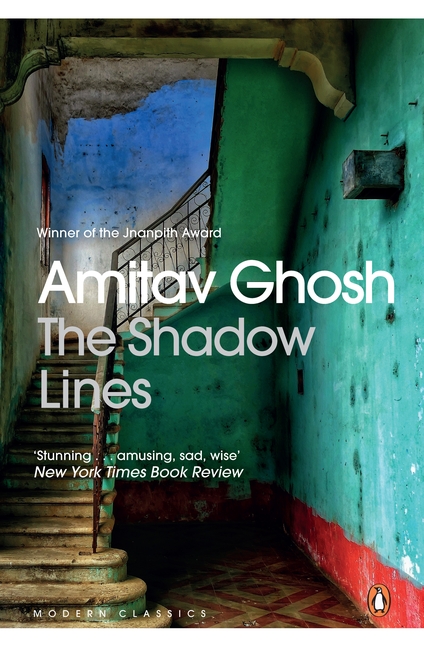
As a young boy, Amitav Ghosh’s narrator travels across time through the tales of those around him, traversing the unreliable planes of memory, unmindful of physical, political and chronological borders. But as he grows older, he is haunted by a seemingly random act of violence. Bits and pieces of stories, both half-remembered and imagined, come together in his mind until he arrives at an intricate, interconnected picture of the world where borders and boundaries mean nothing, mere shadow lines that we draw dividing people and nations.
Out of a complex web of memories, relationships and images, Amitav Ghosh builds an intensely vivid, funny and moving story. Exposing the idea of the nation state as an illusion, an arbitrary dissection of people, Ghosh depicts the absurd manner in which your home can suddenly become your enemy.

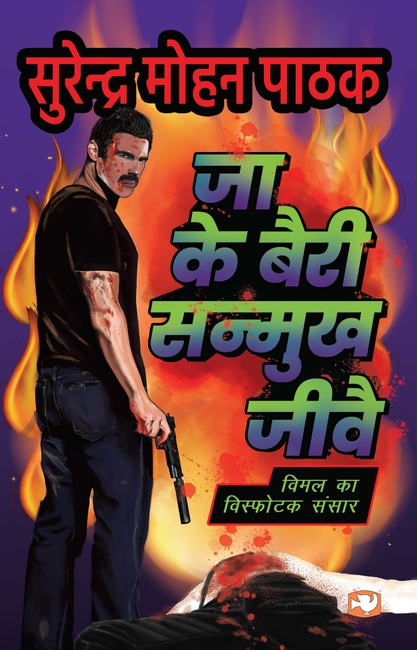
‘I am a khalsa of Waheguru. I am the Guru’s lion. I’ll thunder like the clouds and in the same booming voice, I will unleash havoc on my enemies. My enemies will tremble at my challenge. My scream will rain like cinders upon them.’
Jaake Bairi Sanmukh Jeevay,
Taake Jeevan Ko Dhikkar
This electrifying novel will quake the gentle human sensibilities. The 44th mystery in the Vimal series this is a brand-new gem from the stellar mystery author, Surendra Mohan Pathak.

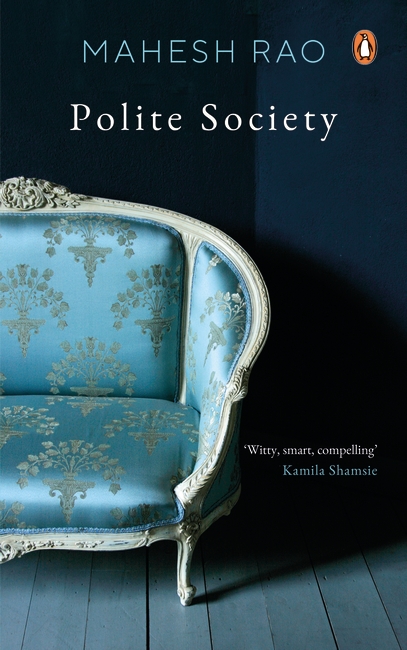
Bored witless in her south Delhi cocoon, the beautiful Ania Khurana seeks excitement. Whether tinkering with her novel-in-progress or setting up her single aunt and close friends with suitable men, she undertakes her projects with a passionate focus. Art fairs, literary residencies, a weekend at a cricketer-turned-politician’s country retreat and, of course, dozens of glittering parties-Ania applies her exceptional industry to them all. But her privilege cannot mask the darkness and vulnerability at the heart of her ornate world-nor does it enable her to influence the dazzling, deadly men and women who appear in it.
Keenly observed, sharply plotted and full of wit and brio, Polite Society reimagines Jane Austen’s Emma in contemporary Delhi to portray a society whose polished surface often reveals far more than is intended.
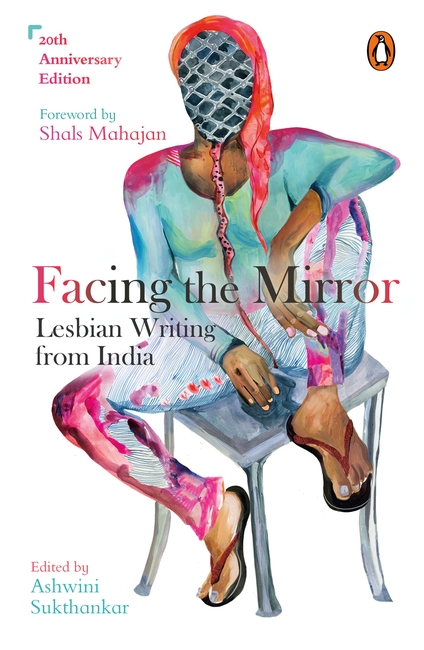
A groundbreaking book where lesbians found their voice for the first time
For decades, most lesbians in India did not know the extent of their presence in the country: networks barely existed and the love they had for other women was a shameful secret to be buried deep within the heart. In Facing the Mirror, Ashwini Sukthankar collected hidden, forgotten, distorted, triumphant stories from across India, revealing the richness and diversity of the lesbian experience for the first time. Going back as far as the 1960s and through the forms of fiction and poetry, essays and personal history, this rare collection mapped a hitherto unknown trajectory.
In celebration of the Supreme Court’s reading down of the draconian Section 377 of the Indian Penal Code, this twentieth-anniversary edition, with a foreword by author and activist Shals Mahajan, brings to readers a remarkable history that illuminates the blood and the tears, the beauty and the magic of the queer movement in India. The raw anger and passion in them still alive, the writings in Facing the Mirror proudly proclaim the courage, the sensuality, the humour and the vulnerability of being lesbian.

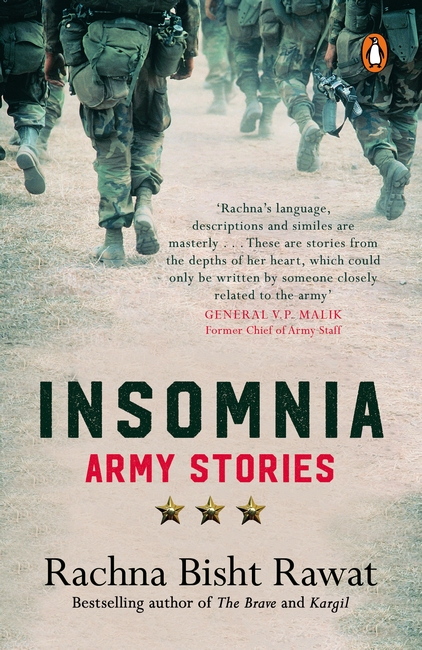
A retired General is haunted by voices of dead men.
Soldiers from two enemy nations manning posts in freezing Siachen form a strange connection.
A young Lieutenant dying in the jungles of Arunachal is watched over by three men, one of whom would have his destiny changed forever.
What is the dark secret held by a Major and his men operating incognito in Kashmir?
What surprise is a train bound for Agra bringing to the all-male bastion of 13 Para?
Who are the invisible people a little girl awaiting brain surgery in the Lansdowne Military Hospital talks to?
From the bestselling author of The Brave, 1965 and Kargil comes a book that will take you into the olive-green world of army cantonments, through stories that will delight and disturb in equal measure.

Cheaters tells five short stories, each discussing a different shade of infidelity in today’s times when societal norms are still the same — archaic. However, the urge to explore and experiment amongst the youth is at an all-time high. This friction, if not handled well, could lead to unexpected roads. Each story, though high on emotions, unfolds in a thrilling narrative.

In Hippie, his most autobiographical novel to date, Paulo Coelho takes us back in time to re-live the dream of a generation that longed for peace and dared to challenge the established social order-authoritarian politics, conservative modes of behavior, excessive consumerism, and an unbalanced concentration of wealth and power.
Following the “three days of peace and music” at Woodstock, the 1969 gathering in Bethel, NY, that would change the world forever, hippie paradises began to emerge all around the world. In the Dam Square in Amsterdam, long-haired young people wearing vibrant clothes and burning incense could be found meditating, playing music and discussing sexual liberation, the expansion of consciousness and the search for an inner truth. They were a generation refusing to live the robotic and unquestioning life that their parents had known.
At this time, Paulo is a young, skinny Brazilian with a goatee and long, flowing hair who wants to become a writer. He sets off on a journey in search of freedom and a deeper meaning for his life: first, with a girlfriend, on the famous “Death Train to Bolivia,” then on to Peru and later hitchhiking through Chile and Argentina.
His travels take him further, to the famous square in Amsterdam, where Paulo meets Karla, a Dutch woman also in her 20stwenties. She convinces Paulo to join her on a trip to Nepal, aboard the Magic Bus that travels across Europe and Central Asia to Kathmandu. They embark on a journey in the company of fascinating fellow travelers, each of whom has a story to tell, and each of whom will undergo a transformation, changing their priorities and values, along the way. As they travel together, Paulo and Karla explore their own relationship, an awakening on every level that brings each of them to a choice and a decision that sets the course for their lives thereafter.
Tania has a dream job as supervising producer at YTV, a leading entertainment channel. But things are not what they seem-YTV’s ratings and fortunes are dipping, and Tania is the one assigned to resurrect the 6 p.m. slot with a new talk show and a scantily clad host. But when a dying girl calls on the show, the fun and games come to a screeching halt. This turn of events gives Rajneesh Tiwari, the demi god of Indian news television, one of his most explosive ‘human interest’ stories of the year. Will life ever be the same for Tania or anyone involved in the doomed 6 p.m. slot?

One Hundred Years of Solitude
Equally tragic, joyful and comical, Gabriel Garcia Marquez’s masterpiece of magical realism, One Hundred Years of Solitude is a seamless blend of fantasy and reality. This great masterpiece is the story of seven generations of the Buendia family and of Macondo, the town they have built. Though little more than a settlement surrounded by mountains, Macondo has its wars and disasters, even its wonders and miracles. A microcosm of Colombian life, its secrets lie hidden, encoded in a book, and only Aureliano Buendia can fathom its mysteries and reveal its shrouded destiny. Blending political reality with magic realism, fantasy with comic invention, One Hundred Years of Solitude is one of the most daringly original works of the twentieth century.
Love in the Time of Cholera
Fifty-one years, nine months and four days have passed since Fermina Daza rebuffed hopeless romantic Florentino Ariza’s impassioned advances and married Dr Juvenal Urbino instead. During that half-century, Florentino has fallen into the arms of many delighted women, but has loved none but Fermina. Having sworn his eternal love to her, he lives for the day when he can court her again.
When Fermina’s husband is killed trying to retrieve his pet parrot from a mango tree, Florentino seizes his chance to declare his enduring love. But can young love find new life in the twilight of their lives?