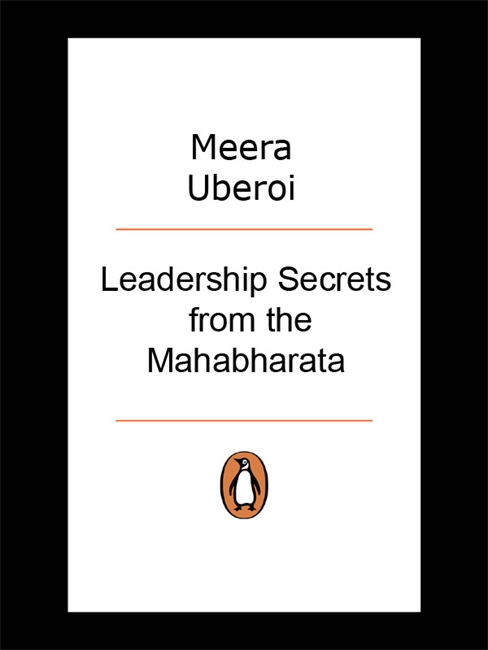
Management insights culled from the Mahabharata, one of the greatest books of all time, is not simply the story of a fratricidal war or a fount of wisdom for philosophers; it is also a comprehensive manual on strategy. From this storehouse of knowledge, Meera Uberoi selects the most pertinent shlokas to reveal the secrets of leadership and the path to success. She shows that the Mahabharata is equal, if not superior, to other management bibles such as The Art of War, The Prince and Go Rin No Sho, The Book of Five Rings. The aphorisms in Leadership Secrets from the Mahabharata have been selected from the Santi Parva, the Bhagvad Gita Parva and the Adi Parva.
As Bhishma lies dying on the battlefield of Kurukshetra, Krishna realizes that with Bhishma’s death, the world will lose ‘all knowledge’. To prevent this, Krishna asks him to impart to Yudhisthira all he knows. These teachings, coming as they do from Bhishma, the wisest of them all, contained in the Santi Parva, form the core of Uberoi’s book. Apart from detailing how to apply the craft of kingship to modern business practices, the book also explores the analogy between kingship and leadership. Pithy and insightful, Meera Uberoi’s selection is a practical guide to leadership in any field of life. The aphorisms, grouped under heads like Duty, War, Espionage and Conduct, deal with eternal values and truths that are as relevant today as they were 3000 years ago.

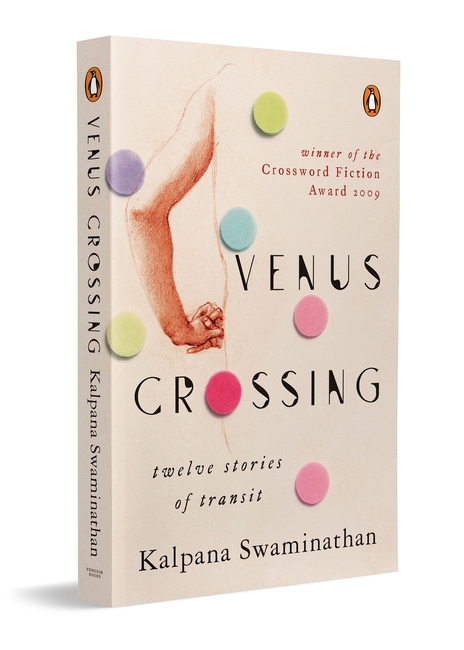
In Venus Crossing, Kalpana Swaminathan masterfully crafts twelve stories that lay bare the deepest complexities of human relationships. These stories capture the instant of transit, that moment when the impossible-the unthinkable-is absorbed into the fabric of life so that life can be lived again. That moment is everything: revelation, challenge, existence. In the Yellow Dupatta, practical compulsions surmount grief as a young couple takes their dead child home from the hospital. A middle-aged nurse finds romance with the most obnoxious of patients in Sister Thomas and Mister Gomes. Two young women shattered by rejection begin the long journey of survival in Fly Away, Peter. Incident at Abu Ghraib finds Sukhi appalled by her mother’s empathy for a disgraced American soldier. Hemant is counselled, in Euthanasia, to opt for the final solution-but will he?
Incisive, brilliant and deeply compassionate, Venus Crossing showcases Kalpana Swaminathan’s consummate skill as a storyteller and proves, yet again, the uncompromising vision of her craft.

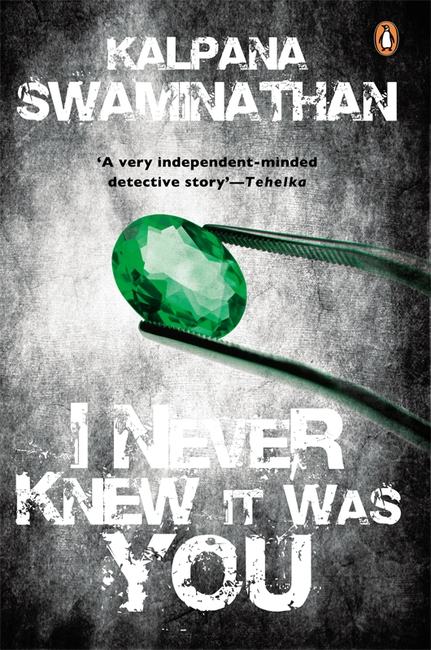
Sita, detective Lalli’s niece-and occasional Watson-runs into former classmate Anais at Mumbai airport. Even as the friends catch up, Anais hands over a cardboard box she is carrying to a waiting woman, nonchalantly informing the traumatized lady that the box contains her son’s ashes. Some days later, Anais herself turns up dead in the slimy Mithi River, a pink nylon rope wrapped ritually around her neck.
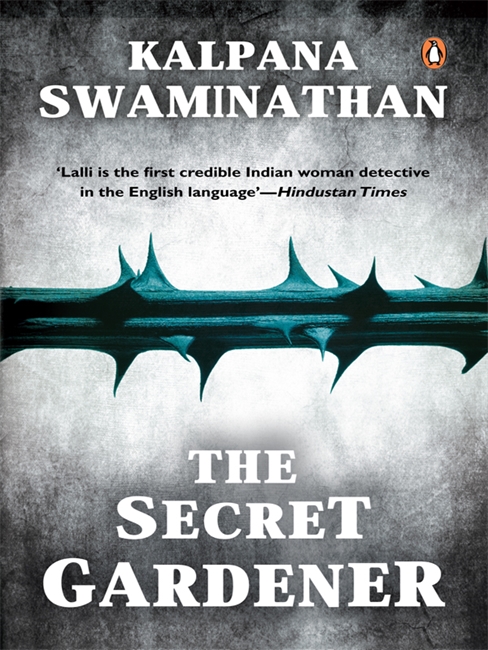
24 Patwardhan Cross. The solitary bone that surfaces in the garden there doesn’t mean much to police surgeon Dr Q or Inspector Savio. But Lalli, who collects curiosities, finds it curious. Things get curiouser when a dying gigolo whispers the address in terror, and curiouser still when a mummified finger with a chic manicure turns up in the same garden. Lalli might have ignored these curiosities had there not been a child at the heart of the matter. As she investigates what makes this garden grow, Lalli uncovers a gruesome tale.

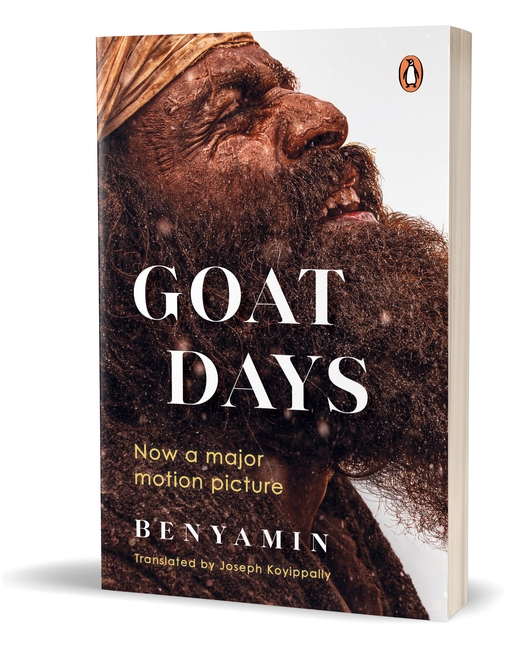
Najeeb’s dearest wish is to work in the Gulf and earn enough money to send back home. He achieves his dream only to be propelled by a series of incidents, grim and absurd, into a slave-like existence herding goats in the middle of the Saudi desert. Memories of the lush, verdant landscape of his village and of his loving family haunt Najeeb whose only solace is the companionship of goats. In the end, the lonely young man contrives a hazardous scheme to escape his desert prison. Goat Days was published to acclaim in Malayalam and became a bestseller. One of the brilliant new talents of Malayalam literature, Benyamin’s wry and tender telling transforms this strange and bitter comedy of Najeeb’s life in the desert into a universal tale of loneliness and alienation.
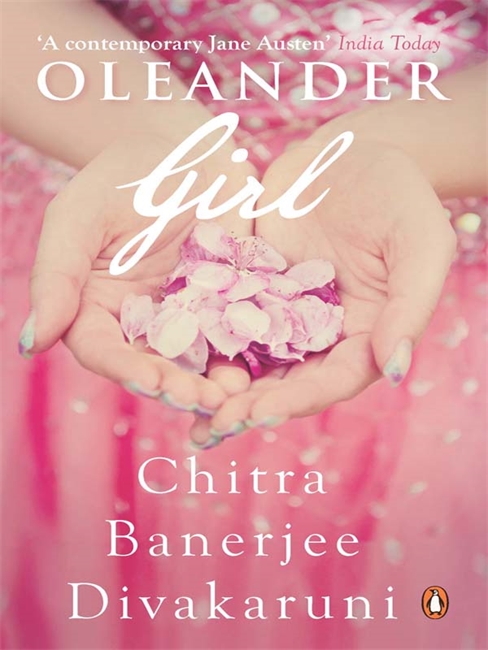
Troubled by the silence that surrounds her parents’ death, seventeen-year-old Korobi Roy clings to her only inheritance from them: the unfinished love note she found hidden in her mother’s book of poetry. But when her grandfather dies, the young woman discovers a dark secret which will finally explain her past.

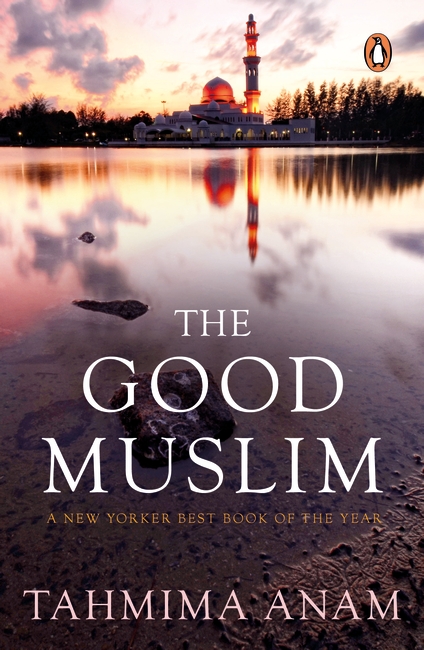
Maya Haque-outspoken, passionate, headstrong-has been estranged from her brother Sohail for almost a decade. When she returns home to Dhaka hoping for reconciliation, she discovers he has transformed beyond recognition. Can the two, both scarred by war, come together again? And what of Sohail’s young son, Zaid, caught between worlds but desperate to belong? The Good Muslim is an extraordinary novel about faith, family and the long shadow of war.
‘I now realize that leaving home was a gesture, like goodbye notes from failed suicides.’
Amit Ray leaves his upper-class home in India with nine books in his bag and seventy rupees in his pocket, beginning his journey into ‘Life’. His story runs a hectic course, from Calcutta to New Delhi and, after a poignant and disastrous Italian interlude, on to London whores, scatological misadventures, Paris, København and back to London. In-between he works variously as a shoeshine boy, cub reporter, lavatory attendant, engineer and writer. The twentieth-century Odysseus, Amit is obsessed with that contraband comestible?Woman. Adam-and-Eve confrontations lead the hero into situations which are in turn lurid, erotic, pathetic, tender and sometimes outrageously hilarious.
Like a beaver, Amit noses his way into that elusive enclave, the ‘Hampstead intellectual circuit’, and learns of the tribal customs, unspoken dogmas and ambiguous hostilities of fellow humans who would feign to know all the answers. And like the proverbial cork, he bobs up and down but never sinks. At the end of the story we find him packing his bags to revisit the land of his birth. There is a hint of thirst quenched. But if we have come to know the hero at all, we must assume that it is only a calm before another storm.
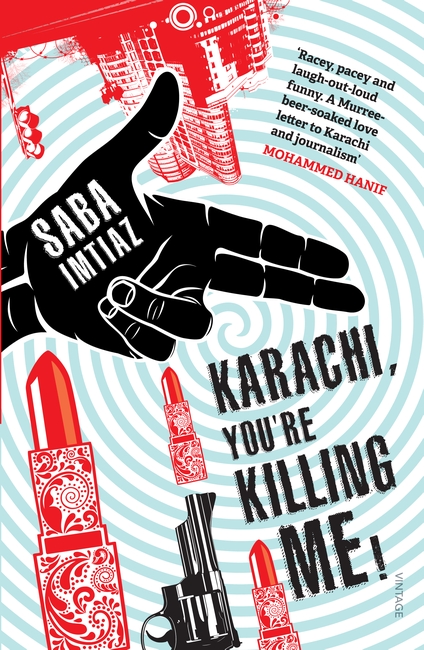
Ayesha is a twenty-something reporter in one of the world’s most dangerous cities. Her assignments range from showing up at bomb sites and picking her way through scattered body parts to interviewing her boss’s niece, the couture-cupcake designer. In between dicing with death and absurdity, Ayesha despairs over the likelihood of ever meeting a nice guy, someone like her old friend Saad, whose shoulder she cries on after every romantic misadventure. Her choices seem limited to narcissistic, adrenaline-chasing reporters who’ll do anything to get their next story—to the spoilt offspring of the Karachi elite who’ll do anything to cure their boredom. Her most pressing problem, however, is how to straighten her hair during the chronic power outages.
Karachi, You’re Killing Me! is Bridget Jones’s Diary meets The Diary of a Social Butterfly—a comedy of manners in a city with none.