A ribald, good-natured story of love in Delhi.
Jaishree Mishra’s second novel is an unexpected romp through the universal dilemmas of love and marriage. It is a compelling tale of icompatible relationships and their astonishing success rated. The Sachdevs, Memoms and Singhs are urban Indians, normal folk with everyday converns, instantly recognizable, in fact, just a little bit like youji and me. But when a foppish Delhiwalla falls for a loverly, smart keralite and his brother finds remance abroad, passion and comedy take control of their destinaies. Why are any of these couples married to each other? Why are the unmarried wanting to marry each other? And why are some of them friends? For wouldn’t you have throught that friends, at the very least, had to be vaguely compatible, even if husbands and wives weren’t?
This hilarious tale of imcompatiblities explores why we do the things we do or, indeed, why we let them happen to us.

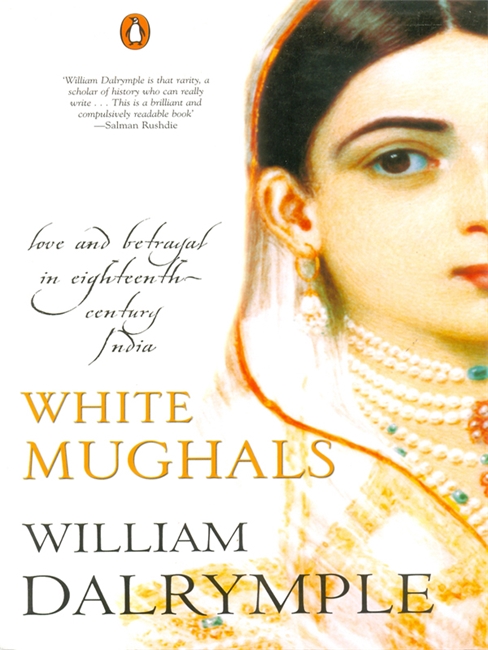
James Achilles Kirkpatrick landed on the shores of eighteenth-century India as an ambitious soldier of the East India Company. Although eager to make his name in the subjection of a nation, it was he who was conquered—not by an army but by a Muslim Indian princess. Kirkpatrick was the British Resident at the court of the Nizam of Hyderabad when in 1798 he glimpsed Khair un-Nissa—’Most Excellent among Women’—the great-niece of the Nizam’s Prime Minister. He fell in love with Khair, and overcame many obstacles to marry her—not least of which was the fact that she was locked away in purdah and engaged to a local nobleman. Eventually, while remaining Resident, Kirkpatrick converted to Islam, and according to Indian sources even became a double-agent working for the Hyderabadis against the East India Company. Possessing all the sweep of a great nineteenth-century novel, White Mughals is a remarkable tale of harem politics, secret assignations, court intrigue, religious disputes and espionage.
On a sultry, rainy Bombay day, Nisha, an impressionable teenager, meets God in the college canteen and falls in love with his ragged, bearded looks and crude, streetwise manners. God patronizingly accepts her in his ‘group’ and it is in this way that their long and passionate romance begins. God’s driving ambition leads him into the unreal world of pseudo poetry, art for hire and compromised journalism while Nisha lands a job in advertising. Sychophants, court jesters, whores, dirty old men, fixers, pretty boys and party girls drift in and out of their lives as their careers take off with dizzying speed. And then, abruptly and harrowingly, everything about their lives goes wrong.

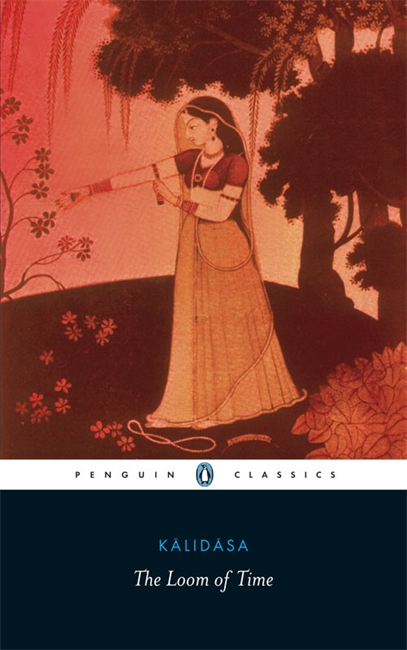
Kalidasa is the greatest poet and playwright in classical Sanskrit literature and one of the greatest in world literature. Kalidasa is said to have lived and composed his work at the close of the first millennium BC though his dates have not been conclusively established. In all, seven of his works have survived: three plays, three long poems and an incomplete epic. Of these, this volume offers, in a brilliant new translation, his two most famous works, the play Sakuntala, a beautiful blend of romance and fairy tale with elements of comedy; and Meghadutam (The Cloud Messenger), the many-layered poem of longing and separation. Also included is Rtusamharam (The Gathering of the Seasons), a much-neglected poem that celebrates the fulfillment of love and deserves to be known better. Taken together, these works provide a window to the remarkable world and work of a poet of whom it was said: Once, when poets were counted, Kalidasa occupied the little finger; the ring finger remains unnamed true to its name; for his second has not been found
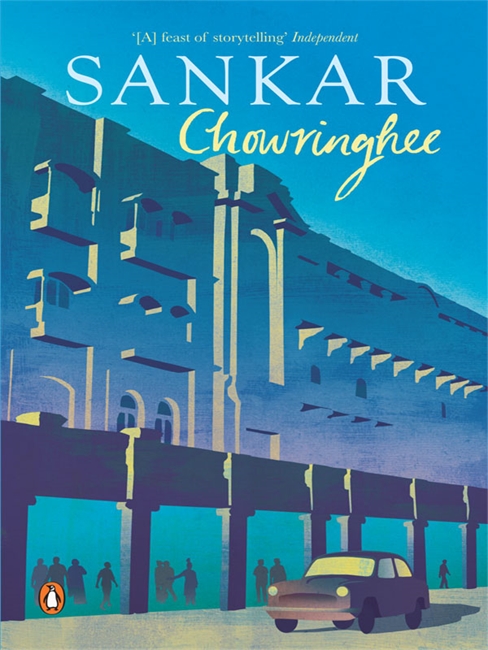
Here, day and night were interchangeable. The immaculately dressed Chowringhee, radiant in her youth, had just stepped on to the floor at the nightclub.’ Set in 1950s Calcutta, Chowringhee is a sprawling saga of the intimate lives of managers, employees and guests at one of Calcutta’s largest hotels, the Shahjahan. Shankar, the newest recruit, recounts the stories of several people whose lives come together in the suites, restaurants, bar and backrooms of the hotel. As both observer and participant in the events, he inadvertently peels off the layers of everyday existence to expose the seamy underbelly of unfulfilled desires, broken dreams, callous manipulation and unbidden tragedy. What unfolds is not just the story of individual lives but also the incredible chronicle of a metropolis. Written by best-selling Bengali author Sankar, Chowringhee was published as a novel in 1962. Predating Arthur Hailey’s Hotel by three years, it became an instant hit, spawning translations in major Indian languages, a film and a play. Its larger-than-life characters-the enigmatic manager Marco Polo, the debonair receptionist Sata Bose, the tragic hostess Karabi Guha, among others-soon attained cult status. With its thinly veiled accounts of the private lives of real-life celebrities, and its sympathetic narrative seamlessly weaving the past and the present, it immediately established itself as a popular classic. Available for the first time in English, Chowringhee is as much a dirge as it is a homage to a city and its people.
A father who delights in the human body, its mysteries, its passion, and the knowledge that it contains and conceals. A mother who wields the power of her love mercilessly. A sister separated in childhood. An uncle who plays games of life and death as a member of the Bombay underworld. A passionate love affair that tears the family apart. And a young woman left to make sense of the world and of her own sexuality. Shashi Deshpande’s novel is about the secret lives of men and women who love, hate, plot and debate with an intensity that will absorb every reader.
It is a story that begins, conventionally enough, with a woman’s discovery of her father’s diary. As Manjari unlocks the past through its pages, rescuing old memories and recasting events and responses, the present makes its own demands: a rebellious daughter, devious property sharks and a lover who threatens to throw her life out of gear again. The ensuing struggle to reconcile nostalgia with reality and the fire of the body with the desire for companionship races to an unexpected resolution, twisting and turning through complex emotional landscapes.
In Moving On Shashi Deshpande explodes the stereotypes of familial bonds with an uncanny insight into the nature of human relationships and an equally unerring eye for detail.

Laila, orphaned daughter of a distinguished Muslim family, is brought up in her grandfather’s house by orthodox aunts who keep purdah. At fifteen she moves to the home of a ‘liberal’ but autocratic uncle in Lucknow. Here, during the 1930s, as the struggle for Indian independence intensifies, Laila is surrounded by relatives and university friends caught up in politics. But Laila is unable to commit herself to any cause: her own fight for independence is a struggle against the claustrophobia of traditional life, from which she can only break away when she falls in love with a man whom her family has not chosen for her. With its beautiful evocation of India, its political insight and unsentimental understanding of the human heart, Sunlight on a Broken Column, first published in 1961, is a classic of Muslim life.

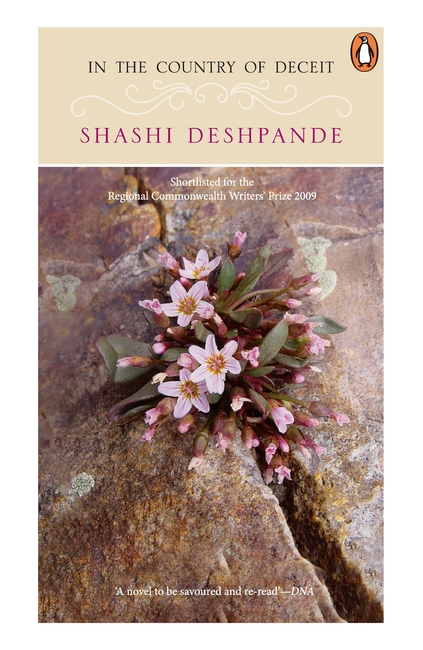
Why did I do it? Why did I enter the country of deceit? What took me into it? I hesitate to use the word love, but what other word is there?’
Devayani chooses to live alone in the small town of Rajnur after her parents’ death, ignoring the gently voiced disapproval of her family and friends. Teaching English, creating a garden and making friends with Rani, a former actress who settles in the town with her husband and three children, Devayani’s life is tranquil, imbued with a hard-won independence. Then she meets Ashok Chinappa, Rajnur’s new District Superintendent of Police, and they fall in love despite the fact that Ashok is much older, married, and-as both painfully acknowledge from the very beginning-it is a relationship without a future.
Deshpande’s unflinching gaze tracks the suffering, evasions and lies that overtake those caught in the web of subterfuge. There are no hostages taken in the country of deceit; no victors; only scarred lives. This understated yet compassionate examination of the nature of love, loyalty and deception establishes yet again Deshpande’s position as one of India’s most formidable writers of fiction