



The rich and varied body of writing in the Indian languages has grown immenasurably in the last hundred yeards. This collection of short stories brings together some pernnial favourites from this vast treasure trve, written by acknowledged masters of the art and sensitively translated. The twenty-three stories included here deal with themes central to modern India:caste, gender politics and emerging changes in the traditonal family structure, These are striking vignettes from all parts of te country, evocative of different lifestyles, yet reflective of common problems and issues with which we can all idnetify.
Catagory: Fiction
Fiction main category
Those Days
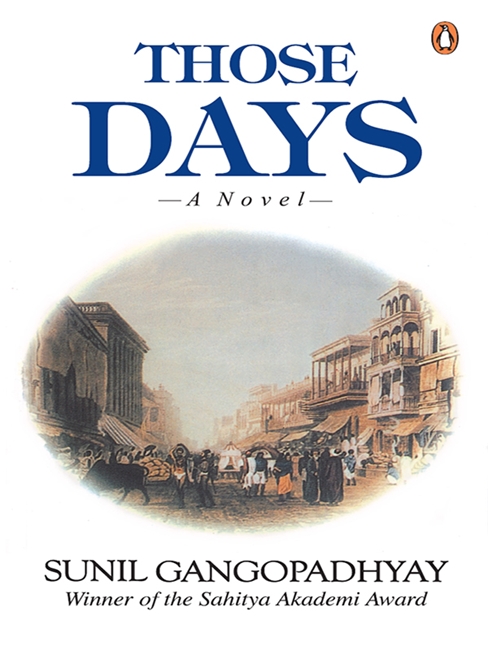
Winner of the Sahitya Akademi Award An award-winning novel that uses both vast panoramic views and lovingly reconstructed detail to provide an unforgettable picture of nineteenth-century Bengal. The Bengal Renaissance and the 1857 uprising form the backdrop to Those Days, a saga of human frailties and strength. The story revolves around the immensely wealthy Singha and Mukherjee families, and the intimacy that grows between them. Ganganarayan Singha’s love for Bindubasini, the widowed daughter of the Mukherjees, flounders on the rocks of orthodoxy even as his zamindar father, Ramkamal, finds happiness in the arms of the courtesan, Kamala Sundari. Bimbabati, Ramkamal’s wife, is left to cope with her loneliness. A central theme of the novel is the manner in which the feudal aristocracy, sunk in ritual and pleasure, slowly awakens to its social obligations. Historical personae interact with fictional protagonists to enrich the narrative. Ishwar Chandra Vidyasagar, the reformer; Michael Madhusudan Dutt, the poet; the father and son duo of Dwarkanath and Debendranath Tagore; Harish Mukherjee, the journalist; Keshab Chandra Sen, the Brahmo Samaj radical; David Hare and John Bethune, the English educationists—these and a host of others walk the streets of Calcutta again, to bring alive a momentous time.
Kalki
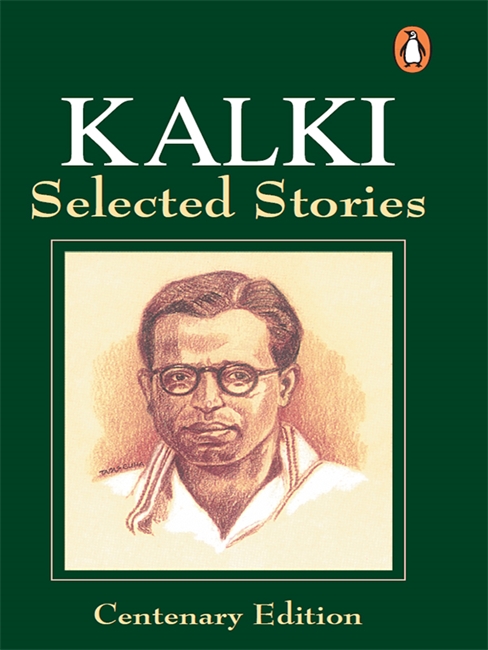
‘Kalki’ R. Krishnamurthy, one of the pioneering giants of the Tamil press in the tumultuous times of the nationalist movement, was a versatile and prolific writer, inscribing the urgencies of his time in his fiction. This collection brings together the best of Kalki’s short stories, which contain some of his most colourful and enduring characters and themes of Tamil popular fiction of the nineteen thirties and forties. There is in these stories the heady urgency of the freedom struggle, the piquant humour of the parodied Tamil gothic and devastating social satire. In her sensitive translations, Gowri Ramnarayan has succeeded in capturing the nuances of the gently mordant wit that made Kalki’s stories the highlight of the magazines they were originally published in, creating for themselves a dedicated following that flourishes undiminished to this day.
Coinciding with the centenary of Kalki’s birth, this volume is a well-deserved tribute to a writer whose breadth of vision and genius imagined and served a new India.
Somadeva
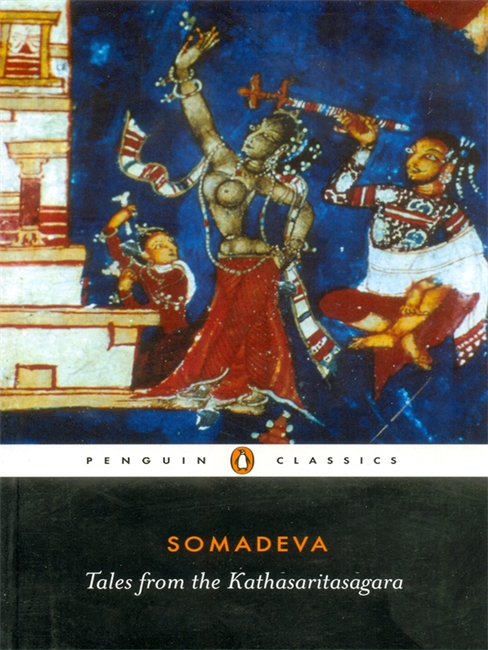
The vast ocean of stories that influenced storytelling the world over ‘The Kathasaritasagara’ is said to have been compiled by a Kashmiri Saivite Brahmin called Somadeva in AD 1070, although the date has not been conclusively established. Legend has it that Somadeva composed the Kathasaritasagara for Queen Suryavati, wife of King Anantadeva who ruled Kashmir in the eleventh century. The stories in this book are retold from ten of the eighteen books of the original Kathasaritasagara. The most remarkable feature of the Kathasaritasagara is that unlike other texts of the time, it offers no moral conclusions, no principles to live by and is throughout a celebration of earthly life. The tale of Naravahanadatta, the prince of the vidyadharas, the sky-dwellers with magical powers, comprises the main narrative and is used as an outer frame to introduce the stories in the text. Promiscuous married women and clever courtesans, imbecile Brahmins, incompetent kings and wise ministers, wicked mendicants and holy ascetics, cursed men and men who are granted boons, evil non-human creatures and friendly magical beings, all jostle for attention in Arshia Sattar’s masterful translation of this timeless collection of tales.
Return Of The Aryans
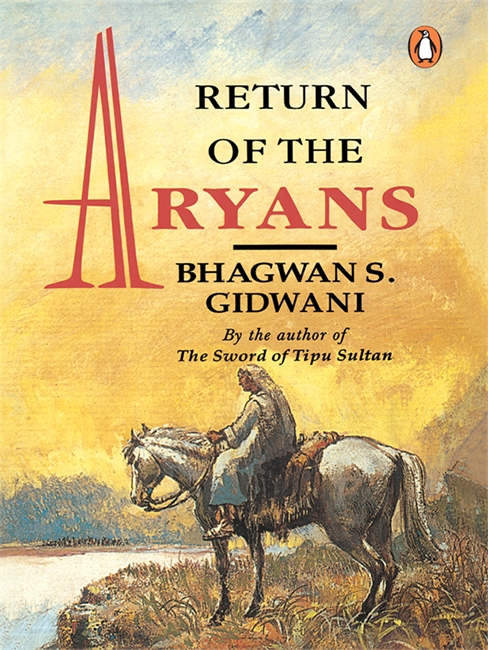
A sweeping saga of ancient india
Return of the Aryans tells the epic story of the Aryans – a gripping tale of kings and poets, seers and gods, battles and romance and the rise and fall of civilizations. In a remarkable feat of the imagination, Bhagwan S. Gidwani takes us back to the dawn of mankind (8000 BC) to recreate the world of the Aryans. He tells us why the Aryans left India, their native land, for foreign shores and shows us their triumphal return to their homeland…
Vast and absorbing, the novel tells the stories of characters like the gentle god, Sindhu Putra, spreading his message of love; the physician sage Dhanawantar and his wife Dhanawantari; peaceloving Kashi after whom the holy city of Varanasi is named; and Nila who gave her name to the river Nile…
Richly textured and with a cast of thousands, the epic adventure of the Aryans come gloriously alive in the hands of the bestselling author of The Sword of Tipu Sultan.
Bhava
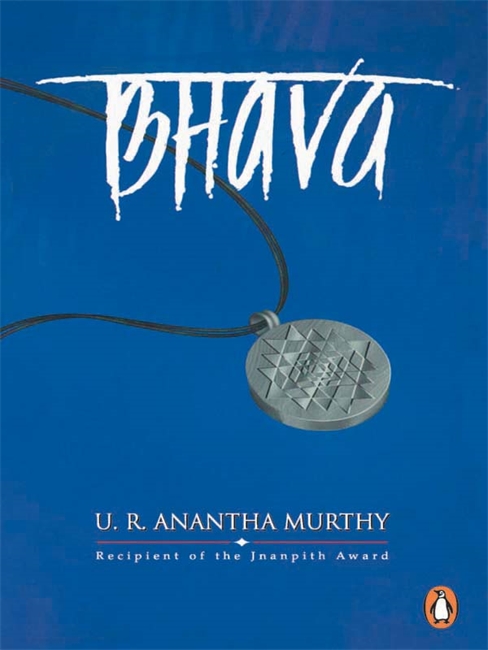
A compelling tale of mystery, passion and spiritual exploration seventy-year-old Shastri; A reciter of Harikatha, encounters an Ayyappa pilgrim on a train. Around the pilgrim’s neck is a Sri chakra amulet which looks like one that belonged to Saroja, Shastri’s first wife. But Shastri thought he had killed Saroja years before, believing she was pregnant by another man. If the amulet is Saroja’s, then she might have survived, and the pilgrim (Dinakar, a television star) could be Shastri’s son. A similar story is revealed when Dinakar visits his old friend Narayan: either could be the father of Prasad, A young man destined for spiritual attainment. The interwoven lives of three generations play out variations on the same themes. Whose son am I? Whose father am I? Where are my roots? These mysteries of the past and present are explored, but there are no clear answers. And while significant in daily being , such questions lose urgency in the flux of becoming (Bhava means both being and becoming). So we are led to consider that Samsara-the world of illusion and embodiment-may not be very different from Sunya , the emptiness from which everything arises. At times a drama of cruelty and lust, at times a lyrical meditation on love and transformation, Bhava is an exceptional novel by one of India’s most celebrated writers. Translated from the Kannada by Judith Kroll with the author.
The Postmaster
Poet, novelist, painter and musician Rabindranath Tagore created the modern short story in India. Written in the 1890s, during a period of relative isolation, his best stories—included in this selection—recreate vivid images of life and landscapes. They depict the human condition in its many forms: innocence and childhood; love and loss; the city and the village; the natural and the supernatural. Tagore is India’s great Romantic. These stories reflect his profoundly modern, original vision. Translated and introduced by William Radice, this edition includes selected letters, bibliographical notes and a glossary.
The Binding Vine
The new novel from the bestselling author of That Long Silence The narrator in The Binding Vine is the clever, sharp-tongued Urmi, grieving over the death of her baby daughter and surrounded by, but rebuffing, the care of her mother and her childhood friend, Vanaa. Instead, she becomes caught up in the discovery of her long-dead mother-in-law’s poetry, written when she was a young woman subjected to rape in her marriage; and in Kalpana, a young woman hanging between life and death in a hospital ward, also the victim of rape. Yet, in this web of loss and despair are the glimmerings of hope. Shashi Deshpande explores with acuity and compassion the redemptive powers of love.
Cinnamon Gardens
Lush and beautiful, Cinnamon Gardens is a story of intertwined lives in the gracious world of Ceylon in the 1920s In a novel of exceptional achievement, Shyam Selvadurai evokes the life of the upper classes of Colombo’s wealthy suburb, Cinnamon Gardens, at a time when the power of colonial rule in the country is shifting. It tells the story of Annalukshmi, a young schoolteacher, who finds herself caught between her family’s pressures to marry and her own desire for a more independent life; a life she sees reflected in her mentor, Miss Lawton, a progressive headmistress. She comes to realize that this life is fraught with complexities and danger and with rules that cannot be broken. There is also Balendran, the obedient son of a domineering patriarch, whose story is brilliantly counterpointed with that of his niece Annalukshmi’s. He leads a comfortable existence with his wife Sonia till he learns that Richard Howland is to arrive in Colombo. This uneasy reunion with a lover from the past throws Balendran into turmoil and re-ignites tensions with his father. As the narrative unfolds and deepens a varied cast of characters emerge, including Louisa, Annalukshmi’s mother who, in the face of a failed marriage, struggles to raise her daughters alone; Arul, Balendran’s exiled brother; and the delightfully high-strung and meddlesome Philomena Barnett. Selvadurai’s sensual descriptions and keen insights take us behind the fragrant gardens and polished surfaces to reveal a world of splintered families, conflicted passions and lives destroyed by class hatred. With this novel, the author confirms his earlier promise as one of Sri Lanka’s most distinctive and talented new voices.
Best Loved Indian Stories Of The Century
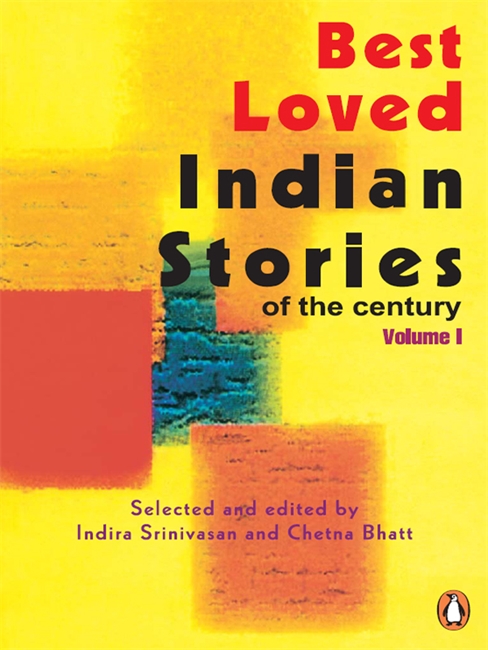
A selection of the most enjoyable and popular short stories from India. Best Loved Indian Stories brings together tales from different parts of the country that have enthralled readers of all ages. This volume, the first of two, represents the best English stories written by Indians in the twentieth century. In these twenty stories you will meet unforgettable characters like the inimitable Muni with his two goats in R.K. Narayan’s classic ‘A Horse and Two Goats’, the pious Vishnu in Khushwant Singh’s ‘The Mark of Vishnu’, the innocent basket-seller with the enchanting eyes in Ruskin Bond’s unforgettable ‘Night Train at Deoli’, the dying grandmother with her eccentric demands in Githa Hariharan’s ‘Remains of the Feast’ and many other men and women who have touched our lives over the generations. The authors included in this volume are: Anjana Appachana Anita Desai Attia Hosain Bharati Mukherjee Githa Hariharan K.A. Abbas Keki N. Daruwalla Khushwant Singh Manjula Padmanabhan Manoj Das Manohar Malgonkar Mulk Raj Anand Nayantara Sahgal Nergis Dalai Padma Hejrnadi R.K. Narayan Raja Rao Ruskin Bond Santha Rarna Rau Shashi Deshpande.