



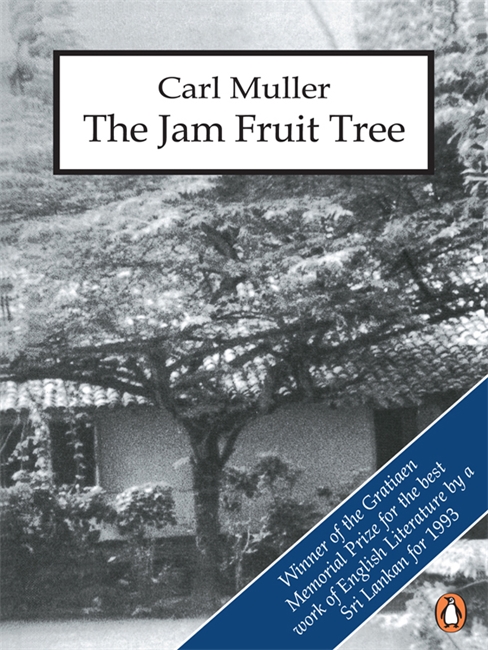
Winner of the Gratiean Memorial Prize for the best work in English Literature by a Sri Lankan for 1993 Hilarious, affectionate, candid and moving, this is the story of the Burghers of Sri Lanka . . . Who are the Burghers? Descended from the Dutch, the Portuguese, the British and other foreigners who arrived in the island-nation of Sri Lanka (and ‘mingled’ with the local inhabitants), the Burghers often stand out because of their curiously mixed features-grey eyes in an otherwise Dravid face, for instance. A handsome and guileless people, the Burghers have always lived it up, forever willing to ‘put a party’. Carl Muller, a Burgher himself, writes in this quasi-fictional, engaging biography of the lives of his people; they emerge, at the end of his story, as a race of fun-loving, hardy people, much like the jam fruit tree which simply refuses to be contained or destroyed.
Catagory: Fiction
Fiction main category
Blasphemy
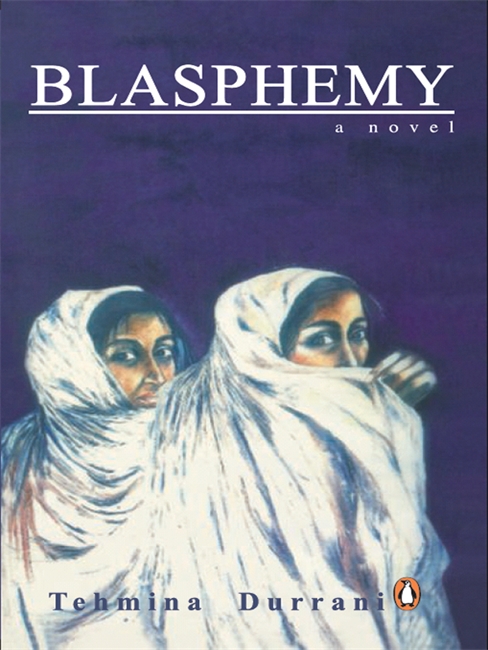
Set in South Pakistan, this controversial novel is a searing study of evil. It is the tragic and shocking story of the beautiful Heer, brutalized and corrupted by Pir Sain, the so-called man of God whom she is married to at the age of fifteen.
First Light
The sequel to the award-winning and critically-acclaimed Those Days, First Light is a magnificent novel set at the turn of the twentieth century in a Bengal where the old and young India are jostling for space. Prominent among its many characters are Rabindranath Tagore or Robi, the young, dreamy poet, torn between his art and the love for his beautiful, ethereal sister-in-law, Kadambari Devi, and the handsome, dynamic Naren Datta, later to become Swami Vivekananda, who abandons his Brahmo Samaj leanings and surrenders himself completely to his Guru, Sri Ramakrishna. The story also touches upon the lives of the men and women rising to the call of nationalism; the doctors and scientists determined to pull their land out of the morass of superstition and blind beliefs, and the growing theatre movement of Bengal, with its brilliant actors and actresses who leave behind the squalor of their lives every night to deliver lines breathtaking in their beauty. Through all this runs the story of Bharat and Bhumisuta – one an illegitimate prince, the other a slave who rises to become the finest actress of her age – who cling to their self-respect and love in a society which has little time for people like them. Grand in its scale and crackling with the energy of its prose, First Light is a rich and comprehensive portrait of Bengal, from its sleepy, slow-changing villages to the bustling city of Calcutta where the genteel and the grotesque live together. Equally, it is a chronicle of a whole nation waking up to a new, modern sensibility.
Book Of Shadows
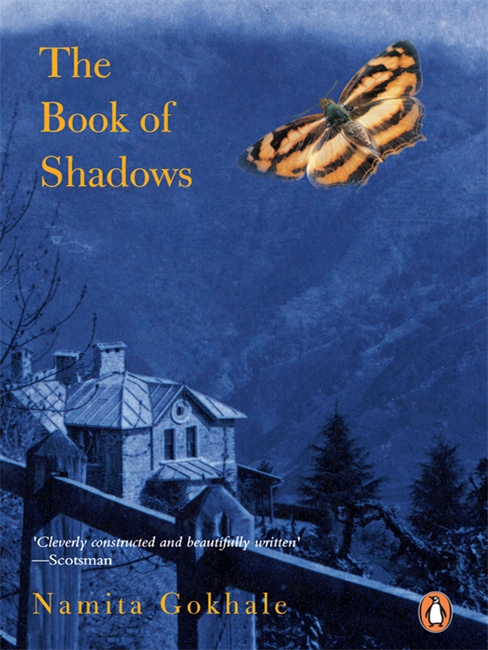
The avengers of my vanity have broken me, humbled me with these small depredations of skin and bone and tissue, leaving me less than I was.’ Scarred by her lover’s suicide and an acid attack that has left her permanently disfigured, Rachita Tiwari has sought refuge in a remote house in the Himalayan foothills. In this rambling house, built by a foolhardy missionary over a hundred years ago, she lives alone”save for the company of the ancient and mysterious manservant, Lohaniju”painting and repainting her nails a bright red, careful not to look into mirrors. As she retreats into herself, battling for her sanity and fearful of a world she no longer trusts, a different dimension claims her and the tremendous history of the house is played out before her. There is the vain fool, Captain Wolcott, and his tragically sensuous mistress, Dona Rosa, -of the wandering heart’; the doomed lovers Marcus and Munro, disciples of Aleister Crowley, infamous dabbler in black magic; Father Benedictus, -seeker of knowledge’, at peace with himself and his God; and the all-knowing, sage crows. With and above them all is the resident ghost of the house, solitary and sad, at times merely an observer as the fantastical destinies unfold around him, and at times unable to remain detached. After a century of silence something compels him to speak”words that the injured woman now inhabiting the house will hear; words that will give her back to herself. Part ghost story, part erotic romance, The Book of Shadows is an ambitious book that investigates the nature of reality, love and faith. It is a work of startling originality by one of India’s most daring and talented writers. -Our kind is not nourished by the sun: it is the moon which gives us sustenance. We wax and wane with the moon, except when harnessed by a human energy, when the pull of the tides loses its grip. As dawn broke over the mountains, lighting up the still white presences of the snows, I fled to my refuge, my fated spot. This night of passion, my first, had initiated me into the sorrows of mankind; the unfaith, the terrible and tenuous link of love.
Servants Of India
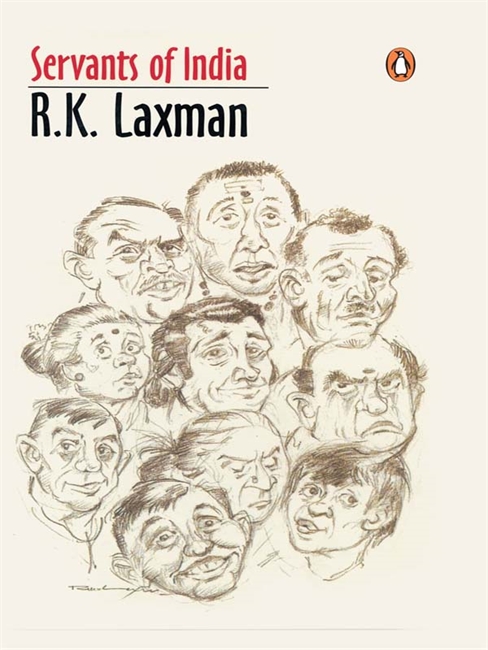
In Servants of India, R.K. Laxman profiles ten hilariously idiosyncratic people, who are among the countless men and women who run the lives of the middle class in India. The tales are put together by Ganesh, a freelance journalist trying to write a feature article on servants he has known. As his chronicle progresses, what emerges is a richly embellished narrative starring unforgettable characters. There is Swami, the cook, who finds his true vocation as a godman; Kumar, who deserts his household duties to pursue his tinsel-town dreams; Anthony, the driver, who makes money on the side by giving lifts to strangers; the maid Shanti, whose lift is thrown into turmoil by the neighbour’s servant who is besotted with her; and Ramaswami, a trusted retainer who reappears mysteriously, much to the consternation of his employer, long after he has been presumed drowned. Marked by Laxman’s trademark wit, and including pencil sketches drawn especially for this edition, Servants of India is a delightful read.
Himalayan Love Story
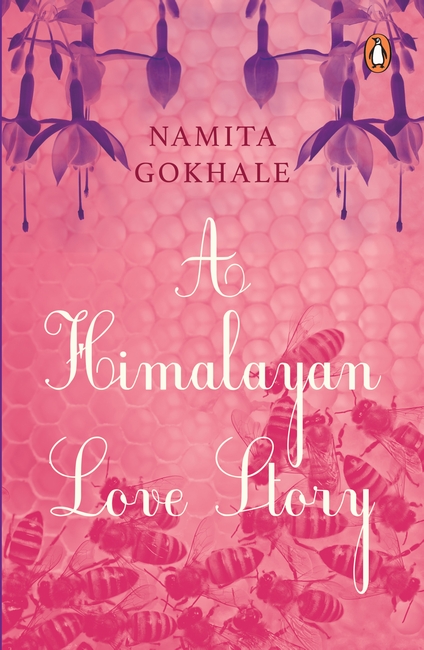
With this haunting novel about romantic loss and fatalism, Namita Gokhale confirms her reputation as one of PBI – India’s finest writers, and one with the rare gift of seeing and recording the epic in ordinary lives. This is the story of Parvati, young, beautiful and doomed, and Mukul Nainwal, the local boy made good who returns to the Nainital of his youth to search for the only woman he has ever loved. Told in the voices of these two exiles from life, this spare, sensitive book is a compelling read.
Afterwards
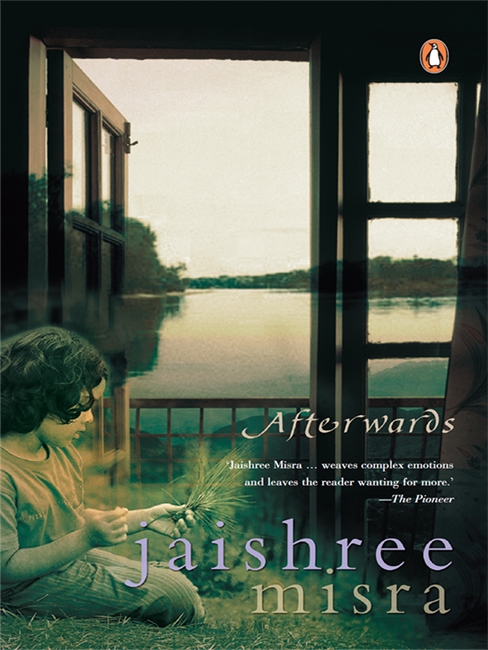
There is always, if not exactly a ‘happily ever after’, at least an ‘afterwards’ to every story — When Rahul Tiwari arrives in Kerala for a short break from London, he has no premonition of a life-changing moment. But one glance over the fence at his lovely but reticent neighbour Maya is enough to launch him on a path of no return. He finds himself playing friend, partner, co-conspirator, and finally the entirely unexpected role of saviour as Maya, suffocating under the weight of a loveless marriage and a suspicious husband, turns to him for help. Together, they flee India with Maya’s one-year-old daughter Anjali and life seems to hold all the promise of a new beginning, until destiny strikes — With characteristic ease and insight, Jaishree Misra writes in her new novel of the transforming power of love and of the joy and heartbreak of giving yourself to another, for better or for worse.
White Mughals
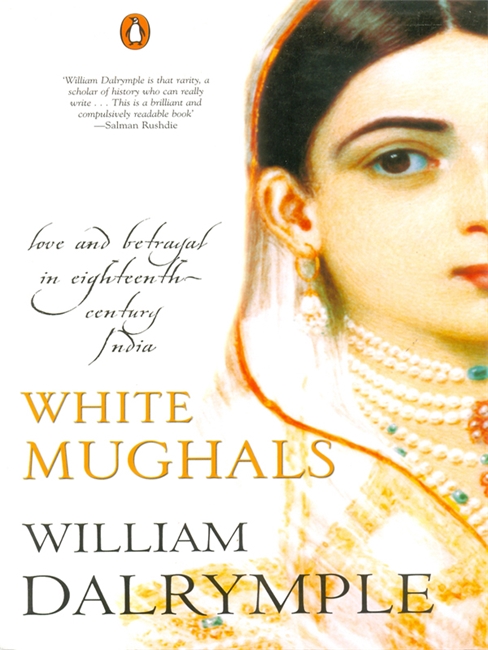
James Achilles Kirkpatrick landed on the shores of eighteenth-century India as an ambitious soldier of the East India Company. Although eager to make his name in the subjection of a nation, it was he who was conquered—not by an army but by a Muslim Indian princess. Kirkpatrick was the British Resident at the court of the Nizam of Hyderabad when in 1798 he glimpsed Khair un-Nissa—’Most Excellent among Women’—the great-niece of the Nizam’s Prime Minister. He fell in love with Khair, and overcame many obstacles to marry her—not least of which was the fact that she was locked away in purdah and engaged to a local nobleman. Eventually, while remaining Resident, Kirkpatrick converted to Islam, and according to Indian sources even became a double-agent working for the Hyderabadis against the East India Company. Possessing all the sweep of a great nineteenth-century novel, White Mughals is a remarkable tale of harem politics, secret assignations, court intrigue, religious disputes and espionage.
Collected Stories
Story-writing is, to me, a way of exploring the world,’ says best-selling novelist and short-story writer Shashi Deshpande. In this, the second volume of her collected short fiction, we travel with her into a world of characters and situations that are identifiable, and experience emotions that are at once complex and cathartic. Intensely felt and beautifully rendered, these are stories that will stay with you a long, long time.
Distorted Mirror

R.K. Laxman, cartoonist par excellence, is also one of the country’s most entertaining writers. The Distorted Mirror brings together some of his best short stories, essays and travelogues. The collection begins with ‘An Accident’, a most unusual mystery story where the murder weapon is a newspaper. In other stories, we are introduced to Gopal, a schoolboy in an ordinary small town that is transformed one day when the Viceroy visits; Shantha, a little girl who makes an interesting discovery in the midst of a wedding; and Bhasker, a writer who is suddenly confronted by his past. Each story is marked by Laxman’s ability to delineate a character or a moment with a few deft strokes and imbued with his trademark wit. No less fascinating are the travelogues-about the United States, Australia, the Andamans, Darjeeling, Mauritius and Kathmandu-which are brought to life by Laxman’s vivid descriptions and his inimitable way of looking at the world around him. The collection is rounded off with a few rare and delightful anecdotes about Laxman’s cartooning career, a subject on which he is usually reticent. Accompanied by Laxman’s illustrations, the pieces in The Distorted Mirror will amuse and entertain every fan of R.K. Laxman’s.