



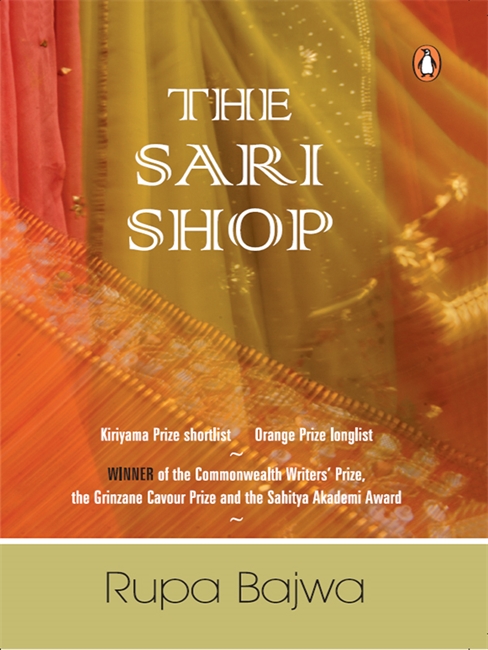
A gem of a novel about the stuff life’s made of It is another working day in Amritsar, and Ramchand is late again. He runs through the narrow streets to Sevak Sari House, buried in the heart of one of the city’s main bazaars. There, amongst the Bangladesh cottons and Benaras silks, Ramchand and his fellow shop assistants sit all day, patiently rolling and unrolling yards of coloured fabric. Then, one afternoon, Ramchand is sent to a new part of the city with a bundle of saris carefully selected for a trousseau. His trip to Kapoor House jolts him out of the rhythm of his daily routine and his glimpse into this different world charges him with an urgent sense of possibility. And so, armed with a second-hand English grammar book and a battered Oxford Dictionary, a fresh pair of socks and a bar of Lifebuoy soap, Ramchand attempts to realize the dream that his childhood had promised. But soon these efforts turn his life upside down, bringing him face to face with the cruel reality of his very existence. The Sari Shop heralds the arrival of a writer who combines a profound sensitivity with humour and unflinching honesty. Rupa Bajwa’s story is both heartbreaking and very real, and depicts a modern world in which hope and violence are permanently entwined.
Catagory: Fiction
Fiction main category
Corridor
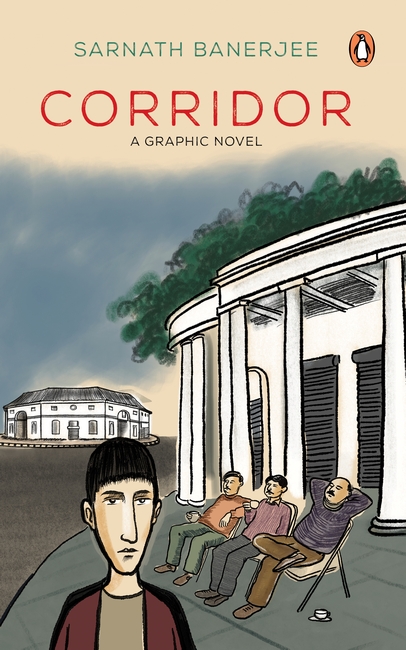
The story of Corridor revolves around an enlightened dispenser of tea, Jehangir Rangoonwalla, who has a shop in the heart of Lutyens’ Delhi, Connaught Place. He also sells second-hand books and dispenses wisdom to his customers. All of the main characters of the novel have this shop as their common local haunt and Mr Rangoonwalla interacts with these residents of Delhi when they visit his shop and at times gives them his words of wisdom. They come to him for tea, books, conversation and advice.
The story is about a plethora of characters, each from a different strata of society and different background. These customers are Brighu, passionate for obscure collectibles and a real love life, Shintu, the newly married on a quest of the ultimate aphrodisiac, and Digital Dutta, a person mostly torn between an H-1B visa and Karl Marx. Dutta is portrayed as a man who lives in his head.
Each of these characters has a story of his own and the author ties them together in a brilliant manner for his book. While narrating their stories, Banerjee subtly touches the greyer shades of their lives and presents them vividly to the reader. The entire novel has been captured in the corridors of contemporary Connaught Place in Delhi and Calcutta. Various pictures and objects have been shown in the background frame and the author ensures to refer them, thereby touching upon the different cultural references.
Sarnath Banerjee presents a different flavour to the art of storytelling by mixing various other art forms such as sketches, illustrations, and photographs. These heighten the impact on the reader in a beautiful way. The author uses an imaginative alchemy of words and images, of a script and artwork, to present the alienation and fragmented reality of the Indian urban life. Thus, the novel presents a delightful tale with interesting twists and turns.
Department Of Denials

The best selling author of The Inscrutable Americans and Making the Minister Smile returns with another entertaining story in The Department of Denials. In this latest venture, Babar Thakur” Babs to his friends” a youth fresh out of college in search of an identity and direction in life, sets off on a trip to fulfil his dream of becoming the prime minister of India one day.In the best traditions of all heroic odysseys, he starts out on his quest alone. Soon, he is on a roller coaster ride through the corridors of power, witness to the shenanigans of netas and babus. Chief among them is the minister Balak Kumar, who, repeatedly at the receiving end of various allegations from the Opposition, finally decides to centralize all denials under one authority, namely, the Department of Denials. And he asks Babs’s father, Bahadur Prasad Thakur, to head the newly created department. The stage is thus set for an unending run of situations, alternately bizarre and funny.
Mulk Raj Anand Omnibus

the Mulk raj anand Omnibus is a tribute to one of the founding fathers of the Indian novel in English. Mulk Raj Anand (1905-2004) is best known for the impassioned social critique contained in his writings. This special commemorative edition published on the eve of his 100th birth anniversary brings together three of Anand’s finest novels which capture the ambivalence of a nation caught between tradition and modernity: Untouchable (1935), coolie (1936) and private Life of an Indian prince (1953)c
Sultry Days

On a sultry, rainy Bombay day, Nisha, an impressionable teenager, meets God in the college canteen and falls in love with his ragged, bearded looks and crude, streetwise manners. God patronizingly accepts her in his ‘group’ and it is in this way that their long and passionate romance begins. God’s driving ambition leads him into the unreal world of pseudo poetry, art for hire and compromised journalism while Nisha lands a job in advertising. Sychophants, court jesters, whores, dirty old men, fixers, pretty boys and party girls drift in and out of their lives as their careers take off with dizzying speed. And then, abruptly and harrowingly, everything about their lives goes wrong.
Loom Of Time
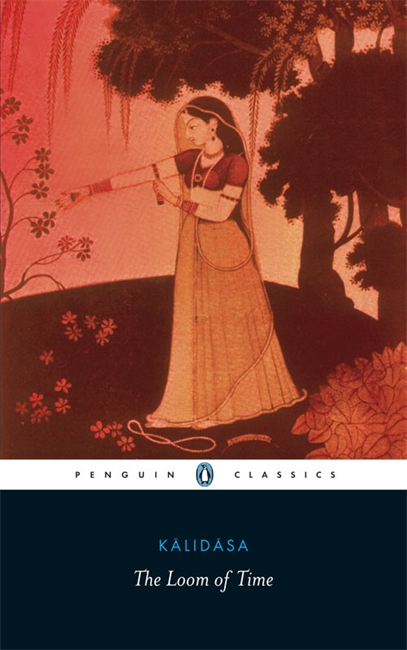
Kalidasa is the greatest poet and playwright in classical Sanskrit literature and one of the greatest in world literature. Kalidasa is said to have lived and composed his work at the close of the first millennium BC though his dates have not been conclusively established. In all, seven of his works have survived: three plays, three long poems and an incomplete epic. Of these, this volume offers, in a brilliant new translation, his two most famous works, the play Sakuntala, a beautiful blend of romance and fairy tale with elements of comedy; and Meghadutam (The Cloud Messenger), the many-layered poem of longing and separation. Also included is Rtusamharam (The Gathering of the Seasons), a much-neglected poem that celebrates the fulfillment of love and deserves to be known better. Taken together, these works provide a window to the remarkable world and work of a poet of whom it was said: Once, when poets were counted, Kalidasa occupied the little finger; the ring finger remains unnamed true to its name; for his second has not been found
The Manticore’s Secret
Simoqin Prophecies
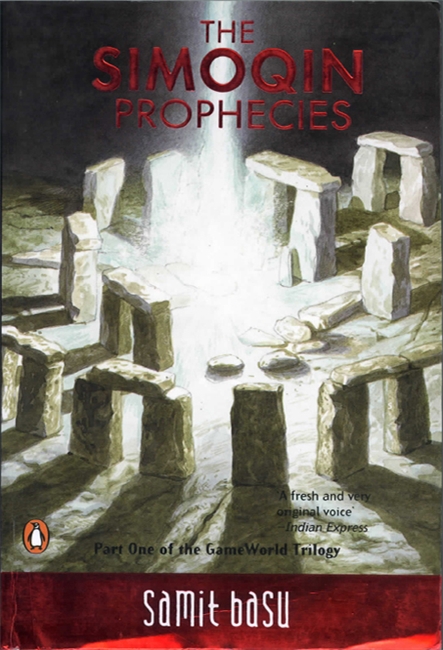
India’s first ever sff (science fiction/fantasy) genre novel in English
The Simoqin Prophecies marks the debut of an assured new voice. Written with consummate ease and brimming with wit and allusion, it is at once classic sff and subtle spoof, featuring scantily clad centauresses, flying carpets, pink trolls, belly dancers and homicidal rabbits. Monty Python meets the Ramayana, Alice in Wonderland meets The Lord of the Rings and Robin Hood meets The Arabian Nights in this novel—a breathtaking ride through a world peopled by different races and cultures from mythology and history.
The Prophecies foretell the reawakening of the terrible rakshas, Danh-Gem, and the arrival of a hero to face him. But heroes do not appear magically out of nowhere; they have to be found and trained. And sometimes the makers of prophecies don’t know everything they need to know…
As the day of Danh-Gem’s rising draws closer and the chosen hero is sent on a quest, another young man learns of terrible things he must do in secret and the difficult choices he must make in order to save the world from the rakshas.
Drawn from a variety of sources ranging from Greek and Indian epics to spy novels, fairy tales to superhero comics, The Simoqin Prophecies is a compelling tale, marked by meticulous plotting and artful storytelling—a page-turner sure to grip you from start to finish.
The Way Home
The Way Home” brings together in one volume fourteen stories representing the very best of contemporary Bengali short fiction. Showcasing some of Bengal’s finest writers at their creative best – Bibhuti Bhushan Bandopadhyay and Rajshekhar Basu, Sirshendu Mukhopadhyay and Ashapurna Devi – these stories deal with a myriad human themes that are at once individual and universal. From “The Brahmin”, Tarashankar Bandopadhyay’s treatise on greed, gluttony and tragic human experience, to “The Fugitive and the Stalkers”, Sunil Gangopadhyay’s trenchant tale of violence and retribution set in the days of the Naxal movement in Bengal; from Samaresh Basu’s harrowing look at poverty and its degrading effect in “The Crossing” to Narendranath Mitra’s lyrical take on the impact of triple talaq on Muslim women in “Sap”, the collection evokes different lifestyles, while reflecting problems and issues with which we can all identify.
Six Acres And A Third
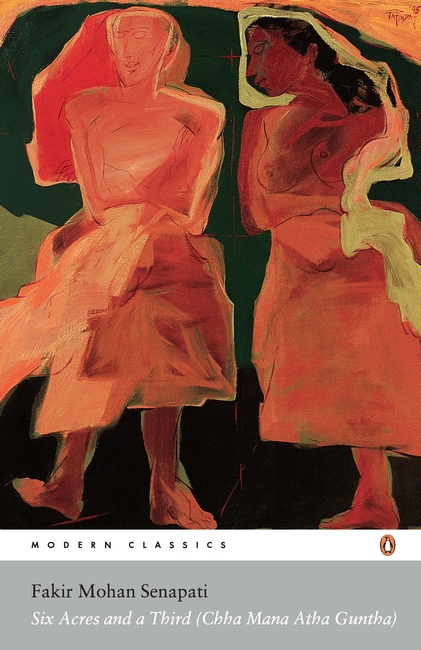
This sly and humorous novel by Fakir Mohan Senapati—one of the pioneering spirits of modern Indian literature and an early activist in the fight against the destruction of native Indian languages—is both a literary work and a historical document. Set in Orissa in the 1830s, Six Acres and a Third provides a unique ‘view from below’ of Indian village life under colonial rule.
This graceful translation faithfully conveys the rare and compelling account of how the more unsavory aspects of colonialism affected life in rural India.