



It was the code of friendship. Like a bowstring: tight. Like an arrow: straight.’
When John Dkhar arrives at Kaizang restaurant, Shillong, one cold November evening, he has no premonition that his life is about to change forever. A loner by nature, and the very epitome of culture and refinement, John comes across people he will soon be involved with in a deadly game of passion and hatred, trust and treachery: James Kharlukhi, tough and uncompromising, a leader born with a lust for danger; Jennifer d’Santos, companion to James, whose love for John can only lead to tragedy; Charlie, aloof, enigmatic, and cursed with an ugly face which might prove to be his undoing; and Dor Kharkongor, ace archer, the spirit of the hills, caught between single-minded loyalty to James and paternal affection for John.
Set against the lush landscape of ShiIlong, Dhruba Hazarika’s tale of revenge and violence brilliantly evokes the sights and smells of North-East India while narrating a dynamic tale which addresses the universal themes of friendship, loyalty and the inherent loneliness of man.
Catagory: Fiction
Fiction main category
Byomkesh Bakshi (1)
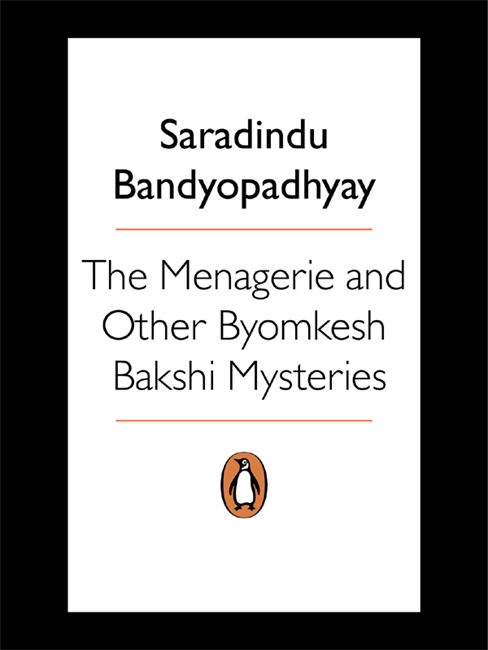
Byomkesh Bakshi’s appeal as the self-styled inquisitor, a detective not by profession but by passion, found him a dedicated following among generations of readers. This collection of stories, all set in Kolkata of the 1950s and 1960s, brings together four mysteries that put the sleuth’s remarkable mental agility to the ultimate test. In ‘the Menagerie’ (adapted by master film-maker Satyajit Ray for his 1967 film Chiriakhana) Byomkesh cracks a strange case involving broken motor parts, a seemingly natural death and the peculiar inhabitants of Golap Colony who seem capable of doing just about anything to safeguard the secrets of their tainted pasts. In ‘the Jewel Case’ he investigates the mysterious disappearance of a priceless necklace, while in ‘the Will That Vanished’ he solves a baffling riddle to fulfil the last wish of a close friend. And, in ‘the Quills of the Porcupine’, the shrewd detective is in his element as he expertly foils the sinister plans of a ruthless opportunist. Sreejata Guha’s translation captures brilliantly the thrill and ingenuity of Byomkesh’s exploits just as it does Saradindu Bandyopadhyay’s remarkable portrayal of a city struggling to overcome its colonial past and come into its own.
Tales Once Told
A selection of stories adapted from the Ithihyamala, a marvellous treasury of legends of Kerala
These vibrant fables evoke a long-lost, never-never land: an enchanted world of sorcerers, exorcists and yakshis; eccentric rajas and haughty poets; martial-arts prodigies and
peerless physicians; wily wits and devious gadflies; clever elephants, sly crooks, gallant brigands and a motley bunch of uncommon common people.
Retold by best-selling author Abraham Eraly and superbly illustrated by Jayachandran, Tales Once Told is an engaging blend of earthy wisdom and sparkling humour.
The End Of Innocence
1971: While a savage civil war rages in East Pakistan, a thousand miles away in West Pakistan, in the safe, cosy village of Sabzbagh, life appears to continue undisturbed. An ancient preoccupation with family honour and social propriety dominates the lives of peasants and landed gentry alike. It is here, at her family estate in Sabzbagh, that naive, privileged nine-year-old Laila is spending her winter vacation. Laila’s world is peopled by adults—progressive parents, a protective ayah, and an imperious, old-fashioned grandmother. Adored and indulged though she is, Laila feels excluded from this enigmatic grown-up world. Much like the young heroes of her favourite Enid Blyton adventures, she yearns for a slice of the action, and with a best friend by her side. This friend is Rani—the spirited teenage granddaughter of a family servant. Rani, however, is hurtling into a forbidden love affair, and when she becomes pregnant, she has no one to turn to but Laila. Eager but artless, Laila plunges headlong into helping Rani. As she flounders in an adult world she does not understand, Laila unwittingly unleashes a catastrophe. This is the story of a guileless relationship between two girls; and as the larger political reality unfolds tragically in the background, so politics is played with Rani. The End of Innocence is a coming-of-age story not just of two children, but of a country and an ideology.
Shakuntala
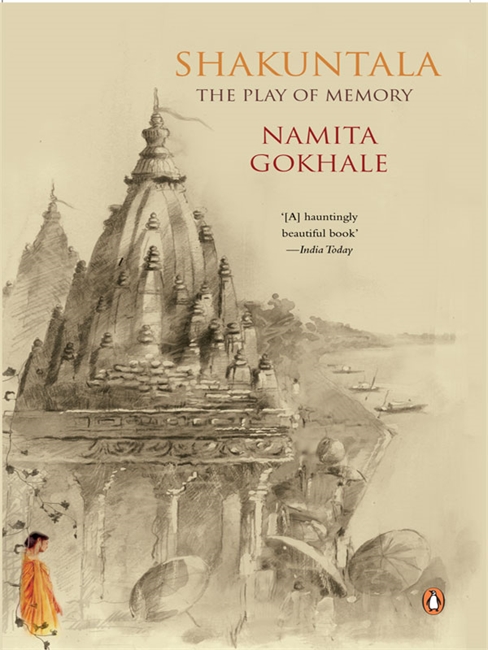
On the ghats of Kashi, the most ancient of cities, a woman confronts memories that have pursued her through birth and rebirth. In the life she recalls, she Shakuntala of the northern mountains-spirited, imaginative, but destined like her legendary namesake to suffer ‘the samskaras of abandonment’. Stifled by social custom, hungry for experience, she deserts home and family for the company of a Greek horse merchant she meets by the Ganga. Together, they travel far and wide and surrender to unbridled pleasure, as Shakuntala assumes the identity of Yaduri, the fallen woman. But an old restlessness compels her to forsake this life as well-and court tragedy.
The Barn Owl’s Wondrous Capers
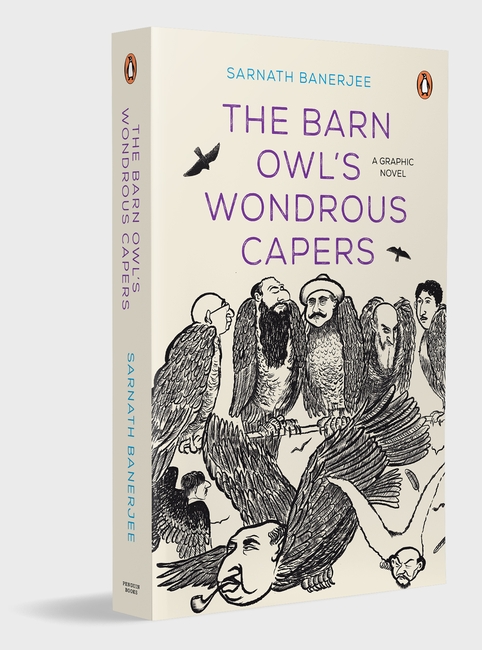
Eighteenth-century Calcutta. The second city of the Empire is teeming with scandalous gossip and rumour. Abravanel Ben Obadiah Ben Aharon Kabariti, Sephardic Jew from Syria and trader in novelties such as corsets, aphrodisiacs and zebras, befriends the British officers and the local elite by day and records their escapades by night in a leather-bound journal.
1950s Paris. A battered copy of the journal surfaces in a hole-in-the-wall antique shop in Montmartre.
London, 2002. A phone rings in the East End, late at night, announcing a death and an inheritance: a silver lighter, a vintage motorcycle, an ancient radio and The Barn Owl’s Wondrous Capers.
What follows is a bizarre chain of events involving eccentric zamindars, a decadent aristocrat with a passion for lady footballers, a psychic cartographer, a haunted office building and, at the centre of it all, Digital Dutta, neighbourhood historian and keeper of secrets.
Inspired by the legend of the Wandering Jew, this second work of fiction from India’s foremost graphic novelist is an irreverent tale of illicit sex and drunken religiosity, which unravels new riddles with each reading.
The Tenth Rasa
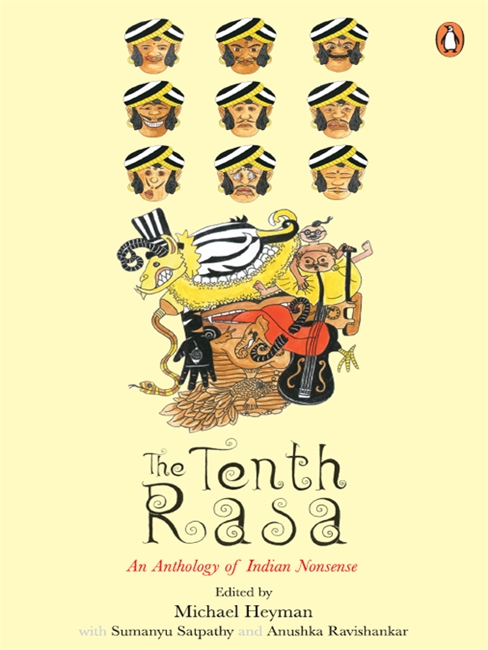
Welcome to the carnival of nonsense where hankies turn into mischievous cats, a messiah is born with her feet in her mouth, you can fave hun by socking on the ree-raw and your favourite corn cakes are made of . . . are you sure you want to know? For the last eighteen hundred years Indian arts have been seen in terms of strictly classified emotional effects known as the nine rasas. The Tenth Rasa: An Anthology of Indian Nonsense celebrates, for the very first time, what Sukumar Ray called the spirit of whimsy , or the tenth rasa, through the topsy-turvy, irreverent, melodic genre of nonsense literature. This fabulous selection of poetry and prose, brilliantly translated from seventeen Indian languages across India, includes works by Rabindranath Tagore, Sukumar Ray, Vinda Karandikar, Gulzar, Dash Benhur, Manoj Das, Navakanta Barua, Mangesh Padgavkar, Sri Sri, Vaikom Mohammad Basheer, Kunjunni and other known, lesser-known and previously unpublished authors. In forms as varied as stories and songs for children and adults, lullabies, folk tales, Bollywood song lyrics and medieval court verse, the writers open doors to wildly imaginative worlds populated by peculiar characters and fantastical creatures, where only nonsense makes perfect sense. Crackling with wit, wordplay and riotous rhymes, and frequently revelling in pure gibberish, this immensely entertaining collection will delight you from start to finish.
Around the Hearth
It is believed that the only way the Khasi people could learn of God’s word was by passing on the stories of their forefathers.
The alphabet of the great Khasi tribe of North-East India was born as late as in 1842, when Thomas Jones, a Welsh Presbyterian missionary, introduced the Roman script to form the essentials of the Khasi written word.
But long before the white man came, the Khasis knew agriculture, trade, commerce and industry. And they were also masters of story-telling.
Theirs was a society of great wisdom and civilized conduct at a time when brute force held sway. For theirs was a culture that worshipped God through respect for both man and nature. Perhaps that is why Khasi stories always begin with ‘When man and beasts and stones and trees spoke as one . . .’
How did the great story-telling tradition of the Khasis survive so long without a script? Putting together myths and legends-peopled by deities and poor folk, speaking trees and talking tigers, the sun and the moon and everything below-bilingual poet and writer Kynpham Sing Nongkynrih describes how fables of love and jealousy, hate and forgiveness, evil and redemption inform the philosophy, moral principles and daily activities of his community even today.
Govardhan’s Travels
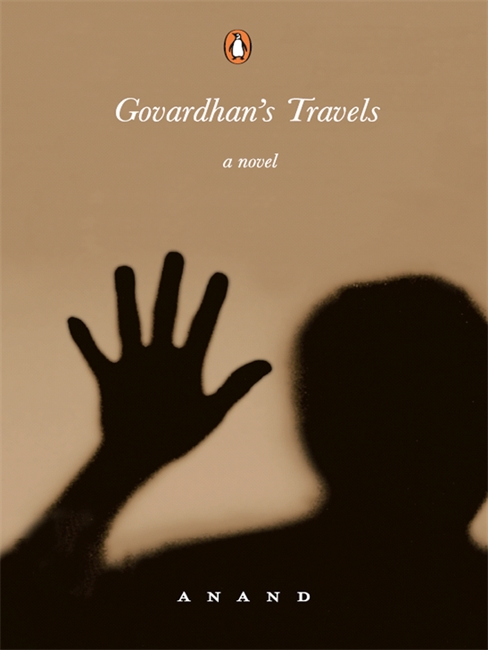
‘The most memorable literary event of my experience . . . Govardhan is that common man who seeks justice from history, from time and society and is punished. Govardhan is everyman. He is a survivor and his story is everyman’s story.’ — Mahasveta Devi
Halfway through his famous play on injustice, Andher Nagari Choupat Raja, Bharatendu Harishchandra stops: What is the duty of a writer—to depict reality as it exists or to project what it should actually be? Unable to decide, Bharatendu abandons the play and releases Govardhan, the main character who is unjustly condemned to death, from drama to real life.
The noose still hangs over Govardhan’s head as he walks out of prison as a representative of all those who are victims of the ruthlessness and absurdity of justice. He questions everyone he encounters and raises a storm which gains momentum as he journeys through space and time. The lines between fact and fiction blur as a host of people from mythology, history and literature join him, some asking questions, like him, and others opposing them.
As we follow Govardhan’s meanderings, we realize that his journey will never end, for with the passage of time he will find more places to visit and more people to meet, even as the ever-present noose tightens around his neck. Ultimately, there can be no escape for the Govardhans of this PBI – World.
Anand’s imaginative recreation of Govardhan’s life after his release from prison maintains the farcical nature of Bharatendu’s work, although it moves away from the comfortable ending of Andher Nagari Choupat Raja. It provides a terrifying portrait of the cruelty and irrationality of the PBI – World which we contend as civilized.
Chowringhee
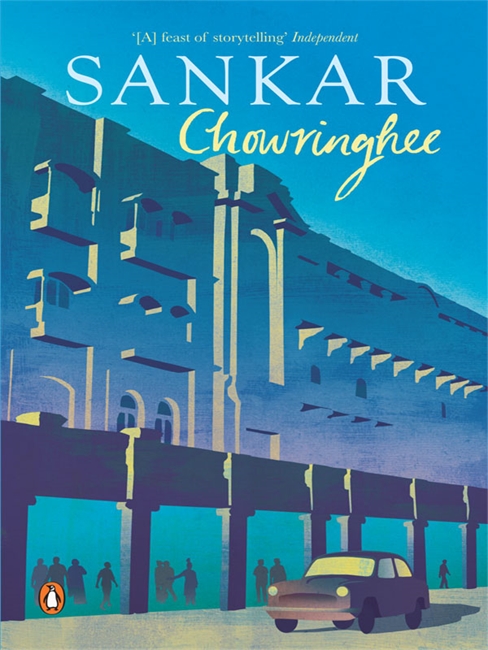
Here, day and night were interchangeable. The immaculately dressed Chowringhee, radiant in her youth, had just stepped on to the floor at the nightclub.’ Set in 1950s Calcutta, Chowringhee is a sprawling saga of the intimate lives of managers, employees and guests at one of Calcutta’s largest hotels, the Shahjahan. Shankar, the newest recruit, recounts the stories of several people whose lives come together in the suites, restaurants, bar and backrooms of the hotel. As both observer and participant in the events, he inadvertently peels off the layers of everyday existence to expose the seamy underbelly of unfulfilled desires, broken dreams, callous manipulation and unbidden tragedy. What unfolds is not just the story of individual lives but also the incredible chronicle of a metropolis. Written by best-selling Bengali author Sankar, Chowringhee was published as a novel in 1962. Predating Arthur Hailey’s Hotel by three years, it became an instant hit, spawning translations in major Indian languages, a film and a play. Its larger-than-life characters-the enigmatic manager Marco Polo, the debonair receptionist Sata Bose, the tragic hostess Karabi Guha, among others-soon attained cult status. With its thinly veiled accounts of the private lives of real-life celebrities, and its sympathetic narrative seamlessly weaving the past and the present, it immediately established itself as a popular classic. Available for the first time in English, Chowringhee is as much a dirge as it is a homage to a city and its people.