



A selection of the most enjoyable and popular short stories from India. Best Loved Indian Stories brings together tales from different parts of the country that have enthralled readers of all ages. This volume, the first of two, represents the best English stories written by Indians in the twentieth century. In these twenty stories you will meet unforgettable characters like the inimitable Muni with his two goats in R.K. Narayan’s classic ‘A Horse and Two Goats’, the pious Vishnu in Khushwant Singh’s ‘The Mark of Vishnu’, the innocent basket-seller with the enchanting eyes in Ruskin Bond’s unforgettable ‘Night Train at Deoli’, the dying grandmother with her eccentric demands in Githa Hariharan’s ‘Remains of the Feast’ and many other men and women who have touched our lives over the generations. The authors included in this volume are: Anjana Appachana Anita Desai Attia Hosain Bharati Mukherjee Githa Hariharan K.A. Abbas Keki N. Daruwalla Khushwant Singh Manjula Padmanabhan Manoj Das Manohar Malgonkar Mulk Raj Anand Nayantara Sahgal Nergis Dalai Padma Hejrnadi R.K. Narayan Raja Rao Ruskin Bond Santha Rarna Rau Shashi Deshpande.
Catagory: Fiction
Fiction main category
Colombo
Colombo is in the throes of an explosion. Its face changes continuously, its vices are legion, its future as yet obscure and its paths speak of sunlight as well as of shadow.-‘ Carl Muller begins his quasi-fictional portrait of this beautiful, war-torn city by describing the great battles fought over it by European colonizers-. In AD 1505, a Portuguese fleet blown off-course took shelter in Galle, overthrew the local kings, fortified Colombo and decided to stay. The Dutch came along, ousted the Portuguese, made Colombo their capital and ruled till the British arrived and sent them packing. Muller intersperses the tales of the past into descriptions of the battles that are being fought in Colombo today”political battles in which vested interests play a major role as well as battles fought on the individual level in the struggle to survive: young women and children turning to prostitution to earn an extra buck, people begging in the streets to make ends meet, unemployed young men turning to crime in frustration, students demonstrating against atrocities, lovers pining for nightfall in order to push away loneliness if only for a few moments… Written in Muller’s lucid style, Colombo: A Novel is a chronicle of a city’s trials and triumphs.
The Pakistani Bride
Zaitoon, an orphan, is adopted by Qasim, who has left the isolated hill town where he was born and made a home for the two of them in the glittering, decadent city of Lahore. As the years pass Qasim makes a fortune but grows increasingly nostalgic about his life in the mountains. Impulsively, he promises Zaitoon in marriage to a man of his tribe. But for Zaitoon, giving up the civilized city life she remembers to become the bride of this hard, inscrutable husband proves traumatic to the point where she decides to run away, though she knows that by the tribal code the punishment for such an act is death. This is a The Pakistani Bride novel on women, tribals and contemporary politics.
The Crow Eaters
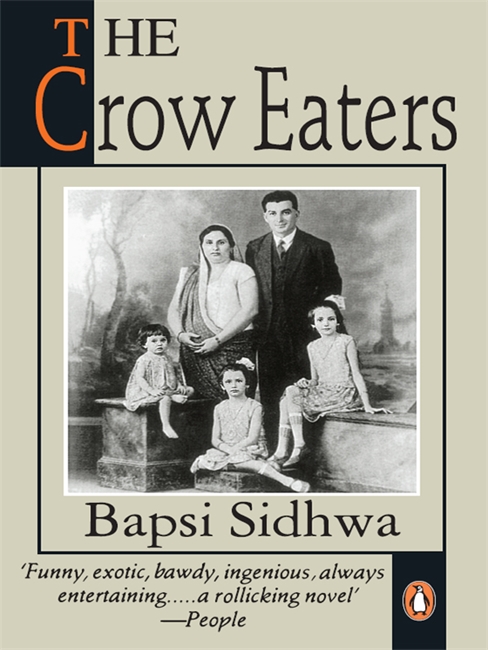
Faredoon (Freddie) Junglewalla is either the jewel of the Parsi community or a murdering scoundrel. Freddies mother-in-law, Jerbanoo, thinks he is planning to do away with her, but Freddie has always been a pragmatist: if the old woman were to die (be murdered?) the body would have to be placed on the open-roofed Towers of Silence, in keeping with custom, and that would never do. Insurance fraud and arson, however, are well within Freddies repertoire???in fact he thinks he has invented the idea, so advanced is it for India, in 1901. As his skills grow he becomes a man of consequence among the Parsis, with people travelling thousands of miles to see him in Lahore, especially if they wish to escape tight spots they have got themselves into.
In this wickedly comic novel, the celebrated author of Ice-Candy Man takes us into the heart of the Parsi community, portraying its varied customs and traits with contagious humour.
Scenes From An Executive Life
A delightfully irreverent account of corporate affairs in the white collar world. From the author of the best-selling The Inscrutable Americans, comes a hilarious novel about the roller-coaster career of an enterprising marketing executive. It is the story of Gambhir Kumar, Human Resource Development Manager in the Y Corporation, whose life is never the same again after he is transferred to the Tissues and Toothpicks Division. As he travels up and down the corporate ladder, Gambhir redefines the role of the young urban professional who must strike a delicate balance between his heady ambitions and the lustful demands of his heart. The novel also features some unforgettable cameos: Gambhir’s wife Draupadi (DD to her friends), who fights the ennui of yuppie life with boyfriends in the afternoons; Kapila, Gambhir’s passionate bedfellow from the Bombay office; ‘Smiley’ Chatterjee, the adman with a three-word vocabulary; and Kumar, a self-styled entrepreneur intent on selling the sword of Gautam Buddha to American tourists. Scenes from an Executive Life is an immensely entertaining exploration of ambition, lust, envy and intrigue in a typical corporate set-up in post-liberalization India.
Once Upon A Tender Time
Once Upon a Tender Time, a poignant tale of childhood, is the concluding part of Carl Muller’s Burgher trilogy. The Burghers of Sri Lanka, hardy and fun-loving, produce children by the dozen-but often forget them. Carloboy Prins von Bloss and his companions are usually considered a pain in the neck by the adults they encounter as they go about the serious business of discovering the world and, primarily, the facts of life. Romps in the backyard, trysts in deserted houses and long bicycle rides to discover true love are commonplace. Also frequent are thrashings and canings as adults try to do.
Ice Candy Man
The story of the upheaval of the 1947 partition of India seen through the eyes of a Parsee girl growing up in Lahore. Through her relationships with her Hindu Ayah, the Muslim cook, the Sikh zoo attendant and the ice candy man, she shows how ordinary citizens reacted to the horrific turmoil.
Ferry Crossing
Twenty-seven engaging stories from the heart of one of India’s youngest states. The great holiday destination of India, Goa has been reduced to an easy caricature by the demands of tourism and advertising: a beautiful land by the sea peopled by a feckless, bohemian race. This anthology introduces us to the true Goa, a place rich in history and tradition where the business of living is as serious and humdrum as it is anywhere else. Included here are the finest short stories from Goa written in Konkani, Marathi, Portuguese and English, all remarkable for their rare freshness, and many marked by sparkling humour and a contagious lightheartedness. The themes vary from the touching naivete of first love, as in Chandrakant Keni’s ‘Innocence’, to the humiliation of poverty, movingly described in stories like Pundalik Naik’s ‘The Turtle’; from the amusing clash of egos among rural elite, brilliantly narrated in Victor Rangel-Ribeiro’s ‘Senhor Eusebio Builds His Dream House’, to the startling brutality inherent in everyday lives, as seen in Pundalik Naik’s ‘When an Ass Mounts a Cow’ and Damodar Mauzo’s ‘Theresa’s Man’. Simply and lucidly told, the stories in Ferry Crossing reveal a Goa infinitely more human and complex than the stereotypical image of an enormous beach resort.
Better Man
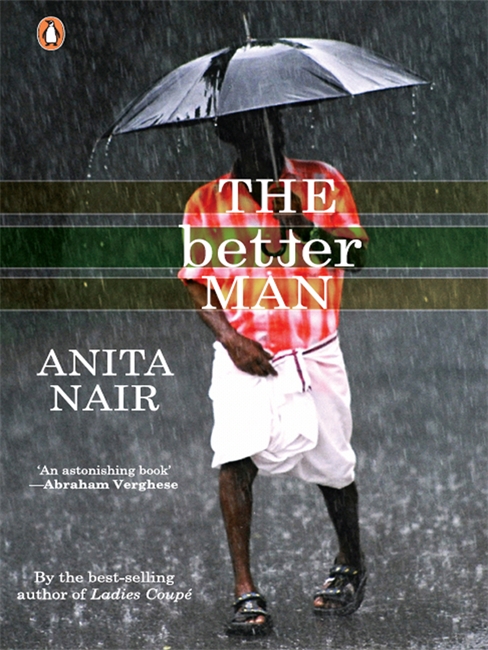
Mukundan, a middle-aged bachelor, is forced to return to his native Kaikurussi, a sleepy village in Kerala. Determined to conquer old ghosts, Mukundan decides to restore his childhood home and hires One-Screw-Loose Bhasi, an outcast painter, to oversee the renovations. A practitioner of a unique style of healing, Bhasi is intrigued by Mukundan’s unhappiness and sets about mending his troubled friend. But the durability of Mukundan’s transformation into a better man is soon called into question.
All Is Burning
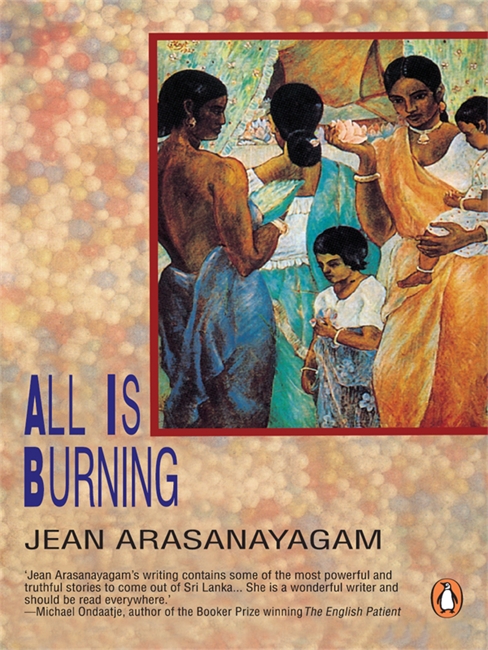
Nineteen stories of rare power from the heart of war-ravaged Sri Lanka. In these stories Jean Arasanayagam brings us voices that are not normally heard: those of anonymous men and women searching for order and reason in the midst of a ruthless civil war. While many succumb to the horror of their times, there are others who discover in themselves unexpected reserves that will help them survive. Thus a young Sinhala man turns his back on an aimless upper-class existence and joins a group of Tamil refugees smuggling themselves into Germany; a woman goes out alone to see the scene of a carnage to try and find her daughter’s lover among the dead and dying; a maid returns from the rich desert city of Doha to the green half-jungle of her village in northern Sri Lanka and rediscovers happiness despite the uncertain future… In addition to stories about the effects of war and violence, this collection also explores aspects of ethnicity and individual choice in a multicultural society. All is Burning is truth-telling at its poignant best.