



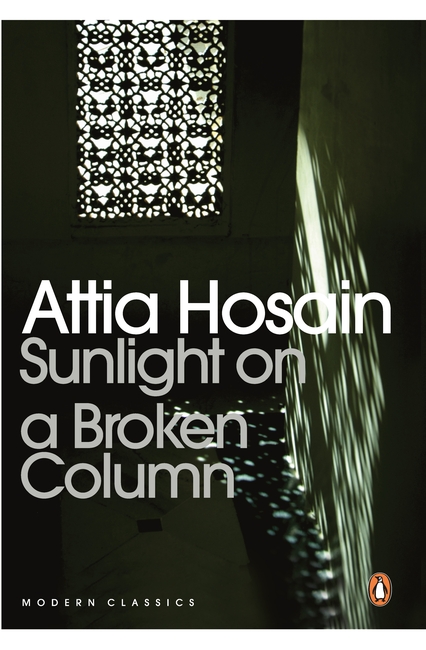
Laila, orphaned daughter of a distinguished Muslim family, is brought up in her grandfather’s house by orthodox aunts who keep purdah. At fifteen she moves to the home of a ‘liberal’ but autocratic uncle in Lucknow. Here, during the 1930s, as the struggle for Indian independence intensifies, Laila is surrounded by relatives and university friends caught up in politics. But Laila is unable to commit herself to any cause: her own fight for independence is a struggle against the claustrophobia of traditional life, from which she can only break away when she falls in love with a man whom her family has not chosen for her. With its beautiful evocation of India, its political insight and unsentimental understanding of the human heart, Sunlight on a Broken Column, first published in 1961, is a classic of Muslim life.
Catagory: Fiction
Fiction main category
Middle India
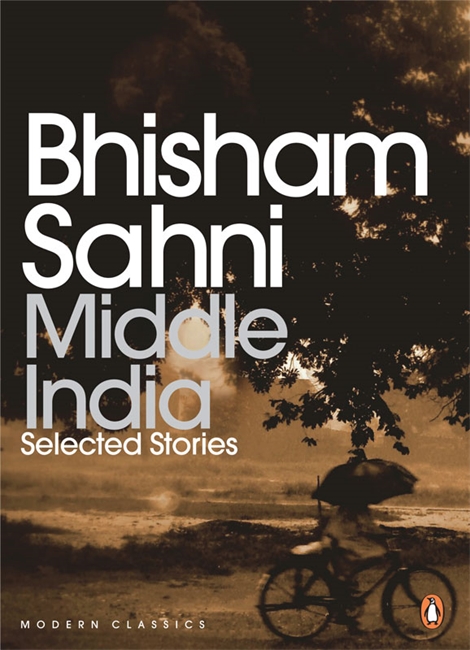
Middle India, in this collection of seventeen short stories, Bhisham Sahni examines middle India the lower middle class not rich or famous or educated in convent schools, not cosmopolitan but urban or semi-urban. In these tightly told tales, he explores with precision of thought and expression the humanity of individuals and their places in society.The collection includes some of Sahni’s best known stories: ‘Dinner for the Boss’, a tragi-comic tale of a man trying to please his employer and a mother’s attempt to please her son; ‘Paali’, the drama of a young boy shared between a Muslim and a Hindu family during Partition; and ‘Sparrow’, a story of love and loss in a marriage. Among the other stories in this anthology are popular favourites like ‘Veero’, ‘The Witch’, ‘Before Dying’, ‘Radha-Anuradha’ and ‘Salma Aapa’.
Divya
‘His ideas and his contribution to Indian literature were . . . revolutionary’ -The Hindu
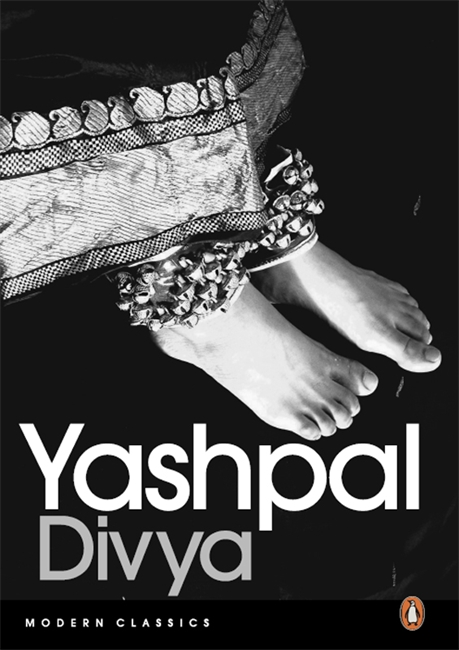
Divya leads a blissful life within the secure walls of the palace even as the world outside rages with caste politics and religious strife, until one night of pleasure changes her entire world. She gets pregnant only to be spurned by her lover. To preserve her high born family’s name she leaves her sheltered existence and trudges through life on her own, first as a slave and then as a court dancer. Adversity finally opens her eyes to the truth-a woman of a high family is not free. Only a prostitute is free. Divya decides that, by enslaving her body, she will preserve the freedom of her mind.
Set in the first century BC against a background of the conflict for supremacy between Hindu and Buddhist ideologies, Divya is a poignant tale that combines vivid imagination with rich historical details.
‘Reminiscent of George Orwell . . . Here too is the biting satire of society as seen through the savage eye of an uncompromising non-conformist’-Dawn
Maudiegirl
Nobody – and the whole of Boteju Land agreed – could cook like Maudiegirl. She wielded a wizard’s wand not only in the kitchen but also over domestic problems, however large in magnitude; from predicting the sex of an unborn child to knowing more than a dozen ways to cook eels; from cutting a goat in the right way to setting failing marriages straight; from nursing the ailing to health to keeping the best kitchen, Maudiegirl had a solution to every little problem. Her home was her castle and the kitchen her domain.
In the fourth serving of his Burgher chronicles, Carl Muller reverts to his favourite family, the von Blosses of his first ‘Burgher’ book, The Jam fruit Tree. A hungry family and a wonderful cook, a kind paedophile, a cantankerous mother-in-law, a disloyal husband, good-for-nothing uncles, prudish Pentecostals, Dunnyboy’s exhibitionism, Sonnaboy’s show-of-strength- the author captures the hallmarks of the von Blosses’ days and ways in his quintessentially irreverent, witty and heart-warming style.
Maudiegirl and the von Bloss Kitchen features many of Maudiegirl’s famous recipes making the book a treat not only for Muller fans but also for the senses!
Nectar In A Sieve
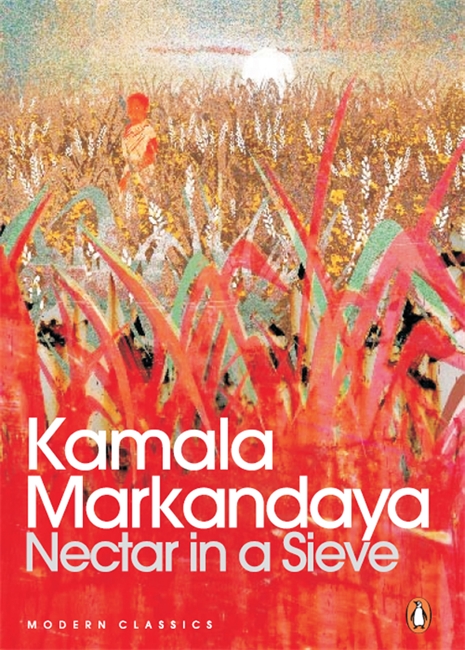
Set in a village in southern India shortly after India gained Independence, Nectar in a Sieve portrays, through the lives of its characters ?? Rukmani, Nathan and their children ?? the hopes and aspirations of a young nation recently embarked on the path of development, surmounting many obstacles along the way. Few novels ever published have celebrated the human spirit, its sheer resilience, with greater success.
Originally published in 1954 to instant acclaim, Nectar in a Sieve became an international best-seller and was translated into seventeen languages. This edition introduces a whole new generation to this classic of modern literature.
Eunuch Park

Palash Krishna Mehrotra writes about prostitutes; cross dressers; murderers; drug addicts; students and stalkers; portraying their perversions and vulnerabilities with equal insight; taking us deep into the dark and seamy soul of India.
Set in the murky underbelly of big cities and small towns; slums and dotcoms; college hostels and rented rooms; Eunuch Park: Fifteen Stories of Love and Destruction is a collection like no other. Gritty; grim and depraved; these are candid vignettes of an India most of us are afraid to acknowledge.
The Orphan Diaries

Among the thousands of orphaned children adopted after 47 there are a few less than twenty who were planted here by Jinnah’s men . . .
At thirty-eight, feeling ancient and used up, Colonel Rajan Menon Raja knows his best years as a commando are behind him. But he is soon tested as never before. The Prime Minister s granddaughter has been abducted, and the kidnappers want some sensitive diaries in the possession of the CBI, the contents of which, if made public, can throw the country into turmoil. Raja works out a meticulous rescue plan, but the raid ends in a disaster the girl is killed, not a single kidnapper is captured and the diaries disappear. And all the evidence points to Raja s complicity. Hounded by the police and, inexplicably, a ruthless psychopath, Raja is on the run, determined to clear his name. As he makes his harrowing journey towards the truth, a sinister plot unfolds an astounding account that began in 1947 . . .
Bombay Tiger
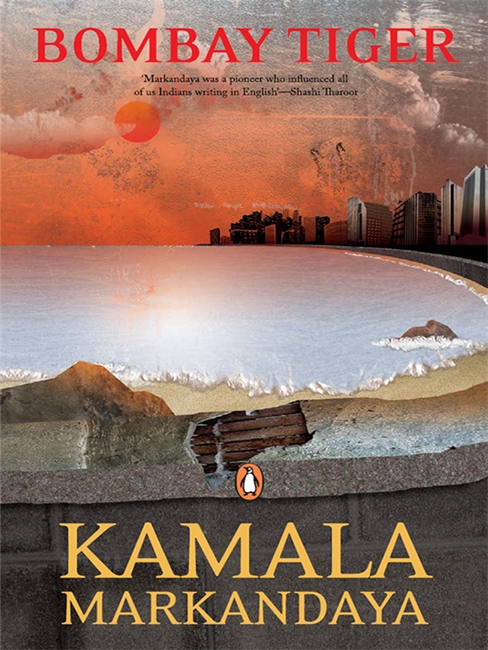
Kamala Markandaya, author of the classic Nectar in a Sieve, published ten novels in all, the last of which appeared in 1982. For the next two decades, till her death in 2004, she lived a life of near anonymity in the outskirts of London. But she hadn’t stopped writing; shortly after her death, her daughter discovered the finished typescript of a new, unpublished novel: The Catalyst: Alias, Bombay Tiger.
Set in the 1980s, Bombay Tiger tells the story of Ganguli—mercurial and larger-than-life—who arrives in Bombay with little more than ruthless ambition, and becomes the city’s biggest industrialist. A Citizen Kane-like figure—destined to become one of the most memorable protagonists in Indian fiction—Ganguli is emblematic of a changing India, post the era of high socialism, beginning to be transformed by private enterprise. This sweeping novel, poignant and comic by turns, traces his dramatic rise and fall, his loves and losses, and his eventual redemption.
Gloriously rich in incident and character and marked by Markandaya’s deep humanity, Bombay Tiger is the work of a major writer at the height of her powers.
In the Country of Deceit
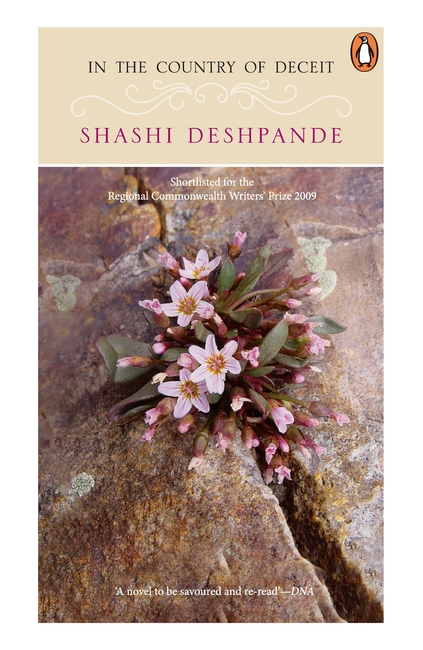
Why did I do it? Why did I enter the country of deceit? What took me into it? I hesitate to use the word love, but what other word is there?’
Devayani chooses to live alone in the small town of Rajnur after her parents’ death, ignoring the gently voiced disapproval of her family and friends. Teaching English, creating a garden and making friends with Rani, a former actress who settles in the town with her husband and three children, Devayani’s life is tranquil, imbued with a hard-won independence. Then she meets Ashok Chinappa, Rajnur’s new District Superintendent of Police, and they fall in love despite the fact that Ashok is much older, married, and-as both painfully acknowledge from the very beginning-it is a relationship without a future.
Deshpande’s unflinching gaze tracks the suffering, evasions and lies that overtake those caught in the web of subterfuge. There are no hostages taken in the country of deceit; no victors; only scarred lives. This understated yet compassionate examination of the nature of love, loyalty and deception establishes yet again Deshpande’s position as one of India’s most formidable writers of fiction
The Book Of Krishna
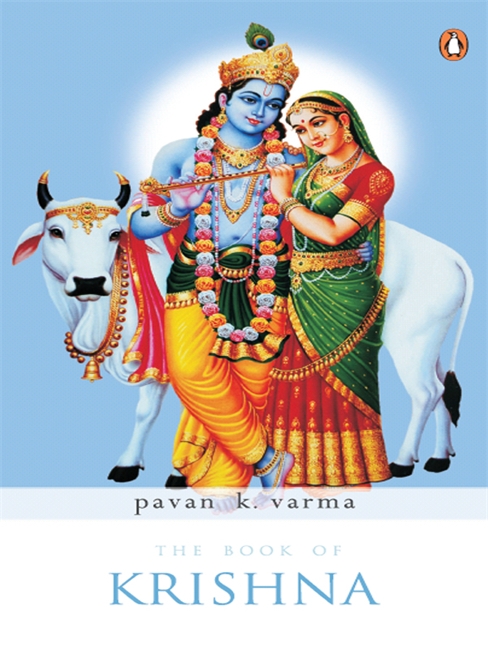
Of all Vishnu’s avatars, Krishna is regarded as the purna avatar, the complete incarnation, for he encapsulates in himself the entire gamut of emotions and attributes that constitute the ideal human personality. He is the most accessible of gods, and bridges the gap between the mortal and the immortal.
In this book, Pavan Varma, the best-selling author of Krishna: The Playful Divine, succeeds brilliantly in communicating the exuberance, the charm and the complexity of this popular deity. Drawing upon the Puranas, classical literature, bhakti poetry and folklore, he has painted a rich and varied portrait of the blue god-as the delightfully mischievous child, the uninhibited lover, the formidable warrior, the wise and pragmatic philosopher, and the Supreme God.