



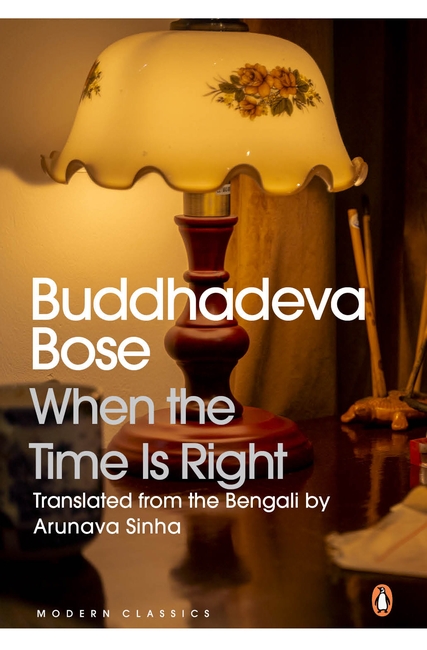
Buddhadeva Bose’s greatest novel When the Time Is Right is a grand family saga set in Calcutta during the last two decades of British rule. Of Rajen Mitra’s five lovely daughters; it is the youngest—the beautiful; intelligent Swati—who is the apple of her father’s eye. As she grows from an impetuous; spirited child to a lonely young woman; Swati is witness to the upheavals and joys of the Mitra family even as the country slides towards the promise of independence and the inevitability of war. Anxious to ensure that his daughters find suitable husbands; Rajen-babu realizes it is only a matter of time before his favourite child too must leave home. While the boorish entrepreneur Prabir Majumdar decides that she will make him a fitting wife; Swati finds herself increasingly drawn to Satyen; the young professor who introduces her to a world of books and the heady poetry of Tagore and Coleridge. First published in Bengali as Tithidore in 1949; When the Time Is Right is a moving tale of a family and a nation.
Catagory: Fiction
Fiction main category
Welcome To Americastan
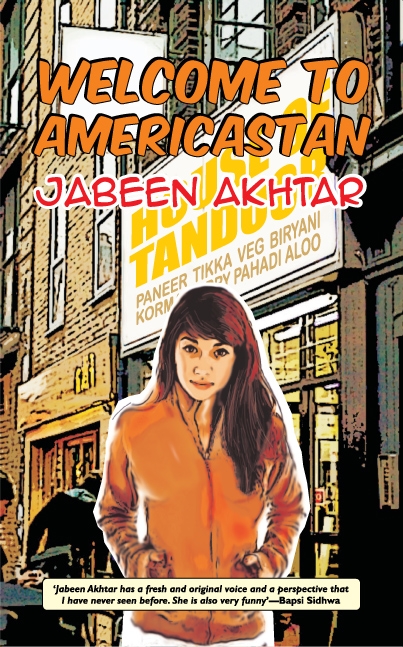
Samira, a Pakistani-American, returns home to her family in North Carolina after being dumped by her boyfriend of eight years (for her best friend), fired from her job (because she ended up in jail) and finding herself on the FBI’s terror watch list (after trying to run over her ex). But living at home with her somewhat eccentric and almost-dysfunctional family proves to be both tricky and exhausting. Between learning to make aloo kofta curry, entertaining cousins from Pakistan, watching her mother spiking the punch with Captain Morgan rum, nursing her broken heart and having the Pakistani American Council foisted on her by her father, Samira cannot escape situations that are challenging, comical and, quite often, downright bizarre. Welcome to Americastan is a hilarious, delightfully irreverent yet thoughtful look at the Pakistani community in America—the double lives led by the young who debate the significance of animal sacrifice while sipping cocktails; atheists who agree to having a maulvi perform their wedding just to please their parents; and parties with an open bar, but only for the goras! With effervescent humour and wit, Jabeen Akhtar turns every stereotype of Muslim–Americans on its head in this quirky, refreshingly candid debut novel.
The Diary Of A Social Butterfly
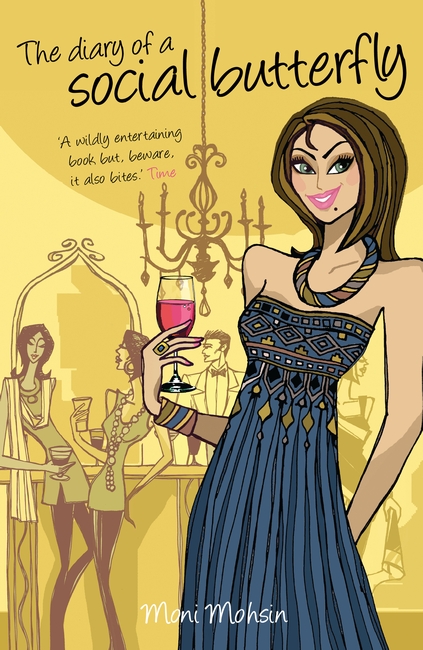
Pakistan may be making headlines—but Butterfly is set to conquer the world.
‘Everyone knows me. All of Lahore, all of Karachi, all of Isloo—oho, baba, Islamabad
—half of Dubai, half of London and all of Khan Market and all the nice, nice bearers in Imperial Hotel also…No ball, no party, no dinner, no coffee morning, no funeral, no GT —Get-Together, baba—is complete without me.’
Meet Butterfly, Pakistan’s most lovable, silly, socialite. An avid partygoer, inspired misspeller, and unwittingly acute observer of Pakistani high society, Butterfly is a woman like no other. In her world, SMS becomes S & M and people eat ‘three tiara cakes’ while shunning ‘do number ka maal’. ‘What cheeks!’ as she would say. As her country faces tribulations – from 9/11 to the assassination of Benazir Bhutto—Butterfly glides through her world, unfazed, untouched, and stopped short only by the chip in her manicure. Wicked, irreverent, and hugely entertaining, The Diary of a Social Butterfly gives you a delicious glimpse into the parallel universe of the have-musts.
Tender Hooks

After freeing her darling son, Jonkers, from the clutches of his low class, slutty secretary, Aunty Pussy has charged Butterfly with finding him a new wife—a rich, fair, beautiful, old family type. Quickly. But who wants to marry poor, plain, die-vorced Jonkers? As Butterfly schemes her way through shaadis, GTs (oho baba, Get Togethers!), and kitty parties trying to find a suitable girl from the right bagground, she discovers to her dismay that her hapless cousin has his own ideas about his perfect mate. And secretly she may even agree!
Full of wit and wickedness, Tender Hooks is another delightful romp through Pakistani high society from the bestselling author of The Diary of a Social Butterfly.
Our Lady Of Alice Bhatti
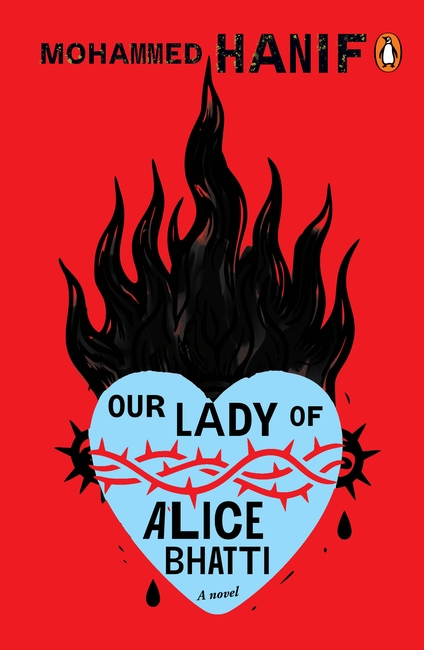
Alice Bhatti has just come out of prison and is looking for a second chance. She’s hungry, tough, and full of fight, but being a Catholic choohra in Karachi means she also needs good luck. A lot of it. Alice’s prayers are answered when she gets a job as Junior Nurse at the Sacred Heart Hospital, a squalid public hospital full of shoot-out victims and homeless drug addicts. There she meets Teddy Butt, a trigger happy, ex-body builder, and a part-time goon for the police. The two could not be further apart and that’s why they fall in love—Teddy with sudden violence, Alice in cautious hope. How will their unlikely romance end?
In A Case of Exploding Mangoes, Mohammed Hanif tore into the corruption of the army and General Zia’s dictatorship; in this novel he draws a dark and compelling portrait of Pakistan today where killers fall in love and lovers are forced to make impossible choices. Written with savage humour and in sizzling prose, Our Lady of Alice Bhatti is a tour de force from one of the most brilliant young writers today.
My Kind Of Girl
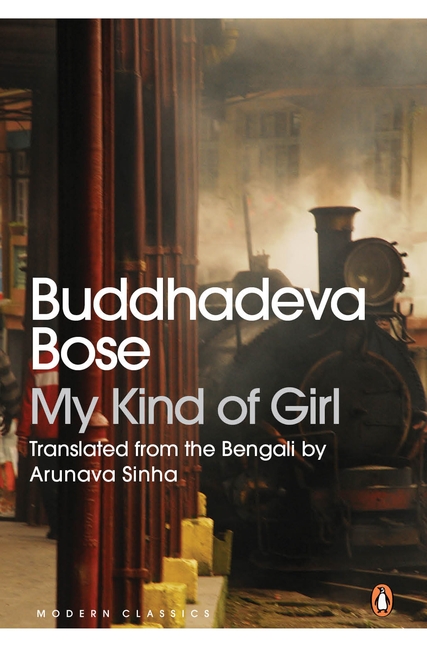
Is the memory of happiness that has passed, sad or happy?
Four middle aged men sit together in a railway station, waiting for dawn to break. To pass their time, each tells a story of a woman they loved secretly in their youth…
Romantic, elegant, suffused with melancholy, My Kind of Girl is a classic love story from one of Bengal’s great writers.
In Other Rooms, Other Wonders
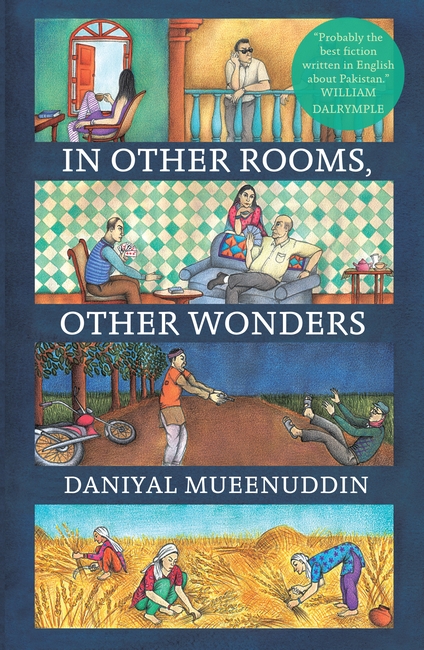
Moving from the elegant drawing rooms of Lahore to the mud villages of rural Multan, a powerful collection of short stories about feudal Pakistan.
An impoverished young woman becomes a wealthy relative’s mistress; an electrician on the make confronts his desperate assailant to protect his most prized possession; a farm manager rises far in the world-but his family discovers after his death the transience of power; a maid, who advances herself through sexual favours, unexpectedly falls in love. In these linked stories about the family and household staff of the ageing KK Harouni, we meet masters and servants, landlords and supplicants, politicians and electricians, village women, and Karachi housewives.
1888 Dial India
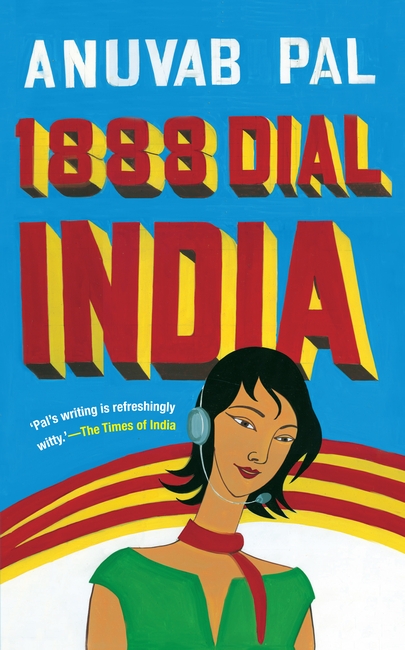
2009—year of the slump. America is in the grip of severe economic hardship and unemployment. The only numbers that are on the rise is the suicide rate. Arun Gupta, entrepreneur, lothario, Aramis cologne user, evangelist of new India’s new dreams, sees a glimmer of a business plan form out of the American crisis. He wants to save lives. And he wants to do it sitting in his baroque Navi Mumbai office. His idea is simple. If everything can be outsourced to India, why not the saving of American lives? Part rant, part satire, 1888 Dial India documents, through the politically incorrect words of its anti-hero, the dreams of corporate India.
Pleasure City
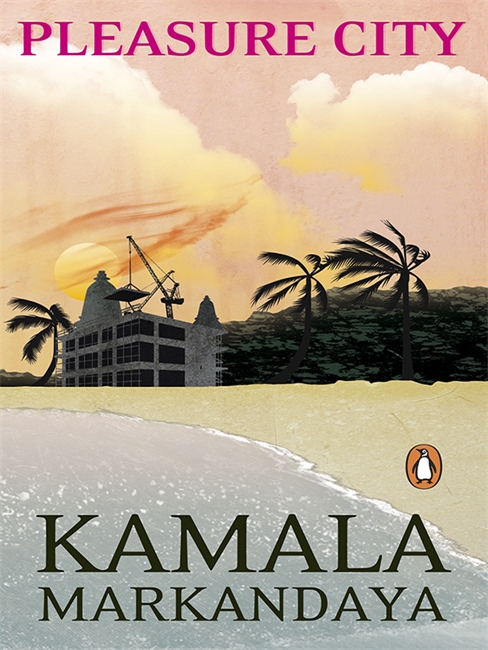
An unlikely friendship helps create beauty and luxury in a coastal paradise. When British multinational AIDCORP lands a project to build a tourist complex—Shalimar—in a coastal village in south India, Mr Tully, one of the directors, arrives at the village to oversee the construction. There he meets Rikki, an orphaned fisher boy, and a deep and abiding friendship arises between the two, notwithstanding the gulf between their lives. The fisher community is torn when half the fishermen begin to work with the company, leaving the other half to suffer from a shrinking catch. Rikki must find a way to pay off his parents’ debt, but he cannot abandon his life near the sea. Thanks to his fluent English, learned from an old English couple who used to live in the village, he begins to work for Tully. Though they come from vastly different worlds, Tully and Rikki learn to accept and value each other: a human relationship forged from the shared human need for goodwill, affection and understanding. It is with the help of this alliance of mutual respect that Shalimar is successfully built, and Tully manages to restore Avalon, a mansion his grandfather built in the area. Pleasure City explores the issues of the interaction between East and West, native tradition and imported technology, in the context of the scientific and technical development of an India that is, well after Independence, racing ahead to forge its postcolonial identity. It is an identity that, like Shalimar, grows from collaboration between East and West, and mutual exchange of ideas and knowledge.
The Great Golden Sacrifice Of The Mahabharata
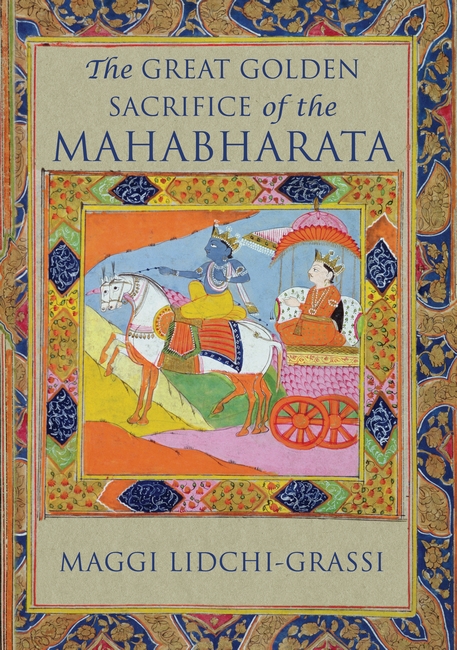
A stunningly lyrical work, The Great Golden Sacrifice of the Mahabharata reinterprets Vyasa’s epic from Arjuna’s point of view. As Arjuna relives the battle of Kurukshetra, he senses a profound change coming upon himself. He begins to understand the true meaning of surrender and sacrifice.
The book comprises three parts, narrated principally by Arjuna. Part I takes us through the childhood and youth of the Pandavas and Kauravas, the game of dice, the Pandavas’ exile, and ends with the armies arrayed for battle at Kurukshetra. Part II recounts the battle itself, and the teachings of the Bhagvad Gita. Part III presents a moving and brilliantly original take on the Mahabharata, as Lidchi-Grassi gives a voice to the forgotten victims of every war—the ordinary citizens who must pick themselves up, and resume the business of life. An old order has been swept away, but can the new age—the Kali Yuga—help lessen human strife and misery? Vastly ambitious in scope and epic in scale, The Great Golden Sacrifice of the Mahabharata is an astonishing read.