‘The body was the only truth she knew. It was the body alone that was left, even as she went beyond the body.’
Journeys form the leitmotif of these astonishing new stories by Ambai. Sometimes culminating in an unconventional love affair, some are extraordinary tales of loyalty and integrity; others touch on the almost fantastic, absurd aspect of Mumbai. Yet others explore the notion of a wholesome self, and its tragic absence at times. These stories are illuminated by vivid and unusual characters: from an eccentric, penurious singer-couple who adopt an ape as their son, to a male prostitute, who is battered by bimbos for not giving ‘full’ satisfaction.
Crucially, some of the stories, like the title one, engage uninhibitedly with a woman’s relationship to her body. For Ambai, feminist par excellence, the sensual body, experienced as a natural landscape changing with age, is at the same time, the only vehicle of life and tool for mapping the external world.

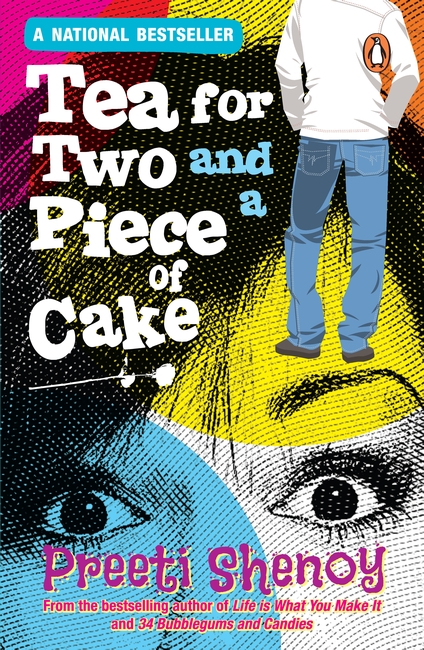
What if life threw you a magnificent opportunity, only to knock you down later and laugh at you? Would you fight back or let it pass?
Nisha’s life is far from perfect. At twenty-six, she is plump, plain-looking, and without a boyfriend. A chance date and a bizarre twist of events lead her to the altar with suave Samir Sharma, only to be abandoned eight years later. As she struggles to stand on her own feet, Akash, a younger guy, enters her life. Can Nisha find love a second time?
Tea for Two and a Piece of Cake is an unusual, a heart-warming, and gripping love-story between two people who have so much to lose by getting into a relationship with each other, yet so much to gain.

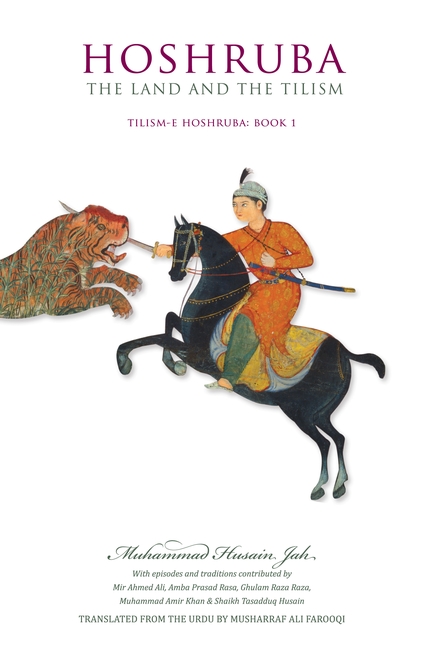
In late nineteenth century Lucknow, two rival story-tellers, Syed Muhammad Husain Jah and Ahmed Husain Qamar, wrote a fantasy in the Urdu language whose equal had not been heard before, and which has never been rivalled since. It was called Tilism-e Hoshruba. The writers claimed that the tale had been passed down to them from story-tellers going back centuries: it was a part of the beloved oral epic, The Adventures of Amir Hamza which had come to the Indian subcontinent via Persia and had gained in popularity during the reign of Akbar, the Mughal emperor.
The Tilism-e-Hoshruba is the subcontinent’s first wholly indigenous Indo-Islamic fantasy epic. It tells the stories of Amir Hamza’s military forces, his grandson and his loyal band of tricksters (masters of wit and disguise) as they go to war with Afrasiyab, the sorcerer who rules the magical land of Hoshruba. Fantasy, the occult, adventure and romance play themselves out in a typically Indian setting as wizards, sorceresses, tricksters and royalty pitch themselves into the battle for Hoshruba. The characters of the epic are marvels of literary creation, and are much more colourful and dashing than those of the Amir Hamza cycle of tales.
The Tilism-e Hoshruba runs to twenty four volumes and will be translated into English for the first time ever by Musharraf Ali Farooqi, the acclaimed translator of The Adventures of Amir Hamza. Random House India will publish all the volumes starting with Hoshruba: The Land and the Tilism, i.e. Book 1 of the series.
Cambridge-educated Sir Saraswati Chandra Ranbakshi is a towering public figure in early twentieth century India. A firm believer in the ideals of Mahatma Gandhi, he also has faith in the virtues of the British Raj. As a result, he has to mediate between the Maharaja of a princely state and the Viceroy and strike a fine balance between tradition and modernity. This tussle between old and new values is reflected in his three children, the daredevil Maneka, the timid Sita, and their brother, Yogendra, who turns their father’s world upside down by falling in love with a lower-caste girl.
A comedy of manners laced with intrigue and excitement, The Tailor’s Needle explores some of the great moral dilemmas of pre-independent India with wit and sensitivity.

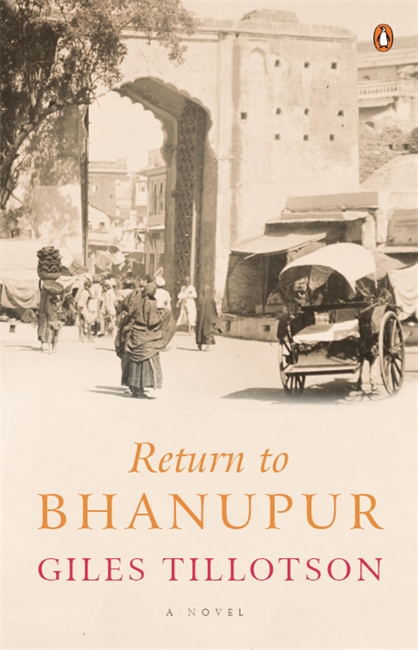
‘It is the first duty of kingship to be as the people wish to see me.’
This fictional account of events in the court of the princely state of Bhanupur, a hundred years ago, is a tale of intrigue, politics and image-building. What was going through the mind of Maharaja Amar Singh II in the key moments of his reign? How much did he rely on the advice of his clever prime minister Chatterjee, the wily Bengali? How did he solve sensitive issues like undertaking a voyage across the seas to attend the coronation ceremony of the British king, without polluting his caste? And what were his relations with the British—especially with Dr Constable and the architect Colonel Talbot, employed by his court? As the narrative moves towards its tragic conclusion, the characters’ innermost convictions are laid bare
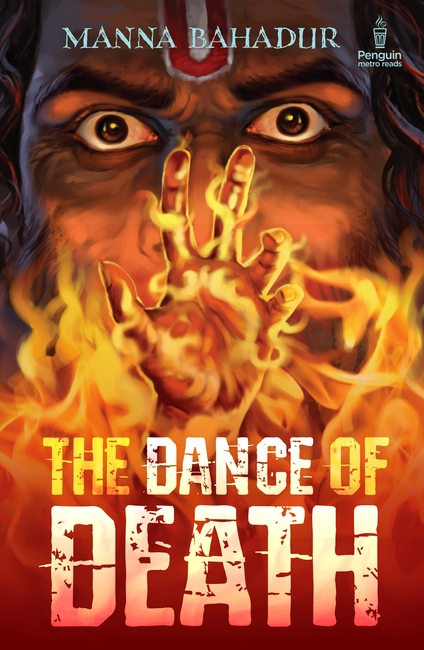
Three stories-one of a demi-god, a Swamiji on trial for murdering his followers, the other, of a young law graduate, racked by nightmares and Fits, and that of a judge whose entire family is threatened because he is presiding on the Swami’s case-come together in strange ways… …and raise a few questions:
Where is the Swami’s wife, the only witness to the case? Why does the young man not respond to treatment? Why does every judge die or leave soon after he takes up the Swamiji’s case?
The mystery slowly begins to unravel as the story progresses and out tumbles a shocking tale of horror, black magic and hypnotism…

When you are trained to endure the harshest of climates, the most hostile of situations, to survive where no ordinary man can – there’s little difference between you and the terrorist you are trying to kill. Little, except which side you are on. Suvir and Murad – both victims of circumstance, both numb with the pain of haivng lost their loved ones – choose to do things differently. While one becomes the most feared of terrorist, the other joins the Special forces. Their face-off is a flight to death as one is out to carry out a major terrorist operation in Delhi and the other has been specially called in to foil the attack… Moving breathlessly, through rugged terrain, this edgy thriller will not let you rest till the very last page!

When a young Indian journalist quits his job to take a year off in Guyana, he discovers a country of epic indolence, lush rainforests and an array of characters . Among the motley crowd of seasoned rogues, Samaritans and ideologues, people trying to escape or accept their colonial legacies, he falls for Jan, a girl who transports him to a new place-within himself and in the world. Acute and lyrical, this brilliant first novel is one of the finest literary achievements to come out of the subcontinent in the last decade.
Sitara said, with awful distinctness, ‘I think I’m going to die’.
And that’s how I got stuck with the annual corpse. Half an hour later I stood in an empty flat, along with a stranger who was very recently, and very violently, dead.
Rushing to Sitara’s aid, Lalli’s niece Sita is distracted by Raphael’s Sistine Madonna. Why is it monochrome? And what does it have to do with the body on the living-room floor?
Such questions are hardly relevant to the police in their hunt for the murderer. But Lalli is a detective who revels in curiosities, and she thinks otherwise.
A brisk thriller of deceit and intrigue, The Monochrome Madonna has Lalli at her most astute as she interprets the nuances of a murder without motive.