



‘A literary heavyweight’-Indian Express
In these bold, wry and ebullient stories, Meera’s astonishing range of narrative techniques is on full display as she expertly lays bare the faultlines behind the façade of everyday life, sometimes with dark humour and sometimes with astoundingly bitter sadness.
Catagory: Fiction
Fiction main category
Landour Days
Laid in India
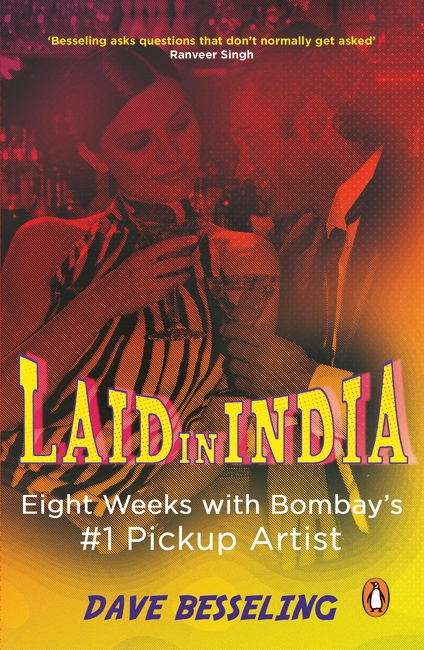
‘For a guy, attraction is simple,’ says Sid. ‘It’s like a switch. You see a hot girl, you want to have sex with her . . . For a girl, things are more complicated,’-fingertips glued together for a few seconds of emphasis-‘looks are just one switch of six, maybe seven. If you can flick all those switches, she will feel a compelling attraction to you. It’s evolutionarily hardwired.’
Meet Siddharth Malhotra, self-appointed Number One Pickup Artist in India, once a dork in a Tier-2 town in Andhra Pradesh who has never known the touch of a woman. Like many before him, he can now get just about any woman, as he boasts. The trick? A secret move only he knows, and an urban encyclopedia of psychological know-how targeted at the fair citizens of India’s metropolises.
Trailing him disbelievingly is a Canadian journalist, drawn to this curious character, six feet plus, wearing geeky glasses and a tailored suit-‘no Ranveer Singh, but no Shakti Kapoor either’. As he watches Sid prove his game bar after bar in Bandra, we discover a frightening yet compelling substrata of Indian pick-up artists. What makes young Indian men like Sid tick, and how do they thrive within a society which is the ultimate ‘cock-blocker’?
The story that follows is that of young urban India today, guided by Tinder and TrulyMadlyDeeply as well as the all-seeing Indian mother and equally ubiquitous societal pressure. Hilarious, acute and full of uncanny insight on modern-day dating, Laid in India reads as real as a pub brawl-and punches just as hard.
The Devil Take Love
A young man from a provincial town, Jalandhar, arrives in the magnificent city of Ujjayini. His astonishing brilliance as a poet is recognized immediately. The formidable young king of Avanti becomes the poet’s chief patron. This is the story of Bhartrihari, the greatest Sanskrit poet of love.
The poet’s fame grows at fabulous speed; his success is effortless. But the journey of his self is not as smooth: he fluctuates between sexual passion and erotic disenchantment, the appeal of the senses in war with the call of the spirit.
With acute insight and sinuous elegance, Sudhir Kakar’s best novel yet, The Devil Take Love, presents in lush detail life in seventh-century cosmopolitan India, while inhabiting the true depths of a poet’s mind and superbly evoking his distinctive voice: impassioned, sardonic, dismayed, pensive.
Flood of Fire: From bestselling author and winner of the 2018 Jnanpith Award
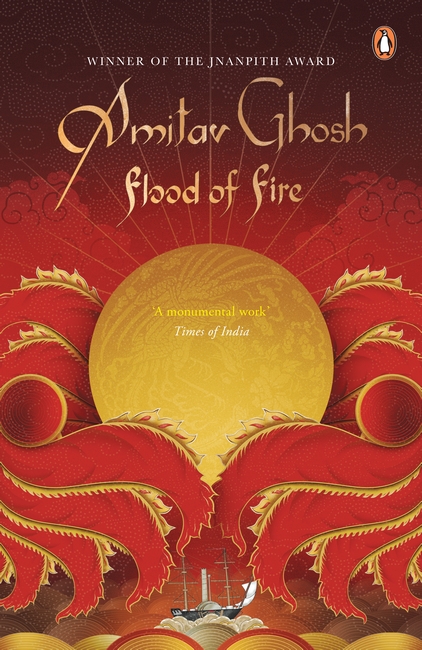
‘A triumph of storytelling’ The Hindu
It is 1839. The British, whose opium exports to China have been blockaded by Beijing, are planning an invasion to force China’s hand. In Calcutta, Zachary Reid, an impoverished young sailor, dreams of his lost love and of a way to make his fortunes. Heading towards Calcutta is Havildar Kesri to lead a regiment of Indian volunteers in the upcoming war. In Mumbai, Shireen Modi prepares to sail alone to China to reclaim her opium trader husband’s wealth and reputation. In Canton, Neel becomes an aide and translator to a senior Chinese official as Beijing begins to prepare for war with Britain and the more he sees, the more worried he becomes-for the Chinese have neither the ships nor the artillery to match the British in modern warfare. The future seems clear but do the Chinese know it?
‘[Flood of Fire] brims with wonderful historical details, clearly the result of prodigious research . . . Readers will find it easy to surrender to the story’ New York Times Book Review
‘An exhilarating end’ India Today
‘Phenomenal’ Tehelka
‘A monumental work’ Times of India
‘Simply unputdownable’ Mail Today
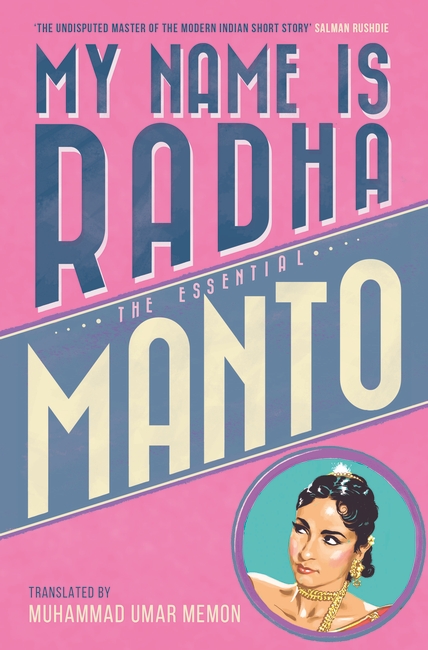
My Name Is Radha: The Essential Manto
‘An errant genius’
The Hindu
The prevalent trend of classifying Manto’s work into a) stories of Partition and b) stories of prostitutes, forcibly enlists the writer to perform a dramatic dressing-down of society. But neither Partition nor prostitution gave birth to the genius of Saadat Hasan Manto. They only furnished him with an occasion to reveal the truth of the human condition.
My Name Is Radha is a path-breaking edition of stories which delves deep into Manto’s creative world. In this singular collection, the focus rests on Manto the writer. It does not draft him into being Manto the commentator. Muhammad Umar Memon’s inspired selection of Manto’s best-known stories along with those less talked about, and his precise and elegant translation showcase an astonishing writer being true to his calling.
A Crazy Kind of Love

Love means, you needn’t be perfect
She couldn’t remember her past.
He wanted to forget his present.
They could see right through each other.
They wanted to be together
And yet it took them long to figure that there is nothing perfect about love!
You just need to be together.
If you’ve ever been in love you will find Crazy Kind of Love funny, mad and a completely adorable read.
A Golden Age
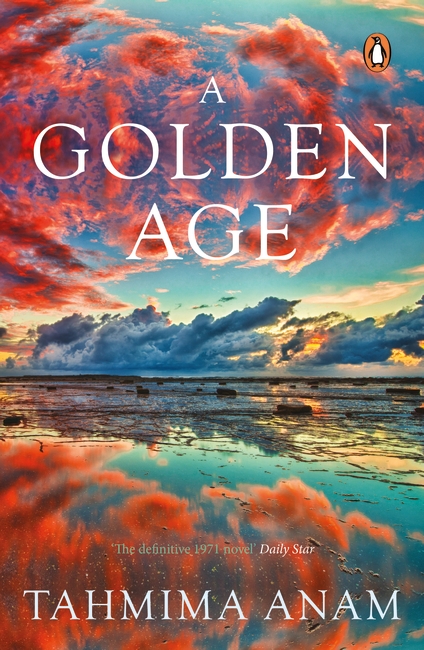
Rehana Haque awakes one March morning feeling happy. She is throwing a party for her son and daughter. In the garden of the house she has built, her roses are blooming; her children are almost grown up; and beyond their doorstep, the city is buzzing with excitement after the recent elections.
Change is in the air.
But none of the guests at Rehana’s party can foresee what will happen in the days and months that follow. For this is East Pakistan, 1971, a country on the brink of war. And Rehana’s life is about to change forever.
Set against the backdrop of the Bangladesh War of Independence, A Golden Age is a story of passion and revolution, of hope, faith, and unexpected heroism. In the chaos of this era, everyone-from student protesters to the country’s leaders, from rickshaw-wallahs to the army’s soldiers-must make choices. And as she struggles to keep her family safe, Rehana will find herself faced with a heartbreaking dilemma.
The Cosmopolitans
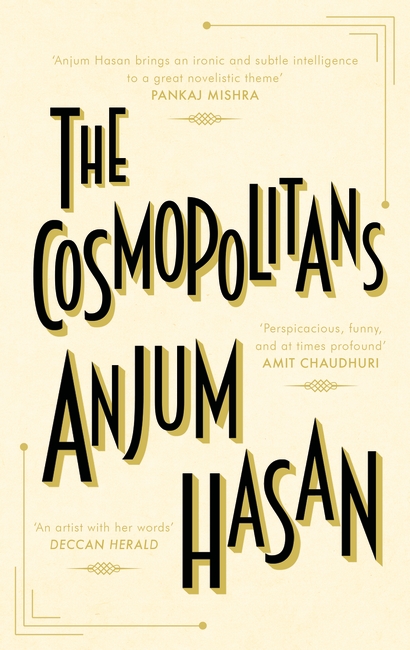
Qayenaat is a drifting, solitary, sensitivefigure at the edge of the Bangalore art scene. When world-famous artist Baban Reddy, once a young man who hung on her every word, returns to the city to show his latest artwork, all her old longings rise to the surface. Baban’s arrival accompanies other momentous events and sets Qayenaat off on the most unexpected journey of her life-to the heart of rural, war-torn India, and into a relationship with the unlikeliest of men.
The Cosmopolitans is a novel of ideas and emotions-one that questions the place of art in modern life, and draws a vivid portrait of a woman at odds with the world. Tender and wry in equal measure, and rich in thought and insight, it confirms Anjum Hasan as one of our most exciting novelists today.
Fever: Mahakaler Rather Ghoda
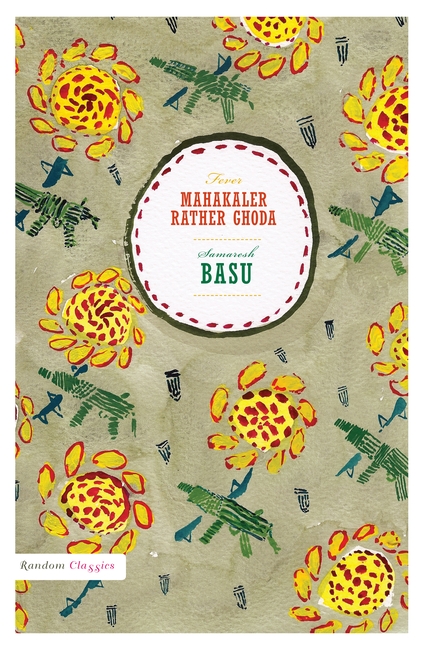
Ruhiton Kurmi has been in jail for seven years. Once a notorious Naxalite, he is now a withered shell; a man broken by torture, racked with fevers and sores. The only way he can endure his life is by shutting out the past. But when Ruhiton is moved to a better jail and eventually freed, memories return to haunt him. He looks back upon his youth, his marriage, his home in the Terai foothills—and he remembers too, the friends he has killed, the revolutionary colleagues he made, and the ideals he once believed in.
Dark, powerful and full of ambiguities, the classic Mahakaler Rather Ghoda (1977) questions the human cost of revolution and its inevitable transience. A sensation in its time, it remains one of the greatest novels about the Naxalite movement.