‘This was always going to happen.’
Tara Mullick falls in love with Jay Dhillon at first encounter. Her pull toward the older, brilliant billionaire is an unyielding force that carries her through Catholic school in Kolkata to four years of recklessness at college in the American Midwest. Things come to a head upon Tara’s return to India. She comes face-to-face with the socially oppressive realities of her world, and then, six years after their initial meeting-with Jay himself.
Edgy and compelling, Hedon is a stunning debut novel that explores the vagaries of love and heartache, and what it means to not know where you belong.

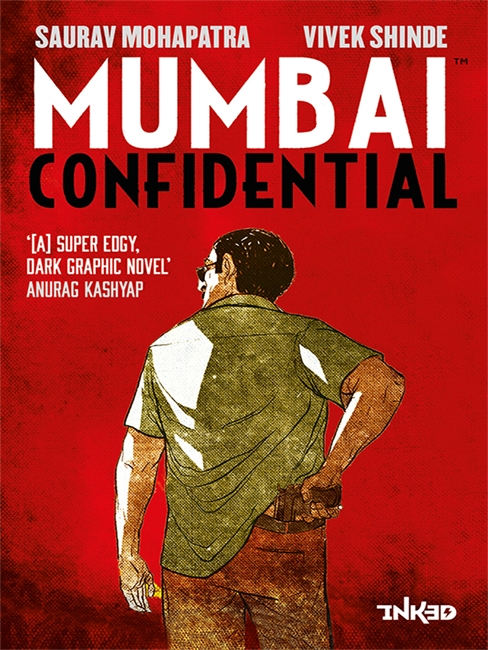
Five years ago, Arjun Kadam was a cop, a rising star in the ranks of the Mumbai Encounter Squad. A tragic event sends him spiralling into depression and drug abuse and Kadam is reduced to a pale shadow of his former self when he becomes the victim of a hit-and-run that also claims the life of a street urchin. Waking from a month-long coma, Kadam is determined to catch the culprit. He’s rapidly sucked into the deep, dark heart of Mumbai, from the glitzy tinsel of Bollywood to the dank depths of the Mumbai Underworld, where the line between the police and the criminals has been blurred beyond recognition. Obsessed with his mission, Kadam sets off a desperate gambit of deadly intrigue and deception that pits him against the very machine of violence and corruption he once helped create.

Fifteen-year-old Tenral leads two lives.There is the one she leads with her family and her friends at school-‘a skin-of-milk life, easy and forgiving, like five o’clock sunshine’. Into her other, difficult life, move her English teacher, Mrs Alfie, and her dead lover. Tenral recreates their romance, taking her clues from Mrs Alfie’s dramatic rendering of poetry, and tries to reconcile the past with the present through her own fairy tales. Even as her friends look on, disapproving of her flights of fancy, Tenral’s complex imaginary world widens to include the dour maths teacher, Mr Tilak, and Mrs Alfie’s mad mother, who spills the secret about Mrs Alfie’s navy blue baby. Events hurtle towards a frightening climax as Mrs Alfie emerges from Tenral’s world of make-believe to reveal the truth. Tenral can reject this truth, and escape into her world of fantasy. Or she can embrace real life with its hardships and disappointments, in the hope that, in the end, it is all worthwhile, for there is always ambrosia for afters.
‘I am Layla the Ordinary. Doesn’t have the same ring to it as Alexander the Great, but then, some of us do have to be ordinary to make the specials stand out even more. Right? Right.’
Sift through the journal of Layla, whose overnight transformation from pedestrian to popular sends her world spinning into a riot of endless lists that range from:
1. Platonic (or, Laylanic) love to first kisses
2. BFF trouble to BF confusion
3. Fashion faux pas to ideal coffee dates
This rib-tickling and charming account of an average teenager’s life will have you hooked from the first page to the last.
Management insights culled from the Mahabharata, one of the greatest books of all time, is not simply the story of a fratricidal war or a fount of wisdom for philosophers; it is also a comprehensive manual on strategy. From this storehouse of knowledge, Meera Uberoi selects the most pertinent shlokas to reveal the secrets of leadership and the path to success. She shows that the Mahabharata is equal, if not superior, to other management bibles such as The Art of War, The Prince and Go Rin No Sho, The Book of Five Rings. The aphorisms in Leadership Secrets from the Mahabharata have been selected from the Santi Parva, the Bhagvad Gita Parva and the Adi Parva.
As Bhishma lies dying on the battlefield of Kurukshetra, Krishna realizes that with Bhishma’s death, the world will lose ‘all knowledge’. To prevent this, Krishna asks him to impart to Yudhisthira all he knows. These teachings, coming as they do from Bhishma, the wisest of them all, contained in the Santi Parva, form the core of Uberoi’s book. Apart from detailing how to apply the craft of kingship to modern business practices, the book also explores the analogy between kingship and leadership. Pithy and insightful, Meera Uberoi’s selection is a practical guide to leadership in any field of life. The aphorisms, grouped under heads like Duty, War, Espionage and Conduct, deal with eternal values and truths that are as relevant today as they were 3000 years ago.

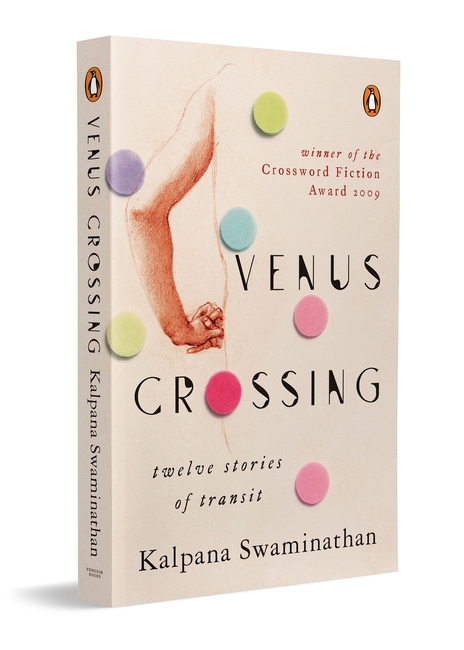
In Venus Crossing, Kalpana Swaminathan masterfully crafts twelve stories that lay bare the deepest complexities of human relationships. These stories capture the instant of transit, that moment when the impossible-the unthinkable-is absorbed into the fabric of life so that life can be lived again. That moment is everything: revelation, challenge, existence. In the Yellow Dupatta, practical compulsions surmount grief as a young couple takes their dead child home from the hospital. A middle-aged nurse finds romance with the most obnoxious of patients in Sister Thomas and Mister Gomes. Two young women shattered by rejection begin the long journey of survival in Fly Away, Peter. Incident at Abu Ghraib finds Sukhi appalled by her mother’s empathy for a disgraced American soldier. Hemant is counselled, in Euthanasia, to opt for the final solution-but will he?
Incisive, brilliant and deeply compassionate, Venus Crossing showcases Kalpana Swaminathan’s consummate skill as a storyteller and proves, yet again, the uncompromising vision of her craft.

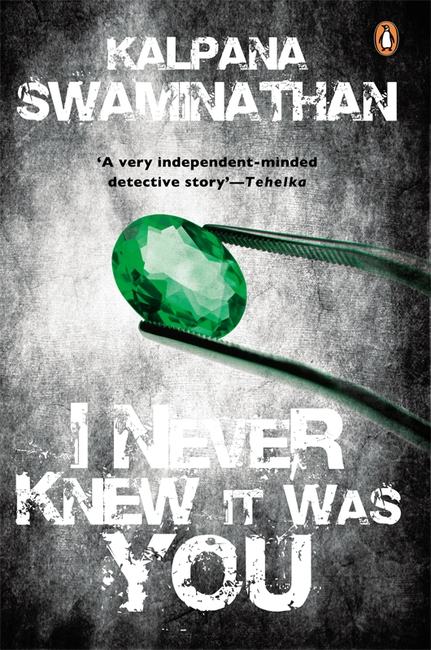
Sita, detective Lalli’s niece-and occasional Watson-runs into former classmate Anais at Mumbai airport. Even as the friends catch up, Anais hands over a cardboard box she is carrying to a waiting woman, nonchalantly informing the traumatized lady that the box contains her son’s ashes. Some days later, Anais herself turns up dead in the slimy Mithi River, a pink nylon rope wrapped ritually around her neck.
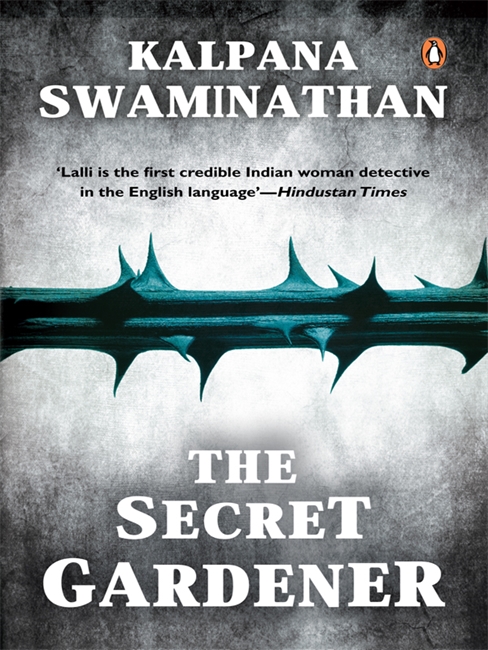
24 Patwardhan Cross. The solitary bone that surfaces in the garden there doesn’t mean much to police surgeon Dr Q or Inspector Savio. But Lalli, who collects curiosities, finds it curious. Things get curiouser when a dying gigolo whispers the address in terror, and curiouser still when a mummified finger with a chic manicure turns up in the same garden. Lalli might have ignored these curiosities had there not been a child at the heart of the matter. As she investigates what makes this garden grow, Lalli uncovers a gruesome tale.

For not having loved one’s dead father enough, could one make amends by loving one’s child more?
Eighty-five and half paralysed, Shyamanand is on his deathbed when he goes missing. His apparent refusal to meet death in the expected way-calm and accepting and lying down-is a cause for great anguish to his son Jamun, who leads a life of quiet desperation, trying to balance feelings of despair and resignation since the suicide of his friend and neighbour Dr Mukherjee.
After their father disappears, Jamun and his brother Burfi reconnect in their old home that builder Lobhesh Monga has his eyes on. In their quest to find out what happened to Shyamanand, they find a path out of desolation, even as TV executive Kasturi, Jamun’s former lover and mother of his only child, is busy recycling the more melodramatic moments of Jamun’s life for the blockbuster Hindi soap Cheers Zindagi.
In powerful, austere prose shot through with black humour, Upamanyu Chatterjee has produced an intensely moving examination of family ties and the redemptive power of love, however imperfect, in the midst of death and degeneration.