In a caste-based feudal society like India, Hanuman who stands outside the temple facing the street seems more accessible to the masses than his distant master, the royal Ram.’
The venerated monkey-god and problem-solver is one of the most recognizable characters of Hindu mythology. In Hanuman, Ram not only finds a loyal servant and a dependable soldier but also a companion. Whether he is conveying Ram’s message to Sita, or saving Lakshman’s life, Hanuman serves Ram—his one and only master—in every way he can.
Ram’s Companion explores the deep bond between Ram and Hanuman, in Devdutt Pattanaik’s unique style. Read on.
Dashratha is heartbroken when Kaikeyi asks for her two boons because it means letting go of his favourite son and having him live in exile for fourteen years. However, as the sun-king of the sun-city, he is also the upholder of dharma, one who keeps his word. He has no choice but to let Ram go.
It is this legacy that Dashratha leaves Ram with, which sets the precedent for all of Ram’s actions. As a Raghuvamsi, a descendent of the Raghu clan, Ram is the very definition of living according to dharma. Ram is first and foremost a son before he takes on any other role, and this is evident throughout the journey of the Ramayana.
In Ram: The Son, Devdutt Pattanaik highlights the foundation of Ram’s commitment to keeping not only his but also his father’s word while traversing the vagaries of life. Pattanaik has the unique ability to convey complex ideas in the most straightforward manner and nowhere is it more evident than when he tells the story of Ram.
It was dharma that made Ram the rightful king of Ayodhya, and it was dharma that made Sita live the rest of her life raising two children in the forest. It was dharma that helped Ram defeat Ravana, and it was dharma that separated him from the love of his life.
While dharma made Ram follow rules even if it gave him unhappiness, Sita was under no such obligation. This is why the choices she made have had such a huge impact on the lessons the epic has to offer.
Sita’s Righteousness is a lesson in understanding the value of righteousness even in the most difficult circumstances. Narrated and illustrated by the inimitable Devdutt Pattanaik, this simple yet powerful story is a compelling read.
Dharma is supposed to be the foundation of a civilized, peaceful society. However, it can also have a dark side that forces a man to be a king first and a husband later.
After Ram defeats Ravana in the epic fight that lasted ten days, Sita’s honour is saved, good has triumphed over evil, and everything wrong with the world has been righted. However, this is also the moment when Sita has to make her most humiliating choice.
Sita’s Humility is an intriguing tale of a woman’s resilience that has been beautifully narrated and illustrated in Devdutt Pattanaik’s straightforward style.
Sita first meets Hanuman in the garden of Ashoka trees, where she has been held captive by Ravana, waiting for her husband to rescue her. Despite living in the land of demons with her honour being threatened every day, she has faith in Ram and his ability to save her. She is overjoyed when Ram’s messenger appears before her.
The mighty Hanuman is the bearer of good news, but he leaves with the burden of Sita’s most difficult choice—one that will prolong her suffering indefinitely instead of putting an end to it immediately.
Beyond the story of Ram and Ravana, Ramayana is the story of the only person who could make choices—Sita. Read on as Devdutt Pattanaik enlightens us with another story that highlights Sita’s virtuosity, with illustrations that bring the action alive.
Humans use choices and rules to create a world where there is more kindness and less cruelty, more right and less wrong.’
Our ability to make decisions that serve others more than ourselves is what differentiates humans from animals. Considering the needs of others first is one of the biggest tenets of dharma, the rules of society. Having grown up with this foundation, Sita and Ram present the very definition of a dharmik life. While dharma makes for a civilized and peaceful society, it also leads to Sita making a choice that marks the end of all happiness in her life.
Elegantly narrated and illustrated by Devdutt Pattanik, read on to discover Sita’s fateful choice and the consequences that make Ramayana the epic it is.
The rulers of the sun-city were called sun-kings because they dazzled by the virtue of always following the rules of the land.’
Sita and Ram lived in an age where living according to dharma, or the rules of society, was of utmost importance, even if it meant living in exile for fourteen years. When Kaikeyi demands her two boons from King Dashratha, everyone except the one who has to suffer is heartbroken. Ram stoically accepts the consequences of his father’s word as his destiny. However, Sita displays astounding grace when she makes a choice that isn’t expected from her.
In the din of Ravana’s cruelty and Ram’s valour, something is often overlooked—the story of Sita, the woman who chose. From the master of mythology, Devdutt Pattanaik, this is the story of the first, and possibly the most difficult, choice that Sita makes.
One minute before midnight on 1 January 1949, Nehru’s long battle with Jinnah ended. However, the rivalry they had bequeathed to their nations, and the world, had barely begun.
Even as Gandhi went on a fast until communal violence ended, Nehru and Jinnah were fighting their own battles on behalf of their countries, facing problems they hadn’t anticipated. Meanwhile, Kashmir was – and still remains – the roadblock to better relations between India and Pakistan. With Gandhi’s subsequent demise being projected as the death of a martyr, things were far from improving.
In this brilliantly detailed essay, Nisid Hajari explores the extent to which India’s and Pakistan’s early leadership defined the futures the two nations would eventually live through.
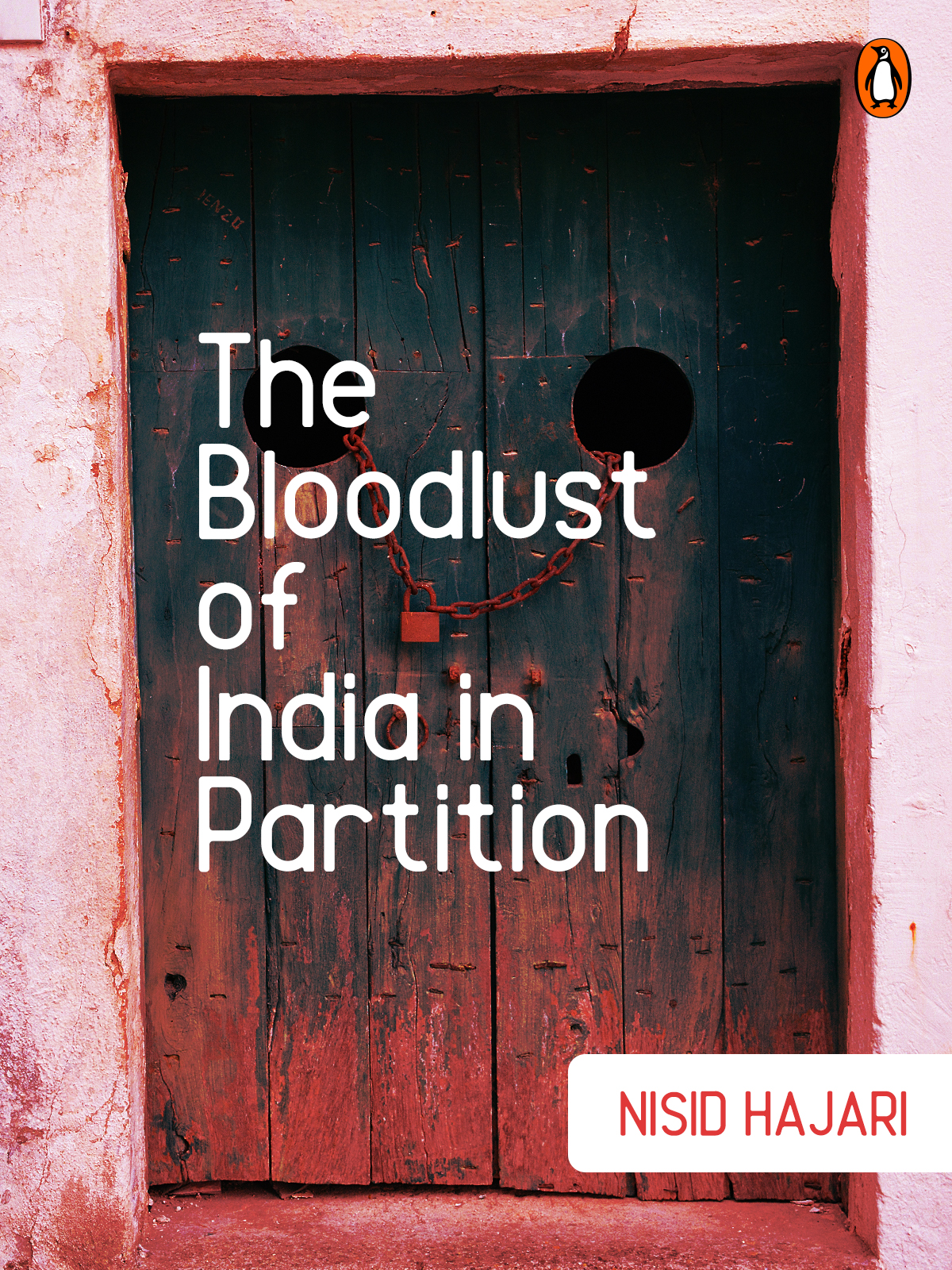
With talk of Partition emerged the most violent and horrific riots in the history of the subcontinent. From Calcutta to Bihar and Punjab, a crazy frenzy was taking over both Hindus and Muslims of a country that was still under British rule.
A situation that was quickly getting out of hand saw the leaders of the hour neither condemning nor making any attempts to stop the violence. Were these the leaders that would eventually lead India and Pakistan towards Independence? Did they know they were leaving behind a bloody legacy that would come to haunt generations of Indians and Pakistanis?
Read on to get an insight into the darkest time of India’s history just as she was getting ready for a new identity in the world.
Until the early 1900s, Hindus and Muslims of the subcontinent were united in their fight against the British, fighting for Independence. Eventually, with the formation of the Muslim League, and the leaderships of Jinnah and Nehru not quite in agreement with each other, it increasingly became evident that independence would come with the formation of two separate states: India and Pakistan.
Could the partition – an event that led to countless horrors – be pegged to two people, influential leaders in their own right? Or were there other factors, like the inability to imagine a populace so hungry for a bloodbath?
Read on to find out what led to Jinnah and Nehru becoming the faces of two nations that would emerge out of the struggle for Independence.