



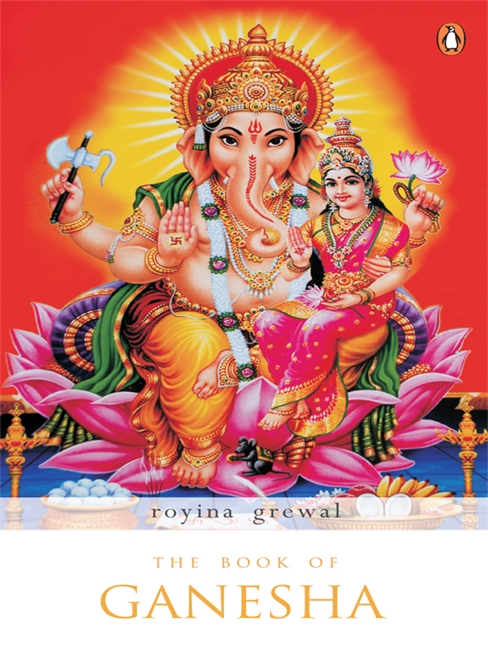
Ganesha, the elephant-headed god, is easily the most recognizable and loveable of Hindu deities. But pinpointing his various attributes is not quite so simple. He is at once the portly, merry, childlike god and the sage, complex philosopher. He is the presiding deity of material wealth and the lord of spirituality. He removes all impediments for his devotees but creates all manner of difficulties for the transgressors, man or god. And associated with every aspect of Ganesha-be it his extraordinary birth, his elephant head, his broken tusk, his vehicle (the mouse), his appetite, his anger-are scores of myths, each more colourful than the other. In this thoroughly researched and delightfully narrated book, Royina Grewal gives us the many stories of Ganesha, exploring their significance and how they reflect the times and the cultures during which they originated.
Catagory: Fiction
Fiction main category
The Giver Of The Worn Garland Krishnadevaraya’s Amuktamalyada
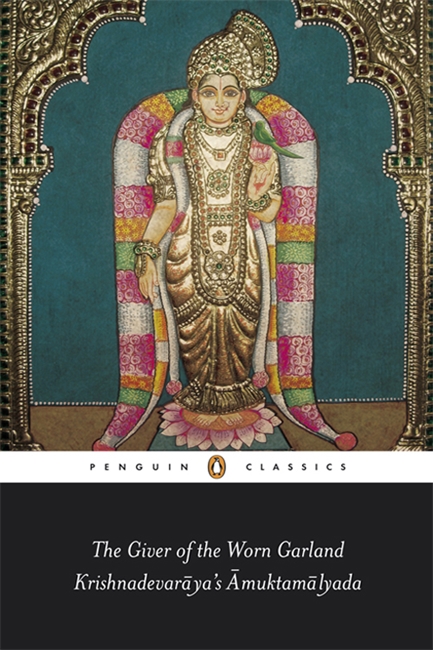
“And below her hair, she would put on a garland and spend a few minutes just gazing into a pond, seeing her reflection and satisfying her desire before turning away and returning the worn garland to her flower basket The emperor Krishnadevaraya’s epic poem Amuktamalyada (Giver of the Worn Garland) depicts the life of the medieval Vaisnava poet-saint Andal, or Goda Devi as she is also known, and her passionate devotion to Lord Visnu. Krishnadevaraya’s unique poetic imagination brings to life a celestial world filled with wonder, creativity, humour and vibrant natural beauty. The mundane is made divine and the ordinary becomes extraordinary; the routine activities of daily life become expressive metaphors for heavenly actions, while the exalted gods of heaven are re-imagined as living persons. The poet’s ability to see divinity in the most commonplace activities is an extension of his powerful belief that god is everywhere, in everything, at all times.
The Resignation
One of the giants of Hindi literature, Jainendra introduced the ‘psychological’ in Hindi fiction. Questions of love, marriage and relationships occupy much of Jainendra’s works, taking them into the realm of the internal and the intimate. In The Resignation, Jainendra tells the story of Mrinal, a young woman whose uncompromising idealism results in her family and society rejecting her completely. Almost seventy-five years after it was written, the story of Mrinal’s struggle against stultifying social norms and her fierce individualism remain startlingly relevant.
March Of The Aryans
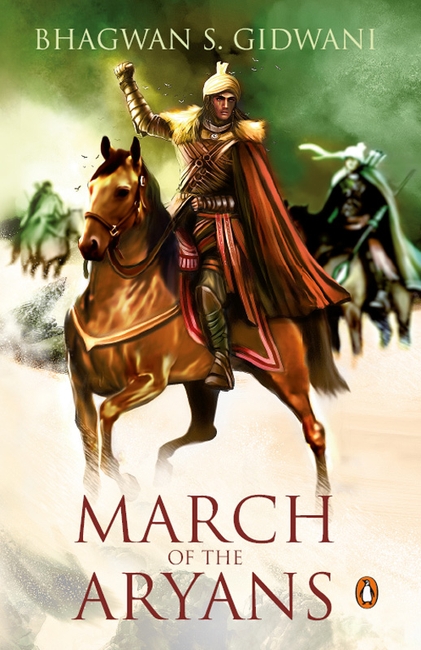
In a remarkable feat of imagination and research, bhagwan S. Gidwani takes us back to the dawn of civilization (8000 BCE) to vividly recreate the world of the Aryans. He tells us why the Aryans left India – their native land – for foreign shores and shows us their triumphant return to their homeland. Here are characters like the gentle god Sindhu Putra, spreading his message of love; the hermit Bharat, who inspired the dream of unity, equality, human rights and dignity for all; the physician – sage Dhanawantar and his wife Dhanawantari; peace-loving Kashi after whom the holy city of Varanasi is named; and Nila who gave his name to the rive Nile. Vast and absorbing, with a cast of thousands, March of the Aryans is a gripping tale of kings and poets, seers and gods, battles and romance, and the rise and fall of civilisations, from the bestselling author of The Sword of Tipu Sultan.
Sisters
When her parents die in an air crash, Mikki Hiralal discovers that her father’s massive business empire is in serious trouble. And it’s up to her to sort the mess. Beset by creditors, rapacious tycoons and untrustworthy associates, the young woman realizes that there is only one person she can turn to for help—the beautiful Alisha, her father’s illegitimate daughter. There is only one hitch—Alisha hates Mikki . . .
Socialite Evenings
A divorce and a succession of sordid affairs have left prominent Bombay socialite Karuna feeling battered, empty and melancholic. She looks back upon her life and the friends and enemies who surround her-neurotic, man-hungry Anjali; gorgeous, vivacious Ritu; high-profile editor Varun, with a penchant for young boys; Krish, the pretentious adman, whose wife actively helps him in his extramarital affairs. Scandalous, astute and utterly riveting, Shobhaa Dé’s first novel, Socialite Evenings, laid bare the world of high-society India and changed the face of the Indian novel forever.
The Seduction Of Shiva
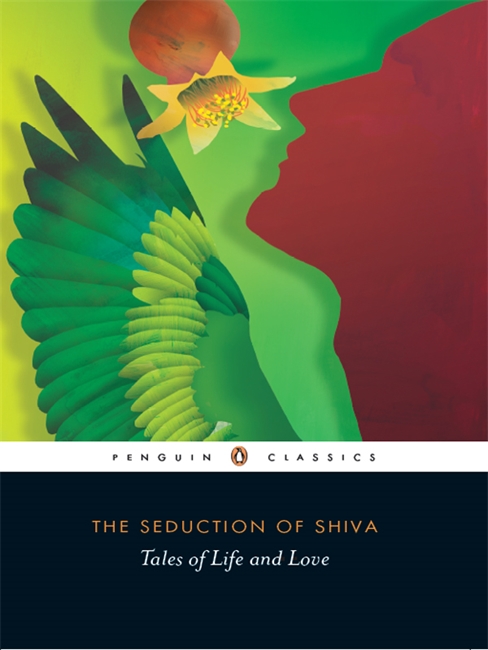
The god Shiva is utterly seduced by Mohini, the enchanting female form assumed by the god Vishnu during the churning of the ocean for nectar. A barber employs wit and wile and rumours of witchcraft to win his wife back from the lustful attentions of their king. The celestial nymph Urvashi curses the Pandava prince Arjuna when he rejects her sexual advances. A woman caught in adultery befools her elders with a religious ritual. A man with a disagreeable missing wife insists nevertheless that she be recovered by his ruler who has a similar problem.
Refined, colloquial, romantic, cynical, satirical by turns, these stories of erotic love, elegantly translated from the Sanskrit classics, make a sustained argument for the secular ends of life of desire tempered with discrimination and pleasure with restraint.
The Mahabharata
The Greatest Story Ever Told
Dispute over land and kingdom may lie at the heart of this story of war between cousins-the Pandavas and the Kouravas-but the Mahabharata is about conflicts of dharma. These conflicts are immense and various, singular and commonplace. Throughout the epic, characters face them with no clear indications of what is right and what is wrong; there are no absolute answers. Thus every possible human emotion features in the Mahabharata, the reason the epic continues to hold sway over our imagination.
In this superb and widely acclaimed translation of the complete Mahabharata, Bibek Debroy takes us on a great journey with incredible ease.
You Can’t Go Home Again
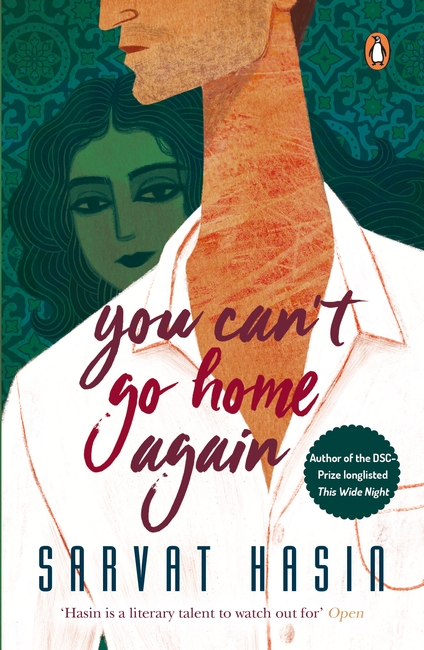
Linked stories draw a powerful portrait of young Pakistan, at home and in the world
A group of teenagers in a Karachi high school put on a production of Arthur Miller’s The Crucible-and one goes missing. The incident sets off ripples through their already fraught education in lust and witches, and over the years, the young men and women grow up together and apart, haunted by both home and djinns in these lyrical linked stories.
In the world of Sarvat Hasin’s contemporary seekers, young rakes move between Murree and New York and women own the magic of their inexplicable passions; a failed soap opera star forms a poignant truce of a marriage with an unlikely man who has his own scars; churails are a persistent spectre in the most modern of lives. Here is the real Pakistan of Mohsin Hamid and Kamila Shamsie, one generation younger-and a young storyteller to take on the legacy of Pakistan’s chroniclers.
Buffering Love

Whether it’s the tinsel town diva who accidentally tweets an intimate personal account, or the aspiring writer who opens a dating app in an office reception just before her interview, the characters from the world of Buffering Love cling on to their mobile phones, sometimes to crush reality and sometimes to embellish it.
Set in urban India, and replete with surprising turns, Buffering Love will delight and devastate its readers in equal measure with its 15 short stories about love and life through myriad mobile apps.