



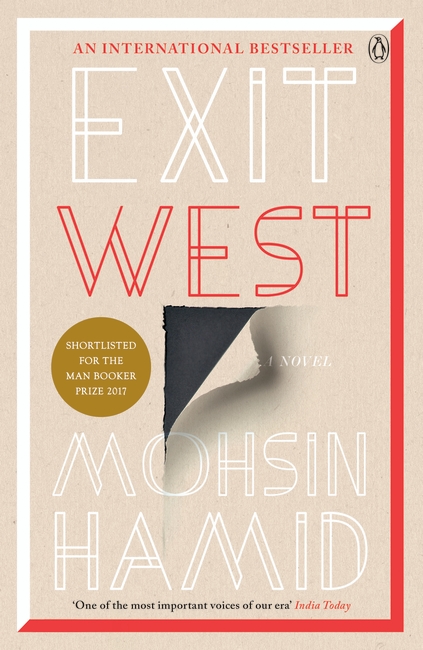
An extraordinary story of love and hope from the bestselling, Man Booker-shortlisted author of The Reluctant Fundamentalist.
This is Nadia. She is fiercely independent with an excellent sense of humour and a love of smoking alone on her balcony late at night.
This is Saeed. He is sweet and shy and kind to strangers. He also has a balcony but he uses his for stargazing.
This is their story: a love story, but also a story about how we live now and how we might live tomorrow. Saeed and Nadia are falling in love, and their city is falling apart. Here is a world in crisis and two human beings travelling through it.
Exit West is a heartfelt and radical act of hope-a novel to restore your faith in humanity and in the power of imagination.
Catagory: Fiction
Fiction main category
The Complete Short Stories: Vol. 2
‘Premchand is India. If you haven’t read Premchand, you have missed out on a lot’ The Hindu
Munshi Premchand, widely lauded as the greatest Hindi fiction writer of the twentieth century, wrote close to 300 short stories over the course of a prolific career spanning three decades. His range and diversity were limitless as he tackled themes of romance and satire, gender politics and social inequality, with unmatched skill and compassion. By turns poignant, acerbic, comical and tragic, many of his stories powerfully invoke the countryside-its pastoral simplicity as well as its harsh realities-while others capture the hopes and anxieties that accompany life in a teeming city where the underdog and the exploiter are caught in an age-old conflict.
For the first time ever, Penguin Classics brings together Premchand’s entire short-fiction oeuvre for the delight of the English-speaking world. Along with M. Asaduddin’s illuminating Introduction, this pathbreaking anthology
features several stories not hitherto available either in Hindi or Urdu. Also included are comprehensive notes that provide the publication history of each story-highlighting the differences, sometimes significant and radical, between the Hindi and the Urdu versions of the same story-as well as a definitive chronology, making this a truly singular collection.
TRANSLATED BY M. ASADUDDIN AND OTHERS
The Complete Short Stories: Vol. 3
‘Premchand is India. If you haven’t read Premchand, you have missed out on a lot’ The Hindu
Munshi Premchand, widely lauded as the greatest Hindi fiction writer of the twentieth century, wrote close to 300 short stories over the course of a prolific career spanning three decades. His range and diversity were limitless as he tackled themes of romance and satire, gender politics and social inequality, with unmatched skill and compassion. By turns poignant, acerbic, comical and tragic, many of his stories powerfully invoke the countryside-its pastoral simplicity as well as its harsh realities-while others capture the hopes and anxieties that accompany life in a teeming city where the underdog and the exploiter are caught in an age-old conflict.
For the first time ever, Penguin Classics brings together Premchand’s entire short-fiction oeuvre for the delight of the English-speaking world. Along with M. Asaduddin’s illuminating Introduction, this pathbreaking anthology
features several stories not hitherto available either in Hindi or Urdu. Also included are comprehensive notes that provide the publication history of each story-highlighting the differences, sometimes significant and radical, between the Hindi and the Urdu versions of the same story-as well as a definitive chronology, making this a truly singular collection.
TRANSLATED BY M. ASADUDDIN AND OTHERS
The Complete Short Stories: Vol. 4
‘Premchand is India. If you haven’t read Premchand, you have missed out on a lot’ The Hindu
Munshi Premchand, widely lauded as the greatest Hindi fiction writer of the twentieth century, wrote close to 300 short stories over the course of a prolific career spanning three decades. His range and diversity were limitless as he tackled themes of romance and satire, gender politics and social inequality, with unmatched skill and compassion. By turns poignant, acerbic, comical and tragic, many of his stories powerfully invoke the countryside-its pastoral simplicity as well as its harsh realities-while others capture the hopes and anxieties that accompany life in a teeming city where the underdog and the exploiter are caught in an age-old conflict.
For the first time ever, Penguin Classics brings together Premchand’s entire short-fiction oeuvre for the delight of the English-speaking world. Along with M. Asaduddin’s illuminating Introduction, this pathbreaking anthology
features several stories not hitherto available either in Hindi or Urdu. Also included are comprehensive notes that provide the publication history of each story-highlighting the differences, sometimes significant and radical, between the Hindi and the Urdu versions of the same story-as well as a definitive chronology, making this a truly singular collection.
TRANSLATED BY M. ASADUDDIN AND OTHERS
The Complete Short Stories: Vol. 1
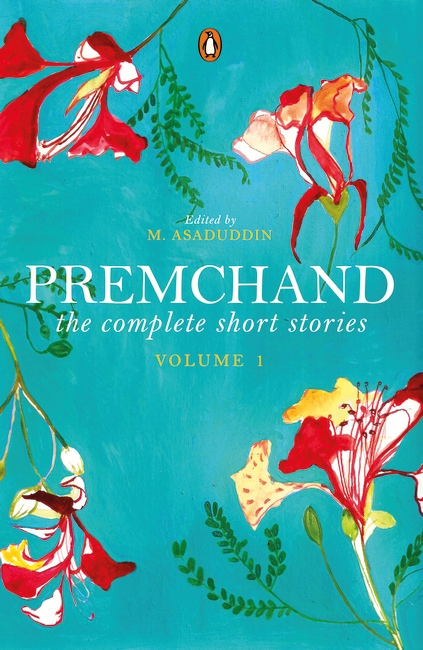
‘Premchand is India. If you haven’t read Premchand, you have missed out on a lot’ The Hindu
Munshi Premchand, widely lauded as the greatest Hindi fiction writer of the twentieth century, wrote close to 300 short stories over the course of a prolific career spanning three decades. His range and diversity were limitless as he tackled themes of romance and satire, gender politics and social inequality, with unmatched skill and compassion. By turns poignant, acerbic, comical and tragic, many of his stories powerfully invoke the countryside-its pastoral simplicity as well as its harsh realities-while others capture the hopes and anxieties that accompany life in a teeming city where the underdog and the exploiter are caught in an age-old conflict.
For the first time ever, Penguin Classics brings together Premchand’s entire short-fiction oeuvre for the delight of the English-speaking world. Along with M. Asaduddin’s illuminating Introduction, this pathbreaking anthology
features several stories not hitherto available either in Hindi or Urdu. Also included are comprehensive notes that provide the publication history of each story-highlighting the differences, sometimes significant and radical, between the Hindi and the Urdu versions of the same story-as well as a definitive chronology, making this a truly singular collection.
TRANSLATED BY M. ASADUDDIN AND OTHERS
The Poison of Love

When Tulsi first meets Madhav, she is irrevocably drawn to his chiselled good looks and charm. Although wary of his many dalliances and the string of broken hearts left in his wake, she is surprised by the intense desire that Madhav arouses in her. And before long, she forsakes her family, her prospective career, her fiancé-all for the love of this inscrutable man. But love can be like poison. And nothing can prepare Tulsi for the heartache and betrayal that lie ahead.
Years later, Tulsi escapes to the ancient city of Vrindavan, seeking redemption amidst the cries and prayers of its anguished widows. However, when her past catches up with her, old wounds resurface with dramatic consequences.
By turns savage and tender, The Poison of Love is a spellbinding tale of love and sacrifice, pain and retribution, confirming K.R. Meera as one of our most fearless and accomplished writers.
Encounters Of A Fat Bride
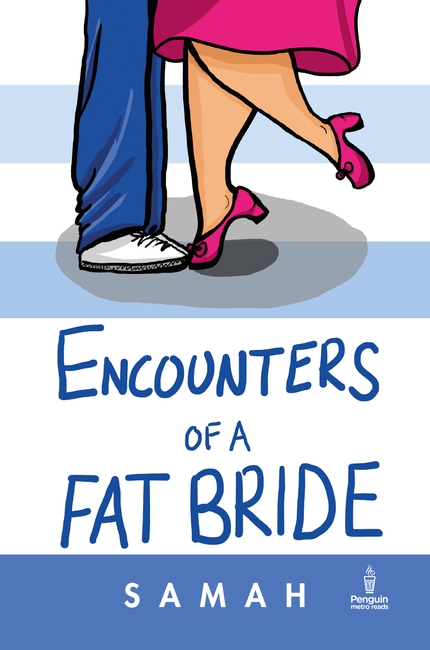
Madhurima Pandey is twenty-five, single, and gradually coming to terms with the annoying ‘you’re next’ nudges from family and friends. But soon they realize that chances of finding a groom for her are slim-mainly because she’s not. At 93 kilos, she knows she isn’t the ideal weight for marriage, even if her family believes she’s the ideal age.
Despite her reservations, the hunt begins, and so does a spree of rejections-until Harsh comes along. Madhu cannot believe that a boy with no obvious flaws has agreed to marry her. Low self-esteem makes her suspect he’s either impotent or a homosexual, but she doesn’t turn down the proposal immediately. A negligible period of courtship and a hurried engagement follow. But does Madhurima really find her happily-ever-after? Or are there more surprises in store?
Jovial, witty and unapologetically honest, Madhurima Pandey’s story of struggle and survival in the run-up to her D-Day gives you a refreshingly new take on the big fat Indian wedding.
Friend Of My Youth
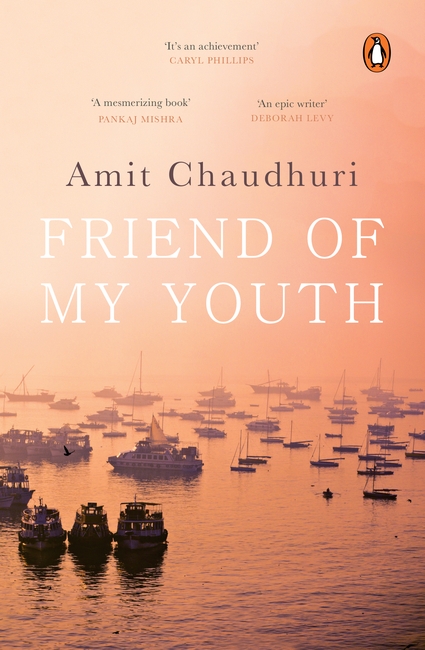
A writer arrives in Bombay on a book-related visit, and finds himself in search of the city he grew up in and barely knows, a city shaken to its core not long ago by the 2008 terrorist strikes-even as he takes for granted his errant local friend, Ramu. A six-foot-tall Kannadiga and one-time junkie who cannot reconcile himself to modern-day adult life, Ramu is an unlikely hero, Bombay incarnate; the writer is his mirrored counterpart in an extraordinary narrative about this city by the sea.
Friend of My Youth is at once an unexpected exploration and a concentrated reminiscence woven around a series of visits to a city that was never really home; a commentary on the power of memory and the stubborn interference of childhood with adult life; a paean to the transformative power of friendship by one of our greatest living writers.
The Puffin Book of Folktales
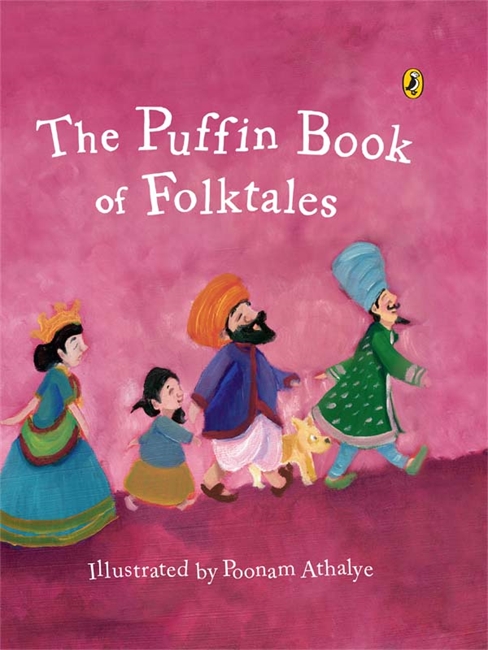
Explore an exciting and beautiful underwater world with Panna. Watch little blue bird Podna fight a mighty king for his little brown Podni. Join Lord Ganesha on his quest for a pot of kheer. Read about lovelorn Lord Surya pining for his Harshringar, leaving the world in darkness. Help the dove get her egg back.
Split
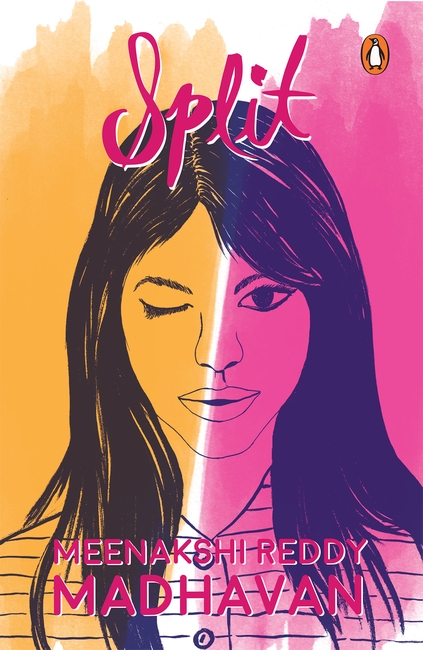
Who needs love? It only leads to trouble.
Noor is having the worst year of her life. First her mother decides to leave her father. Then her dad’s mother, the Horrible Old Crone, moves in to look after Noor (who’s sixteen and doesn’t need looking after, thank you very much). And she just knows the HOC is going to be mean about her mother because she never wanted her son to marry a Muslim. And now Noor has to attend some children-of-divorce thing after school-and her gang canNOT find out.
THEN she meets Ishaan. He’s funny and nerdy, and likes all the same things she likes. Except love is stupid, as she’s told everyone, and Ishaan isn’t her type anyway. He wears glasses, participates enthusiastically in the lame children-of-divorce thing, and would rather read than play football in the break like all the other boys.
Could love happen with someone who is the complete opposite of everything you’ve ever stood for? Can forgiveness squirm its way in with love?