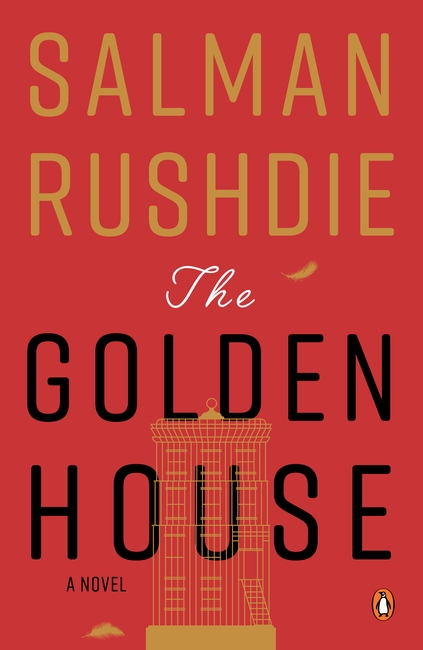
On the day of Barack Obama’s inauguration, an enigmatic billionaire from Bombay takes up residence in a cloistered community in New York’s Greenwich Village. Along with his improbable name, untraceable accent and unmistakable air of danger, Nero Golden has brought along his three adult sons: agoraphobic, alcoholic Petya; Apu, the flamboyant artist; and D, who harbours an explosive secret even from himself.
The story of the powerful Golden family is told from the point of view of their neighbour and confidant, René, an aspiring filmmaker who finds in the Goldens the perfect subject. René chronicles the undoing of the house of Golden: the high life of money, of art and fashion, a sibling quarrel, an unexpected metamorphosis, the arrival of a beautiful woman, betrayal and murder, and far away, in India, the unravelling of an insidious plot.
Copiously detailed, sumptuously inventive, brimming with all the razzle-dazzle that imbues his fiction with the lush ambience of a fable, The Golden House is about where we were before 26/11, where we are today and how we got here. The result is a modern epic of love and terrorism, loss and reinvention-a powerful, timely story told with the daring and panache that make Salman Rushdie a force of light in our dark new age.

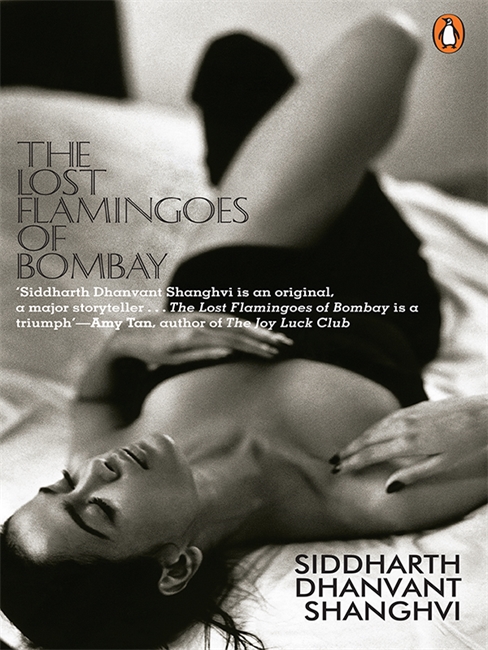
Star photographer Karan Seth is in Bombay to immortalize the city in a unique photo-record of its hidden faces until tragedy strikes and he is drawn into a Fitzgeraldian world of sex, crime and politics. Utterly disenchanted, he abandons the camera and Bombay and heads to England. Yet, like the flamingoes of Sewri, who unfailingly give in to the strange, haunting pull of the great metropolis, Karan too knows that he must return to his old loves. The Lost Flamingoes of Bombay is at once a razor-sharp depiction of contemporary urban society and an affecting tale about love’s betrayals and the redemptive powers of friendship.

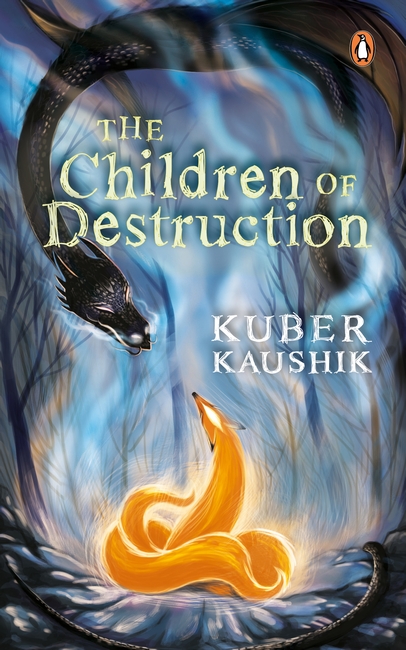
We used to live in a world of magic . . .
For Alice, life as a teenager is hard enough without turning into a supernatural herald of destruction. And you would think that after causing minor hurricanes with a major sneeze, being visited by a talking fox and ending up on a journey with death around every corner, things can’t get much worse.
Wrong.
They can.
Between a blind and telekinetic mass murderer, a girl bound to a shadow-demon and a genetically engineered pseudo messiah, a whole generation of weird is ready to come of age. And when it does, the world will change.
If it survives that long.

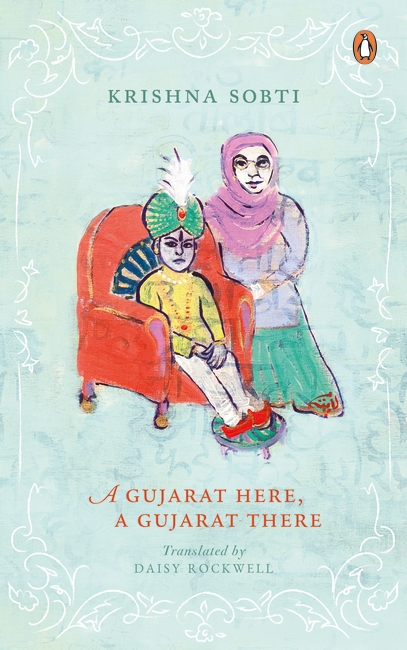
Delhi, 1947. The city surges with Partition refugees. Eager to escape the welter of pain and confusion that surrounds her, young Krishna applies on a whim to a position at a preschool in the princely state of Sirohi, itself on the cusp of transitioning into the republic of India. She is greeted on arrival with condescension for her refugee status, and treated with sexist disdain by Zutshi Sahib, the man charged with hiring for the position. Undaunted, Krishna fights back. But when an opportunity to become governess to the child maharaja Tej Singh Bahadur presents itself-and with it a chance to make Sirohi her new home once and for all-there is no telling how long this idyll will last.
Part novel, part memoir, part feminist anthem, A Gujarat Here, A Gujarat There is not only a powerful tale of Partition loss and dislocation but also charts the odyssey of a spirited young woman determined to build a new identity for herself on her own terms.
These stories based in the urban middle class milieu reflects on the tensions, stress and complications of contemporary lives. The language and communication is that of today’s youth. These stories reflect life as it is today and history as it is being formed and lived today. The stories take you to lanes and bylanes and lets you delve into middle class urban India.
Note: This book is in the Hindi language and has been made available for the Kindle, Kindle Fire HD, Kindle Paperwhite, iPhone and iPad, and for iOS, Windows Phone and Android devices.

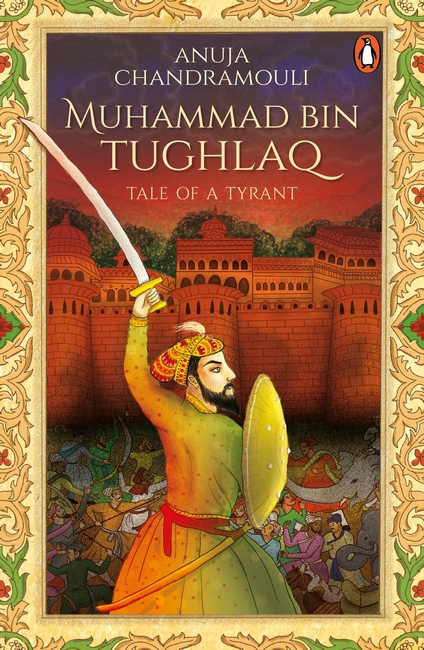
When his father dies, Prince Jauna Khan succeeds to the throne of Delhi as Muhammad bin Tughlaq. His reign will prove to be epic and bloody, but unsurpassed in splendour, innovation and defeat.
A formidable strategist and remarkable scholar, the Sultan will go down in history for his brutality as well as his brilliance, unfairly remembered only as a cruel tyrant who might have been raving mad. His high-flown aspirations and grandiose ambitions may have met with crushing failure, but even so, Tughlaq was a great hero of the fourteenth century, albeit a tragic and fatally flawed one.
In this fictional retelling, Anuja Chandramouli, one of India’s best mythology writers, reimagines Muhammad bin Tughlaq’s life and times in incredible detail to bring to life the man behind the monarch.
The story of a woman’s search for strength and independence Meet Akhilandeshwari, Akhila for short: forty-five and single, an income tax clerk and a woman who has never been allowed to live her own life—always the daughter, the sister, the aunt, the provider. Until the day she gets herself a one-way ticket to the seaside town of Kanyakumari, gloriously alone for the first time in her life and determined to break free of all that her conservative Tamil brahmin life has bound her to. In the intimate atmosphere of the ladies coupe which she shares with five other women, Akhila gets to know her fellow travellers: Janaki, pampered wife and confused mother; Margaret Shanti, a chemistry teacher married to the poetry of elements and an insensitive tyrant too self-absorbed to recognize her needs; Prabha Devi, the perfect daughter and wife, transformed for life by a glimpse of a swimming pool; fourteen-year-old Sheela, with her ability to perceive what others cannot; and Marikolanthu, whose innocence was destroyed by one night of lust. As she listens to the women’s stories, Akhila is drawn into the most private moments of their lives, seeking in them a solution to the question that has been with her all her life: Can a woman stay single and be happy, or does a woman need a man to feel complete?
What makes a fanatic? A fundamentalist? What makes communities that have lived together for years suddenly discover a hatred for each other?
New Delhi, in the year 2000. Staff meetings, lesson modules, a half-hearted little affair with a colleague-this is the bland but comfortable life of Shiv Murthy, a history teacher in an open university. But disruption and change are on their way-an outspoken young woman with a broken knee comes into his life and turns it upside-down; then Hindu zealots attack his writings on Basava, the reformer-poet. When fundamentalism lands on his own doorstep, Shiv discovers that the ideas he has inherited-about history, nations and patriots-are liable to shrink day by day. The time of siege is not exclusively Indian-prejudice speaks different languages but has the same destructive message: ‘Only trust those of your kind.’ With love, lust and a perverted nationalism at his heels, Shiv is forced to confront the demands of his times and choose a direction for the future. But first, he must come to terms with his own incomplete past, his fears, and his obsession with a woman who will give him the strength he seeks.

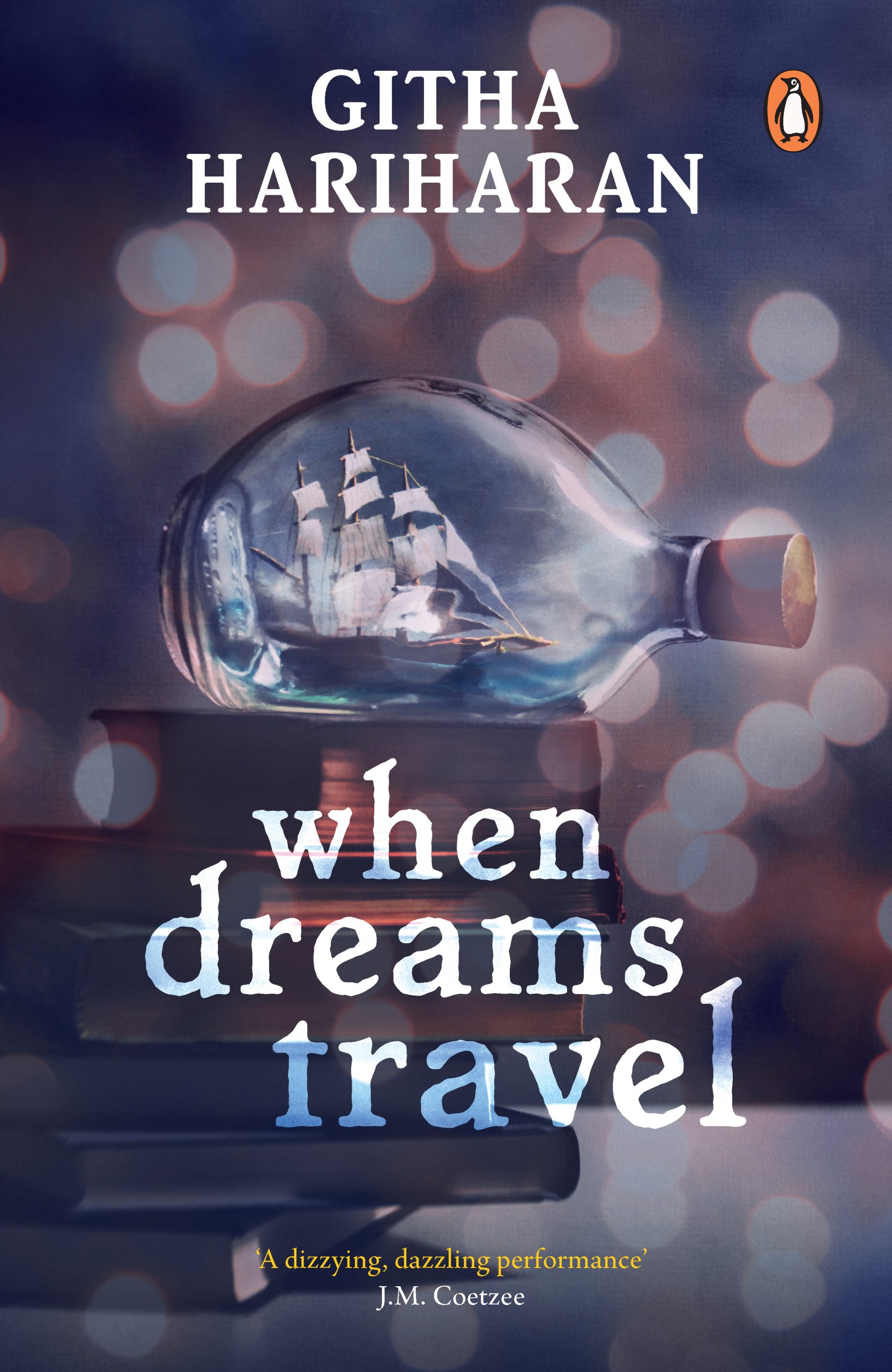
A magical tour de force by a writer at the height of her powers, ‘When Dreams Travel’ weaves round Scheherazade-or Shahrzad of the thousand and one nights-a vibrant, inventive story about that old game that’s never played out: the quest for love and power. The curtain opens on four figures, two men and two women. There is the sultan who wants a virgin every night; there is his brother, who makes an enemy of darkness and tries to banish it; and there are their ambitious brides, the sisters Shahrzad and Dunyazad, aspiring to be heroines-or martyrs. Travelling in and out of these lives to spellbinding effect is a range of stories, dark, poetic and witty by turns, spanning medieval to contemporary times. With its sharp and lively blend of past and present, its skillful reworking of the historical tradition, and its controlled use of evocative language, Githa Hariharan’s multi-voiced narrative assumes the significance of modern myth.
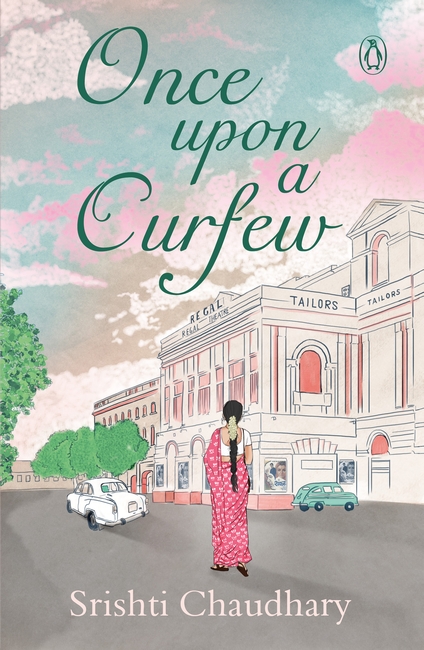
It is 1974. Indu has inherited a flat from her grandmother and wants to turn it into a library for women. Her parents think this will keep her suitably occupied till she marries her fiancé, Rajat, who’s away studying in London.
But then she meets Rana, a young lawyer with sparkling wit and a heart of gold. He helps set up the library and their days light up with playful banter and the many Rajesh Khanna movies they watch together.
When the Emergency is declared, Indu’s life turns upside down. Rana finds himself in trouble, while Rajat decides it’s time to visit India and settle down. As the Emergency pervades their lives, Indu must decide not only who but what kind of life she will choose.