




From the highly acclaimed author of Atlas of Unknowns (“Dazzling . . . One of the most exciting debut novels since Zadie Smith’s White Teeth”—San Francisco Chronicle; “An astonishment of a debut”—Junot Díaz), a bravura collection of short stories set in locales as varied as London, Sierra Leone, and the American Midwest that captures the yearning and dislocation of young men and women around the world.
In “Lion and Panther in London,” a turn-of-the-century Indian wrestler arrives in London desperate to prove himself champion of the world, only to find the city mysteriously absent of challengers. In “Light & Luminous,” a gifted dance instructor falls victim to her own vanity when a student competition allows her a final encore. In “The Scriptological Review: A Last Letter from the Editor,” a young man obsessively studies his father’s handwriting in the hope of making sense of his death. And in the marvelous “What to Do with Henry,” a white woman from Ohio takes in the illegitimate child her husband left behind in Sierra Leone, as well as an orphaned chimpanzee who comes to anchor this strange new family.
With exuberance and compassion, Tania James once again draws us into the lives of damaged, driven, and beautifully complicated characters who quietly strive for human connection.
Catagory: Fiction
Fiction main category
Our Story Ends Here
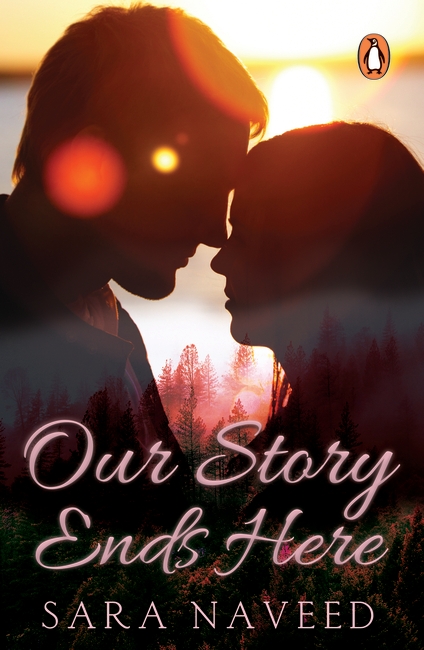
Sarmad was trained as a terrorist to be ruthless, to be fearless and to take away innocent lives. He has caused pain that he can’t undo. For years, he has been living without a heart, without a soul, without her.
Mehar is an army general’s daughter. After losing a loved one she decides to go to the Swat valley with her college friends to revisit the place that holds all her childhood memories.
While Mehar is looking forward to her adventurous trip, Sarmad is working on his upcoming deadly mission.
Unwittingly, their paths cross and they are forced to stay together in the same room for eleven days. Fate brings them together, but destiny has planned something else.
Does their story end here? Or has it just begun?
The Mahabharata
This definitive and magnificent 10-volume unabridged translation is one of the rare English translations of full of the epic. Bibek Debroy makes the Mahabharata marvelously accessible to contemporary readers. Dispute over land and kingdom may lie at the heart of this story of war between cousins-the Pandavas and the Kouravas-but the Mahabharata is about conflicts of dharma. These conflicts are immense and various, singular and commonplace. Throughout the epic, characters face them with no clear indications of what is right and what is wrong; there are no absolute answers. Thus every possible human emotion features in the Mahabharata, the reason the epic continues to hold sway over our imagination.
In this superb and widely acclaimed translation of the complete Mahabharata, Bibek Debroy takes on a great journey with incredible ease. This is the fifth volume in the series.
The Mahabharata
This is the sixth book in the definitive and magnificent 10-volume unabridged translation of one of the rare English translations of the full epic. Bibek Debroy makes the Mahabharata marvellously accessible to contemporary readers. Dispute over land and kingdom may lie at the heart of this story of war between cousins-the Pandavas and the Kouravas-but the Mahabharata is about conflicts of dharma. These conflicts are immense and various, singular and commonplace. Throughout the epic, characters face them with no clear indications of what is right and what is wrong; there are no absolute answers. Thus every possible human emotion features in the Mahabharata, the reason the epic continues to hold sway over our imagination. In this superb and widely acclaimed translation of the complete Mahabharata, Bibek Debroy takes on a great journey with incredible ease.
The Occult
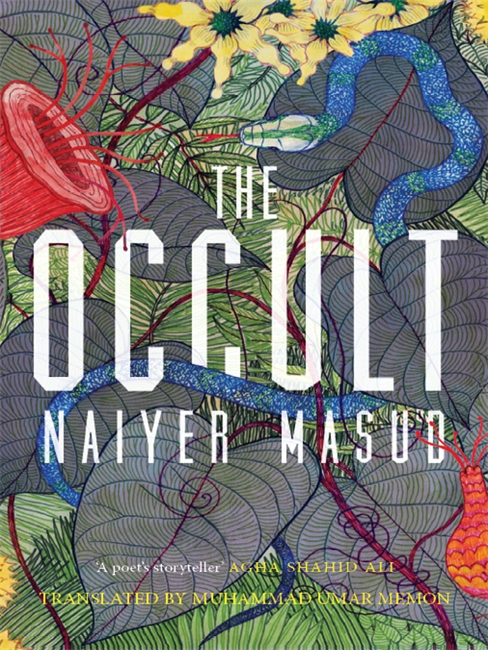
of The Occult have no discernible plots, their terrains are unidentifiable,
the characters that inhabit them have no names. Houses possess
domains where you are overcome with fear or desire without knowing why.
A lone dark cloud that brings sudden rain traverses the interpenetrating
landscape of the five stories. Time passes swiftly in some locations and is
knotted thickly at others. An exquisitely made artefact could either be the
model for a palace or a memorial of it. Has the woman fleeing managed
to escape once again or has she drowned in the fast-flowing river? A
narrative thread from one story may be taken up and twisted in another.
Together the stories create a shimmering maze where meaning is elusive
but from which the enchanted reader never wants to exit.
House of Screams
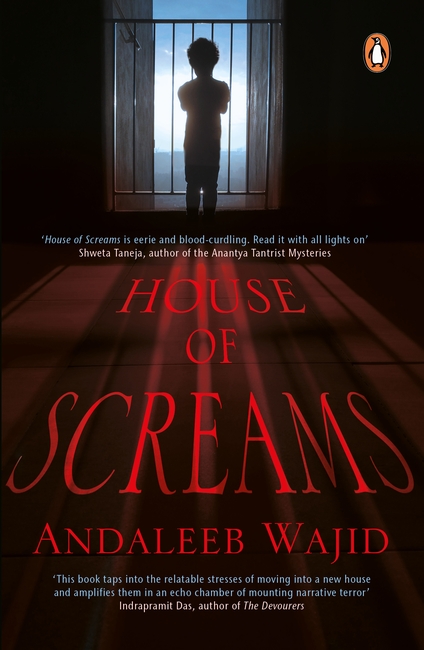
Tired, she soon fell asleep to the sound of Zain’s gentle breathing. The crickets outside seemed to have finally gone quiet. An hour later, the screams began.When Muneera finds out she’s inherited her uncle’s old house on Myrtle Lane, she decides to move in with her husband, Zain, and their three-year-old son, Adnan. The promise of saving money and living in one of Bangalore’s nicest areas has them packing up their old lives at their tiny apartment and shifting to this sprawling bungalow.
But they soon realize there’s more to the house than its old-world charm. Bloody hands reach out of the walls; there’s a boy whom only Adnan can see; and every night, they’re woken up by loud, blood-curdling screams. As the terrors threaten to tear their little family apart, they discover the shocking extent of the house’s gory history. And unless they manage to leave, they’re going to become a part of it.
Trial by Silence
ONE AMAZING STORY. TWO DIFFERENT ENDINGS.
At the end of Perumal Murugan’s trailblazing novel One Part Woman, readers are left on a cliffhanger as Kali and Ponna’s intense love for each other is torn to shreds. What is going to happen next to this beloved couple?
In Trial by Silence-one of two inventive sequels that picks up the story right where One Part Woman ends-Kali is determined to punish Ponna for what he believes is an absolute betrayal. But Ponna is equally upset at being forced to atone for something that was not her fault. In the wake of the temple festival, both must now confront harsh new uncertainties in their once idyllic life together.
In Murugan’s magical hands, this story reaches a surprising and dramatic conclusion.
A Lonely Harvest
ONE AMAZING STORY. TWO DIFFERENT ENDINGS.
At the end of Perumal Murugan’s trailblazing novel One Part Woman, readers are left on a cliffhanger as Kali and Ponna’s intense love for each other is torn to shreds. What is going to happen next to this beloved couple?
In A Lonely Harvest-one of two inventive sequels that pick up the story right where One Part Woman ends-Ponna returns from the temple festival to find that Kali has killed himself in despair. Devastated that he would punish her so cruelly, but constantly haunted by memories of the happiness she once shared with Kali, Ponna must now learn to face the world alone.
With poignancy and compassion, Murugan weaves a powerful tale of female solidarity and second chances.
If You See Me, Don’t Say Hi
In eleven sharp, surprising stories, Neel Patel gives voice to our most deeply held stereotypes and then slowly undermines them. His characters, almost all of whom are first-generation Indian Americans, subvert our expectations that they will sit quietly by. We meet two brothers caught in an elaborate web of envy and loathing; a young gay man who becomes involved with an older man whose secret he could never guess; three women who almost gleefully throw off the pleasant agreeability society asks of them; and, in the final pair of linked stories, a young couple struggling against the devastating force of community gossip.
If You See Me, Don’t Say Hi examines the collisions of old world and new world, small town and big city, traditional beliefs (like arranged marriages) and modern rituals (like Facebook stalking). Ranging across the country, Patel’s stories-empathetic, provocative, twisting, and wryly funny-introduce a bold new literary voice, one that feels timelier than ever.
The Bhagavata Purana 1
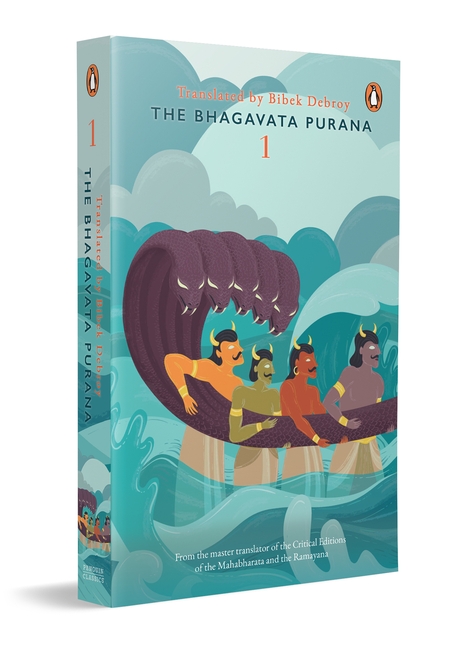
A seamless blend of fable and philosophy, the Bhagavata Purana is perhaps the most revered text in the Vaishnava tradition. It brings to life the legends of gods, asuras, sages and kings-all the while articulating the crucial ethical and philosophical tenets that underpin Hindu spiritualism.
The narrative unfolds through a series of conversations and interconnected stories. We are told how the sage Vyasa was inspired by Narada to compose the Bhagavata Purana as a means to illumine the path to a spiritual life. We learn of the devotion of Prahlada, the austerity of Dhruva, and the blinding conceit of Daksha. Also recounted are tales of the many incarnations of Vishnu, especially Krishna, whom we see grow from a beloved and playful child to a fierce protector of the faithful.