Should you move on if life gives you a second chance?
Aditya Arora spent the last years of high school watching his first love, Neela, die of cancer. College, he hopes, will be a fresh start. But when the past comes back to haunt him in the form of his late girlfriend’s father, Professor Krishnan, the year soon turns out to be harder than his worst nightmare.
Thankfully, Aditya’s not so far gone that he can’t make friends. With the help of Kaveri, Justin and Mausammi, he slowly begins building resistance to Krishnan’s spitefulness and anger.
As relationships change equations and academic pressures reach inhuman levels, Aditya learns some important lessons in trust, acceptance and, of course, moving on. Hopefully, he won’t be the only one learning them!

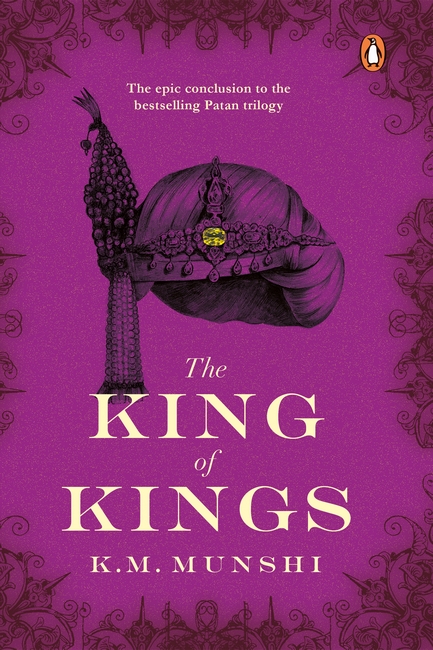
A mysterious emissary arrives in the port city of Bhrigukachchh. He has been sent by King Jaysinhdev of Patan with a secret message for Kaak, the valiant chieftain of the city. The king seeks to urgently enlist Kaak’s help in conquering the kingdom of Junagadh. However, Kaak has also received crucial summons from two others: Leeladevi, the firebrand princess whose marriage to Jaysinhdev Kaak himself facilitated; and Ranakdevi, the queen of Junagadh.
Caught in a web of conflicting loyalties, Kaak must navigate a treacherous terrain of political machinations where the slightest misstep could lead to grave consequences-where even he will not emerge unscathed.
K.M. Munshi’s magnificent conclusion to his beloved Trilogy, The King of Kings is a panoramic epic filled with adventure and intrigue, and a timeless classic with a nuanced insight into human nature and the complex links between statecraft and violence.

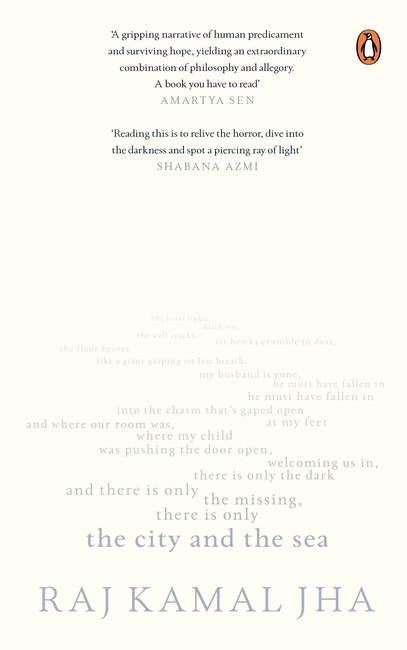
In a crumbling neighbourhood in New Delhi, a child waits for a mother to return home from work. And, in parallel, in a snow-swept town in Germany on the Baltic Sea coast a woman, her memory fading, shows up at a deserted hotel. Worlds apart, both embark, in the course of that night, on harrowing journeys through the lost and the missing, the living and the dead, until they meet in an ending that breaks the heart – and holds the promise of putting it back together again.
Called the novelist of the newsroom, Raj Kamal Jha cleaves open India’s tragedy of violence against women with a powerful story about our complicity in the culture that supports it. This is a book about masculinity – damaging and toxic and yet enduring and entrenched – that begs the question: What kind of men are our boys growing up to be?

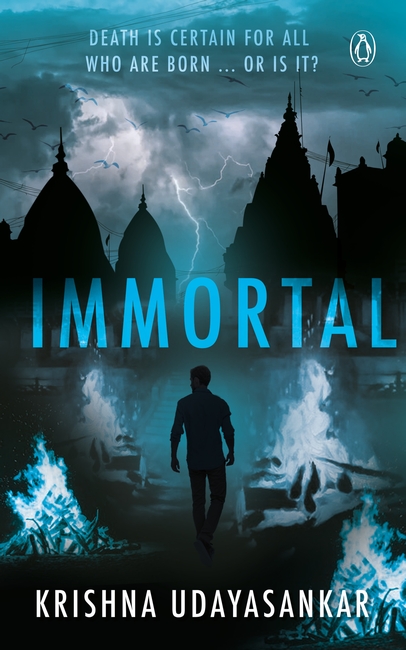
Professor Bharadvaj is more than just another whisky-loving, gun-toting historian-for-hire. Behind the assumed identity of a cynical academic is a man who has walked the earth for scores of years. He is Asvatthama-the cursed immortal, the man who cannot die.
When Professor Bharadvaj is approached by the enigmatic Maya Jervois to search for a historical artefact unlike any other, he is reluctant to pursue it. The object in question, the Vajra, is rumoured to possess incredible alchemical powers, but the Professor does not believe it exists. After all, he has spent many lifetimes-and identities-searching for it, in a bid to unearth the secret to his unending life.
Yet, as the evidence of the Vajra’s existence becomes increasingly compelling, the professor is plunged into an adrenaline-fuelled adventure that takes him from the labyrinthine passages beneath the Somnath temple to the legendary home of the siddhas in the Nilgiris, and finally into the deserts of Pakistan to solve a confounding puzzle left behind by the ancients.
But who is behind the dangerous mercenaries trying to thwart his discoveries at every step? And is the professor-a legendary warrior in a long-ago life-cursed to walk the path of death and bloodshed forever?

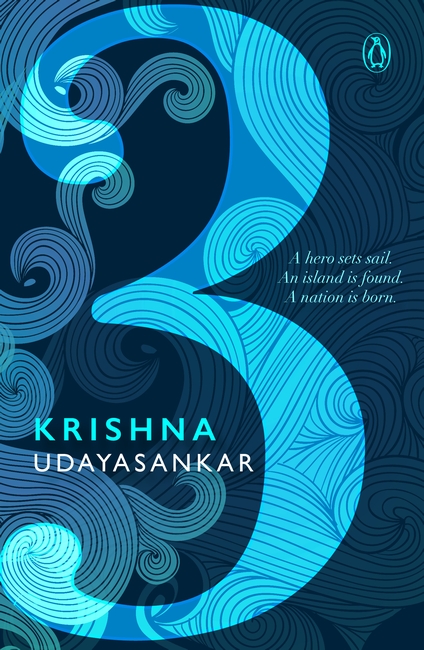
Early thirteenth century CE. The Srivijaya Empire, considered to be one of the world’s greatest maritime forces, has been abruptly left powerless in a swift political exchange.
With nothing but a meaningless crown, a once-lauded navy and the will to keep alive the name of Srivijaya against the endless onslaughts of old enemies and ambitious neighbours, Emperor Prabhu Dharmasena and his kin leave behind their island realm to traverse the seas, desperate and homeless. Sailing amongst them is Dharmasena’s youngest son, Nila Utama, for whom loyalty and honour have ceased to have meaning since he saw his father forsake their beloved land.
Now, all that is left to do is survive…
Or so Nila thinks, till a voyage across turbulent seas brings him to a fishing village, where the headstrong prince, so far insistent on keeping to the shadows, is forced to step up to his responsibility, face his old demons and discover what it truly means to be a king.
Based on the founding legend of the island of Singapore, also known as Singapura or the Lion City, 3 is an engrossing tale – told in an exquisitely rich voice – of love, self-realization and adventure on the high seas.

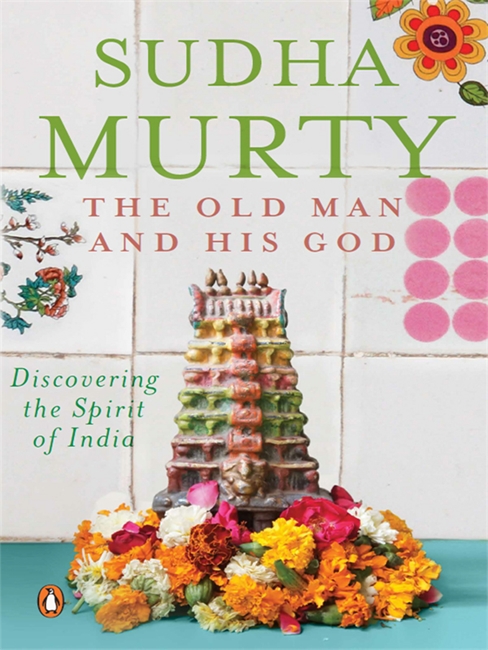
As she goes about her work with the villagers, slum dwellers and the common men and women of India, Sudha Murty-writer, social worker and teacher-listens to them and records what they have to say. Their accounts of the struggles and hardships which they have at times overcome, and at other times been overwhelmed by, are put together in this book.There are stories about people’s generosity-and selfishness-in times of natural disasters like the tsunami; women struggling to speak out in a world that refuses to listen to them; and tales of young professionals trying to find their feet as they climb up the corporate ladder.Told simply and directly from the heart, The Old Man and His God is a collection of snapshots of the varied facets of human nature and a mirror to the souls of the people of India.
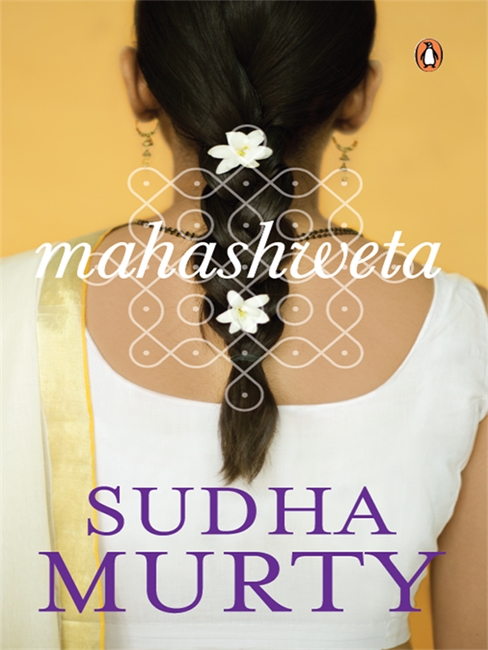
Anupama looked into the mirror and shivered with shock. A small white patch had now appeared on her arm.’ Anupama’s fairytale marriage to Anand falls apart when she discovers a white patch on her foot and learns that she has leukoderma. Abandoned by her uncaring in-laws and insensitive husband, she is forced to return to her father’s home in the village. The social stigma of a married woman living with her parents, her steother’s continual barbs and the ostracism that accompanies her skin condition force her to contemplate suicide. Determined to rebuild her life against all odds, Anupama goes to Bombay where she finds success, respect and the promise of an enduring friendship. Mahashweta is an inspiring story of courage and resilience in a world marred by illusions and betrayals. This poignant tale offers hope and solace to the victims of the prejudices that govern society even today.
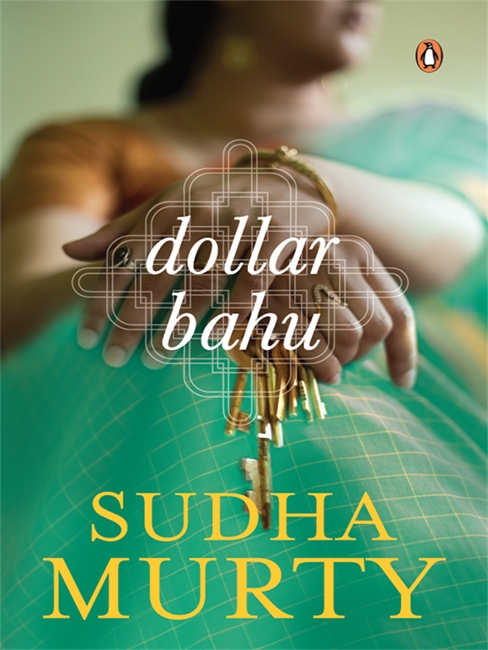
A story of how money corrupts the way people look at one another and how it can almost tear a family apart Vinuta marries Girish, a bank clerk, and starts living with his family in Bangalore. She adjusts to her new family well, looking after her husband, father-in-law and mother-in-law Gouramma, not taking to heart her mother-in-law’s constant picking. But when Girish’s elder brother Chandru, who is in the US, decides to get married, Vinuta has to listen to the constant comparisons made between her and Chandru’s wife, the ‘Dollar Bahu’, whose husband earns the valuable dollars that has brought the family its recent affluence. Vinuta slowly loses her peace of mind and health. Then Gouramma decides to visit her US-based son and daughter-in-law. Once there, she sees how liberating life can be, away from the strict norms that govern Indian middle-class life. But she also begins to understand that mere dollars cannot buy the love and respect that she gets as her due back in India. Does Gouramma forge a new relationship with Vinuta and can Vinuta forgive and forget the past?
What is more important: a successful career or a happy marriage?
In the small town of Hubli, Shrikant discovers that he is attracted to his plain-looking but charming neighbour Shrimati, who always does better than him in the school exams. Shrimati too falls in love with the amiable and handsome Shrikant and the two get married. Shrikant joins an IT company and starts rapidly climbing the corporate ladder. He works relentlessly and reaches the pinnacle of his industry, while Shrimati abandons her academic aspirations and becomes his uncomplaining shasow, silently fulfilling her duties as a corporate leader’s wife. But one day, while talking to an old professor, she starts examining what she has done with her life and realizes it is dismally empty…
Gently Falls the Bakula is the story of a marriage that loses its way as ambition and self-interest take their toll. Written nearly three decades ago, Sudha Murty’s first novel remains startlingly relevant in its scrutiny of modern values and work ethics.
What secrets lurk in a family’s past—and how important are they in the here and now?
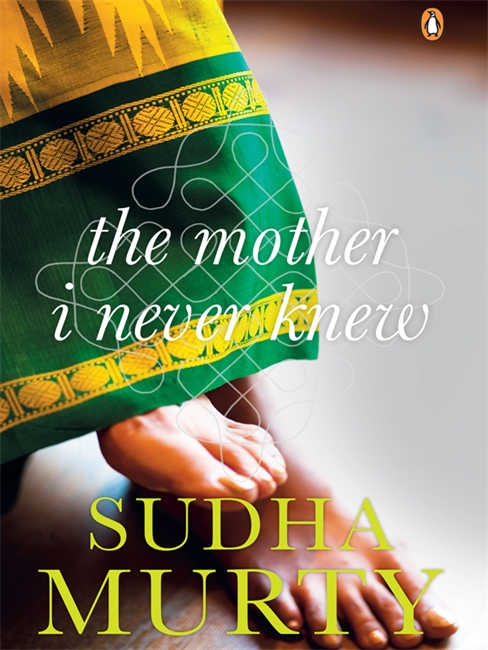
Sudha Murty’s new book comprises two novellas that explore two quests by two different men—both for mothers they never knew they had.
Venkatesh, a bank manager, stumbles upon his lookalike one fine day. When he probes further, he discovers his father’s hidden past, which includes an abandoned wife and child. Ventakesh is determined to make amends to his impoverished stepmother—but how can he repay his father’s debt?
Mukesh, a young man, is shocked to realize after his father’s death that he was actually adopted. He sets out to find his biological mother, but the deeper he delves, the more confused he is about where his loyalties should lie: with the mother who gave birth to him, or with the mother who brought him up.
The Mother I Never Knew is a poignant, dramatic book that reaches deep into the human heart to reveal what we really feel about those closest to us.