India, 1922. A curse seems to have fallen upon the royal family of Satapur, a princely kingdom tucked away in the lush Sahyadari mountains, where both the maharaja and his teenage son have met with untimely deaths. The state is now ruled by an agent of the British Raj on behalf of Satapur’s two maharanis, the dowager queen and her daughter-in-law.
When a dispute arises between the royal ladies over the education of the young crown prince, a lawyer’s counsel is required to settle the matter. Since the maharanis live in purdah, the one person who can help is Perveen Mistry, Bombay’s only female lawyer. But Perveen arrives to find that the Satapur Palace is full of cold-blooded power play and ancient vendettas.
Too late she realizes she has walked into a trap. But whose? And how can she protect the royal children from the palace’s deadly curse?
‘A marvellously plotted, richly detailed series’
WASHINGTON POST
‘Even better than the series’ impressive debut’
PUBLISHERS WEEKLY
‘Perveen Mistry . . . is sure to join the leads of great mystery fiction’
SUSAN ELIA MACNEAL
‘An astonishing heroine’
BAPSI SIDHWA

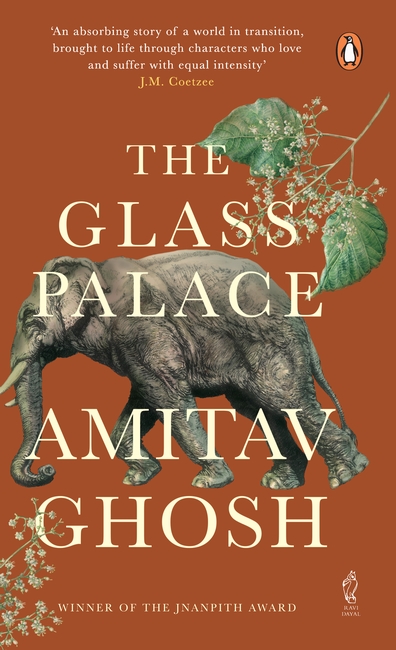
Set in Burma during the British invasion of 1885, this masterly novel tells the story of Rajkumar, a poor boy lifted on the tides of political and social chaos, who goes on to create an empire in the Burmese teak forest. When soldiers force the royal family out of the Glass Palace and into exile, Rajkumar befriends Dolly, a young woman in the court of the Burmese queen, whose love will shape his life. He cannot forget her, and years later, as a rich man, he goes in search of her. Through this brilliant and impassioned story of love and war, Amitav Ghosh presents a ruthless appraisal of the horrors of colonialism and capitalist exploitation.

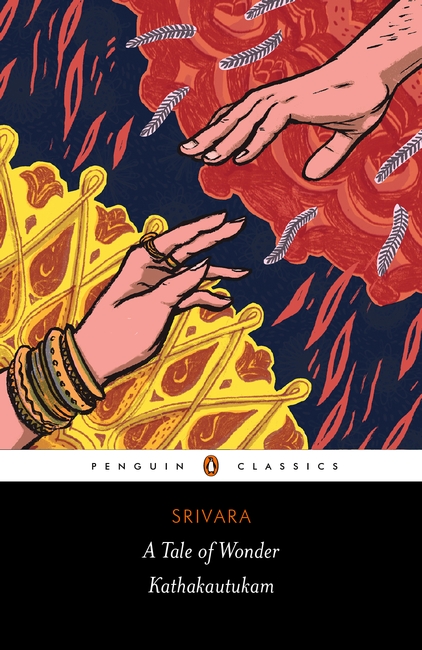
A biblical story travels across regions and time-ultimately reaching medieval India where it is transformed by Shaivite overtones. The result is an exquisite epic love poem of love which also attests to the rich diversity of India’s cultural past.
In an unnamed kingdom in the West, the beautiful princess Zuleikha has nightly visions of a handsome, young man. So captivated is she by this beautiful stranger that her waking hours are afflicted with heartache, much to the anxiety of her father. Zuleikha is resolved to be with Yusuf, and it is in her dreams that she learns of the obstacles that separate her from her beloved. What ensues is a captivating tale of longing and love-a parable of the journey of the soul in its search for the divine.
Magnificent in its simple elegance, A Tale of Wonder is a timeless story that challenges the insidious notion that India has always been dominated by one faith only and insular to other cultural and religious influences.

‘Magnificent . . . Ashk writes with a clear hand and is served well by Daisy Rockwell as she recreates a compelling narrative’-Dawn
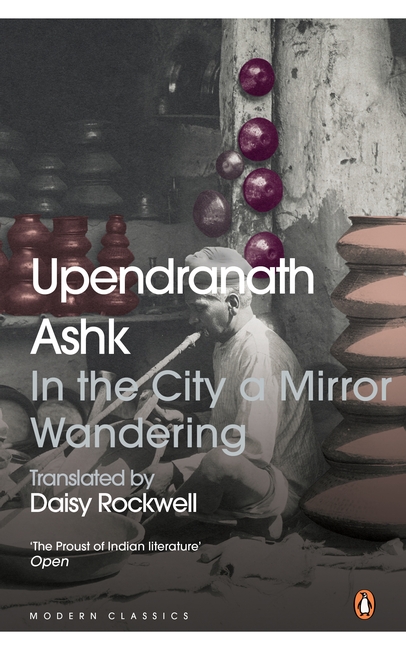
Unfolding over the course of a single day, Ashk’s sweeping sequel to Falling Walls explores the inner struggles of Chetan, an aspiring young writer, as he roams the labyrinthine streets of 1930s’ Jalandhar, haunted by his thwarted ambitions but intent on fulfilling his dreams.
Married to a woman he does not love while pining for another man’s wife, Chetan must also face the prospect of taking up a dead-end job in the wake of his recent failures in Lahore and Shimla. And as he trudges around Jalandhar, constantly running into people he’d rather avoid, he finds himself confronting the tangled memories, frailties and fears that assail him.
Intensely poignant and vividly evocative, In the City a Mirror Wandering is an exploration of not only a dynamic, bustling city but also the rich tapestry of human emotion that consumes us all.

A portrait of a Muslim family?-?from the heady days in Uganda to hard times in a new country, and the tragic accident that forces them to confront the ghosts of the past.
It’s 1998. And Mansoor Visram has lived in Canada for 25 years, ever since dictator Idi Amin expelled South Asians from Uganda. As a refugee with a wife and child, Mansoor has tried his best to recreate the life they once had, but starting over in Canada has been much harder than he expected. He’s worked as a used-car salesman, as a gas-station attendant, and now he runs a small dry cleaner in suburban Calgary. But he’s hatching plans for a father-and-son empire that will bring back the wealth and status the Visrams enjoyed in Uganda. The problem is, his son Ashif does not share his dreams, and he’s moved across the country to get away from his father. He’s a rising star at a multinational corporation in Toronto, on the cusp of a life-changing promotion, but he can’t seem to forget his girlfriend from long ago. Mansoor’s wife, Layla, has spent the past decade running her own home-cooking business and trying to hold her family together. But Ashif rarely comes home to visit, and Mansoor’s pride has almost ruined their marriage. As the fissures that began generations ago-and continents away-reappear, Mansoor, Ashif, and Layla drift further and further apart.
On the Night of Power, a night during Ramadan when fates are decided for the next year, a terrible accident occurs. Will the Visrams survive this latest tragedy?
Night of Power is a heart-wrenching story of a family in crisis. Gripping and unforgettable, Anar Ali’s debut novel vividly illuminates the injustices of displacement and the nuances of identity-of losing a home and coming home again.

Set in London, The Sandglass tells the story of two feuding families whose lives are interlinked by the changing fortunes of postcolonial Sri Lanka. After his mother’s death, Prins Ducal is driven to re-examine his family’s history. In doing so, he discovers questionable circumstances surrounding another death in his family—his father’s—and sets about unravelling the secrets shrouding it. In this beautifully constructed novel, Romesh Gunesekera expertly weaves together the fabric of 1990s London and post-war Sri Lanka, moving seamlessly between past and present.
This vivid and haunting short-story collection creates a masterful portrait of contemporary Sri Lanka. A married couple, living in London, find their marriage strained by the fighting in their far-off homeland. An ordinary shopkeeper is burnt alive by terrorists, leaving his neighbour’s life in turmoil. Between exile and loss, Gunesekera’s characters struggle for the elusive and divided place that they call home.
At the age of eleven, Triton goes to work as a houseboy to Mister Salgado, a marine biologist obsessed with the island’s disappearing reef. It was the biggest house he had ever seen. People from all over the world came here-to sell their wares, to talk, to live; for this was where life took place. Even the sun would rise from the garage and sleep behind the del tree at night. But beyond Mister Salgado’s house and their Sri Lankan village, there is a world falling apart, and it is in this world that Triton must become a man. An absolute classic, Reef is a luminous coming-of-age novel.
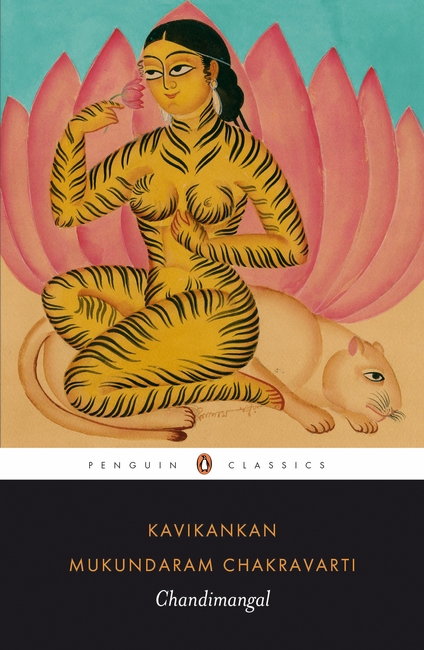
The Chandimangal of Kavikankan Mukundaram Chakravarti is an exemplary work of epic scale that recounts the story of the Goddess Chandi’s constant battle to establish her cult among humans. Through the three books of the kavya-The Book of the Gods, The Book of the Hunter and The Book of the Merchant-we are introduced to Chandi in all her manifestations, from the benevolent to the wrathful, from Abhaya to Chamunda.
Mukundaram’s captivating tales and vivid imagery bring together the enchanting world of the gods with the more challenging world of the mortals while critiquing sixteenth-century Bengali society. In his exquisite rendering of the Chandimangal, Edward Yazijian manages to capture not only the performative and humorous but also the reverent aspects of the text.

The day Mayadevi turned sixty-eight, seventy or seventy-five years old (her date of birth was an ever-changing fact linked to her moods), she decided to go to London.’
Thus begins Bulbul Sharma’s delightful collection of stories about her aunts, young and old, tetchy and unpredictable, brave and exasperating. One aunt thinks nothing of leaving her village to walk up high mountains in search of peace and shelter, another ends up with a husband who cannnot cope with the daily humiliation of having to look up a his tall wife, and a third enters service in a palace that every day sinks a little deeper into the pond beneath its foundation.
Illuminated by a vast compassion for the travails of women struggling to cope with changing lifestyles and traditions, My Sainted Aunts is as much an insight into the lif of a lost generation as it is a rollicking read.