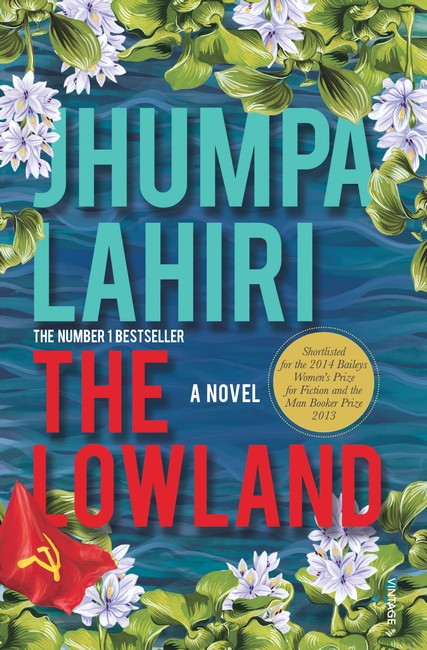
Two brothers bound by tragedy. A fiercely brilliant woman haunted by her past. A country torn by revolution. A love that lasts long past death. This extraordinary, emotionally riveting new novel, set in India and America, expands the scope and range of one of our most beloved storytellers: the Pulitzer Prize-winning, #1 New York Times best-selling author of Interpreter of Maladies and Unaccustomed Earth.
Born just fifteen months apart, Subhash and Udayan Mitra are inseparable brothers, one often mistaken for the other in the Calcutta neighborhood where they grow up. But they are also opposites, with gravely different futures ahead. It is the 1960s, and Udayan-charismatic and impulsive-finds himself drawn to the Naxalite movement: he will give everything, risk all, for what he believes. Subhash, the dutiful son, does not share his brother’s political passion; he leaves home to pursue a life of scientific research in a quiet, coastal corner of America.
But when Subhash learns what happened to his brother in the lowland outside their family’s home, he comes back to India, hoping to pick up the pieces of a shattered family, and to heal the wounds Udayan left behind-including those seared in the heart of his brother’s wife.
Suspenseful, sweeping, piercingly intimate, The Lowland is a masterly novel of fate and will, exile and return. Shifting among the points of view of a wide range of richly drawn characters, it is at once a page-turner and a work of great beauty and complex emotion; an engrossing family saga with very high stakes; and a story steeped in history that seamlessly spans generations and geographies. A tour de force and an instant classic, this is Jhumpa Lahiri at the height of her considerable powers.

This is translated from English book Unaccustomed Earth written by Jhumpa Lahiri.
The stories of Unaccustomed Earth focus on second-generation
immigrants making and remaking lives, oves and identities in England and America. We follow brothers and sisters, mothers and fathers, friends and lovers, in stories that take us from Boston and London to Bombay and Calcutta.
Blending the individual and the generational, the exotic and the strikingly mundane, these haunting, exquisitely detailed and emotionally complex stories are intensely compelling elegies of life, death, love and fate. This is a dazzling work from a masterful writer.

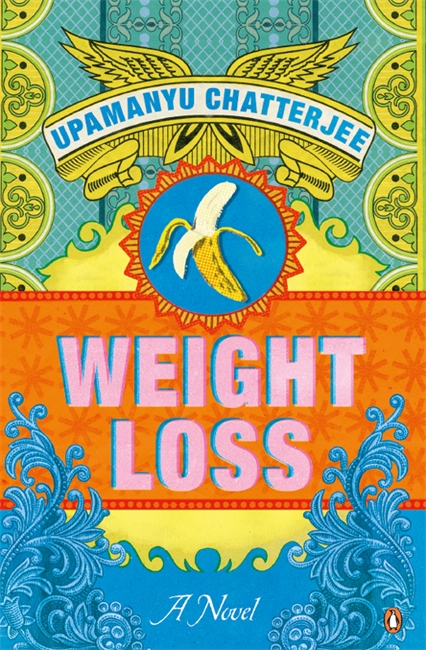
A fascinating portrayal of life in an Indian middle-class family by the best-selling author of English, August Upamanyu Chatterjee’s second novel brilliantly recreates life in an average Indian family at the end of the twentieth century. Jamun, the central character, is a young man, unmarried, adrift. He stays away from his family, which comprises his parents, Urmila and Shyamanand, his elder brother, Burfi, his sister-in-law, Joyce, his two nephews and the children’s ayah. Jamun returns to the family when his mother is hospitalized. Once there, he decides to stay on until one of his ailing parent dies. He barely admits to himself that there is another, probably stronger, reason for his extended stay in the family home- an old friend Kasturi, now married and pregnant, who has returned to the city (that she associates with Jamun) . . . Flitting back and forth in time and space, and writing in a language of unsurpassed richness and power, Upamanyu Chatterjee presents a funny, bitterly accurate and vivid portrait of the awesome burden of family ties.

In this sequel to Upamanyu Chatterjee’s debut novel, English, August, Agastya Sen- older, funnier, more beleaguered, almost endearing- and some of his friends are back. Comic and Kafkaesque, The Mammaries of the Welfare State is a masterwork of satire by a major writer at the height of his powers.

Innocent and unremarkable, but for his near crippling obsessions with sex and running, Bhola goes through life falling for all the wrong people. At School, he lusts indiscriminately after his teachers, both male and female, and is equally attracted to eunuchs. While in college, he has vaguely demeaning affairs with his landlady, and a vegetable vendor-cum-nurse and her husband. Later, he marries (a woman with a voice like liquid gold), fathers a daughter and suspects he is close to balance and beauty. Then his past catches up with him.
Upamanyu Chatterjee’s genius for black humour and the absurd has never been more compelling than in this unforgettable portrait of a lost life.

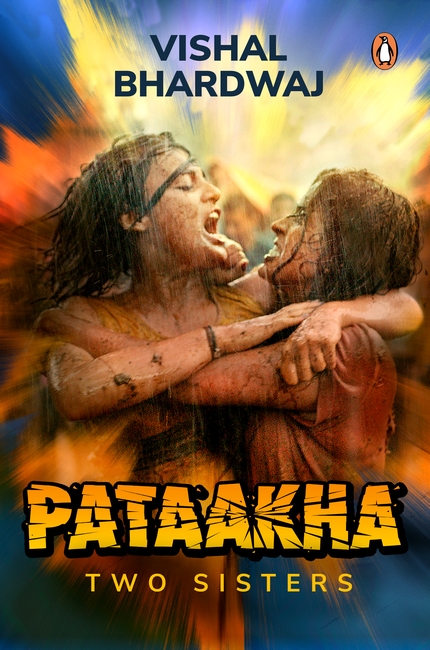
They cannot live with each other, they cannot live without each other. As children, they squabbled all day long. When they were old enough, they married two brothers, and took with them their feuds to their in-laws. Boisterous and fiery pataakhas, sisters Badki and Chhutki are the bane of each other’s existence. Their days start and end with petty squabbles and violent clashes, marked by unapologetic use of free-flowing abuses. But one day things go too far and a decision made upturns the trajectory of both their lives.
Based on Charan Singh Pathik’s eponymous short story, Vishal Bhardwaj’s adaptation is a hilarious tour de force that obliquely and mischievously takes into its ambit notions of patriarchy and diplomacy between nations. This translation, which includes the novella and the screenplay that the film-maker developed from the short story, not only brings to the reader a rustic, elemental tale rooted in the soil, but also provides a unique glimpse into the art of adapting a literary work into film.

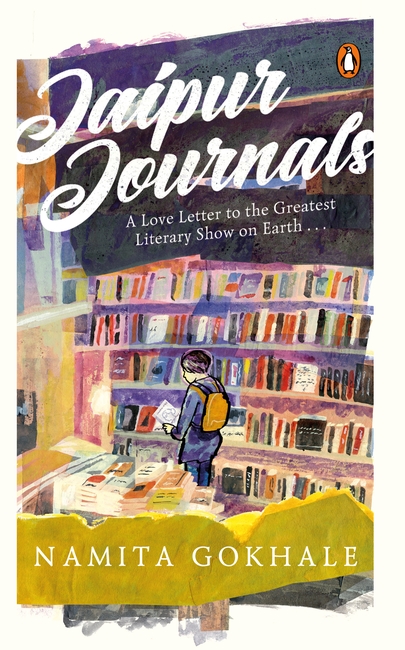
From a septuagenarian who has completed her semi-fictional novel but does not want to publish it, to an author who receives a threat in the form of an anonymous letter, from a historian who reunites with a past lover, to a burglar who is passionate about poetry, from a young woman who has no idea what this world has in store for her, to an American woman looking for the India of her hippie youth, this metafictional, wryly funny, pacey novel is an ode to literature. Told from multiple perspectives, set against the backdrop of the vibrant multilingual Jaipur Literature Festival, diverse stories of lost love and regret, self-doubt, and new beginnings come together in a narrative that is as varied as India itself.
Partly a love letter to the greatest literary show on earth, partly a satire about the glittery set that throngs this literary venue year on year, and partly an ode to the millions of aspiring writers who wander the earth with unsubmitted manuscripts in their bags, Jaipur Journals is a light-footed romp that showcases in full form Gokhale’s unsparing eye for the pretensions and the pathos of that loneliest tribe of them all: the writers.

In the new era, where every person’s actions have the potential to have a global impact, we must redefine what it means to be a true professional. By common definition, a professional is someone who possesses the skills and knowledge necessary to do a job-whether it’s a top degree from a prestigious university or simply years of on-the-job training. For centuries, we have relied on this definition to help us determine who is capable and who is not, often assuming that the person with the most professional characteristics is the best for the job. But every day we see examples of so-called professionals who do more harm than good: a few irresponsible bankers whose get-rich-quick schemes led to a global financial meltdown; a once-respected hedge fund manager charged with running the world’s largest Ponzi scheme and robbing his clients of billions; a team of executives siphoning funds from their employees’ pension plans . . . the list goes on. All of these people had the qualities necessary to do their jobs well, but instead they chose to abuse and corrupt their professions for their own personal gain. So how can we weed out the best from the worst when the accepted standards are no longer enough, and when even the most powerful and respected among us cannot be trusted? According to businessman and bestselling author Subroto Bagchi, the first step is to redefine what it means to be a professional. Today, it takes more than just aptitude-it takes a commitment to do what’s right, not only for your business, but for society as a whole. The Professional outlines the explicit and implicit code of conduct. This is a must read for anyone looking for a little clarity in an increasingly blurry world.
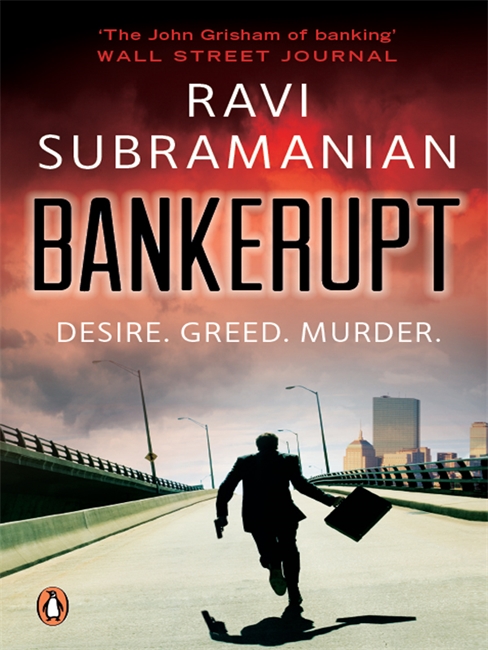
A university is an institution for higher education and research. It can also be a place where academic brilliance leads to overinflated egos, bitter politics and finally, murder. Cirisha Narayanan, a professor who has risen meteorically, stumbles upon a cryptic message. Aditya Raisinghania, her banker husband, sets up a highly innovative financial hoax. Her profiteering father harvests Australia’s largest bird—the emu—in India. The US elections are on and the debate on gun control has reached a fever pitch.
Set in Mumbai, Coimbatore and Boston, Ravi Subramanian creates an impeccably researched world where everyone has a motive to kill. Nothing is as it seems in this cunningly vicious thriller where the plot turns on a dime.

All relationships should come with a precautionary warning: HANDLE WITH CARE
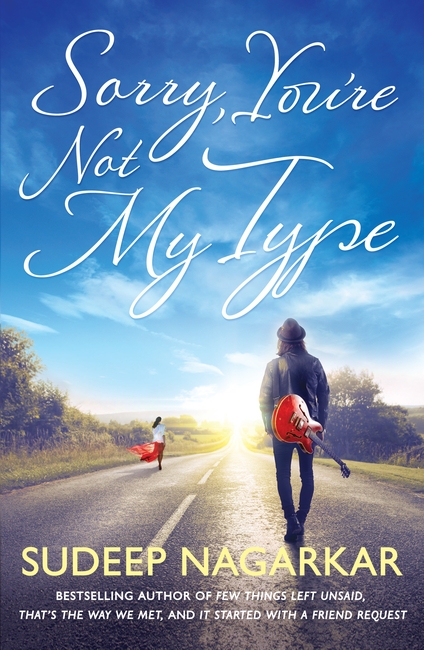
The final audition for Rajhans College’s prestigious music band brings together three contrasting personalities. Vikrant, a perfectionist, who believes there is only one perfect someone for you. Anamika, a free spirit, who stands up for what she believes is right. And Yuvi, a die-hard music lover, who can strum the guitar all night long and still wake up the next morning to drop off his girlfriend. The three become close friends and start hanging out regularly. So how does Aditya, a stranger, become a part of their lives? And what happens next?
Sorry, You’re Not My Type is a true story that will redefine friendship, affection, and infatuation.