




Stories abound in Assam’s fields, ponds, rivers, forests, hills and cities. Most of its people wear each other’s clothes, eat each other’s food and speak each other’s languages. Diversity and amalgamation are the primarily identifiable elements of people from Assam. Yet, everyday patriarchy and politics of boundaries have resulted in so much confusion and conflict. Thankfully, we are witnessing emerging voices of people who experience life differently because of their own identities and locations and propose an inclusive space for us all. The women and transpeople who have contributed to Riverside Stories come from this diversity and bring their stories of multiple experiences from Assam to the world. This collection of fiction, non-fiction, poetry and visual stories, puts on record the experiences of the self, the very personal, within homes, in the environment, with politics, and with disappointments, desires, hopes and memories for a future. In putting together this anthology, it is our hope that we have complicated—more than it already is—the notion of whose and which stories can be told.
Catagory: Fiction
Fiction main category
Stress to Zest
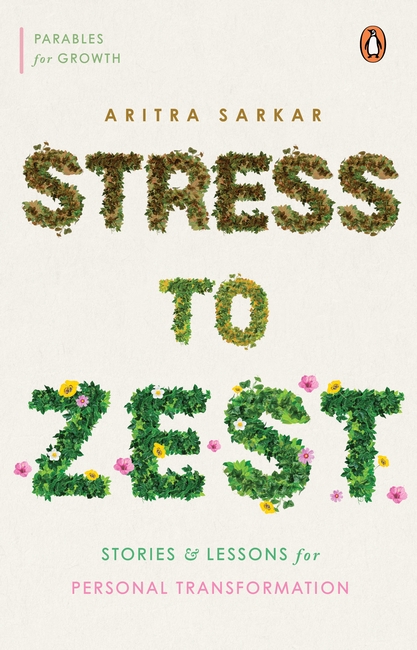
Stress to Zest takes you on a journey to help you understand how seven common stress factors impact the human mind:
- Financial Stress: The weight of bills, debts and financial uncertainty.
- Relationship Stress: The tides of love, conflict and connection.
- Job Stress: The demands of work, deadlines and ambition.
- Health Stress: The fragility of our bodies and minds.
- Competition Pressure: The race against others and ourselves.
- Social Pressure: The expectations that shape our choices.
- Parental Pressure: The balancing act of nurturing and self-care.
In this collection of stories set in diverse contexts across the globe, you’ll meet characters from all walks of life grappling with these stressors. Their journeys are not mere survival tales; they’re blueprints for transformation. Witness how they navigate the storm, find resilience and discover a newfound zest for life.
The Fertile Earth
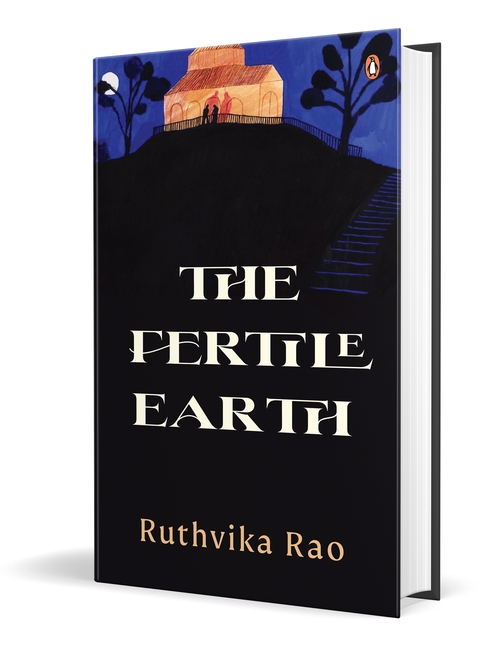
Vijaya and Sree are the daughters of the Deshmukhs of Irumi. Hailing from a lineage of ancestral aristocrats, their family’s social status and power over villagers on their land is absolute. Krishna and Ranga, brothers, are the sons of a widowed servant in the Deshmukh household.
When Vijaya and Krishna meet, they forge an intense bond that is beautiful and dangerous. But after an innocent attempt to hunt down a man-eating tiger in the jungle goes wrong, what happens between the two of them is disastrous, the consequences reverberating through their lives into young adulthood.
Years later, when violent uprisings rip across the countryside and the Marxist, ultra-left Naxalite movement arrives in Irumi, Vijaya and Krishna are forced to navigate the insurmountable differences of land ownership and class warfare in a country that is burning from the inside out—while being irresistibly drawn back to each other, their childhood bond now full of possibilities neither of them are willing to admit.
The Fertile Earth is a vast, ambitious debut that is equal parts historical, political, and human, with the enduring ties of love and family loyalty at its heart. Who can be loved? What are the costs of transgressions? How can justice be measured, and who will be alive to bear witness?
Phantoms of August
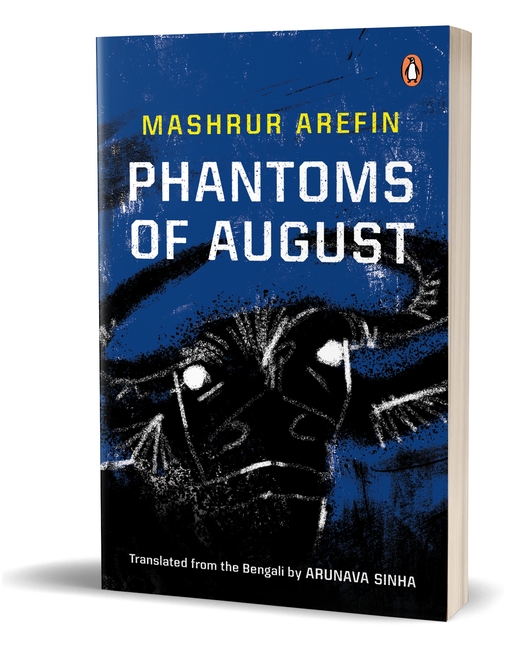
An unnamed narrator takes it upon himself to discover the truth behind the assassination of Sheikh Mujibur Rehman—who led Bangladesh’s independence movement from Pakistan, which was achieved in 1971—and his entire family. With literary greats for company, the narrator negotiates his complicated personal life and his philosophical and literary musings even as he locates a gun to shoot the assassins who are still alive. Hallucinatory, flitting between reality and dreams, and traversing the length and breadth of Dhaka, this is a fever dream of a novel—an individual’s quest while navigating the scarred and traumatized mind of a nation.
Our City That Year
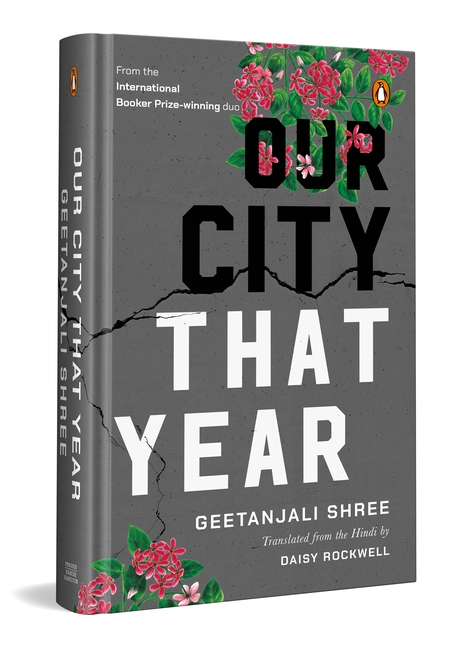
A city teeters on the edge of chaos. A society lies fractured along fault lines of faith and ideology. A playground becomes a battleground. A looming silence grips the public.
Against this backdrop, Shruti, a writer paralyzed by the weight of events, tries to find her words, while Sharad and Hanif, academics whose voices are drowned out by extremism, find themselves caught between clichés and government slogans. And there’s Daddu, Sharad’s father, a beacon of hope in the growing darkness. As they each grapple with thoughts of speaking the unspeakable, an unnamed narrator takes on the urgent task of bearing witness.
First published in Hindi in 1998, Our City That Year is a novel that defies easy categorization—it’s a time capsule, a warning siren and a desperate plea. Geetanjali Shree’s shimmering prose, in Daisy Rockwell’s nuanced and consummate translation, takes us into a fever dream of fragmented thoughts and half-finished sentences, mirroring the disjointed reality of a city under siege. Readers will find themselves haunted long after the final page, grappling with questions that echo far beyond India’s borders.
The Book of Discoveries
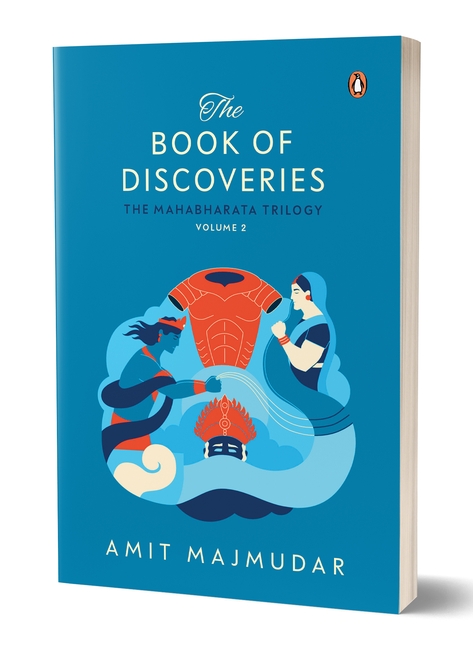
Mortal danger follows the Pandavas and Panchali into exile.
Back in Hastinapur, the bloody-minded Kauravas continue to scheme for total domination.
Both Arjuna and Duryodhana approach Krishna for help.
Is war between the cousins inevitable? Or will the elders manage to avert it?
The Book of Discoveries is the eagerly awaited second instalment of the Mahabharata trilogy, which began explosively with The Book of Vows. Imagined afresh and composed in a style that captures the power, charm and ambiguity of Vyasa’s Mahabharata, this book dramatizes the stunning prelude to war—one that is full of thrilling adventures, fateful encounters and life-altering revelations.
Grounding his telling in the original Sanskrit version, Majmudar has recreated the ancient epic for a contemporary audience. His finest work yet, this is one of the most accessible, magical and unputdownable retellings of the Mahabharata. The Book of Discoveries will be followed by The Book of Killings.
The Lost Symbol (Hindi)/The Lost Symbol/द लॉस्ट सिम्बॉल
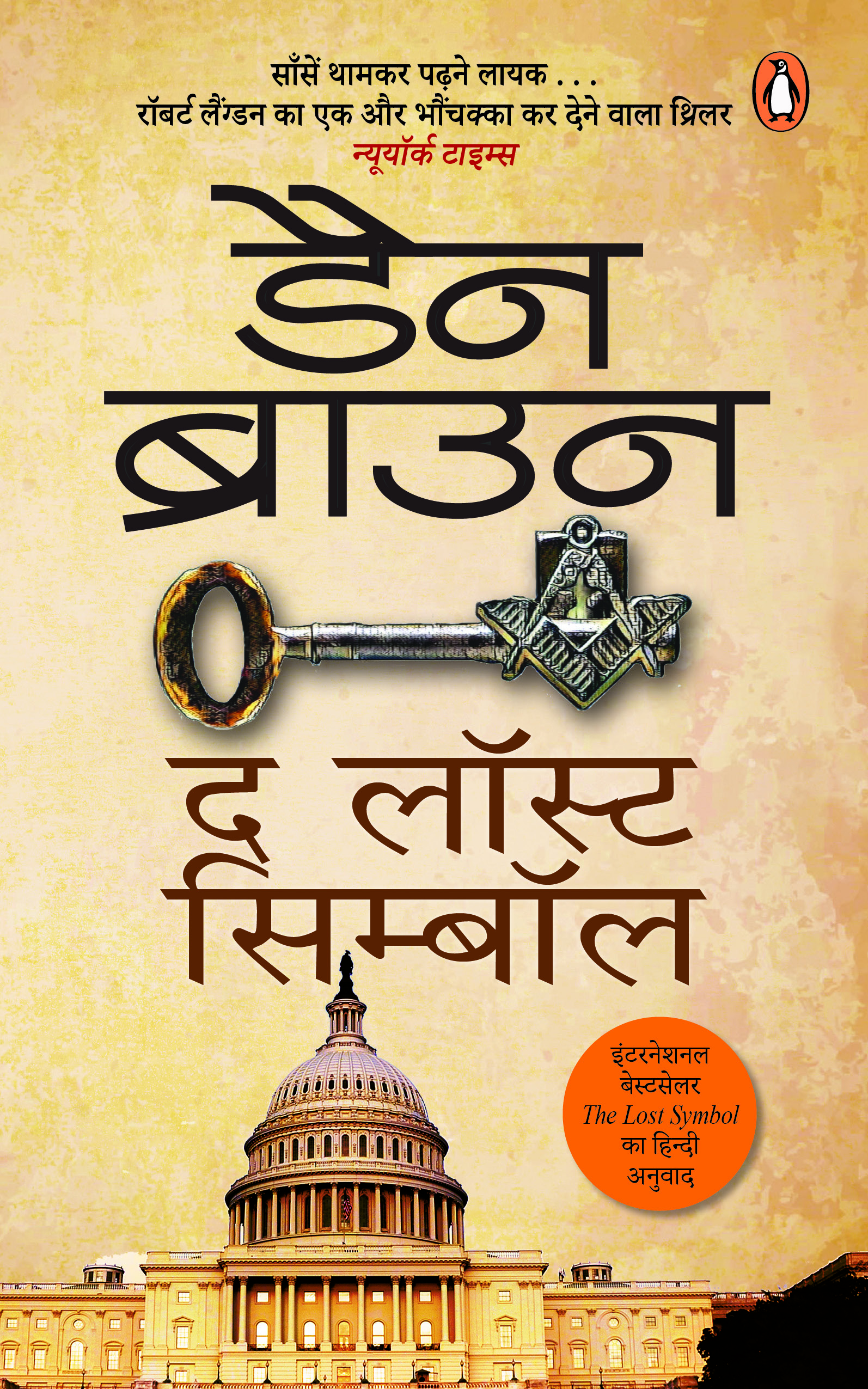
अमेरिका के कैपिटॉल बिल्डिंग में हॉर्वर्ड के सिम्बॉलॉजिस्ट रॉबर्ट लैंग्डन सायंकालीन लैक्चर देने जाते हैं तभी अजीबोगरीब घटना घटती है। वहाँ एक पाँच चिह्नों वाली वस्तु मिलती है और लैंग्डन पाते हैं कि वह कोई प्राचीन आमंत्रण है जिसे पाकर अतीत के ज्ञान को हासिल किया जा सकता है। लेकिन इसी बीच जब उनके गुरु का अपहरण हो जाता है, तो उन्हें पता चलता है कि उन्हें छुड़ाने का एक मात्र रास्ता उस आमंत्रण को स्वीकार करना ही है।
क्या लैंग्डन अपने गुरु को छुड़ा पाते हैं?
क्या वह प्राचीन ज्ञान को हासिल कर पाते हैं?
यहीं द लॉस्ट सिम्बॉल की कहानी है।
The Continents Between

Looking over their shoulder at the home they left behind, the lives of immigrants Sudeep and Kamalika are suffused with a permanent sense of nostalgia. This is America in the 1980s, and it throws up all the challenges and insecurities they must fight against as they raise their rather American children in a conventional Bengali household.
Reminiscent of Jhumpa Lahiri’s Namesake, The Continents Between is a rich and thoughtful translation of Bani Basu’s epic novel, Janmabhoomi, Matribhoomi. Debali Mookerjee Leonard’s translation straddles difficult questions of identity, immigration, betrayal, love and politics with sympathy and skill and leaves you wanting more.
No Longer Human: A New Translation
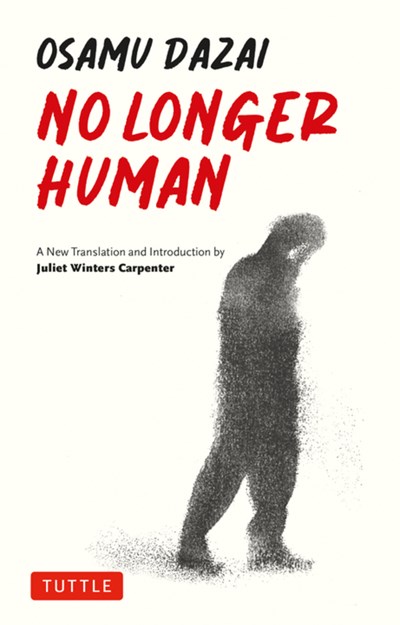
A completely new translation of Osamu Dazai’s great masterpiece by award-winning translator Juliet Winters Carpenter.
A journey to hell with Osamu Dazai, Japan’s ultimate bad boy novelist” —Damian Flanagan, The Japan Times
No Longer Human is the story of Yozo Oba, who, from early childhood, finds it impossible to form meaningful relationships with family or friends. As a child he copes by acting the fool—mocking himself while entertaining others. As an adult he turns to alcohol, sex and drugs, which lead to his eventual self-destruction.
Originally written in 1948 and based closely on Dazai’s own life, the timeless and universal themes of social alienation, failure and one man’s inner torture at his inability to feel like a normal human still resonate with young people everywhere, making this an enduring international classic.
This contemporary translation will be welcomed by all fans of modern Japanese literature as well as by readers familiar with Osamu Dazai. After Soseki Natsume, Osamu Dazai is Japan’s most popular writer. Dazai is enjoying a surge in interest among young people today thanks to the success of the manga, anime and film series Bungo Stray Dogs, whose protagonist, a detective named Osamu Dazai, is based on the real-life author.
“Dazai’s brand of egoistic pessimism dovetails organically with the emo chic of this cultural moment and with the inner lives of teenagers of all eras.” —Andrew Martin, The New York Times
A Woman on a Suitcase

Newly married Seema Hyderi is tired of being thrown out of her husband’s house. Now, sitting on her suitcase after a third eviction, she has a choice to make: obey her husband and submit, or listen to her instinct and leave forever.
The consequences of her decision will take Seema on a journey: from a world of unloving mothers and manipulative matchmakers to new avenues filled with anxiety, exploration and pleasure. In delightful prose filled with wicked humour and immense pathos, Haider takes Seema and her suitcase on a rollercoaster ride from Karachi to London
and back again.