___________________________________
‘Shoot all the bluejays you want, if you can hit ’em, but remember it’s a sin to kill a mockingbird.’
A lawyer’s advice to his children as he defends the real mockingbird of Harper Lee’s classic novel – a black man falsely charged with the rape of a white girl. Through the young eyes of Scout and Jem Finch, Harper Lee explores with exuberant humour the irrationality of adult attitudes to race and class in the Deep South of the 1930s. The conscience of a town steeped in prejudice, violence and hypocrisy is pricked by the stamina of one man’s struggle for justice. But the weight of history will only tolerate so much.
To Kill a Mockingbird is a coming-of-age story, an anti-racist novel, a historical drama of the Great Depression and a sublime example of the Southern writing tradition.

Kafka Tamura runs away from home at fifteen, under the shadow of his father’s dark prophesy.
The aging Nakata, tracker of lost cats, who never recovered from a bizarre childhood affliction, finds his pleasantly simplified life suddenly turned upside down.
As their parallel odysseys unravel, cats converse with people; fish tumble from the sky; a ghost-like pimp deploys a Hegel-spouting girl of the night; a forest harbours soldiers apparently un-aged since World War II. There is a savage killing, but the identity of both victim and killer is a riddle – one of many which combine to create an elegant and dreamlike masterpiece.
*Murakami’s new book Novelist as a Vocation is available now*
‘Wonderful… Magical and outlandish’ Daily Mail
‘Hypnotic, spellbinding’ The Times
‘Cool, fluent and addictive’ Daily Telegraph

‘A masterly novel’ New York Times
‘Such is the exquisite, gossamer construction of Murakami’s writing that everything he chooses to describe trembles with symbolic possibility’ Guardian
Read the haunting love story that turned Murakami into a literary superstar.
When he hears her favourite Beatles song, Toru Watanabe recalls his first love Naoko, the girlfriend of his best friend Kizuki. Immediately he is transported back almost twenty years to his student days in Tokyo, adrift in a world of uneasy friendships, casual sex, passion, loss and desire – to a time when an impetuous young woman called Midori marches into his life and he has to choose between the future and the past.
*Murakami’s new book Novelist as a Vocation is available now*
‘Evocative, entertaining, sexy and funny; but then Murakami is one of the best writers around’ Time Out
‘Poignant, romantic and hopeless, it beautifully encapsulates the heartbreak and loss of faith’ Sunday Times
‘This book is undeniably hip, full of student uprisings, free love, booze and 1960s pop, it’s also genuinely emotionally engaging, and describes the highs of adolescence as well as the lows’ Independent on Sunday

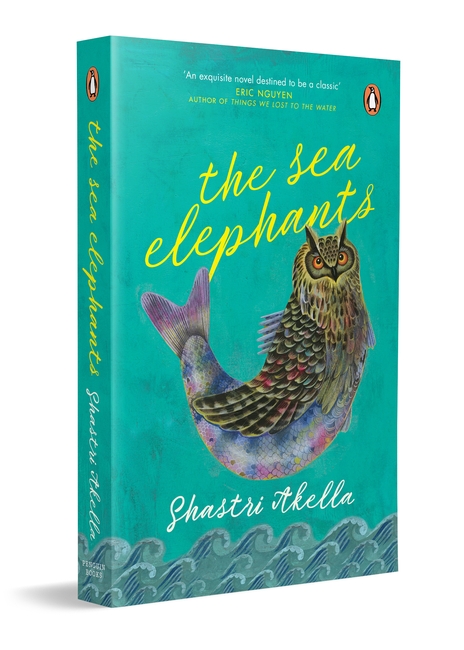
Shagun knows he will never be the kind of son his father demands. After the agonizing deaths of his beloved twin sisters, he flees his own guilt, his mother’s grief, and his father’s violent disapproval by enrolling at an all-boys boarding school. He forms tumultuous and eye-opening relationships there, but doesn’t find true belonging till he encounters a traveling theater troupe performing the myths of his childhood.
Welcomed by other storytellers, Shagun thrives-easily embodying mortals and gods, men and women-and embraces a life on the move, far from his father’s clutches. When Shagun meets Marc, a charming photographer, he seems to have found the love he always longed for. But not even Marc can save him from his lingering shame, nor his father’s ever-present threat to send him to a conversion center. As Shagun’s past begins to engulf him once again, he must decide if he is strong enough to face what he fears most, and to boldly claim his own happiness.
Set in 1990s India, The Sea Elephants is an utterly immersive and spellbinding novel, both dark and beautiful, harrowing and triumphant. An ode to the redemptive joys of storytelling, Shastri Akella’s soulful debut is a celebration of hard-won love-of others and for ourselves.

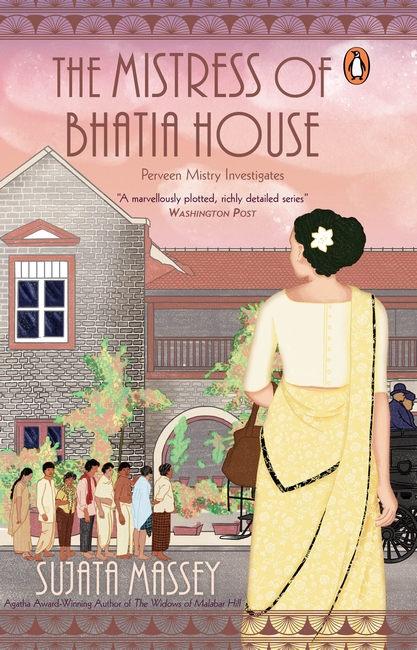
India, 1922: Perveen Mistry is the only female lawyer in Bombay, a city where child mortality is high, birth control is unavailable and very few women have ever seen a doctor.
Perveen is attending a lavish fundraiser for a new women’s hospital specializing in maternal health issues when she witnesses an accident. The grandson of an influential Gujarati businessman catches fire–but a servant, his young ayah, Sunanda, rushes to save him, selflessly putting herself in harm’s way. Later, Perveen learns that Sunanda, who’s still ailing from her burns, has been arrested on trumped-up charges made by a man who doesn’t seem to exist.
Perveen cannot stand by while Sunanda languishes in jail with no hope of justice. She takes Sunanda as a client, even inviting her to live at the Mistry home in Bombay’s Dadar Parsi colony. But the joint family household is already full of tension. Perveen’s father worries about their law firm taking so much personal responsibility for a client, and her brother and sister-in-law are struggling to cope with their new baby. Perveen herself is going through personal turmoil as she navigates a taboo relationship with a handsome former civil service officer.
When the hospital’s chief donor dies suddenly, Miriam Penkar, a Jewish-Indian obstetrician, and Sunanda become suspects. Perveen’s original case spirals into a complex investigation taking her into the Gujarati strongholds of Kalbadevi and Ghatkopar, and up the coast to Juhu Beach, where a decadent nawab lives with his Australian trophy wife. Then a second fire erupts, and Perveen realizes how much is at stake. Has someone powerful framed Sunanda to cover up another crime? Will Perveen be able to prove Sunanda’s innocence without endangering her own family?

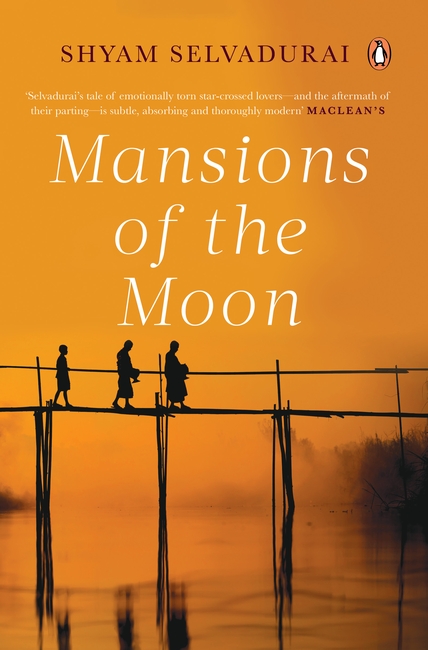
In this sweeping tale, at once epic and intimate, Shyam Selvadurai introduces us to Siddhartha Gautama-who went on to become ‘the enlightened one’-an unusually bright and politically astute young man settling into his upper-caste life after marrying Yasodhara, a woman of great intelligence and spirit. Mansions of the Moon traces the couple’s early love and life together, and then the anguished turmoil that descends upon them both as Siddhartha’s spiritual calling takes over and the marriage partnership slowly, inexorably crumbles.
Drawing on ancient records and historical sources, and weaving it with fiction and mythology, Shyam Selvadurai creates a vivid portrait of Yasodhara, a remarkable woman on a remarkable journey. Mansions of the Moon is an evocative, thought-provoking novel and a must-read for anyone interested in spirituality, mythology and the power of the human spirit.

Winner of the JCB Prize for Literature 2023
Fire Bird is a masterfully crafted tale of one man’s search for the elusive concept of permanence. Muthu has his world turned upside down when his father divides the family land, leaving him with practically nothing and causing irreparable damage to his family’s bonds. Through the unscrupulous actions of his once-revered eldest brother, Muthu is forced to leave his once-perfect world behind and seek out a new life for himself, his wife and his children.
In this transcendental novel, Perumal Murugan draws from his own life experiences of displacement and movement, and explores the fragility of our fundamental attraction to permanence and our ultimately futile efforts to attain it. Translated from the nearly untranslatable Aalandapatchi, which alludes to a mystical bird in Tamil, the titular fire bird perfectly encapsulates the illusory and migratory nature of this pursuit.
Fire Bird is a thought-provoking and beautifully written exploration of the human desire for stability in an ever-changing world.

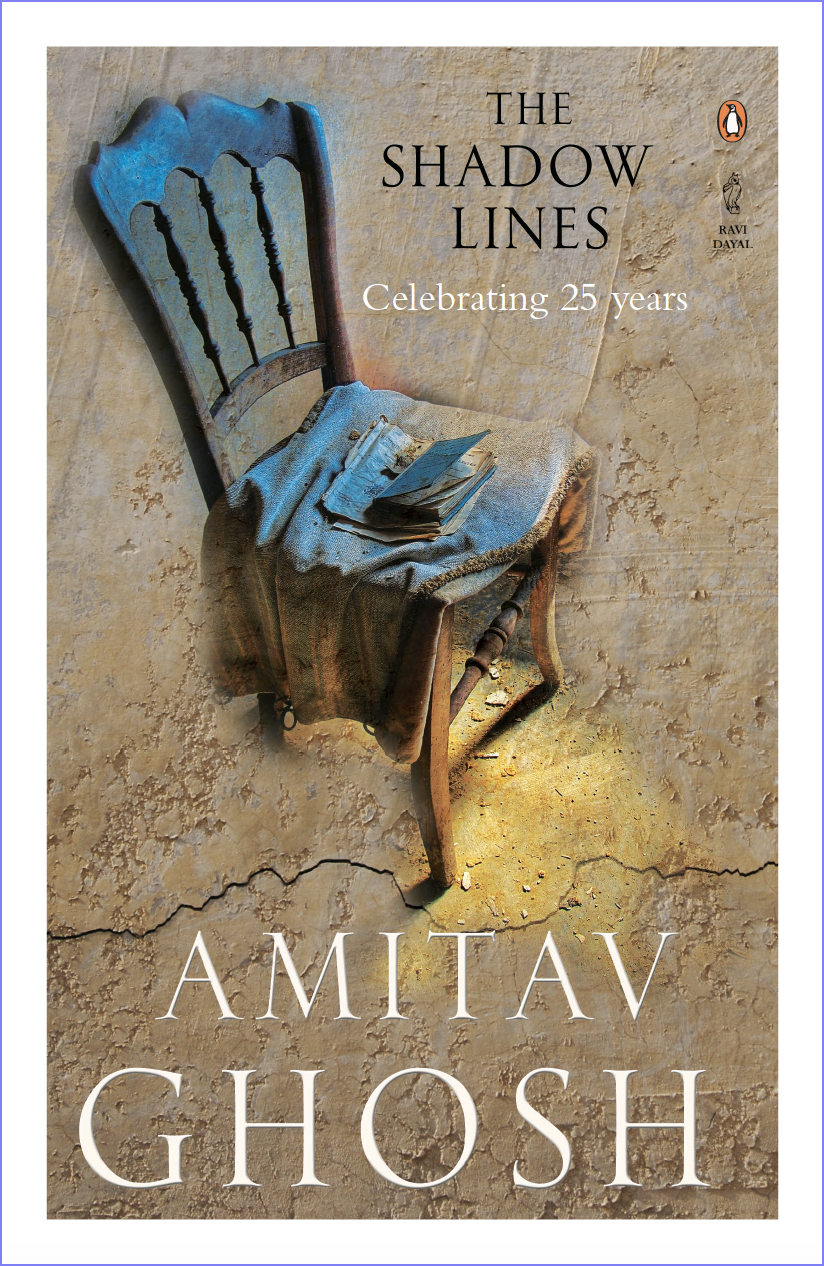
As a young boy, Amitav Ghosh’s narrator travels across time through the tales of those around him, traversing the unreliable planes of memory, unmindful of physical, political and chronological borders. But as he grows older, he is haunted by a seemingly random act of violence. Bits and pieces of stories, both half-remembered and imagined, come together in his mind until he arrives at an intricate, interconnected picture of the world where borders and boundaries mean nothing, mere shadow lines that we draw dividing people and nations. Out of a complex web of memories, relationships and images, Amitav Ghosh builds an intensely vivid, funny and moving story. Exposing the idea of the nation state as an illusion, an arbitrary dissection of people, Ghosh depicts the absurd manner in which your home can suddenly become your enemy. Winner of the Sahitya Akademi Award.
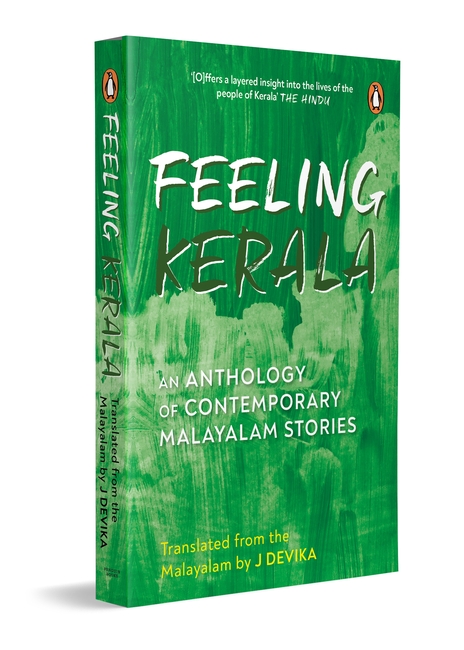
The living, pulsating and ever-changing entity that is Kerala is best represented by its astute, critical and deeply insightful writers of the Malayalam short story, and in Feeling Kerala, a selection of some of the best and sharpest narratives from the region is now translated and curated for English readers to love and cherish.
While staying true to its literary form, these stories provide a tour into the heart and soul of contemporary Kerala and aim at getting past the twentieth-century characterizations of the state, say, as defined by communist egalitarian spirit or matrilineal families. After all, Kerala is unique in more ways than one, thanks to the heightened experience of migration and transnationalism, among other things.
This collection also succinctly encapsulates the varied landscapes of Kerala: the highlands, the coastal areas and the growing urban centres. They move in and out of homes and take the readers into older spaces-convents and panchayats-and the new spaces of the capital-airports and tourist resorts-as well as the world of criminals.

After successfully fending off the Chalukya’s siege of Kanchi, the Pallava emperor Mahendra Varmar drives the enemy king, Pulikesi, to call for a truce. The statesman in Pallavar is keen to convert a foe into a friend, but a vengeful Pulikesi reneges on his commitment. While the Pallavas are successful in chasing the Chalukyas away, Pallava Nadu bears the brunt of Pulikesi’s wrath.
Fate wields its unpredictable hand further.
A rash decision by the sculptor Aayanar and his daughter Sivakami results in her being abducted by the Chalukyas. Sivakami takes a momentous vow, little realizing how far-reaching the consequences will be.
How will the Pallava crown prince Narasimha Varmar, who is in love with Sivakami, act? Will Mahendra Varmar shape his son’s future in a manner he had always envisaged? And what role will the Machiavellian bikshu play in Sivakami’s life as a captive?
The Bikshu’s Love, the action-packed third volume of Sivakami’s Vow, is unputdownable, and sets the stage for the startling climax of this magnum opus in the fourth and final book in the series.