



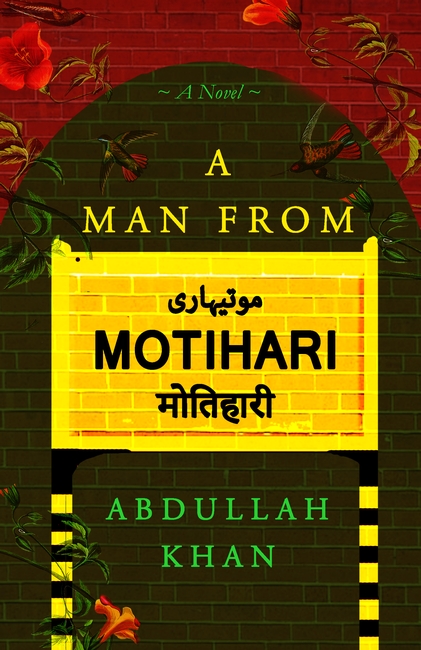
When dapper Aslam, an aspiring writer, who is recovering from a broken relationship, accidently meets Jessica, an activist and an actor in the adult entertainment industry from Los Angeles, they fall hopelessly in love with each other. The novel is about these two unlikely characters and their journeys in the backdrop of the rise of right-wing political forces in India. It takes you to the Indian hinterlands to bring to light George Orwell’s deep connection with Motihari, a small town in the northern part of Bihar from where Gandhi Ji experimented with Satyagraha for the first time.
Catagory: Fiction
Fiction main category
Fear and Lovely
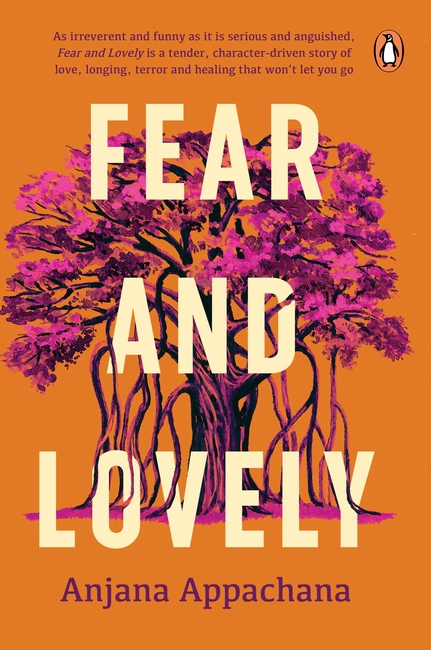
Mallika is a painfully shy young woman growing up in the heart of a close-knit, sometimes stifling New Delhi colony. Though she is surrounded by love, her life is complicated by secrets that she, her mother and her aunt work hard to keep.
After suffering a trauma aged nineteen, Mallika loses three days of her memory and slowly spirals into a deep depression. She must find a way out of this abyss, back to herself and those she cares about. But she must also hide her mental illness from her community.
In a narrative that unfolds elliptically from the perspectives of Mallika and the seven people closest to her, the astonishing story of these characters’ lives emerges. For Mallika’s family, childhood friends and the two men she loves are also hiding truths. As each gives voice to contending with their own struggles, secrets and silences shatter.
The Portrait of a Secret
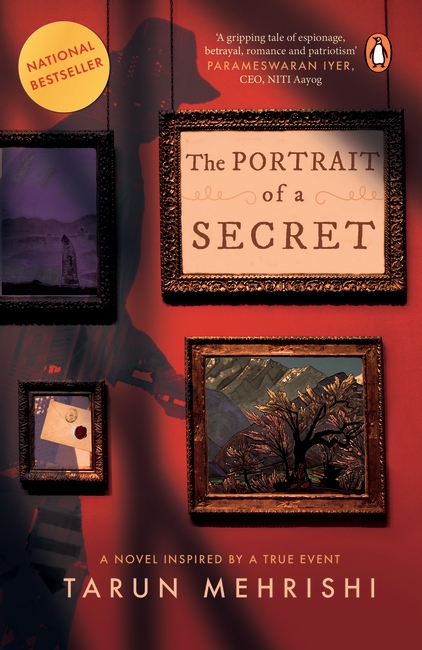
As India’s chief of intelligence, Amitabh has spent a lifetime battling India’s enemies, domestic and foreign. But in the winter of his career, he receives a chilling message from his top mole inside the ISI: a nuclear strike against India is imminent. Nothing is known—except that it’s coming.
At the same time, senior IAS officer Kamal investigates the theft of two priceless paintings from a government research facility. What appears to be an inside job soon reveals a terrifying connection to the looming terror strike.
Racing against time, Amitabh and Kamal must uncover a conspiracy that stretches from the blood-soaked borders of Partition to a forgotten chapter of Indian cinema and into the vaults of international art smugglers—where a long-forgotten betrayal holds the key to modern-day devastation.
From the corridors of New Delhi to the shadow games of Langley and Islamabad, Indian intelligence must outmanoeuvre both the ISI and the CIA in a battle for control over a secret that could shift the balance of global power.
In the end, only one man can decide whether the truth is revealed—or buried forever.
The Portrait of a Secret is a gripping geopolitical thriller that blends espionage, art and Partition-era history into a pulse-pounding narrative. Inspired by true events.
Navarasa
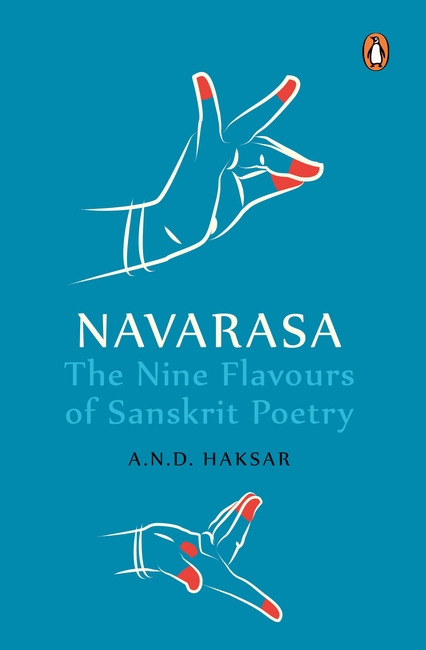
In Indian aesthetics, the ‘rasa’ is the juice or sap that pervades through our art, culture, and guide our primal human emotions. The Navarasas first mentioned in the ancient Hindu text the Natya Shastra, have defined the core of Indian aesthetics; our art, dance, theatre, and literature are based on these nine human emotions.
A first of its kind, this collection of verses from the original Sanskrit, moves away from a mere interpretation of the rasas to an actual translation from ancient texts such as the Subhashitavali by Vallabhadeva (15th century Kashmir), the Sharngdharapaddhati by Sharngadhara (14th century Rajasthan), and the Suktimuktavali by Jalhana (13th century Deccan).
Navarasa: The Nine Flavors of Sanskrit Poetry brings to us for the first time, 99 verse translations on the nine rasas of ancient Hindu history.
KaiKa’s Songs
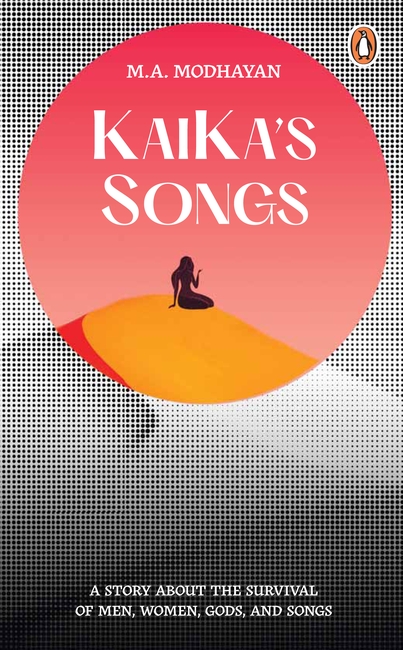
Several sand storms have passed since the death of all mothers and fathers of sand island, leaving behind the last five children on the island.
Two short young women, two tall young men, and one blind little girl.
They shared the island with sand, a wrathful mother.
Every day and night, Kaika and her tribe members sang to sand.
She wanted to keep her tribe alive.
She constantly looked for the right song that could keep Sand calm.
But Sand was still hungry and enraged.
One and a Half Wife
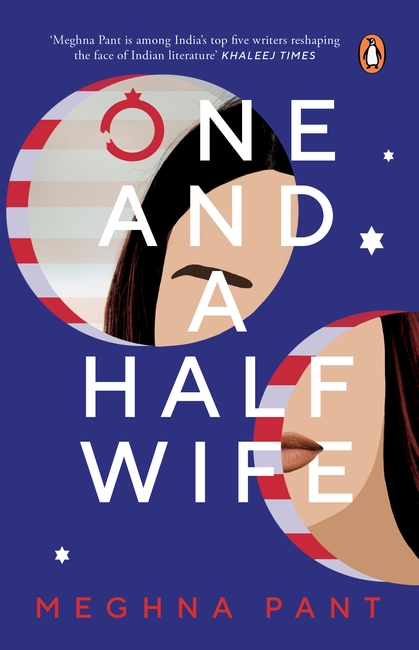
Amara Malhotra was fourteen years old when her parents immigrated to the United States of America. But unlike most Indian immigrants, she was not destined to achieve the American Dream. Much to the anxiety of her parents-the spirited Biji and the doting Baba-Amara leads an unremarkable life. That is, until she marries Harvard-educated millionaire, Prashant Roy. This fairy tale isn’t meant to last, though, and even as Amara’s marriage collapses, she finds herself returning to the land of her birth, to the small city of Shimla. Here, in a borough grappling with questions of modernity, Amara is caught in a tug-of-war between old beliefs and new ones, between parents who favour obedience and new friends who encourage independent thought.
With powerful insights, One and a Half Wife traces the coming-of-age of multiple characters, while redefining family, relationships and love in contemporary India.
Anthill (Puttu, winner of Kerala Sahitya Akademi Award)

The remote village of Perumpadi, at the border between Kerala and Karnataka, is a unique settlement. Bounded by dense Kodagu forests on the south and west, and raging rivers on the north and east, its very isolation was what drew the first settlers to this unharnessed land.
The first to make his way across this rough terrain was Kunjuvarkey, along with a young woman bearing his child. Kunjuvarkey was fleeing the opprobrium of getting his own daughter pregnant. Those who followed had similar shameful secrets. In a land of sinners, where no one pried into the other’s past, they were able to live and build a community without being tied down by society’s interdictions.
Fifty years later, as the community moves into modernity, they start showing signs of reforming from their beginnings-of a hillbilly and promiscuous existence. With no panchayats to resolve local disputes, following in his father’s footsteps, Jeremias Paul of Reformation House, known by the moniker President, becomes the unchallenged adjudicator of Perumpadi, thanks to his equanimity and sense of fairness.
But Jeremias has his own secrets and, ultimately, may have to answer for his own moral lapse.
Anthill, a robust translation of the award-winning novel Puttu and with a cast of over 200 characters, tells the story of a people who have tried to shed the shackles of family, religion and other restraining institutions, but eventually also struggle to conform to the needs of a cultured society.
Written with disarming honesty and biting humour, Anthill is ultimately a story that questions the veneer
of respectability people try to put up in their lives.
Ambapali
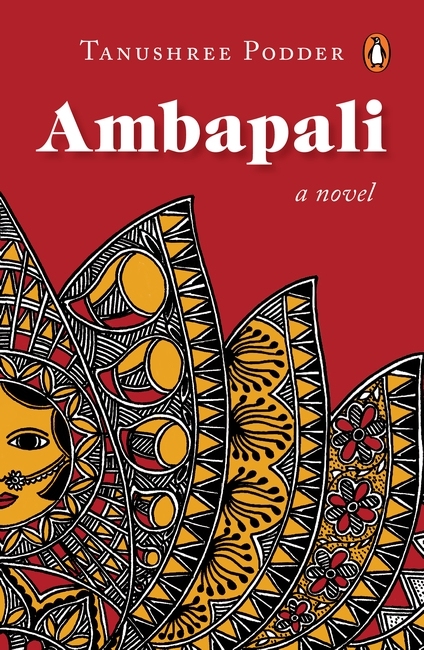
Not every courtesan has gone down in the annals of history like Ambapali. She was beautiful, intelligent, talented and, as the nagarvadhu janpad kalyani-the bride of the city-she went on to wield immense power amongst the nobles. Until she renounced all worldly pleasures to embrace Buddhism.
This vivid narrative tells the story of a young woman forced to follow a path because of the machinations of powerful people. Propelled onto the cultural centerstage in the Vajji republic against her wishes, betrayed in love, disappointed by friends, Ambapali’s is yet the story of a strong woman determined to take control over her life. A remarkable, poignant novel about the dazzling glamour, daring romance, and sacrifice that marked Ambapali’s life.
Oblivion and Other Stories
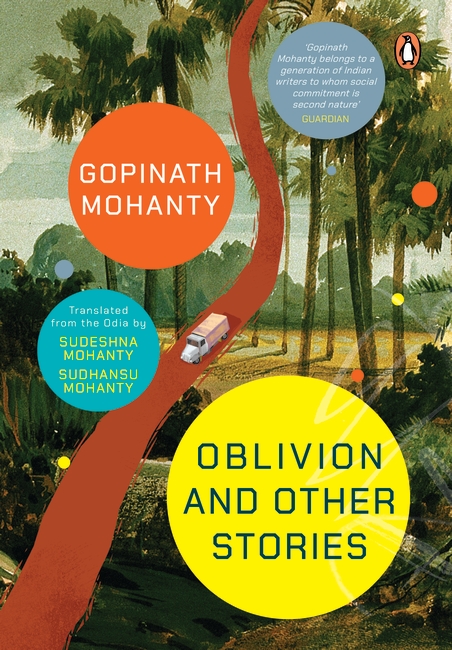
Oblivion and Other Stories is an anthology of twenty short stories by Gopinath Mohanty, the doyen of Oriya (now Odia) literature. The stories, written across a half-century (1935-1988), sample his oeuvre of writings and the variety of his themes-from ‘Dã’ (mid-1930s) to ‘Oblivion’ (1951) to ‘The Upper Crust’ (1967) to ‘Lustre’ (1971) and ‘Festival Day’ (1985).
They capture the forgotten others, the banality of marginal living on life’s edge-of the poor, the tribals and ordinary people-invisible in the feudal landscape of Orissa in the twentieth century.
Originally written in Oriya by the Padma Bhushan awardee, these have now been translated for the first time into English and recreate the social life of mid-twentieth century India.
The embellished past in the stories is not one of nostalgia but a full-toned portrait of society. Marginalization is the running thread: dispossession, disenfranchisement, class/caste social exclusivity and lack of education.
Life Switch
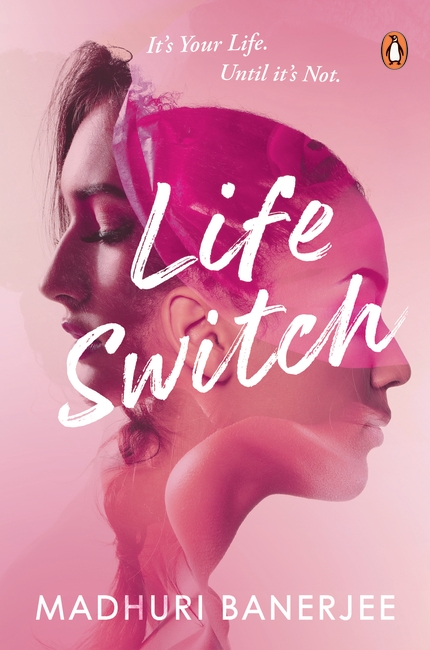
Just imagine.
If you could switch your life with someone else . . .
Would you?
A staid housewife, Nandita, swaps her life with Annie, her doppelgänger. She switches her phone, her home, her husband and her boring family life for the glamorous corporate life that Annie leads in an advertising agency.
Annie looks at this as a social experiment for a new ad campaign she is creating. She hopes that this will help her beat her rival and put her right at the top of the company. Nandita believes this will make her husband fall in love with her.
Their lives begin to get horribly complicated when secrets are revealed. In their bid to have everything, they’ve set the ball rolling on something that has now pitched them against each other.
The question is, who will win? For whom will all the pieces of the puzzle come together?
Life Switch is a passionate, intense, sexy love story that thrills.