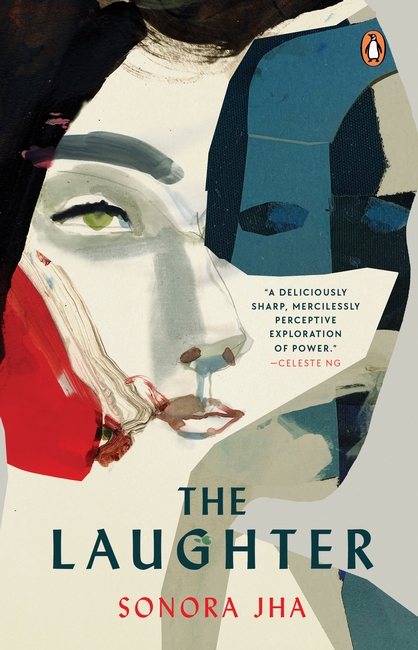
Dr. Oliver Harding is long settled into the routines of a divorced, aging academic. But his quiet life is upended by his new colleague, Ruhaba Khan, a dynamic Pakistani law professor.
Ruhaba unexpectedly ignites Oliver’s long-dormant passions, a secret desire that quickly tips towards obsession after her teenaged nephew arrives to stay with her. Drawn to them, Oliver tries to reconcile his discomfort with the worlds from which they come, and to quiet his sense of dismay at the encroaching change they represent-both metaphorically and in Ruhaba’s spirited engagement with the student movements on campus.
After protests break out demanding diversity across the university, Oliver finds himself and his beliefs under fire, even as his past reveals a picture more complicated than it seems. As Ruhaba seems to fade in and out of reach, Oliver reacts in ways shocking and devastating.
Sonora Jha has created a complex character both in tune and out of step with our time, an erudite man who first inspires and then challenges our sympathies. As the novel reaches its shocking conclusion, Jha compels us to re-examine scenes in a new light, revealing a depth of loneliness in unlikely places, the subjectivity of innocence, and the looming peril of white rage in America.
An explosive and tense work of fiction, The Laughter is a fascinating portrait of privilege, radicalization, class, and modern academia that forces us to confront the assumptions we make, as both readers and as citizens.

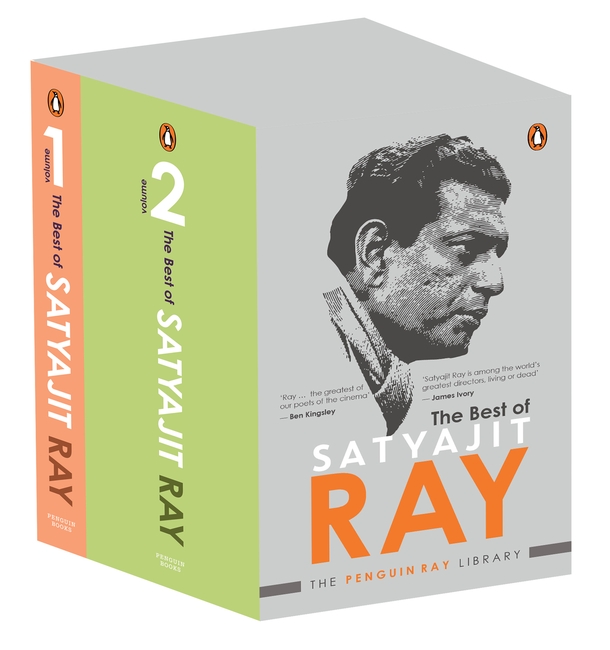
Satyajit Ray (1921-1991), polymath, polyglot, novelist, short-story writer, illustrator, designer, music composer, was one of the most eminent film directors of world cinema. His Pather Panchali (Song of the Little Road, 1955) established his position as a major film director, winning numerous awards. Recipient of the Lifetime Academy Award in 1992 ‘In recognition of his rare mastery of the art of motion pictures and for his profound humanitarian outlook, which has had an indelible influence on filmmakers and audiences throughout the world’, Ray took Indian cinema to a grand platform hitherto unachieved by any Indian film director. “Not to have seen the cinema of Ray means,’ said Akira Kurosawa, ‘existing in the world without seeing the sun or the moon.’
While Ray’s films are fairly well-known, his writings-fiction and non-fiction-written in Bengali and English continue to attract attention. His illustrations, design works, comic strips, science fictions, detective stories are gems of Indian literature. Ray’s non-fictions are gems, which bring to lights his thoughts on film-making, film appreciation, composition of music, art, design and screenplay, among others. ‘The Penguin Ray Library’ is an endeavour to open a window to the master’s writings to a wide spectrum of readers.
From the ever-popular adventures of Ray’s enduring creation, the professional sleuth Feluda to the chronicles of Professor Shonku; short stories; writings on filmmaking; and thoughts on world as well as Indian cinema, among others, this anthology, a two-volume boxset, The Best of Satyajit Ray is not only a treat for the Ray enthusiasts but also a collector’s edition.

In the distant land of Gandhara, there once was a janapada called Chakrapuri. Its elders were a worried lot. Their children were uninterested in the welfare and upkeep of the janapada. Most of them were consumed by self-interest and avarice, seeking personal gains, even at the cost of their fellow citizens. Realizing that the young must learn the arts and crafts of citizenship, the Sabha of Chakrapuri decided to employ Nitina of Takshashila, whose wisdom was said to be unparalleled, to teach their children. So it came to pass that the unconventional scholar was entrusted with the charge of these boys and girls for the next ninety days.
Thus begins the Nitopadesha. A labyrinth of stories in the style of the Panchatantra and the Jataka tales, this is a book about good citizenship and citizen-craft that will speak to the modern reader. Covering aspects such as what citizenship means, the ethical dilemmas one faces as a citizen and how one can deal with social issues, Nitin Pai’s absorbing translation is an essential read for conscientious citizens of all ages.

Naishee Kamaraj has a special bond with her younger brother, Shravan. One day when he suddenly goes missing, everyone tells her perhaps he left of his own volition, but Naishee knew her brother better than anyone else. She fears there has been foul play. And her fears come true when she receives a second-hand phone with a video of her brother being held captive. She needs to perform some horrific activities to save her brother. As time ticks by, Naishee knows she will come out a totally different being by the end of it all . . .

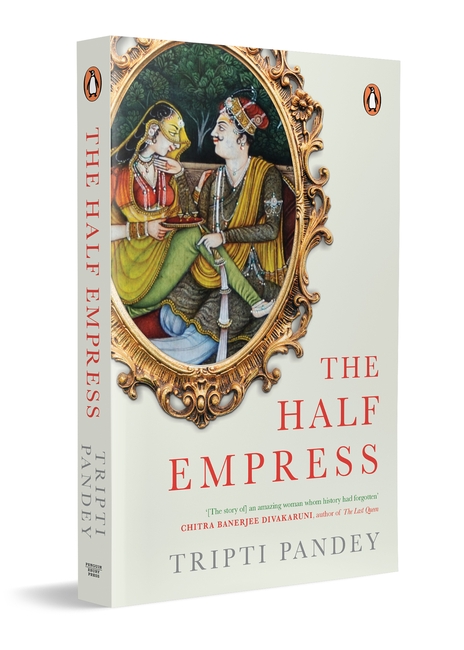
Among the rulers of Jaipur, Maharaja Sawai Jagat’s name is taken with contempt, because of his affair with a tawaif, or courtesan, Raskapoor, the daughter of a Muslim mother and a Brahmin father. The Maharaja defied all norms and bestowed upon her the title of ‘Half Empress’. With little experience, Raskapoor resiliently navigated her way through the cobwebs of the royal life. But, pitched against a fleet of plotters in an atmosphere filled with deceit, she finally fell into their trap and was imprisoned. There are many stories about how her life ended-the compassionate prison chief allowed her to flee or she flung herself on to the pyre of Jagat Singh. But today, she is best remembered by the guides who routinely mention her as a celebrity prisoner at the famous Nahargarh Fort.
In her historical novel The Half Empress, Tripti Pandey transports the reader to the royal corridors of nineteenth-century Jaipur and brings to life the story of a formidable woman who has been deliberately omitted from history.

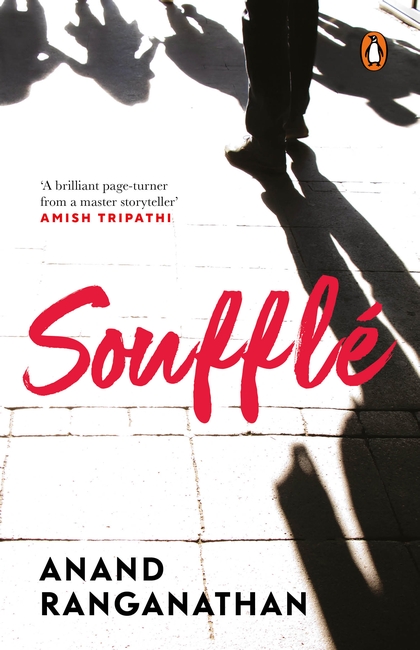
One sultry Mumbai night, business tycoon Mihir Kothari takes a bite of a soufflé and drops dead. According to the CCTV footage, celebrity chef Rajiv Mehra is the killer. It seems like an open-and-shut case.
Or is it?
A catastrophic accident on the day the chef is to be hanged allows him to escape and, driven by an inner calling, pursue a new life. Chased by shadows he thought he had left behind, torn by spurned love, the chef
returns in search of the real killer so that he can prove his innocence. But there is a problem. Unknown to him, the killer has chosen his next target: the chef himself!
Soufflé is a rich, layered thriller that explores life, love and the passions that motivate people to do unexpected and impossible things.
‘If this psychological, compelling and unpredictable novel doesn’t keep you hooked, give up reading’
ASHWIN SANGHI
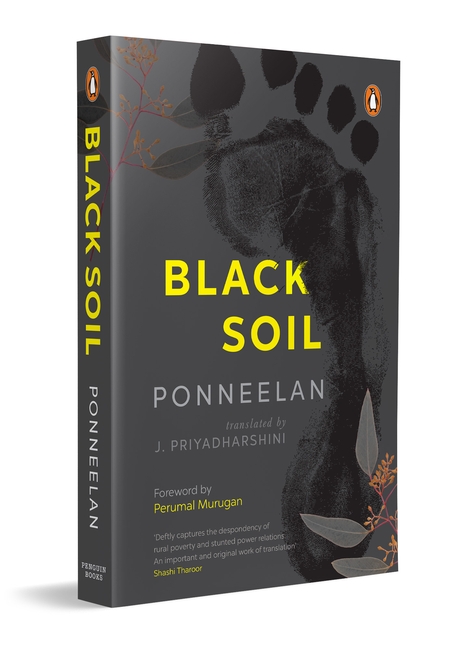
Kannappan is posted to Perumalpuram as the new schoolteacher. The village lies in the black soil region of Tamil Nadu where the river Tamirabarani flows. He’s an outsider in this village with Veerayyan, a local farmer, as his only guide and friend.
Once settled in his role, Kannappan observes the everyday brutality faced by the farmers at the hands of the sadistic, all-powerful landlord-the Master. Child marriage is common in the village and so is the appalling practice of marrying young lads to older women who then serve as their father-in-law’s consort. Through his gentle yet probing conversations with the villagers, Kannappan tries his best to show the villagers a better way of life. The farmers who had begun protesting the excesses meted out to them by the upper-caste landlord soon find an ally in Kannappan. The schoolteacher’s sympathies for their cause bolster their waning spirits and replenishes their resolve to fight back.
Ponneelan’s first novel is a tour de force. Now translated for the first time, Black Soil lays bare the atrocities faced by the farmers and the human cost of building a better tomorrow.

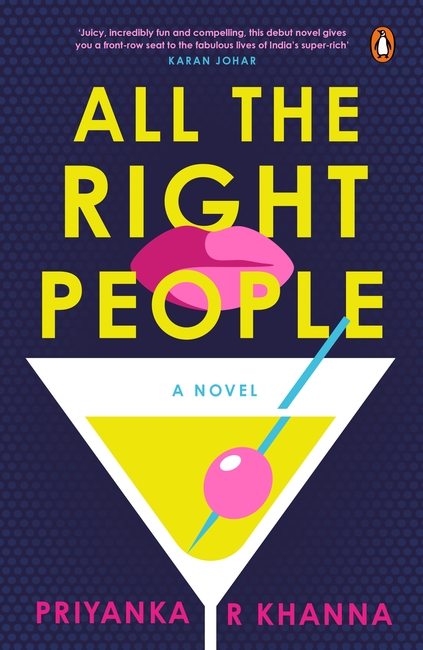
Tara-Shaan-Aria. Nearly twenty years ago in a classroom in Mumbai, three young girls formed a tight knit trio that navigated school and university, first loves and fresh starts.
But when Tara’s father, Mohan Mehta, a prominent businessman, hits the headlines for the wrong reasons, this friendship comes under the scanner. Will their bond go the distance?
Tara is devastated. A social media star who found a way to fit into London’s high society, she’s worked her entire life to be the perfect everything. But she’s always had friends and family by her side. That is, until she’s left alone to pick up the pieces of the only life she knows.
As the daughter of a billionaire industrialist, in Aria Mistry’s world, nothing short of perfection will do. Her father’s pride and joy, she’s always lived by the rules. When she meets Bollywood star Rohan Rawal, he challenges everything she’s been raised to believe. Will she choose to follow her head or her heart?
Delhi party girl by night and a leading politician’s dutiful daughter by day, Shaan Singh knows which role to play to get her own way. Feisty and fiercely intelligent, she has political aspirations of her own. But when her parents force her into marriage for strategic gain, how far will she fight to hold onto her freedom? Or will she give in?
Glittering, whip-smart and incredibly fun, All The Right People takes you into the hidden, privileged world of the wealthiest and most powerful families in Bombay, Delhi and London but tells a universal story. Of love. Of loss. Of family. Of friendship. Of difficult decisions.
And of women taking control of their own lives.

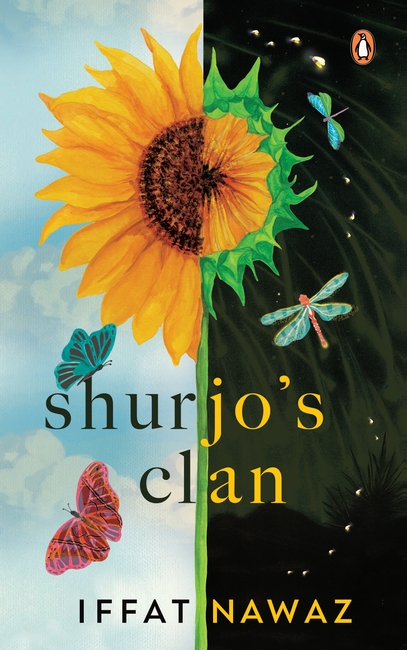
During the hours of daylight, young Shurjomukhi’s family is like any other in Dhaka, going through the motions of school, work, and domesticity in a nation still in the flush of youth. But every night, once darkness falls over their asymmetrical house, they switch over to the Unknown world. Death does not exist in the Unknown side and the family is joined for dinner by Shurjo’s freedom fighter uncles, who were martyred in the tea gardens of Sylhet at the start of the 1971 Bangladesh liberation war, and her grandmother who killed herself by jumping into a well in the aftermath of 1947. These dinners are festive affairs, replete with the joy of reunion, music and stories, but underneath the celebration, Shurjo’s family is riddled with the traumas of their past: death, war, migration, separation, the inability to belong to a land, dwelling in an in-between space, an eternal limbo. And when the miasmic shadow of the past inevitably falls on young Shurjo, the pitfalls of their dual reality is laid bare. The only way forward is an upheaval that splits the family apart, flinging Shurjo and her parents to the other end of the world.
Imaginative and compelling, Shurjo’s Clan merges magical realism with a vivid historicity to paint an entirely contemporary portrait of how grief is inherited, how the traumas and memories of our ancestors continue to shape those who come long after.
Spanning decades, from the forced migration of Bengalis to East Pakistan in 1947, through the 1971 liberation war, the wave of immigrants to the West in the 1980s, and a final return, Iffat Nawaz’s lyrical and evocative prose marks the arrival of a distinctive voice, one that unravels questions of grief, belonging, identity, and family with delightful imaginativeness and devastating insight. With its mesmerising balance between inexplicable otherworldliness and undeniable reality, this debut novel asks, above all, how we can honour the past without letting its wounds destroy us.
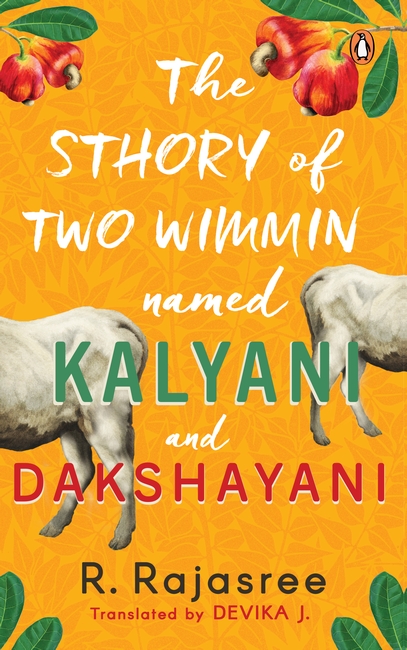
The Sthory of Two Wimmin Kalyani and Dakshayani traces luminous paths of female friendship in the rural worlds of north Malabar, through the lives of two rural women, Kalyani and Dakshayani. Rebelling against the patriarchy in school at the age of six (‘Rot in ‘ell, yuh sonofabitch’, yells Dakshayani at the school master who lifted her skirt to pinch her thigh, and walks out of school, with Kalyani following in solidarity), the two friends take on life and love. Women have no native place, they learn-but they have each other. Rajashree’s cleverly crafted narrator pauses and plays the scenes of their struggles, pains and laughter, drawing strength from them for her own battle against the mind-police. The bittersweet longing for one’s place of birth, the dialects of Malayalam, animals, spirits-all come alive in Rajashree’s beautifully crafted tale, enabled by Devika’s magnificent and careful translation.