



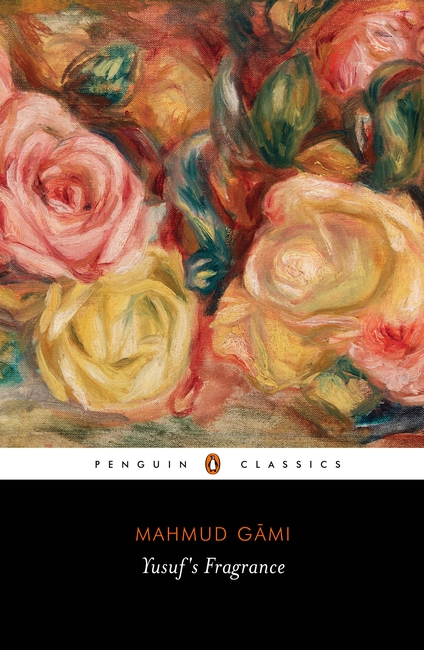
It can be said of the 19th century Kashmiri poet, Mahmud Ga¯mi that he was a pioneer in introducing the Persian genres of the ghazal, nazm, masnavi and na¯t into Kashmiri. Mahmud Gami’s contribution to Kashmiri poetry is unique in both scope and depth. Not only is he the first truly prolific poet who has written entirely in the Kashmiri language, but much of his poetry also stands out for its beauty of expression and depth of thought, such as in the lyrical romance of Shireen Khusrau, Yusuf Zulaikha, and Layla Majnun.
Yusuf’s Fragrance is both a celebration as well as an homage to Gami’s oeuvre. Through these beautiful verses, we explore themes of love, both physical and metaphysical, philosophy, folklore, and tradition through different narrative devices, such as nazms, masnavis, and vatsuns.
Catagory: Fiction
Fiction main category
Anthill
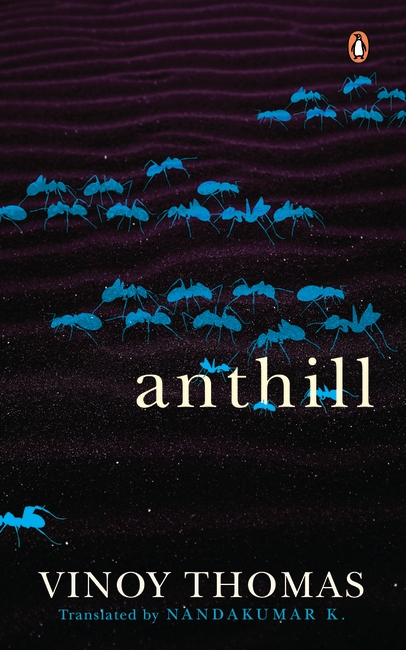
Bounded by dense Kodagu forests on the south and west, and rivers on the north and east, Perumbadi, at the border between Kerala and Karnataka, has hidden itself from the world. Its very isolation has attracted varied settlers from south Kerala over the years. The first settler on this land, Kunji Varkey, was fleeing the opprobrium of getting his own daughter pregnant. Those who followed had similar shameful secrets.
Anthill, the exquisite translation from the Malayalam of the Kerala Sahitya Akademi-winning novel Puttu, is the story of common people who tried to wriggle out of the shackles of family, religion and other restraining institutions, but eventually also struggle to civilize themselves-from their beginnings of a hillbilly existence and life as a promiscuous community.
As Perumbadi moves into modernity and feels the need for refined justice, Jeremias comes to be known by the moniker President and becomes the unchallenged adjudicator of Perumbadi, thanks to his equanimity and sense of fairness. However, even as he resolves local disputes, he is troubled by developments in his own home and by his own moral failure.
One of the most promising young writers in Malayalam, Vinoy Thomas, in his bestselling second novel, deploys dark humour to question the moral codes that bind society. Ultimately, this is also a story about the human race.
Penguin 35 Collectors Edition: The Perfect Us
Love is not having to hold back . . . but will she ever truly let him in?
Avantika is an investment banker, an ambitious go-getter and the exact opposite of Deb-a corporate professional turned failed writer, turned scripter of saas-bahu serials.
They’ve been together for ten years, surviving everything from college to rave parties to annoying best friends, including Shrey, who has no respect for personal boundaries, and Vernita and Tanmay-the annoying yet enviable ‘it’ couple who seem to have it all.
Now Avantika wants to take the next step. But will Deb be able to catch up? Or will it rip them apart? No matter how hard he tries, Deb can’t convince Avantika that he’s the one for her. Not as long as she is broken and her past looms in the background-pushing her, troubling her, goading her to question if their love is enough.
Will Deb be able to find their perfect place? The Perfect Us is love’s struggle to find a happily ever after . . .
Penguin 35 Collectors Edition: Queen of Ice
Didda, princess of Lohara, is beautiful, intelligent–and lame.
Despised by her father and bullied by his heir, Didda’s childhood is miserable and her future, bleak.
When she is married off to the dissolute ruler of Kashmira, she must learn to hold her own in a court ridden with factions and conspiracies. But Didda is no ordinary queen. Ruthless and ambitious, she wants to rewrite history. Will she succeed?
Queen of Ice is a compulsive read that brings alive the turbulent history of tenth-century Kashmir with an exquisite balance of fact and fiction. This is award-winning author Devika Rangachari’s finest novel yet.
Penguin 35 Collectors Edition: The Shadow Lines
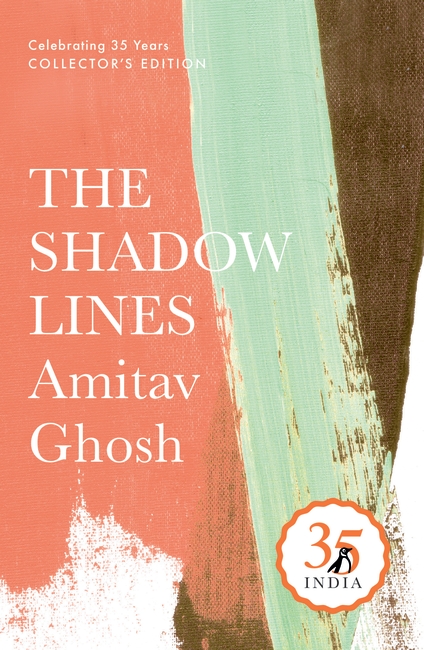
As a young boy, Amitav Ghosh’s narrator travels across time through the tales of those around him, traversing the unreliable planes of memory, unmindful of physical, political and chronological borders. But as he grows older, he is haunted by a seemingly random act of violence. Bits and pieces of stories, both half-remembered and imagined, come together in his mind until he arrives at an intricate, interconnected picture of the world where borders and boundaries mean nothing, mere shadow lines that we draw dividing people and nations. Out of a complex web of memories, relationships and images, Amitav Ghosh builds an intensely vivid, funny and moving story. Exposing the idea of the nation state as an illusion, an arbitrary dissection of people, Ghosh depicts the absurd manner in which your home can suddenly become your enemy. Winner of the Sahitya Akademi Award.
Penguin 35 Collectors Edition: Chowringhee
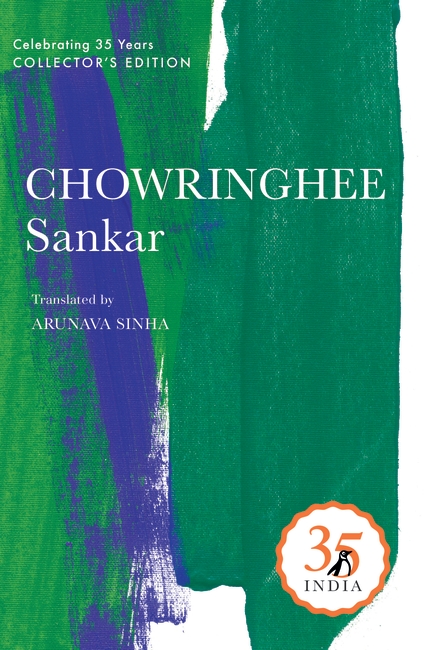
Here, day and night were interchangeable. The immaculately dressed Chowringhee, radiant in her youth, had just stepped on to the floor at the nightclub.’ Set in 1950s Calcutta, Chowringhee is a sprawling saga of the intimate lives of managers, employees and guests at one of Calcutta’s largest hotels, the Shahjahan. Shankar, the newest recruit, recounts the stories of several people whose lives come together in the suites, restaurants, bar and backrooms of the hotel. As both observer and participant in the events, he inadvertently peels off the layers of everyday existence to expose the seamy underbelly of unfulfilled desires, broken dreams, callous manipulation and unbidden tragedy. What unfolds is not just the story of individual lives but also the incredible chronicle of a metropolis. Written by best-selling Bengali author Sankar, Chowringhee was published as a novel in 1962. Predating Arthur Hailey’s Hotel by three years, it became an instant hit, spawning translations in major Indian languages, a film and a play. Its larger-than-life characters-the enigmatic manager Marco Polo, the debonair receptionist Sata Bose, the tragic hostess Karabi Guha, among others-soon attained cult status. With its thinly veiled accounts of the private lives of real-life celebrities, and its sympathetic narrative seamlessly weaving the past and the present, it immediately established itself as a popular classic. Available for the first time in English, Chowringhee is as much a dirge as it is a homage to a city and its people.
Penguin 35 Collectors Edition: One Part Woman
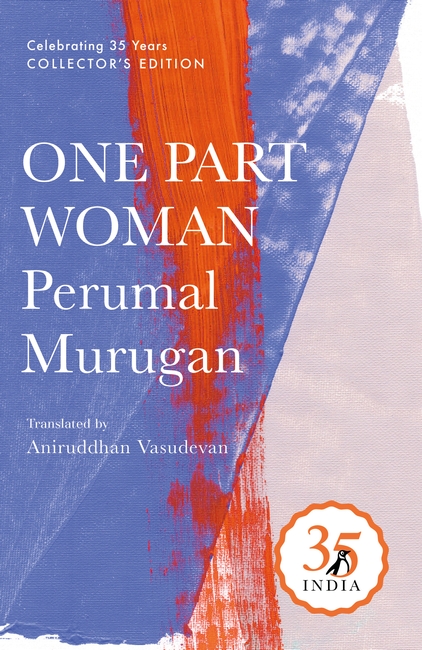
All of Kali and Ponna’s efforts to conceive a child-from prayers to penance, potions to pilgrimages-have been in vain. Despite being in a loving and sexually satisfying relationship, they are relentlessly hounded by the taunts and insinuations of the people around them. Ultimately, all their hopes and apprehensions come to converge on thechariot festival in the temple of the half-female god Ardhanareeswara and the revelry surrounding it. Everything hinges on the one night when rules are relaxed and consensual union between any man and woman is sanctioned. This night could end the couple’s suffering and humiliation.But it will also put their marriage to the ultimate test. Acutely observed, One Part Woman lays bare with unsparing clarity a relationship caught between the dictates of social convention and the tug of personal anxieties, vividly conjuring an intimate and unsettling portrait of marriage, love and sex.
Penguin 35 Collectors Edition: The Great Indian Novel
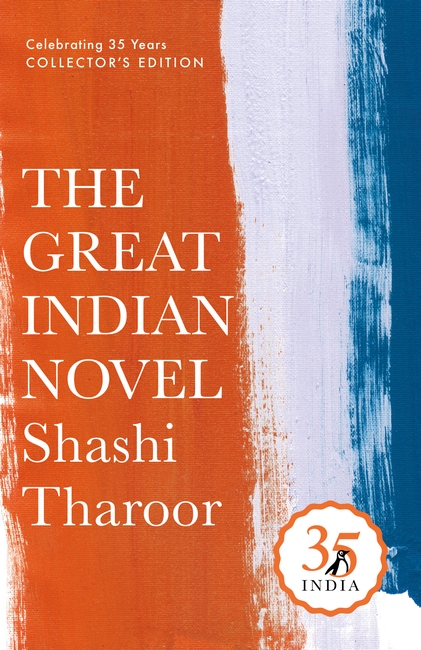
In Shashi Tharoor’s satirical masterpiece, the story of the Mahabharata is retold as recent Indian history, and renowned political personalities begin to resemble characters from the Mahabharata-all of whom have a curious and ambiguous relationship with Draupadi Mokrasi (D. Mokrasi for short) . . .
Penguin 35 Collectors Edition: The Princess and the Political Agent
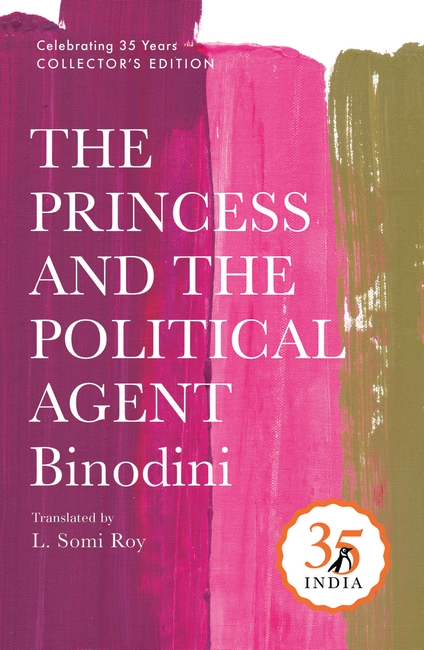
In 1979, Binodini won the Sahitya Akademi Award for her groundbreaking feminist novel Boro Saheb Ongbi Sanatombi, a work of historical fiction based on the life of her rebellious aunt, Princess Sanatombi of Manipur. Now translated into English by Binodini’s son L. Somi Roy, this is the love story of Sanatombi and Lt Col. Henry St
P. Maxwell, the British representative in the Tibeto-Burman kingdom of Manipur.
A poignant tale of love and fealty, treachery and valour, it is set in the midst of the imperialist intrigues of the Raj, the glory of kings, warring princes, clever queens and loyal retainers. Reviving front-page global headlines of the Anglo-Manipuri War of 1891, Binodini’s perspective sparkles with wit, empathy and beauty, vividly bringing to life the court and manners of a little-known kingdom. In doing so, she recovers its extraordinary history and a forgotten chapter of the British Raj.
Andaman Adventure: Barren Island
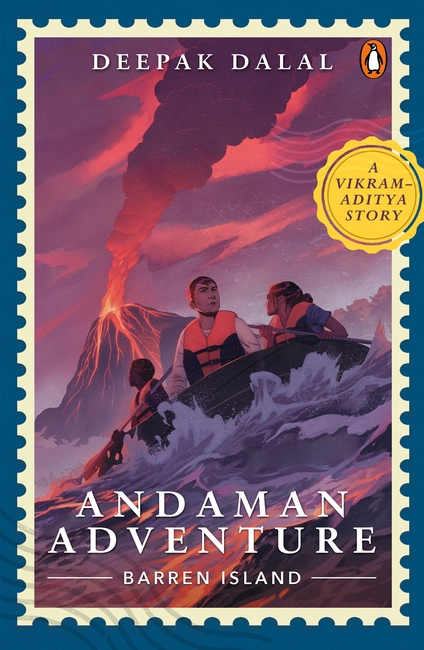
This is the eighth and final book in the Vikram-Aditya series and the second of the two-part ‘Andaman Adventure’ books after The Jarawa.
When the book begins, Vikram, Aditya and Chitra are in Port Blair, the capital city of the Andamans. The trio are recuperating from their recent adventure in the remote Jarawa Jungles in the Andaman Islands. While exploring this colourful city, Vikram stumbles upon a series of intriguing clues. However, the investigations he conducts end up ruffling some feathers and manage to upset some powerful criminals. To escape their wrath, Vikram is forced to undertake a secret voyage destined for unknown shores, under cover of darkness.
In the remote corners of the Andaman Sea lies an island called Barren. Vikram arrives at this uninhabited and forgotten outpost of India, and soon discovers that it is not just a band of desperate men he must pit his wits against. Primal forces of nature, the very ones that shaped our planet, are at work on Barren Island, and Vikram and his companions have to face these challenges as well. Finally, this scintillating adventure series comes to a fiery and exhilarating climax on Barren Island’s isolated shores.