Rajinder Singh Bedi: Selected Short Stories curates some of the best work by the Urdu writer, whose contribution to Urdu fiction makes him a pivotal force within modern Indian literature. Born in Sialkot, Punjab, Rajinder Singh Bedi (1915-1984) lived many lives-as a student and postmaster in Lahore, a venerated screenwriter for popular Hindi films and a winner of both the Sahitya Akademi as well as the Filmfare awards. Considered one of the prominent progressive writers of modern Urdu fiction, Bedi was an architect of contemporary Urdu writing along with leading lights such as Munshi Premchand and Saadat Hasan Manto.
Written between 1940 and 1975, the fifteen short stories included in this collection comprise favorites like ‘Garam Coat’ (Woollen Coat), ‘Lajwanti’, ‘Apne Dukh Mujhe De Do’ (Give Me Your Sorrows), ‘Rahman ke Joote’ (Rahman’s Shoes) and others. Bedi’s stories dissect human emotions with grim precision as he navigates the everyday lives of men and women, exposing social inequities and economic problems.

The Monkey’s Wound and Other Stories is a collection of sixteen short stories by Hajra Masroor that are illustrative of her uncompromising tone, her piercing portrayals of the bitter realities of life, and the wounds and traumas of the inner lives of women. The stories, translated from the original Urdu, are sourced from her well-known collection of stories, Sab Afsanay Meray and are stories that bring out Masroor at her best.

The Social Butterfly is back with her signature wingbeat. The world may have moved at a rattling pace since her last outing but the lifestyles of Lahore’s literati, Dubai’s glitterati and London’s desi flutterati have more than kept pace. Earth-shattering events like wars, climate change, and the pandemic have nothing on the treachery of the maalish waali, Meghan Markle’s tiara and the mechanics of ‘sad make-up’. Spanning eight rollicking years from 2014 to 2021, Butterfly’s frank, funny diaries tell us how it is in the private lives of the haves and the have-mores.
Scandalously colourful and uniquely desi, the latest installment of the Butterfly series is delish.

In April 1900, on the imaginary island of Mingheria—the twenty-ninth state of the Ottoman Empire—tensions rise between its Muslim and Orthodox Greek populations as a deadly plague, possibly brought by Muslim pilgrims or merchant vessels, sparks a rebellion. To curb the epidemic, Sultan Abdul Hamid II
dispatches a skilled Orthodox Christian quarantine expert, but resistance from some Muslims, a murder, and incompetence in local governance hinder containment efforts. As the death toll climbs, a Muslim doctor is also sent, yet the quarantine’s failure prompts international intervention through a naval blockade. Now
the people of Mingheria are on their own, and they must find a way to defeat the plague themselves. Steeped in history and rife with suspense, Nights of Plague is an epic story set more than one hundred
years ago, with themes that feel remarkably contemporary.

WINNER OF THE INTERNATIONAL BOOKER PRIZE 2022
WINNER OF AN ENGLISH PEN AWARD
In northern India, an eighty-year-old woman slips into a deep depression after the death of her husband, and then resurfaces to gain a new lease on life. Her determination to fly in the face of convention – including striking up a friendship with a transgender person – confuses her bohemian daughter, who is used to thinking of herself as the more ‘modern’ of the two.
To her family’s consternation, Ma insists on travelling to Pakistan, simultaneously confronting the unresolved trauma of her teenage experiences of Partition, and re-evaluating what it means to be a mother, a daughter, a woman, a feminist.
Rather than respond to tragedy with seriousness, Geetanjali Shree’s playful tone and exuberant wordplay results in a book that is engaging, funny, and utterly original, at the same time as being an urgent and timely protest against the destructive impact of borders and boundaries, whether between religions, countries, or genders.

The first battle is lost. The book of Mritsanjeevani is in the wrong hands but Nagendra’s plans are not limited only to immortality. What seemed to be the end of all wars was just the beginning of an incredible journey in search of a hidden verse. Om is still incomplete without the knowledge of his past, but he is not alone anymore. Two of the mightiest warriors of all time stand by his side. Two mysterious warriors stand unconditionally with Nagendra too or is there a hidden agendas behind all the allies? Who are LSD and Parimal in real and who is Om? Tighten your seat belts for an adventure in search of words that hold a bigger purpose than even immortality for Divinities and Demons.
EVIL ALWAYS FINDS ANOTHER WAY
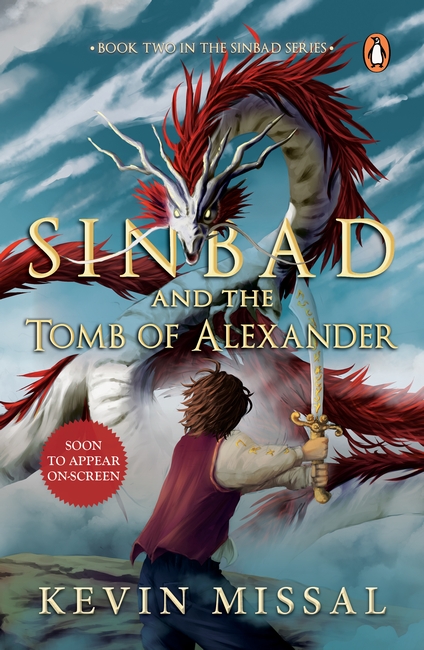
You would think having saved the world from Armageddon would have its perks, but sadly there are no happily ever afters. Because evil never sleeps. We battled the Angel of Death and prevented the trumpet of Israfil from being blown. But Iblis, the Devil King, is after yet another artefact that can bring him back to life.
Now my crew and I race against time to find the famed Water of Life. And as luck would have it, it is said to be hidden in the legendary tomb of-wait for it-Alexander the Great. What fate!
So here I am again, Sinbad the Sailor, pitted against Viking warriors, immortal Chinese alchemists, haunted isles and murderous golems, creatures of the dark . . . you get the drift. Then there is the Lame Archdemon, Admiral Sakhr, a foe far more sinister than I have ever encountered.
And on top of it all, my friends seem to be drifting away from me, as is the love of my life, Safeena, Iblis’s daughter.
Bestselling author Kevin Missal’s second book in the Sinbad series is a thrilling reimagination of the fabled sailor from the classic One Thousand and One Nights!

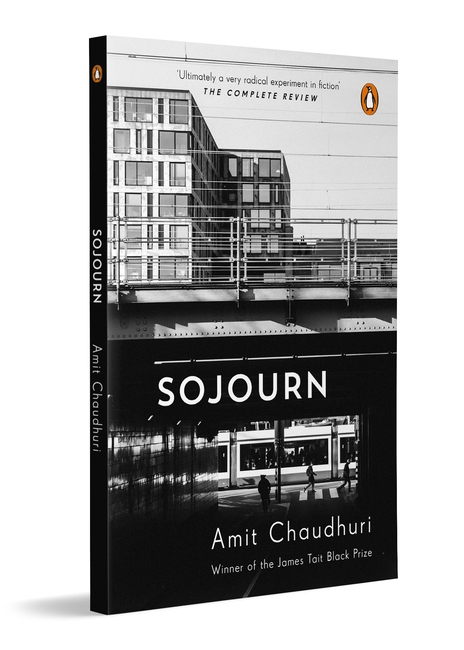
An unnamed man arrives in Berlin as a visiting professor. It is a place fused with Western history and cultural fracture lines. He moves along its streets and pavements; through its department stores, museums and restaurants. He befriends Faqrul, an enigmatic exiled poet, and Birgit, a woman with whom he shares the vagaries of attraction. He tries to understand his white-haired cleaner. Berlin is a riddle-he becomes lost not only in the city but in its legacy.
Sealed off in his own solitude, and as his visiting professorship passes, the narrator awaits transformation and meaning. Ultimately, he starts to understand that the less sure he becomes of his place in the moment, the more he knows his way.
Latif’s life changes when he is appointed bellboy at the Paradise Lodge – a hotel where people come to die.
After his father’s death, drowned in the waters surrounding their small Island, it is 17 year-old Latif’s turn to become the man of the house and provide for his ailing mother and sisters. Despite discovering a dead body on his first day of duty, Latif finds entertainment spying on guests and regaling the hotel’s janitor, Stella, with made-up stories. However, when Latif finds the corpse of a small-time actor in Room 555 and becomes a mute-witness to a crime that happens there, the course of Latif’s life is irretrievably altered.
The Bellboy is as much a commentary on how society treats and victimizes the intellectually vulnerable as it is about the quiet resentment brewing against religious minorities in India today. With a mix of wry humour and heart-wrenching poignancy, the book narrates a young boy’s coming-of-age on a small island, and his innocence that persists even in the face of adversity and inevitable tragedy.

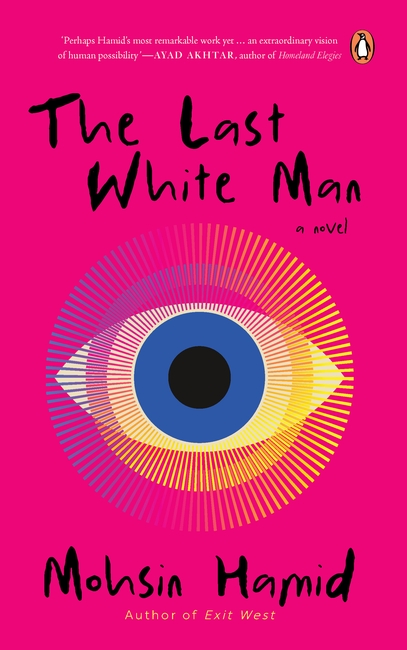
One morning, Anders wakes to find that his skin has turned dark, his reflection a stranger to him. At first he tells only Oona, an old friend, newly a lover. Soon, reports of similar occurrences surface across the land. Some see in the transformations the long-dreaded overturning of an established order, to be resisted to a bitter end. In many, like Anders’s father and Oona’s mother, a sense of profound loss wars with profound love. As the bond between Anders and Oona deepens, change takes on a different shading: a chance to see one another, face to face, anew.