



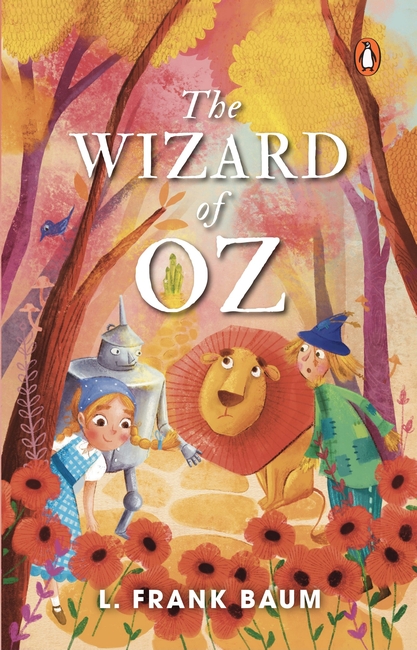
One minute young Dorothy is playing with her pet dog Toto, the next minute she’s flying.
A powerful tornado whisks her miles and miles away, dropping her into the mystical land of Oz where nothing is as it seems. Now she must follow the yellow brick road to Emerald City, to find the only person who can help her-the wonderful Wizard of Oz.
As Dorothy sets off on her strange quest, she is joined by a scarecrow who seeks a brain, a tin man who longs for a heart, and a cowardly lion who is desperate for some courage. Together with her newfound friends, Dorothy must embark on an enchanting adventure, meeting a host of enchanting creatures along the way.
Will Dorothy ever get home? Or will the Wicked Witch of the West and her flying monkeys catch her first? Read The Wizard of Oz to find out.
Catagory: Fiction
Fiction main category
The Jungle Book (PREMIUM PAPERBACK, PENGUIN INDIA)
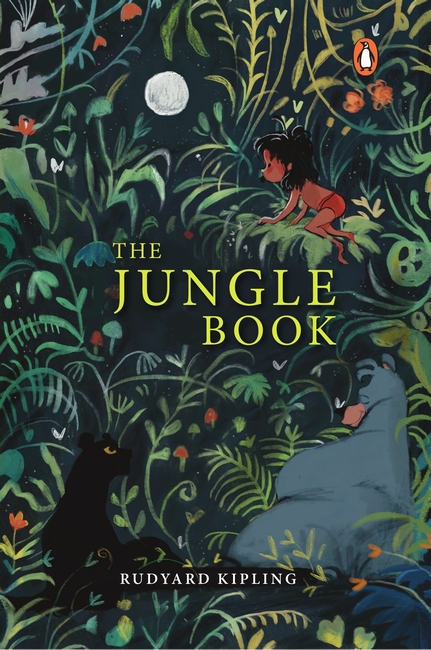
Mowgli is not an ordinary boy; he can climb trees like a monkey and even outrun a tiger. He is a child of the jungle. Discovered at the edge of a cave in the Seeonee hills, Mowgli was taken under the care and protection of a family of wolves when he was no more than a baby. Now adopted by the wolf-pack, he slowly grows up away from the world of men. Along the way he makes life-long friends: Baloo the brown bear and Bagheera the wise panther who help him learn the laws of the jungle.
But the jungle can be a dangerous place.
Together the trio face unforeseen dangers and find themselves caught up in exciting adventures-until Mowgli finally comes face-to-face with Shere Khan the tiger, and the Bandar-Log.
Join Mowgli on his journey through the jungle. Meet Little Toomai, Akela, Rikki-tikki-tavi, Kaa, and other fascinating creatures-and find yourself transported to the enchanting world of The Jungle Book!
Jezebel
Translated from the Malayalam by Abhirami Girija Sriram and K.S. Bijukumar
Jezebel, a young doctor in Kerala, struggles against the cruel realities of a patriarchal world-realities that not even her education, resolve or professional brilliance can shield her from. Her already contentious divorce proceedings go suddenly awry, and her unhappy marriage holds complex secrets. In K.R. Meera’s blistering new novel, which takes the form of a courtroom drama to show us the rich inner worlds of its characters, we see Jezebel reflect on her life and its pivotal points as she takes the stand. Through her memories, we see her grow from a reticent, serious young woman to a rebel who refuses to bend to the conventions of society.
Like the Biblical story of Queen Jezebel, who was much maligned as a scheming harlot and infamously thrown to her death from her palace window, Jezebel is a novel that asks if independent women can ever live lives that are free of judgement K.R. Meera’s hypnotic prose, in this elegant translation from the Malayalam by Abhirami Girija Sriram and K.S. Bijukumar, makes resonant allusions to the Bible in powerful ways that elucidate the correlations between legend and the protagonist’s life while also exploring how sexuality and gender roles are manipulated by the dictates of society.
Vishnu Purana
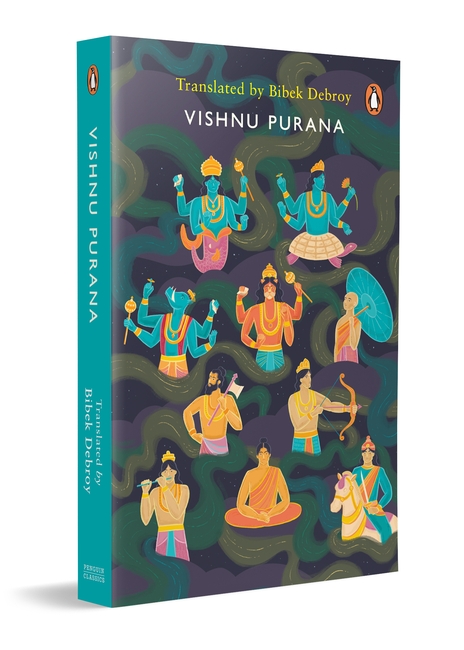
LORD VISHNU AND THE CREATION
The Vishnu Purana is part of a series of eighteen sacred Hindu texts known collectively as the Puranas. It occupies a prominent position among the ancient Vaishnava Puranas which recount tales of creation and the many incarnations of Lord Vishnu. It describes the four classes of society, the four stages of life, and key astronomical concepts related to Hinduism.
Brimming with insight and told with clarity, this translation of the Vishnu Purana by Bibek Debroy presents readers with an opportunity to truly understand the classical Indian mythic texts. Debroy has previously translated the Bhagavata Purana, the Markandeya Purana, and the Brahma Purana.
Pocketful of stories 3.0
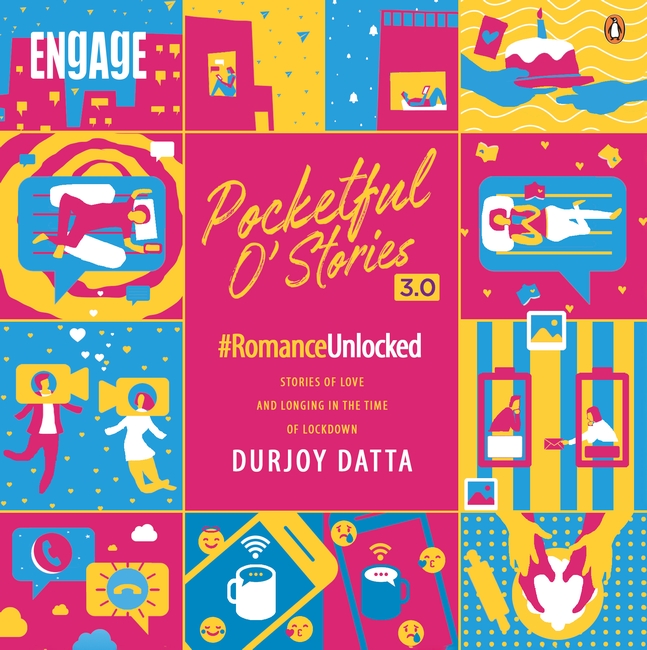
ITC Engage, one of India’s leading fragrance brands is back with its much-loved bestselling series Pocketful O’ Stories 3.0 in collaboration with the bestselling romance novelist Durjoy Datta.
This year’s theme, #RomanceUnlocked captures the poignant yearning of lovers during the time of lockdown. Couples invaded the digital space and found new ways to connect and keep their romance alive. Their stories of love and longing inspired the latest edition of this series.
People were invited to submit their microtales about love in the new normal. Almost 35,000 entries were received within a month, making this edition already a huge success.
Here’s presenting a compilation of the best tales that also includes Durjoy’s own stories of love and longing in the time of lockdown.
The Wait
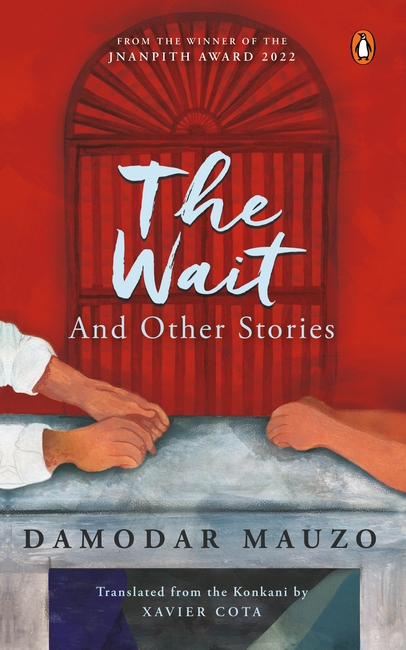
“Damodar Mauzo’s stories present us with vivid glimpses of the richly diverse, cosmopolitan reality of contemporary Goa. In these perceptive, keenly observed stories Hindus, Catholics and Muslims all find ways to co-exist, in defiance of bigotry.” AMITAV GHOSH
A cab driver, who assumes the identity of whoever his clients want him to be, finds himself in a tricky situation with a passenger. A late-night call leads a doctor down a path of lust and desire, but with unexpected results. A writer acquaints himself with a thief who had broken into his house. A migrant worker falls in love but wonders how he can present himself as a suitor. A young man, having lost the love of his life, takes it upon himself to resolve another couple’s dilemmas.
Konkani writer Damodar Mauzo’s sometimes bizarre, sometimes tender stories, set largely in
Goa, create a world far removed from the sun and sand and the holiday resorts. Here you find villagers facing moral choices, children waking up to the realities of adult lives, men who dwell on remorse, women who live a life of regret and communities whose bonds are growing tenuous in an age of religious polarization. Probing the deepest corners of the human psyche with tongue-in-cheek humour, Mauzo’s stories reveal the many threads that connect us to others and the ease with which they can be broken. Written in simple prose and yet layered in nuances, The Wait is a collection that brings to the anglophone world one of the doyens of Konkani literature.
Where the Sun Never Sets (from the bestselling author of You Only Live Once)

ORDER NOW AND GET A SIGNED COPY FROM THE AUTHOR OF YOU ONLY LIVE ONCE
‘A story about finding hope in the darkest of times that will brighten your day!’
If you find someone’s diary, would you dare open it?
Well, if you chance upon your old diary, would you dare read through your past?
Iti is forced to move back to her hometown of Mussoorie amid worldwide lockdown to work on her first movie script. Iti’s chance encounter with her first love, Nishit, reunion with her estranged best friend, Shelly, and nights spent reading her well-kept diary, make her best memories and worst nightmares come to life. She has always run away from her past, but now has no choice.
Will reading her diary prove to be an adventure worth taking for completing the script? Will life be the same? Ever?
Set in the COVID-19 lockdown, from the national bestselling author of On the Open Road and You Only Live Once, Where the Sun Never Sets is a riveting personal account of unforgettable childhood dreams, turbulent teenage years, complicated close relationships, human resilience, and the never-ending journey of growing up.
When I Am with You
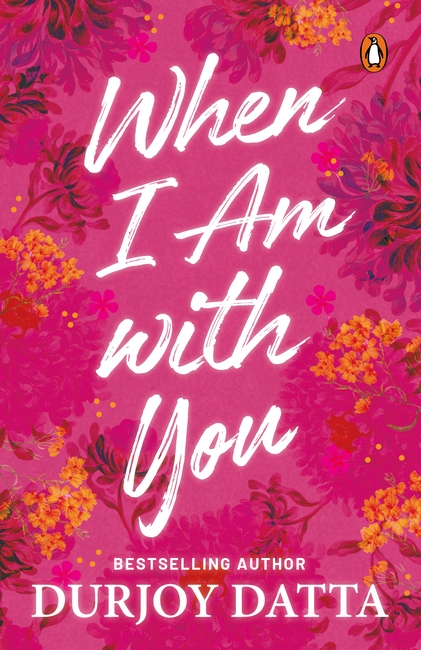
You can plan everything, but you can’t plan with whom and when you’ll fall in love, isn’t it?
Aishwarya, at twenty-eight years, would rather be a single mother than trust the ‘normal’ family structure. In her new start-up, she wants to revolutionize childcare for young woman professionals-this is her ultimate goal. Plus, she’s in a hurry to do it all. On her mind is the ambitious and good-looking Akshay, perfect genetic material, but he’s not ready to be part of her plans. Yet.
In comes Dhiren, who has made and lost his money in cryptocurrency. He takes up the first floor of Aishwarya’s nursery building and, by a queer coincidence, begins to work for her. Her friends Smriti and Vinny, as protective as mother hens, warn her against Dhiren. There is something that he’s hiding along with his friend Neeraj-they just don’t know what.
Things begin to take shape but really, it’s just the beginning of a disaster. The only thing that can save them is what they don’t want-love.
Crazy, quirky and so utterly romantic, this book is the ultimate relationship roller coaster!
Satyajit Ray Miscellany
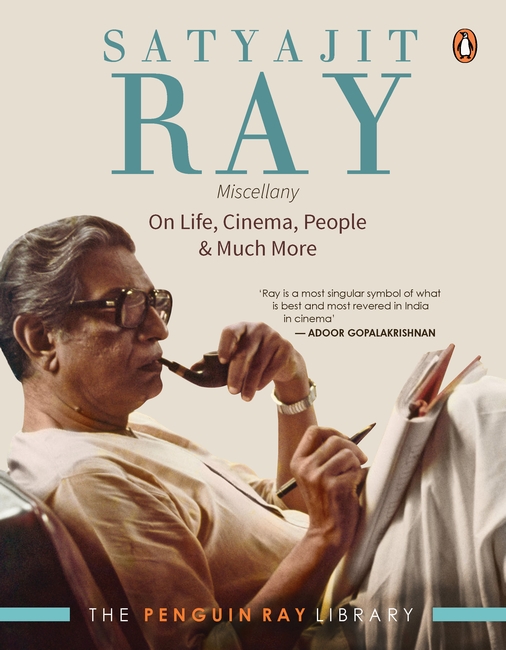
More than seventy rarest essays on filmmaking, screenplay writing, autobiographical pieces and rare photographs and manuscripts of Ray
‘Ray is a most singular symbol of what is best and most revered in Indian cinema’ – Adoor Gopalakrishnan
‘Satyajit Ray, I salute you. The greatest of our poets of the cinema’-Ben Kingsley
Satyajit Ray (1921-1992), one of the doyens of world cinema, gave a unique aesthetic expression to Indian cinema, music, art and literature. His writings, especially, autobiographical works, thoughts on filmmaking, screenplay writing and eminent personalities from art, literature and music, among others, are considered treasure troves, which largely remained unseen and therefore less known till date.
Satyajit Ray Miscellany, the second book in The Penguin Ray Library series, brings to light some of the rarest essays and illustrations of Ray that opens a window to the myriad thought-process of this creative genius. With more than seventy gripping write-ups and rare photographs and manuscripts, this book is a collector’s item.
Salt of the Earth
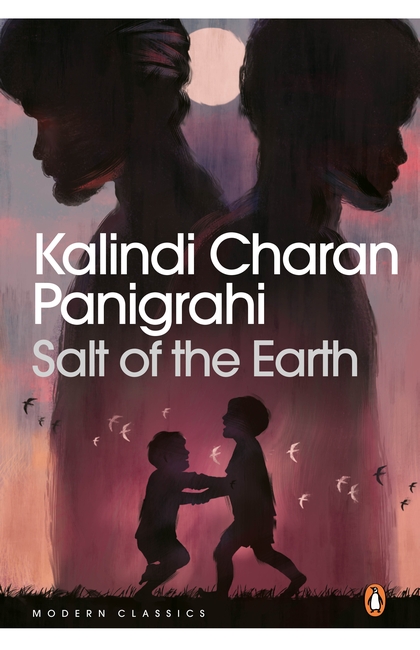
Kalindi Charan Panigrahi was a notable poet and writer in Odia. He is credited for the short but influential movement in Odia literature called the Sabuja Yug which was the age of Romanticism, inspired by Tagore’s writings. He was awarded the Padma Bhushan in 1971. Matira Manisha is his most well-known work. It has been translated into English twice before. Mrinal Sen made a film on this book and it received the National Film Award for Best Odia film in 1967.
The novel is, quite simply, the tale of two brothers, who have very different attitudes towards the land they inherit from their father. It talks about the breaking apart of the joint family and celebrates a Marxist and Gandhian approach to living.